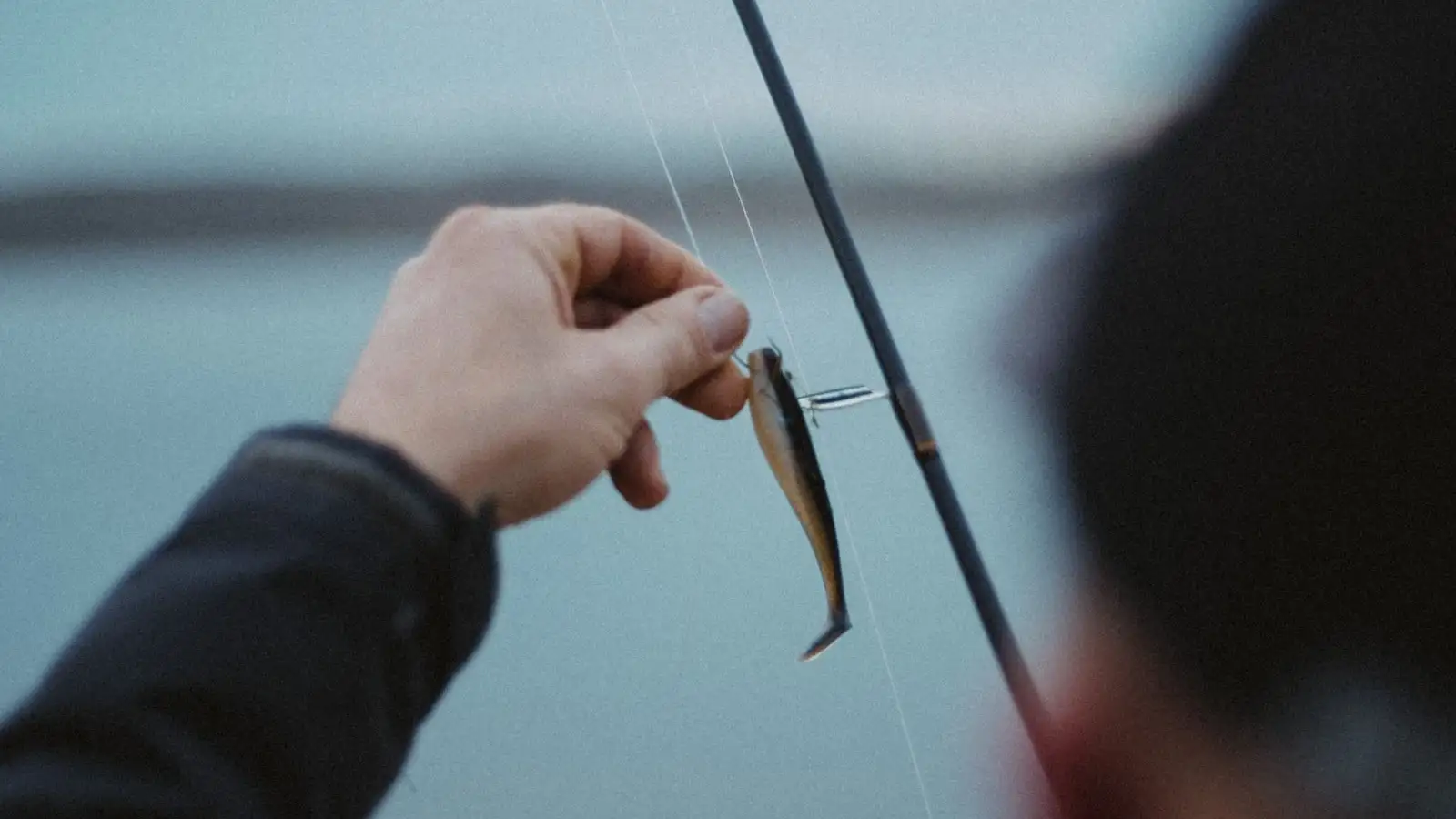
The spinning reel part that decides whether your line twists
A walk around your own spinning reel, part by part, ending at the line roller — the small piece most anglers never connect to the twist they keep fighting.
Functional explainers covering rod, reel, line, and hook characteristics and selection logic.
A walk around your own spinning reel, part by part, ending at the line roller — the small piece most anglers never connect to the twist they keep fighting.
Length, action, and power all trade off differently in boulder-strewn current. How to pick a rod for short casts, line control, and a full day of wading.
The same power and action labels mean different things on spinning and baitcasting rods. Guide placement, reel seat, and line path explain why.
Rod power is load capacity; rod action is where the blank bends. Learn to feel the difference by hand so you stop shopping these two specs as one.
Graphite, fiberglass, and composite blanks are trade-offs in sensitivity, weight, recovery, and durability, not quality rankings. How builders choose.
Longer rods add distance and line control, but cost accuracy, cover, and hookset leverage. Here is how rod length really trades off on the water.
Rod power and action control hook penetration, shock absorption, and pressure. A stiffer blank can set a hook harder—and pull it out just as fast.
UV, heat, chemicals, and abrasion kill fishing line long before any date on the spool. Here's the tug test and cut-back habit that catch it early.
Line and lure ratings are working ranges, not hard limits. Test any lure by feel before you lose casting distance, accuracy, or a rod tip on the water.
Stretching and warm water can rescue a coiled line, but only if it's still sound. Here's how to tell memory from twist and when to strip the spool.