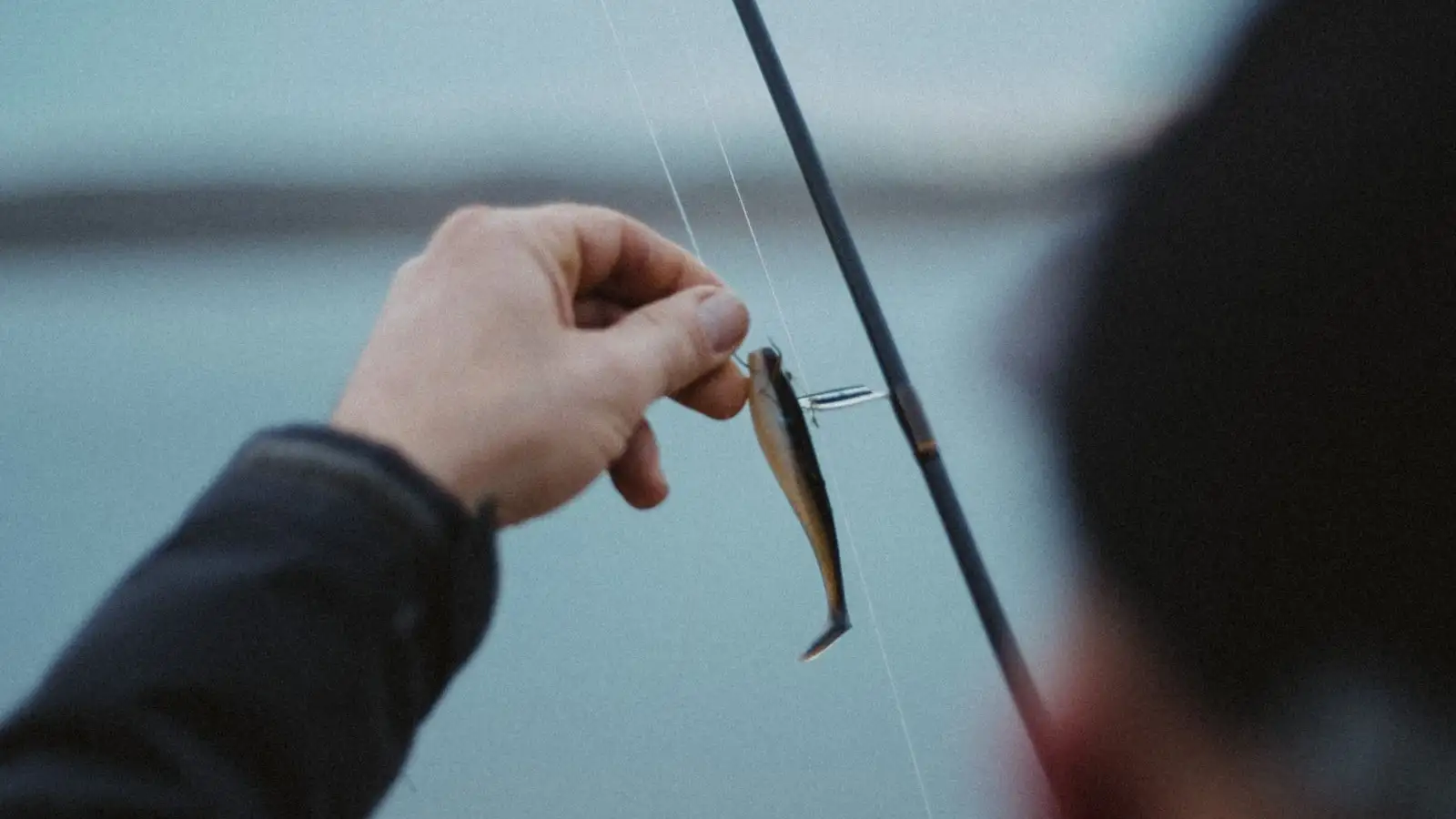
A longer rod casts farther, but not because length is a virtue in itself. The gain comes from two mechanical side effects: a longer rod swings its tip through a longer arc, which puts more line speed into the same stroke, and it holds the tip higher above the surface, which keeps more line off the water where current and surface tension bleed distance away. Both of those gains are paid for in accuracy, maneuverability, and hooksetting leverage at the tip. Rod length is a leverage and line-management trade-off, not a skill level, and the water in front of you decides which side of the trade you want.
Walk out onto a tailwater flat with me on a windless morning. I have stood in this kind of water enough times to know the script. The surface is glass. The current slides past at a walking pace. Out past forty feet there is a seam where colder water dumps in from a spring creek, and the fish are stacked along it. The water is clear and the light is low and flat, which means a fish can see the shape of a person from a long way off. Wading into range is the one thing you cannot do.
Two rods are lying in the grass behind us, both strung with the same weight of line. Pick up the short one, the kind you would carry on a brook trout stream, and make the cast. The loop unrolls, the fly turns over, and it lands well short of the seam. Nothing about that cast felt wrong. It simply did not get there. Now pick up the longer rod and make the same stroke with the same timing. The extra arc does the work, and the fly lands a few feet above the seam, right where you wanted it.
Then the current takes your line.
The moment the line touches down, the water between you and the fly starts pushing it downstream. A belly of line forms, and that belly drags the fly off the seam. A beautiful cast has turned into a bad drift. You lift the tip and flip the line upstream, which is a mend, and this is where length stops being about the cast and starts being about everything that happens after it. With the longer rod, the tip is high enough and far enough out that you can pick the whole belly up and lay it upstream without moving the fly. With the short rod, you cannot reach the belly. You lift, you drag the fly, and you get a mend that fixes only the half of the line nearest you.
Same cast. Same fish. One rod is still fishing, and the other has already put them down.
That is the trade in miniature. Here is how it works when you pull it apart.
What length is actually changing
Rod length is measured in feet and inches, and those inches show up in exactly two places: the arc the tip travels through, and the height of the tip above the water.
The arc is plain leverage. Your hand is the pivot point. Rotate it through the same angle with a longer rod and the tip covers more ground, which pulls line faster and feeds more energy into the loop. That is the part people mean when they say longer rods cast farther, and it is true as far as it goes. Same material, same taper, longer rod: the line goes further.
But length does not fix a sloppy stroke, and it often exposes one. A longer rod has a longer power arc, which is forgiving of a smooth, progressive application of power and unforgiving of an early one. Rush the stroke, hit it hard at the start instead of the end, and a long rod throws a tailing loop that crosses itself in the air. The same rushed stroke on a short rod throws a slightly wider loop that still lands somewhere useful. People who move up a foot in length often cast worse for a month and blame the rod.
Line speed and loop shape
Think about how much time the rod gives you to apply power. A short rod has a short arc, so to get the line moving fast you have to accelerate abruptly. That abruptness is why short rods feel crisp and quick in the hand. A long rod spreads the same acceleration over a longer distance, which makes a smooth cast easier and a tight loop easier to hold at distance. It also makes the whole stroke take slightly longer, and that timing change is the thing most anglers never consciously adjust for.
Keeping line off the water
Here is the part that gets undersold. Much of what we call casting distance is not casting at all. It is how much line you can keep airborne and how little of it is lying on the surface between you and the fly.
A longer rod carries more line. The tip is higher, so the line has a straighter path from tip to target with less sag in it, and the first thirty feet behind the fly stays off the water rather than sinking into the surface film where drag begins. On a wide river with conflicting current lanes, that carried line is worth more than the extra ten feet of raw distance the leverage buys you.
The bill comes due: accuracy and cover
Everything length gives you, it takes back somewhere else.
Accuracy is the first tax. A small error in the angle of your hand moves the tip further off the intended path on a long rod than on a short one, and the line follows the tip. That is why short rods feel accurate, and it is not a feeling. It is geometry. Brush, tight bank cover, sidearm casts under low branches: the shorter rod wins every time, because a small mistake stays small.
Small boats and kayaks are the same story. A long rod on a kayak means the tip is in the water on one side and in the brush on the other, and you cannot change direction fast enough to matter. Add the fact that you are often casting from a seated position with a low rod angle, and the extra length becomes a liability instead of reach.
There is one more thing worth knowing. With only a few feet of line past the tip, a long rod does not have enough mass to load, so it feels like a wet noodle in close. That is not a defect. Tight-line nymphing techniques were built around long rods precisely because you do not need to load them. You are steering weighted flies on a tight line, not throwing the weight of the line.
Hooksets: more line moved, less force applied
Sweep a rod through the same arc and the tip picks up more line on the longer one. That is a genuine advantage for long-line hooksets, the kind where you have sixty feet out and a nymph ticking along the bottom. The longer sweep takes up slack faster and drives the hook home.
But the lever cuts both ways. The fish at the end of a longer rod gets a longer lever of its own. It can bend the rod with less force, which is wonderful on light tippet and miserable when you are trying to turn a fish away from a root wad. Short, stout rods winch. Long, soft ones absorb. If your water is full of wood and your fish run for it, you will feel the difference in the first ten seconds.
Two-handed rods are a different tool
A two-handed or switch rod is not a single-hander with extra sections bolted on. The stroke changes completely. Both hands are on the blank, a D-loop forms behind you, the line tip anchors on the water, and a sweep and load delivers the line without a backcast. Switch rods sit in the middle ground between the two styles.
The length in those rods buys reach and mending that one hand cannot drive, and it costs you the compact one-hand cast you may want for the rest of the day. It is a specialized tool for a specific kind of water and a specific way of fishing it. Comparing its distance numbers to a single-hander's misses the point.
How I pick a length for the water in front of me
I do not pick a rod by what casts farthest in a parking lot. I pick it by how wide the river is where I am standing and how much is hanging over my head.
A brushy creek eight feet wide with alder branches at shoulder height is short-rod water. You will be casting sidearm under branches all day, and extra reach is just one more thing to snag. A broad tailwater fished from the bank, with three current lanes between you and the seam and no way to wade closer, is long-rod water, and the reason is the mend more than the cast. A drift boat or a kayak is short-rod water. A big river where you never leave the gravel bar is long-rod water.
If you want to know what an extra six inches does on your home water, do not take anyone's word for it, including mine. Take both rods to the same run on the same day and cast at the distance you actually fish, not the distance you would brag about. Then watch which one is still drifting clean thirty seconds after the line lands. That answer will be yours, and it will be right.