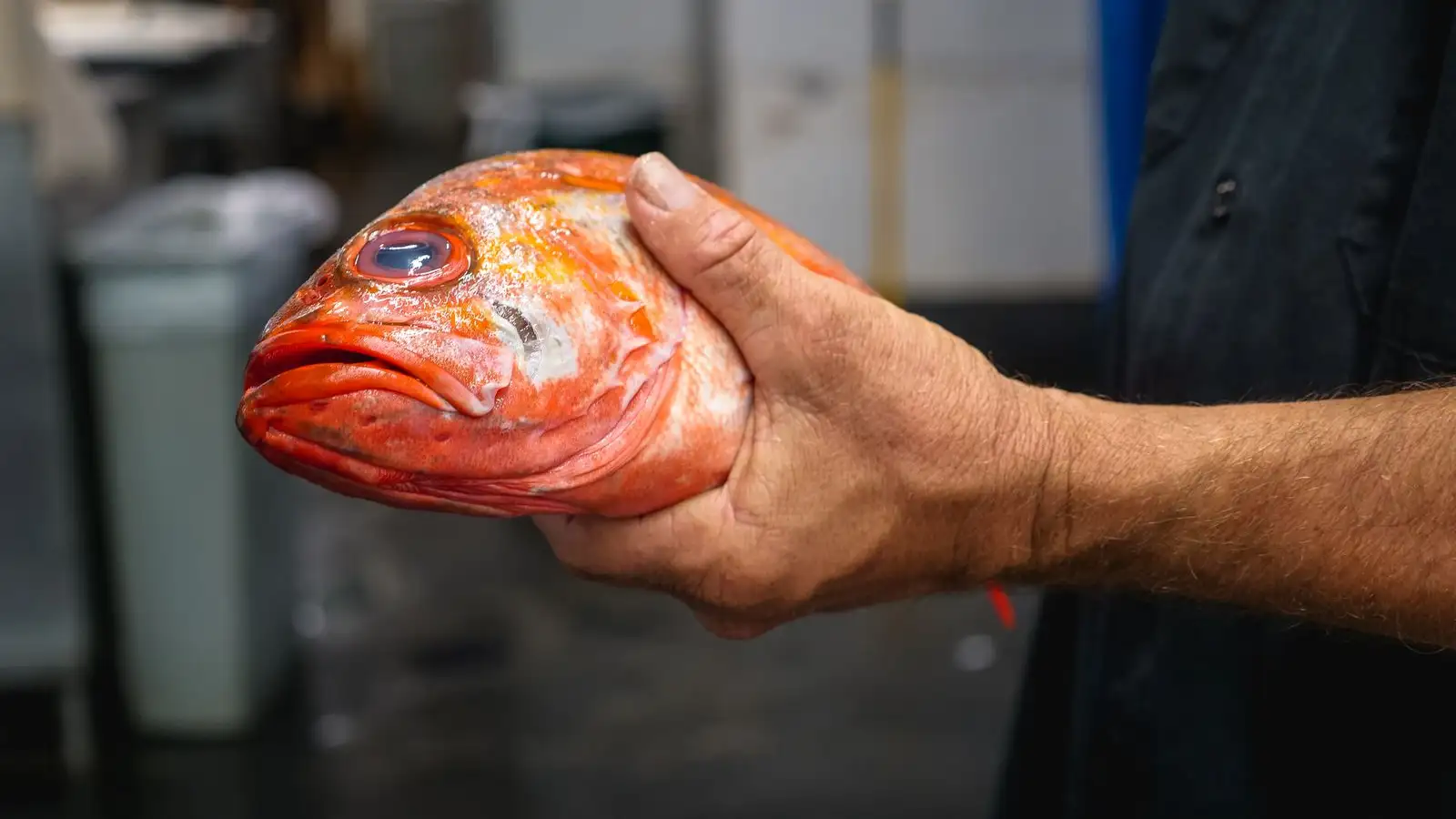
Whole fish and fillets need different cooking methods because the cut decides what sits between the heat and the flesh. A whole fish comes with its own insulation — skin, scales, a fat layer, and a skeleton that slows the heat down — so it wants ambient cooking: the oven, a covered grill, a steamer. A skin-on fillet wants a screaming-hot pan and direct contact on the skin side. A skinless fillet has nothing left to shield it, so it wants poaching, steaming, or a low, patient pan. Run all three through the same method and two of them come out wrong, and the one that survives is usually the one people expected to be hardest.
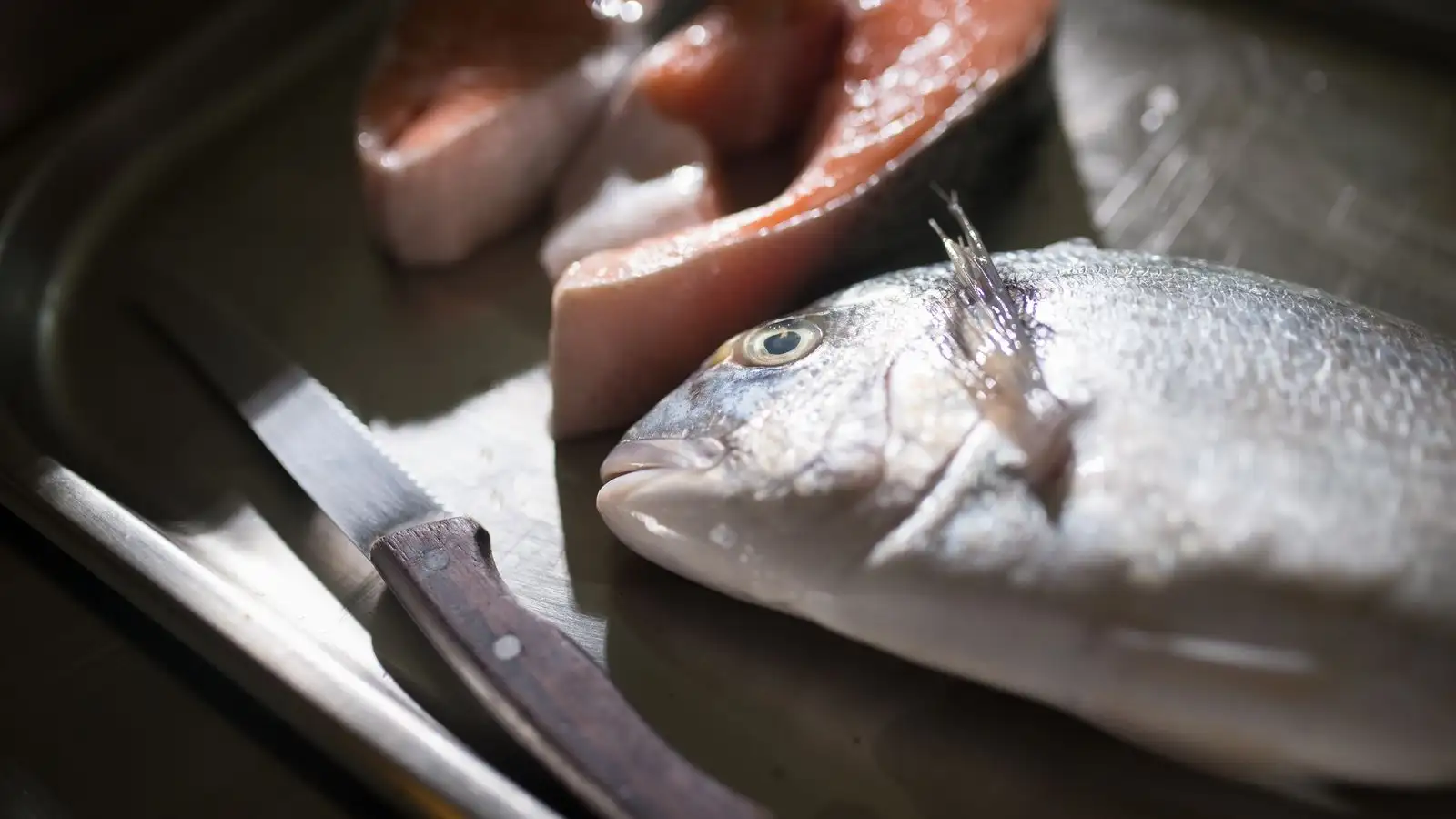
Watch it happen on my counter. There's a two-pound whole sea bass on the board, still stiff, and next to it two fillets cut from its cousin: one silver with the skin on, one bare and pale as the inside of a wrist. Three pieces of the same kind of animal. If I slide all three under the broiler for eight minutes, exactly one comes out right, and it isn't the fillet.
I know because I did that. The whole fish was gorgeous — skin blistered and salty, flesh at the bone still slipping. The skin-on fillet was edible and a little sad, its skin soft and flabby where it should have crackled. The skinless one was chalk. Not ruined in any dramatic way. Just tight and dry, the way a chicken breast goes when you look away for four minutes.
That's the whole problem on one tray. Which is why I stopped thinking in recipes and started thinking in layers.
What the whole fish already has going for it
Stand at the oven door and look at what the heat has to get through. Scales, skin, a layer of fat under the skin, then the meat, and finally the bones and the cavity. Every one of those is a delay. The outside is taking the abuse while the middle is still catching up, and that gap is exactly why a whole fish forgives a hot oven and a long-ish stay in it.
So I bake it, grill it over indirect heat, or steam it. What I don't do is lay it in a hot dry pan, because there's no contact and no point.
Two things I actually pay attention to:
The cavity. A fish stuffed tight with lemon wheels and a fist of herbs is a fish with an insulating plug in the middle. I keep it loose — a couple slices, a few stems, mostly for the smell — so heat can move through the center.
Where I probe it. Not the belly, which is thin and hits 145°F long before the rest. I go in just behind the head, above the spine, at the thickest point. That bone is the last thing to be done, so if the reading is right there, the fish is right.
On the grill, the skin will char before the center is anywhere near done. That's not a technique failure, it's the geometry. Indirect heat with the lid down, then finish the skin over the coals at the end instead of at the beginning.
Skin-on fillets: the skin is the reason you bought it
A skin-on fillet is a compromise between two surfaces. One side is armor, one side is naked, and they will never cook at the same rate. That's the entire technique.
Skin side down in a hot pan, into fat that's already shimmering. Then leave it alone. This is where people wreck it — they get nervous at thirty seconds and start nudging, and the skin tears because it hasn't rendered and released yet. It lets go when it's ready, a clean slide, and the sound changes from a hard roar to a lower crackle as the moisture cooks out. That sound is your timer.
Salt the skin and dry it hard with a paper towel first. Water is the enemy of crisp. If the surface is wet, the fish steams itself in its own juice and you get pale and rubbery instead of brown and glassy.
I sear it most of the way on the skin, then flip for thirty or forty seconds, no more. The flesh side needs almost nothing — the skin has been shielding it the whole time, so it's been cooking gently from below the entire while.
And here's the part most instructions skip: they tell you to cook skin-on salmon exactly like skin-on snapper. Salmon is fatty, mackerel is fattier, and fat buys you time. Bass and snapper are lean, so they hit opaque and blow past it fast. Same method, different clock.
Fat is a timer, not a flavor note
I use fat content to set heat. Lean fish — cod, bass, flounder, walleye — get a moderate pan and my full attention, because the window between translucent and chalk is maybe ninety seconds on a thin fillet. Fatty fish — salmon, mackerel, bluefish — will take a hotter pan and a few more minutes and still be fine, because the fat keeps the flesh from drying while the outside browns. When I see white beads of albumin squeezing out of a salmon fillet, that's not a garnish, that's the fish telling me the heat was too high or the time was too long.
Skinless fillets are where good cooks still lose fish
A skinless fillet has no armor, no fat cap on one side, and usually not much thickness. Nothing slows the heat and nothing bastes the flesh from within. Every method that depends on high, dry heat is working against you.
Which is why I poach them, steam them, or cook them low in a covered pan with a little liquid. Not because it's elegant. Because gentle heat and moisture are the only things standing between a skinless fillet and the texture of a foam packing peanut.
If I do want a sear on one — a piece of halibut, a cod cheek — the pan stays at medium, not high, and I take it out while the very center still looks faintly translucent. Carryover finishes it. On a fillet that thin, the pan is still cooking it after it's on the plate.
The flake test is a liar on thin fillets
Cook until it flakes easily with a fork is fine advice for a whole fish and terrible advice for a skinless fillet. Flaking means the connective tissue has separated, which on a big piece happens right around the moment it's done and on a thin piece happens after it's already dry. If a skinless fillet is flaking in the pan, you're late.
My cue on thin fillets is color, not structure. Opaque all the way through, no pearly center, and the flesh springs back under a finger instead of leaving a dent. On the whole fish, I trust the thermometer at the bone and I don't overthink it.
Rest it, but not the way you rest a steak
Fish needs less rest than meat — a few minutes, loosely covered, is plenty — but it does need those minutes. The heat piled up at the surface evens out into the middle and the juices stop running. A whole fish benefits most, because those bones hold heat and keep pushing it inward while it sits. Skinless fillets benefit least and cool fastest, so thirty seconds on the board isn't a rest, it's just a delay.
One thing I had to unlearn: acid. A quick dip in lemon and oil before cooking is fine. A half-hour marinade in citrus or vinegar starts curing the surface — the outside firms up and turns chalky while the inside is untouched, and no amount of butter fixes that. Fifteen or twenty minutes, tops, and only on the thicker cuts.
Matching it up in one pass
Whole fish: oven, covered grill, or steamer. Loose cavity, skin scored, probe at the thickest point behind the head to 145°F.
Skin-on fillets: hot pan, skin down, in shimmering fat, and don't touch it until it releases. Sear mostly on the skin, flip briefly, salt and dry the skin first.
Skinless fillets: poach, steam, or medium-low pan with a lid. Pull early, rest a minute, trust color over flake.
Same fish. Three different answers. Once I started choosing the method by what was actually between the heat and the meat, I stopped ruining the expensive one.