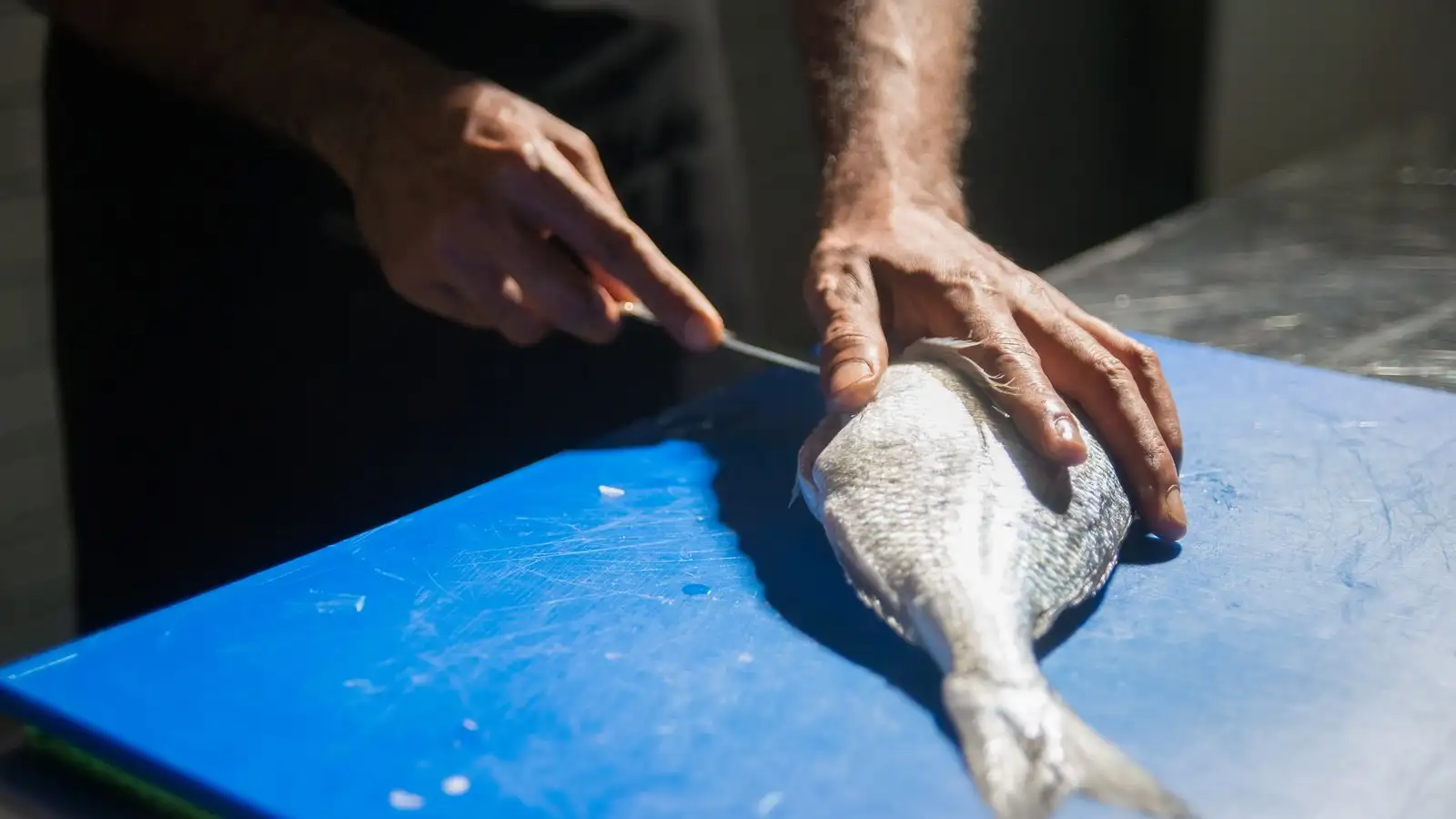
Fish held between 32°F and 40°F from the moment it leaves the water is what decides how it eats two days later, and everything you do in the kitchen is downstream of that number. Ice on the fish, not ice packs beside the fish. Meltwater drained, not pooling. Whole gutted fish kept whole when you have the choice. A thaw that happens in the refrigerator instead of on the counter. Get the cold chain right and the cooking step starts from a fair baseline; get it wrong and no amount of butter fixes it.
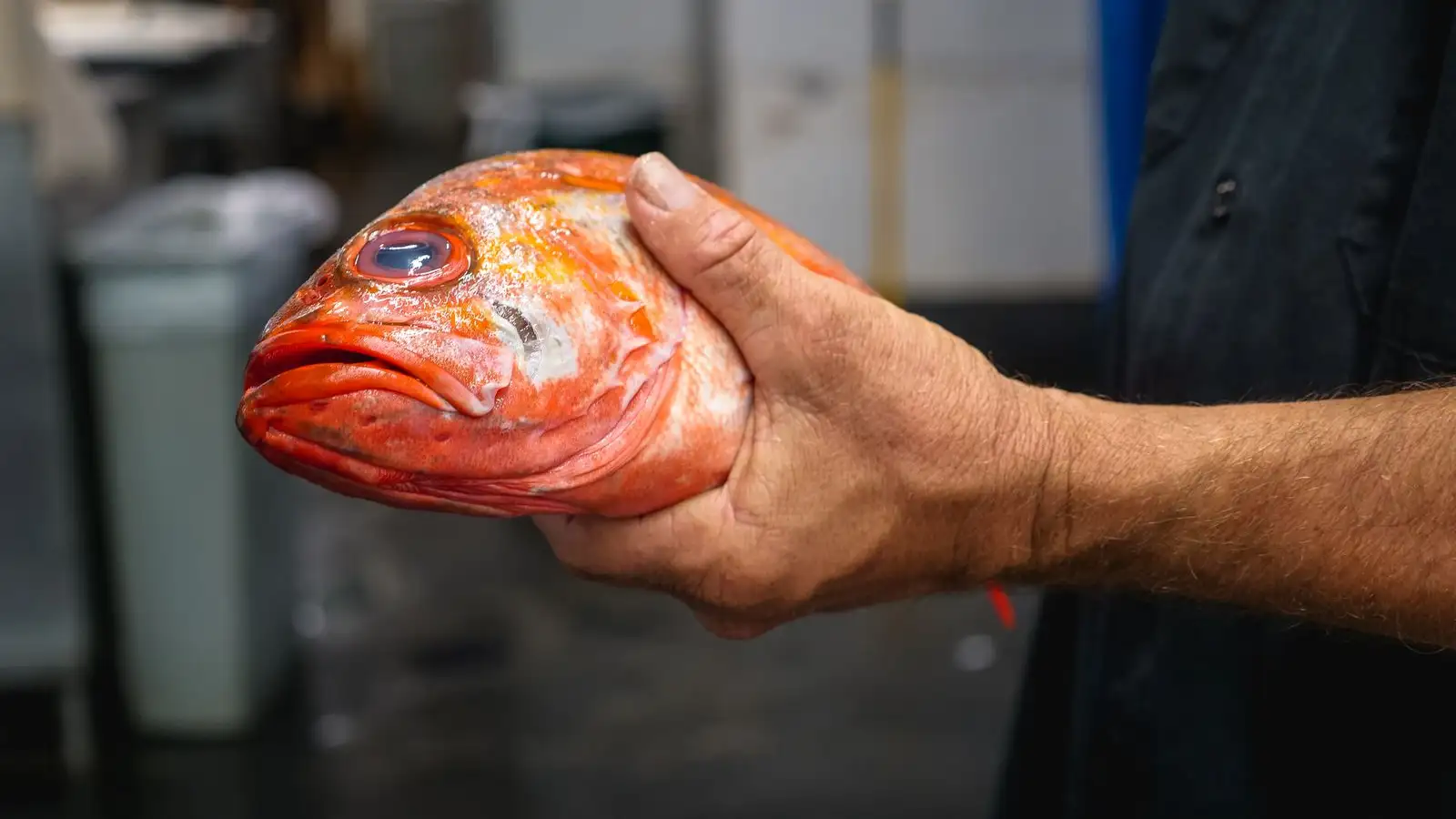
I used to think a cooler was a cooler. Fill it, drop in a couple of frozen bottles, lay the fish on top, drive home. Then one July afternoon I popped the lid on the tailgate and saw four rainbows curled in an inch of pink water. They were still cold to the touch. They were not still good. The meat had gone soft and pale, and when I fried them that night they tasted like the cooler smelled. Nothing was wrong with my heat, my pan, or my seasoning. The problem had happened hours earlier, and I hadn't been there for it.
That's the part nobody tells you. People argue about cast iron versus carbon steel, about whether to soak walleye in buttermilk, about the exact second to pull a fillet off the heat. All of that matters less than the temperature of the fish when it hit the pan. The cold chain is the whole game, and it starts before you've put the rod down.
The first ten minutes decide the next two days
There's a reason commercial boats bleed and chill fish immediately, and it isn't tradition. A fish that dies slowly and warm in the bottom of a livewell is already losing. The muscle is still working, the body temperature is still close to the water it came out of, and the bacteria that live on the skin and in the gills have nothing stopping them.
So bleed it. A quick cut at the gills or through the throat latch, then into cold water. For most freshwater fish, a slurry of ice and water is the fastest thing you have. Ice alone chills by contact, and the air gaps between cubes slow it down. Water alone is a poor conductor of heat the way a bathtub is. Ice and water together, a thick slurry, enough ice that it doesn't all melt, pulls the core temperature down fast and holds it there.
The catch is that a slurry is a bath, and a bath is water. Whole fish with skin and scales on can sit in it for a while without much harm. Fillets cannot. If you're going to leave fish in a slurry for more than a short stretch, make it whole fish. Then get it out and let it drain.
Ice packs are not ice
This is where most coolers fail. A cooler packed with frozen gel packs and no loose ice is a picnic cooler, not a fish cooler. Gel packs are built not to leak, which means they cool through plastic and air. That's fine for sandwiches. It's slow and uneven for a fish you want sitting at 33°F.
What you want is ice in contact with the fish, the fish bedded down into it, more ice on top, and a way for the melt to get away from the flesh.
Block ice versus cubes is a real tradeoff, not a preference. Cubes have more surface area, so they chill faster and melt faster. A block melts slowly and holds a low temperature for hours, which is what you want on a long drive or a hot day. If you can do both, do both: a layer of cubes to knock the temperature down, a block on top to keep it there for the ride home.
A kill bag built for the purpose does the same job better than a hard cooler in one specific way. It conforms to the fish and the ice, so there's less air space. Air is insulation. A half-full cooler with two fish rattling around in it is mostly air, and mostly air is why your ice is gone by the time you reach the ramp.
Drain the water, or the water wins
Meltwater is the quiet killer. A fish sitting in it is sitting in a bath that's warming faster than the ice above it, and the flesh is taking on water the way a sponge does. Flavor goes dilute, texture goes mushy, and the outside of the fillet turns that pale, washed-out gray nobody wants on a plate.
Three fixes, and I've used all of them. Tip the cooler and pull the drain plug whenever you stop. Put the fish on a rack or in a basket so it sits above the water instead of in it. Or line the bottom with a bag of ice you can lift out and dump.
The same rule applies in the refrigerator at home. Fish on ice, yes, but in a colander or on a rack over a pan, so the melt drains away. A fillet sitting in a shallow dish of its own melt for a day is a fillet you'll regret.
Keep it whole when you can
Skin and scales are packaging. They're not perfect, but they slow moisture loss, they block oxygen, and they keep the flesh from sitting in direct contact with meltwater. A whole gutted fish, properly iced, will hold quality noticeably longer than the same fish cut into fillets.
That means the gutting matters more than it seems. The viscera is warm, wet, and full of the enzymes and bacteria that start the whole breakdown process. Get it out, rinse the cavity, get the fish cold. Leave the head and the skin on if you're not eating it tonight.
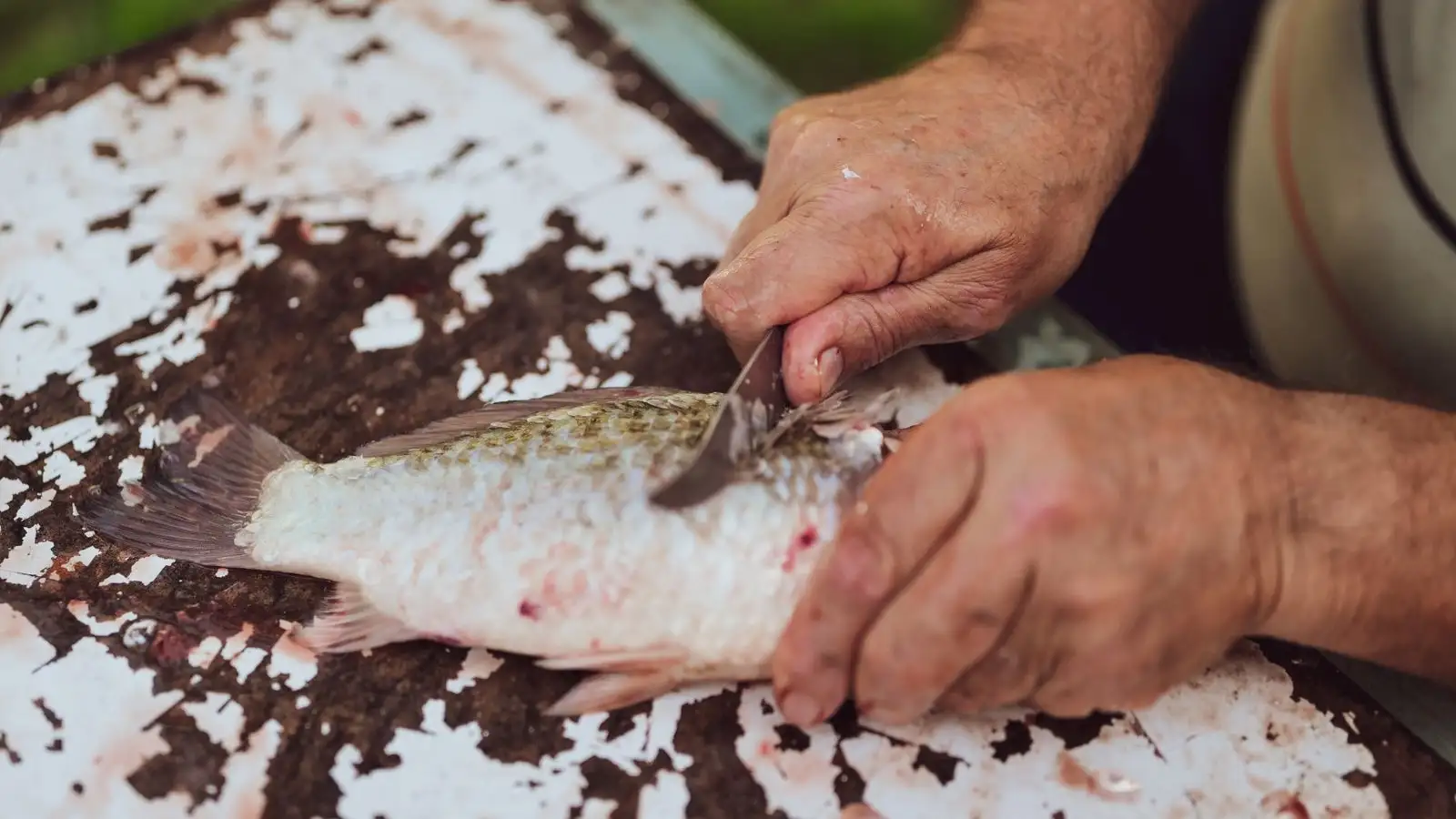
When you do fillet, and usually you will, because fillets are what you cook, dry them. Not sort of dry. Pat them with paper towel until the towel comes away barely damp, then wrap them tight. Plastic wrap pressed directly against the flesh, then a bag or paper around that. The enemy is air. Air dries the surface, and oxygen turns the fats in fish rancid faster than almost anything else in your kitchen.
Freezer work is the same idea at a lower number. A freezer running at 0°F or below stops bacterial growth almost completely and slows the enzymes that cause spoilage. It does not kill the bacteria already there. This is the part people get backwards. Freezing is a pause button, not a reset button. A fish that sat warm for four hours before it went into the freezer is still a fish that sat warm for four hours. The freezer just holds it in that condition.
Which is why you label things. Write the date on the bag or the wrap with a marker, because months from now a frosted fillet looks exactly like every other frosted fillet, and you will not remember. First in, first out. The freezer isn't storage; it's a queue.
Thawing is part of the cold chain, not the end of it
Take it out of the freezer and put it in the refrigerator. Overnight, in a dish, on the bottom shelf where the temperature runs coldest. That's it. It's slow and boring and it's the only method that keeps the whole piece in the safe range the entire time.
The counter is the wrong answer because of geometry. A frozen fillet on a countertop has a thin outer layer that warms into the range where bacteria multiply long before the center has thawed at all. You're incubating the outside of the fish while the inside is still a brick.
If you're in a hurry, cold water in a sealed bag, changing the water as it warms. Faster than the fridge, still cold. What you don't want is warm water, and you really don't want a fillet floating bare in the sink.
What actually earns its place in the truck
You don't need much. A cooler with a drain plug, a bag of cubes, and a block if the drive is long is enough for a day trip. Add a rack or a basket so nothing sits in the melt. Keep a marker in the truck for labeling.
If you fish saltwater, in heat, or on trips where the fish won't be cleaned until you get home, a kill bag and block ice earn their keep and then some. If you're keeping a couple of panfish for dinner tonight, a slurry and a drained cooler is plenty and you should not overthink it.
The honest version is that the cold chain is a series of small decisions, and each one is cheap if you make it early and expensive if you make it late. Ice is cheap at the dock. It is not available forty minutes down the road. A drained cooler takes five seconds at a gas station. A waterlogged limit takes a whole afternoon of fishing and gives you back fish you'll end up breading heavily to cover for.
I've cooked fish that went through this the right way, and I've cooked fish that didn't. Same lake, same species, same pan, same butter. One of them tastes like the lake. The other one tastes like a lesson. The difference is a number, and the number is between 32 and 40.