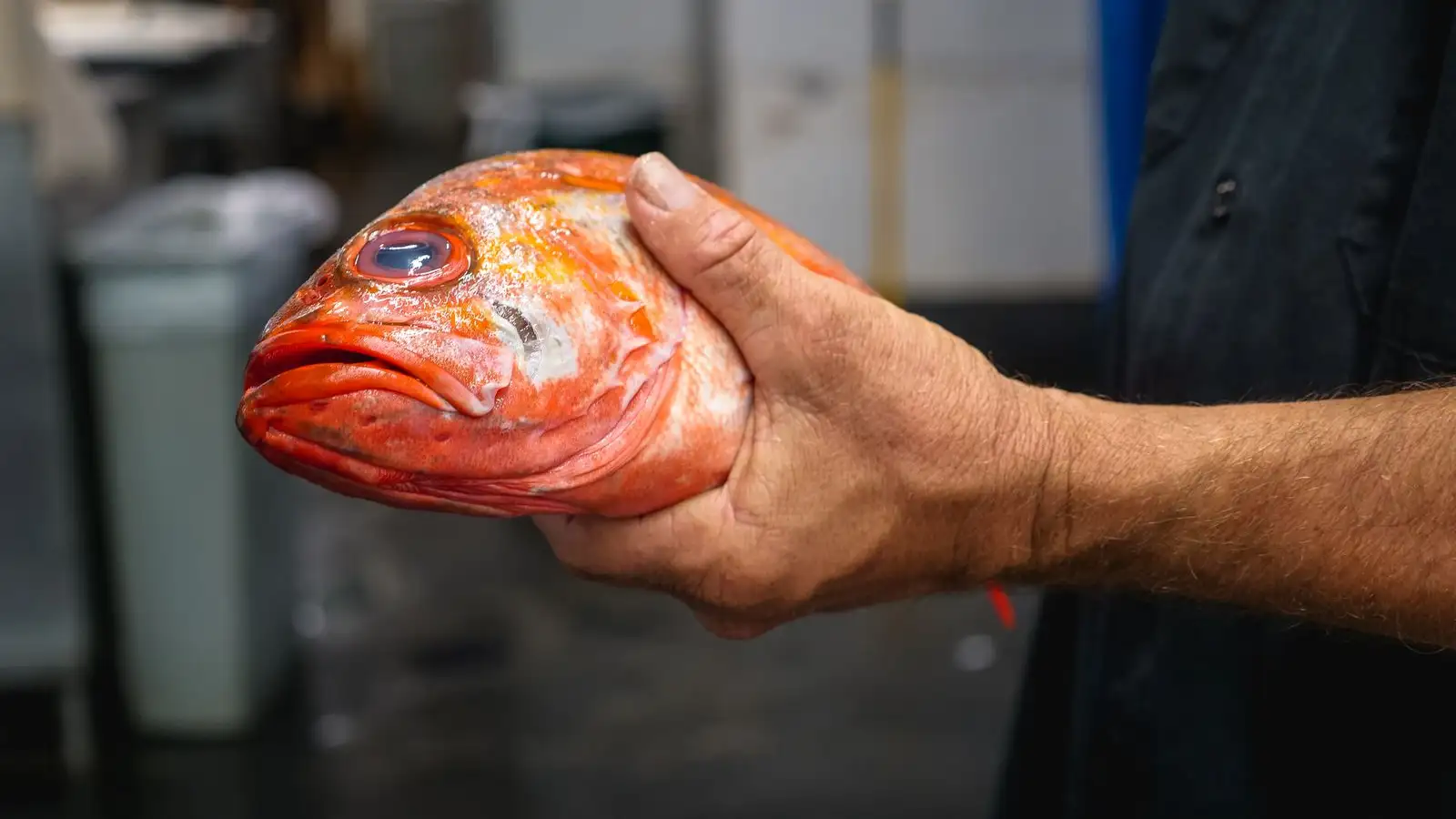
Strong-flavored fish get tamed in the order the problem shows up: bleed and ice the fish the moment it's landed, cut out the blood line, the skin, and the dark fat before anything else touches the meat, soak the trimmed fillets in milk or lightly salted water for about half an hour, then cook them fast and hot with smoke, garlic, and pepper instead of poaching them pale. Trim what causes the taste, shorten what dilutes it, add what carries the rest.
Two different things are going on when somebody at the table says a fish tastes fishy, and they get fixed in different places. One is blood and fat that has turned — that's a clock problem that starts the second the fish dies, and it's why an oily fish handled badly is beyond saving by the time it reaches your kitchen. The other is mud, a diet problem the fish was carrying around in its flesh long before you hooked it. Same complaint at the table, two entirely different jobs at the sink. Most of the advice floating around collapses them into one, which is why people soak a fillet that still has the red stripe in it and wonder why nothing changed.
What the sink actually shows you
Put a catfish fillet on a wet board and look at it before you do anything. There's a dark red band running the length of it, slightly off center, sometimes brownish, sometimes nearly maroon. That's the lateral line. It's the blood-rich, fat-rich seam, and it is where the muddy taste concentrates. You can find it with a thumbnail before you can see it — drag your thumb down the middle of the fillet and you'll feel the change in texture right there.
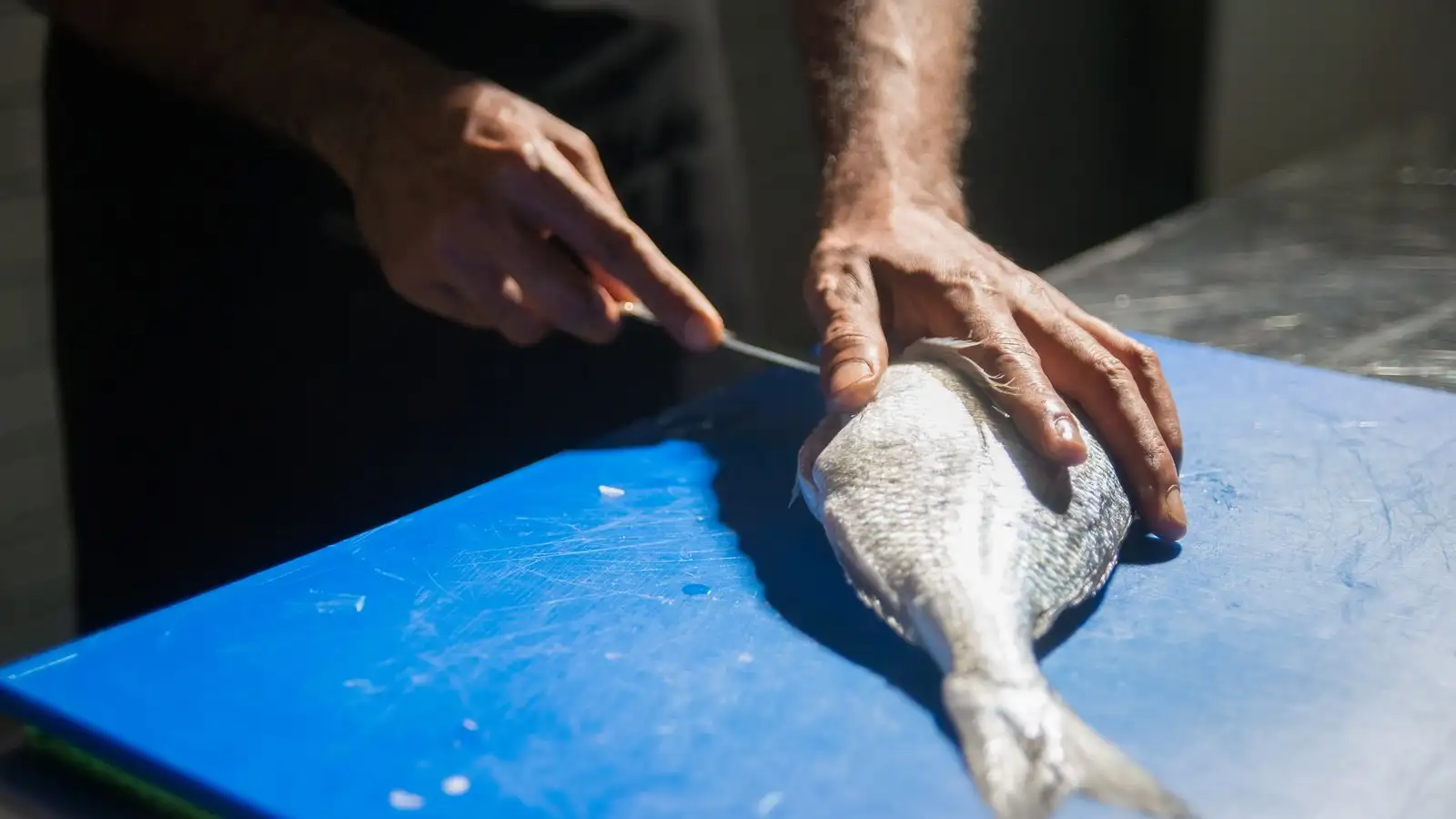
Cut that strip out. Not scrape it, not rinse it. Cut it. I run the knife down either side of the seam and lift the whole band out in one piece, and what's left looks like a cleaner, paler fillet that a picky eater will actually recognize as fish. Same story on carp, where the seam is thicker and the belly flap carries a band of dark fat that should go in the scrap bowl with it. That bowl of red trimmings is the whole lesson, honestly. Everything else is finishing work.
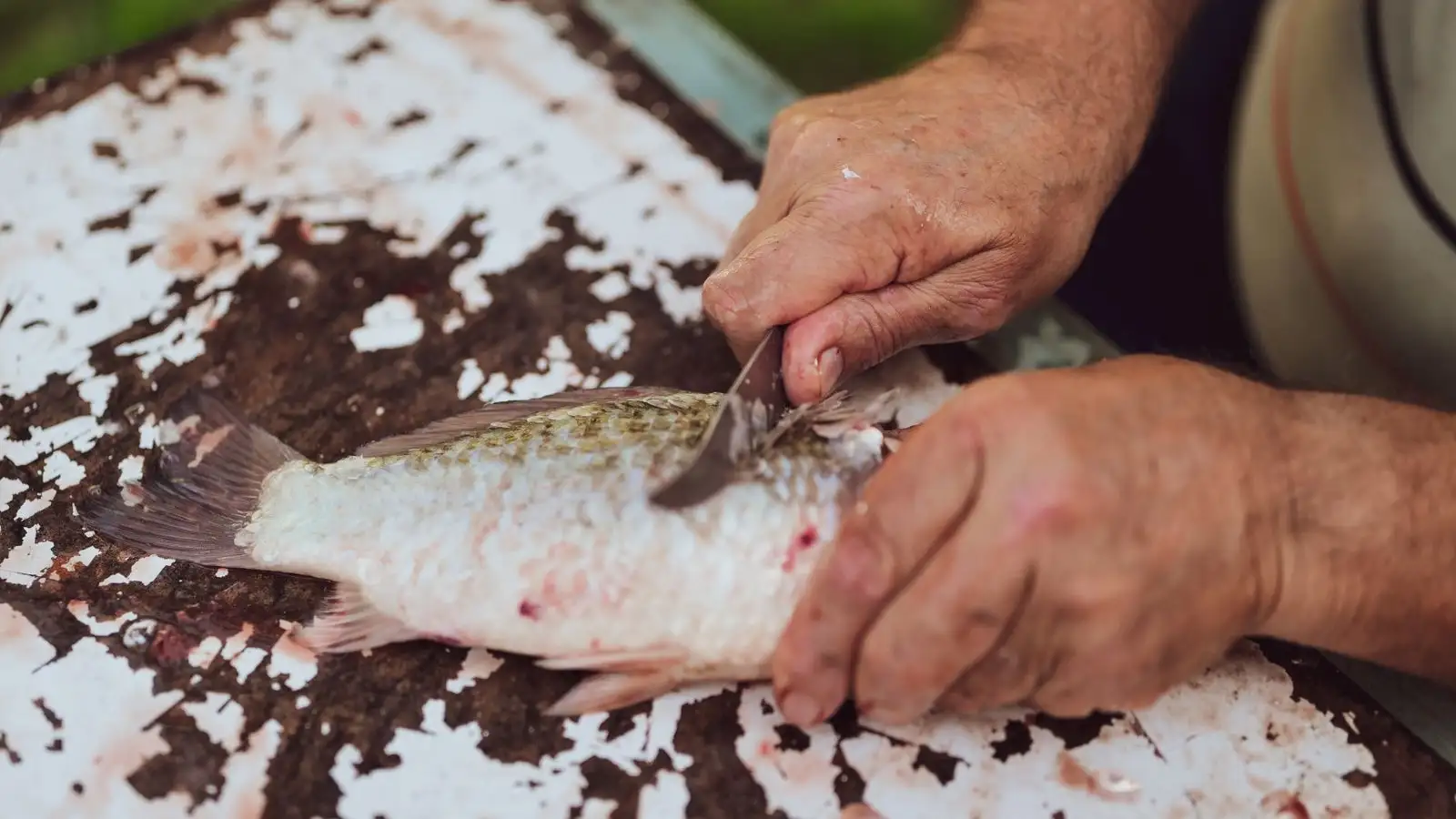
Skin comes off bottom feeders. Catfish, carp, the whole muddy crew. The skin holds flavor you're not going to win an argument with, and it holds it through cooking. Some people scale a carp and fight with it; skinning takes ninety seconds and settles it.
On the muddy ones, purge first if you can
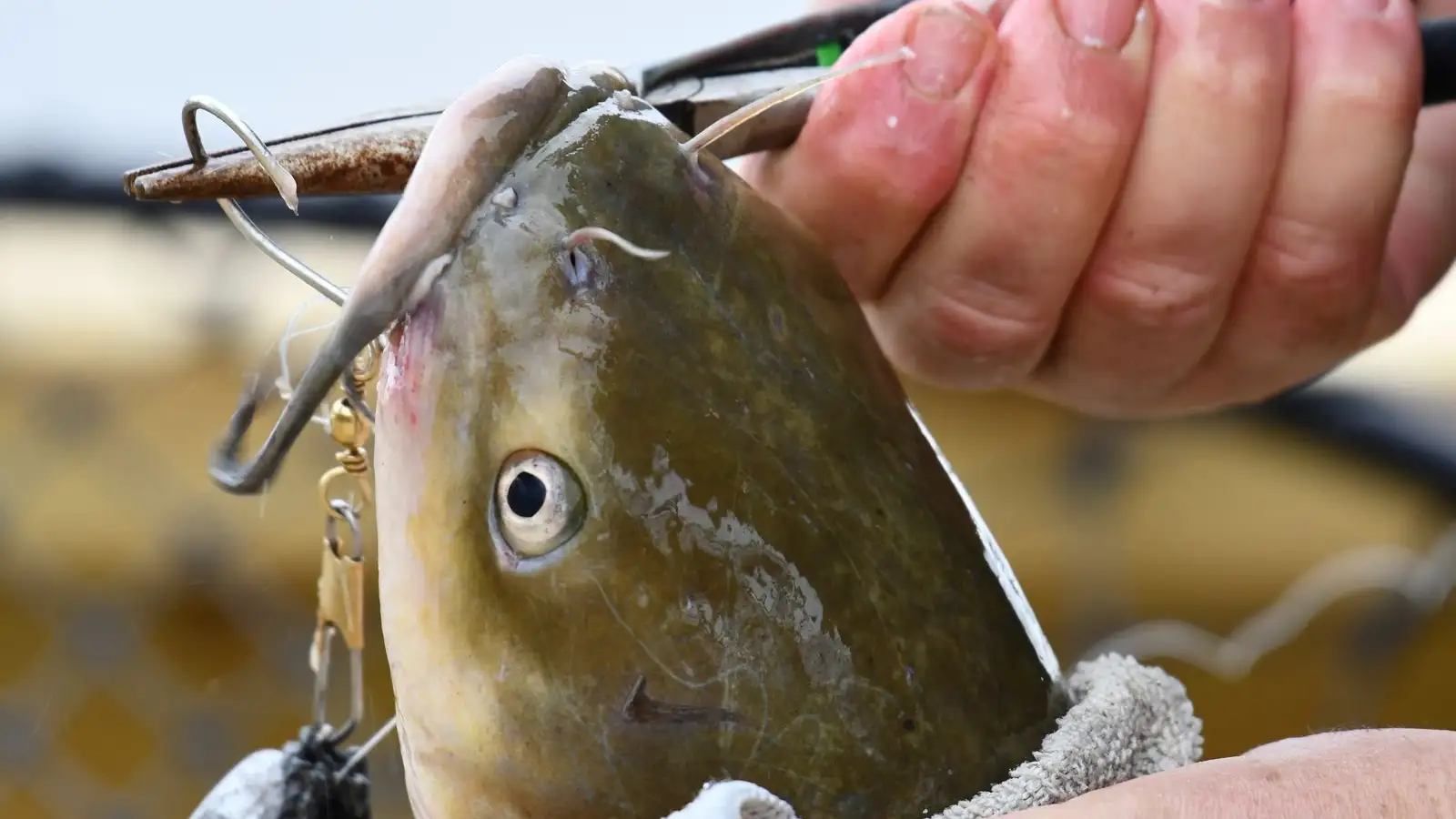
If the fish is still alive, this is the one thing you can do that no amount of seasoning will duplicate. Clean, cool, aerated water in the dark, a couple of days, changing it out. A stock tank with a bubbler, or a big cooler with the hose trickling. It's an old method because it works — the fish flushes its gut and the mud taste in the flesh fades. What it won't do is turn a big old warm-pond carp into walleye. It takes the edge off. That's the honest version of the promise.
Oily fish are a one-way door
Mackerel, bluefish, big Spanish — the fat is the point and the fat is the enemy. It starts going rancid fast, and once it turns, there is no soak, no marinade, no wood smoke that brings it back. So this is a bleeding and icing job, done on the boat or on the bank, within minutes.
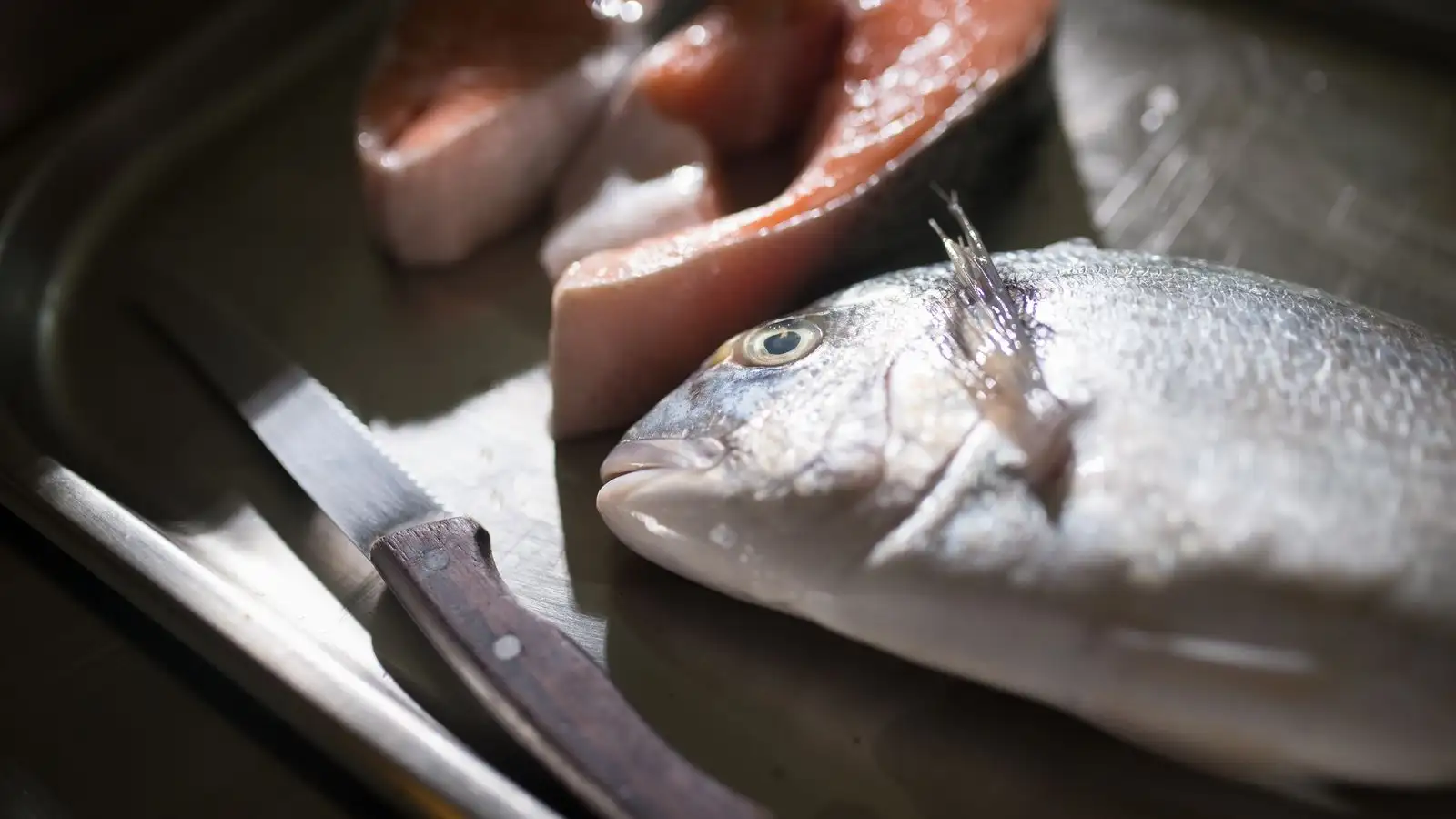
Cut the gills or the throat and drop the fish in an ice slurry, not on ice, in it. The blood leaves, the body cools, the fat stays sweet. I've eaten mackerel that went straight into a slurry and mackerel that sat in a bucket for two hours, and they might as well be different species. If you're buying instead of catching, this is why you look at the fish's belly and eyes and not just the date on the tag — bright, clean, no rust-brown streaks along the flank.
With those fish you keep the dark meat, mostly. You trim the blood line and the belly fat if it's strong, but you don't go at it like a carp. Different animal, different job.
Soaking is a rinse, not a marinade
Half an hour. Cold. In the fridge. Whole milk is the traditional bath; lightly salted water does nearly the same work for less money, roughly a tablespoon of salt to a quart, and it's what I use most of the time now. What both do is draw blood and surface fat out of the trimmed flesh — you'll see the liquid go pink and the fillet go from gray-pink to a cleaner white.
What they don't do is fix a fillet you didn't trim. Milk over a red stripe is perfume on a problem.
And longer is not better. Past about an hour, the flesh starts taking on water, and a waterlogged fillet steams in the pan instead of browning, goes soft in the middle, and no amount of pepper rescues that texture. Pull them out, pat them dry with paper towels, and let them sit uncovered in the fridge for a few minutes while the pan heats. Dry surface, hot pan, crust.
Skip the lemon in the soak. I did it for years because every recipe said so. Acid doesn't pull anything out; it covers, and while it's sitting there it's firming and tightening the outside of the fish, so the fillet goes chalky at the edges before it ever hits heat. Lemon belongs at the table, squeezed over the crust, where it brightens without cooking the fish twice.
Cook it like you mean it
Strong-flavored fish wants dry heat and assertive company. Smoke, a hot grill, a screaming oven with a crust on it. Fat carries smoke, which is why oily fish and a wood fire get along so well — the thing that made the fish difficult is the thing that takes the flavor.
Season before it cooks, not after. Garlic, coarse black pepper, smoked paprika, thyme, cumin if it's a carp and you're leaning that direction. Salt early enough to draw moisture to the surface and let it dry. Don't poach an oily fish. Poaching keeps everything in the pan that you spent the morning trying to get out.
And give it something sharp on the plate. Vinegary slaw, pickled onion, hot sauce, a lemon wedge. Not to hide the fish — to cut the fat between bites so the third forkful tastes as good as the first.
One more thing about family dinner, since that's the actual goal. Serve it in smaller portions, crust side up, with a fork and no ceremony, and don't rename it. A kid who's told it's chicken and finds out otherwise stops trusting the kitchen, and you've traded one dinner for a year of arguments.
What won't work
Some fish don't need any of this and you'll ruin them by trying. A fresh walleye or a small trout goes in the pan plain and comes out better than anything in this article. And there's a floor on the muddy ones — a huge, old, warm-water bottom feeder is going to taste like where it lived no matter how clean your trim is. If you've purged it, trimmed it, soaked it, and it still smells like the pond bottom, that's information. Smoke it hard, make dip out of it, or throw it back next time.