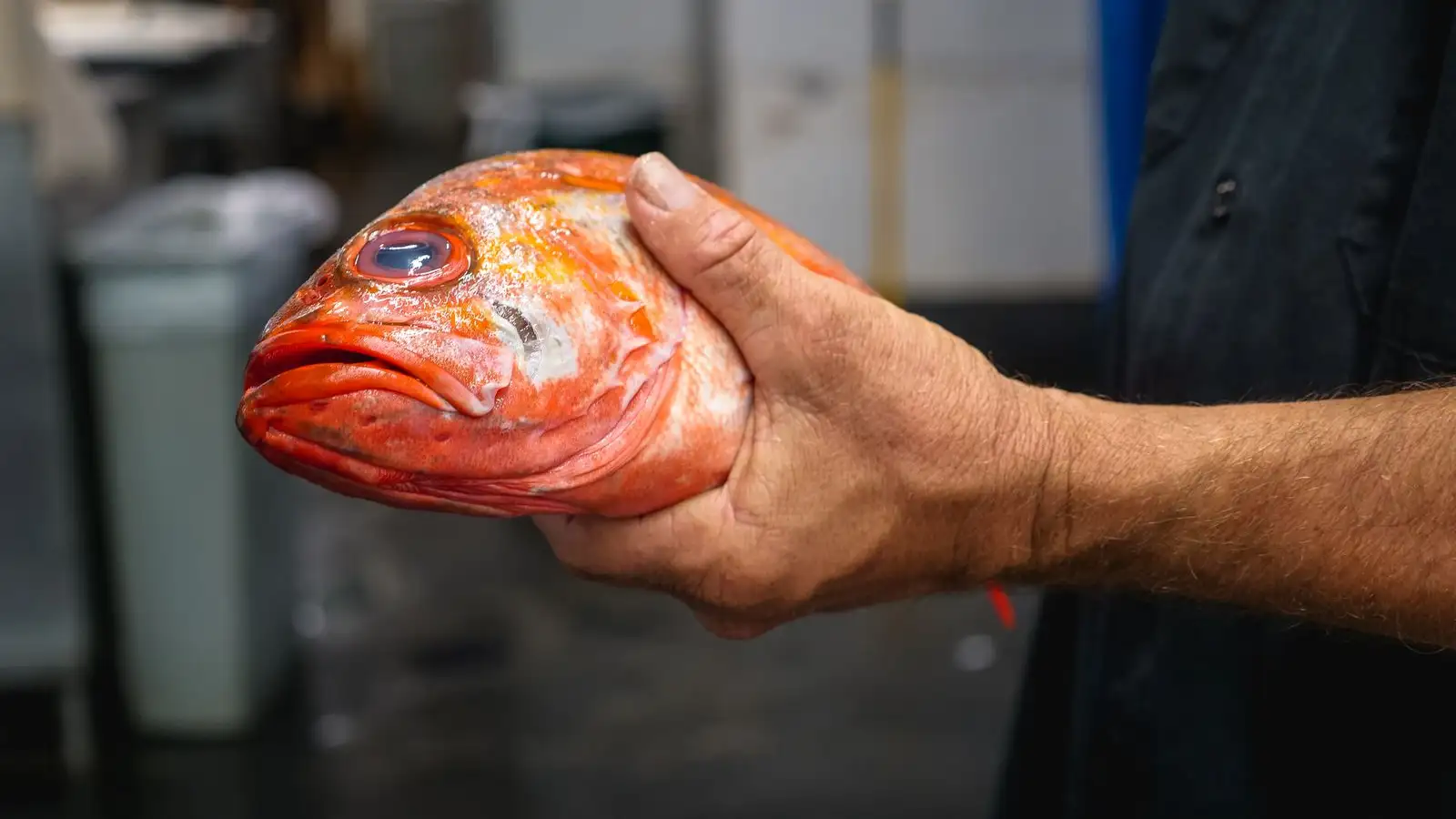
Bleed the fish and gut it on the bank, within the first five minutes after it leaves the water, because that window is what actually decides how the flesh tastes later. Nothing downstream of it—the ice, the knife work, the vacuum sealer—can pull flavor out of meat that was already going wrong, and nothing downstream can put back what a lazy half hour in a bucket takes away.
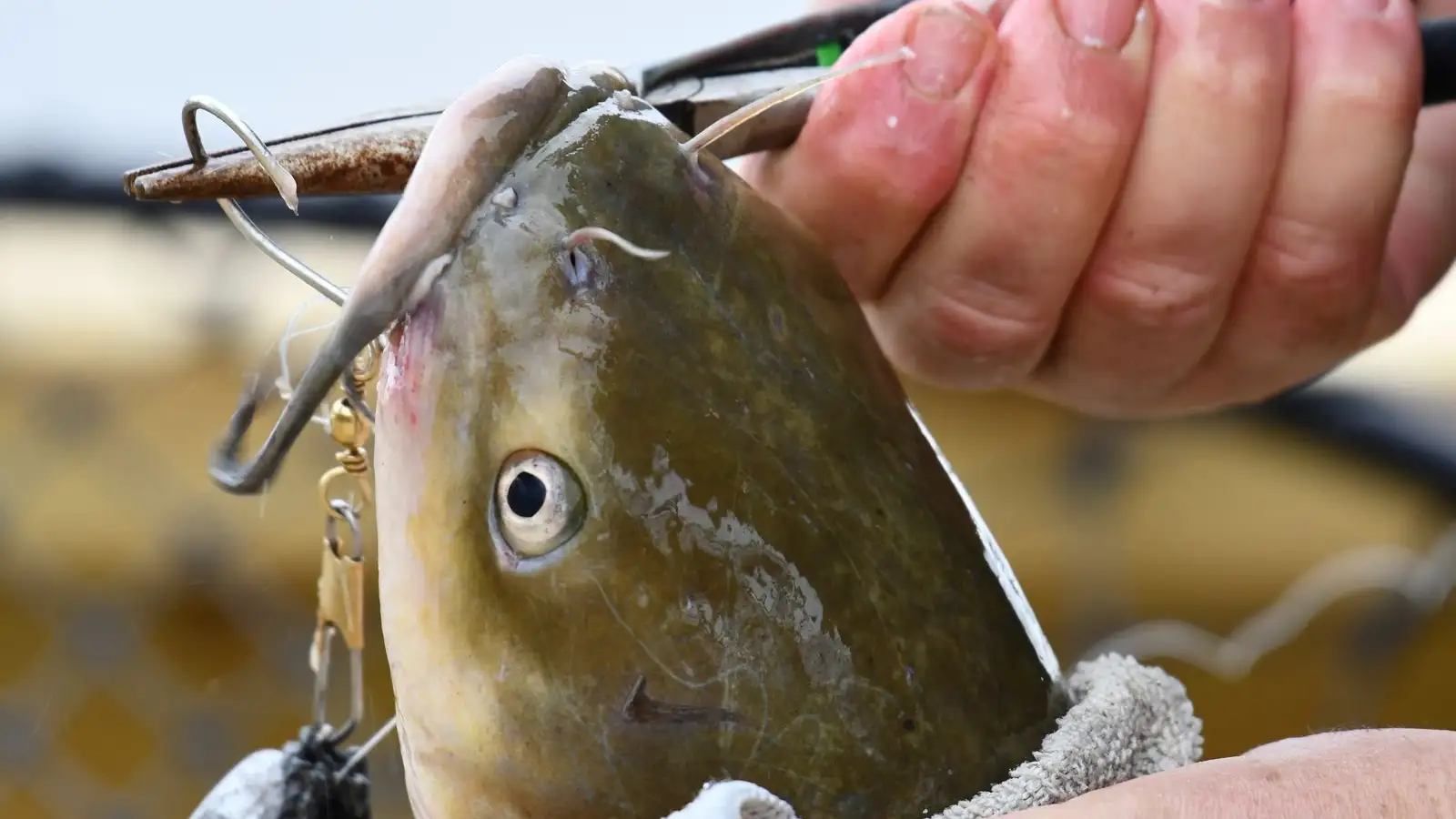
I want you to hold a fish that's just come out of cold water. Say a foot-long brook trout, orange belly, spots still wet. It's cool in your hand, but it is not as cold as the creek was. There's a degree or two of warmth sitting in there, and that small gap is the clock. Everything you are about to do is an argument with that warmth.
You don't need much. A thin blade that is actually sharp, a patch of shade, and water moving past your feet. That's the whole kit. You're not making dinner out there. You're stopping the clock, and then you'll make dinner at home with something worth cooking.
The cut that does the real work
Turn the fish belly-up, head toward you, and put your thumb behind the pectoral fin so it settles. The knife goes in under the jaw, into the soft hollow where the two gill plates meet. One short push, a quarter inch or so, angled up and out. Then open it through the gills on both sides. That's it. You're not filleting anything. You are cutting a drain.
The blood that comes out is dark, almost maroon. Hold the fish head-down in the current and let it run. What you're watching for is the color shift. Dark venous blood first, then a thinner, pinker runoff that looks like creek water with a tint in it. When the runoff goes pale, the fish has bled out. Ten to twenty seconds in cold moving water, longer for a bigger fish or slack water.
Something I had to learn by wasting fish: the bleed only works while the heart is still beating. Once a fish has been dead and stiff for ten minutes, the blood has already started settling into the tissue, and you're just making cuts in a body. You can still gut it. You can't really bleed it. That's why the bank matters and the kitchen counter doesn't.
A fish bled properly has almost no blood left in the muscle. Blood in muscle is where the metallic, muddy, vaguely sour taste comes from. It isn't the meat. It's the blood in the meat, and it's the single biggest variable you control.
Open the belly, but only through the skin
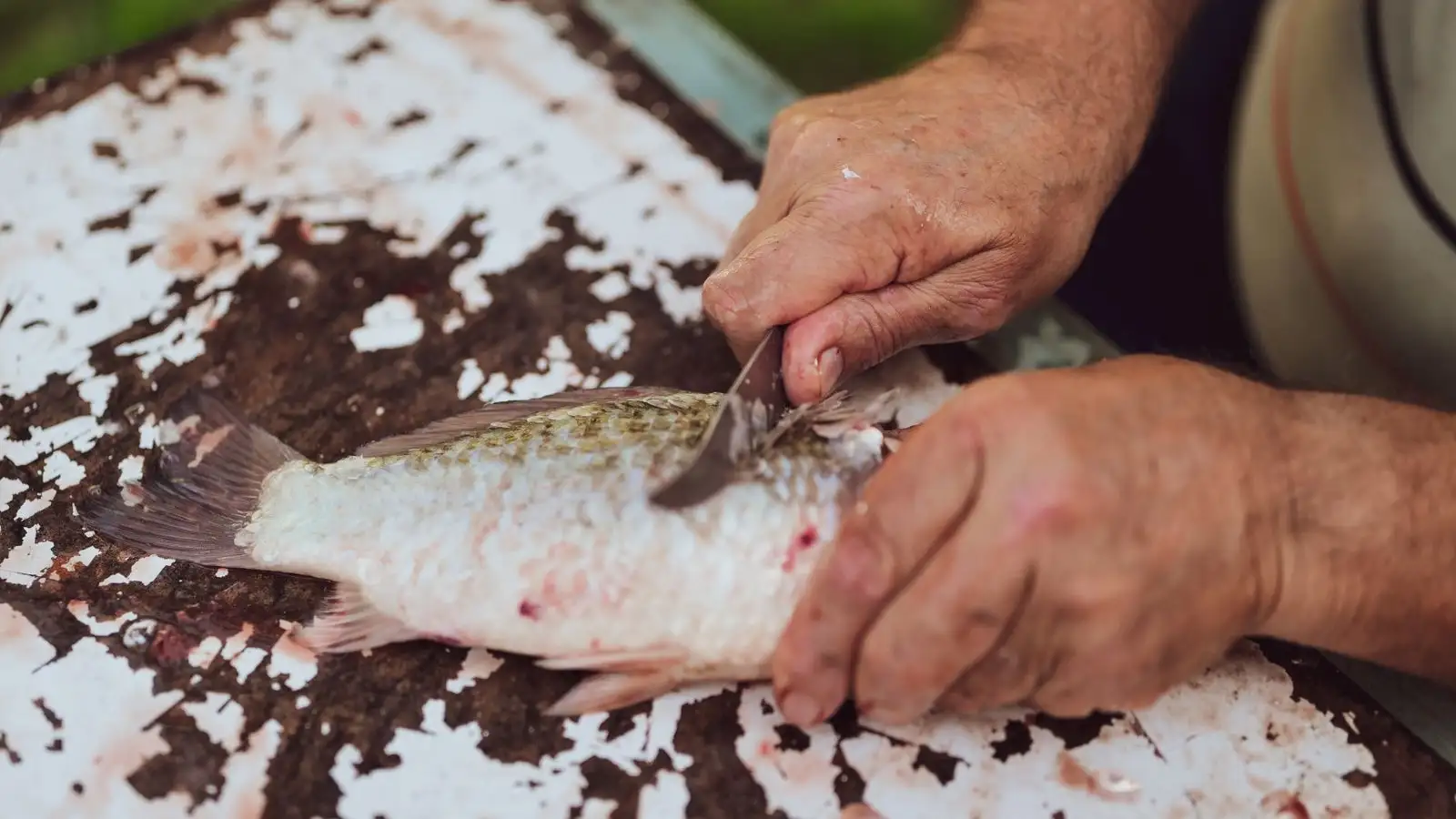
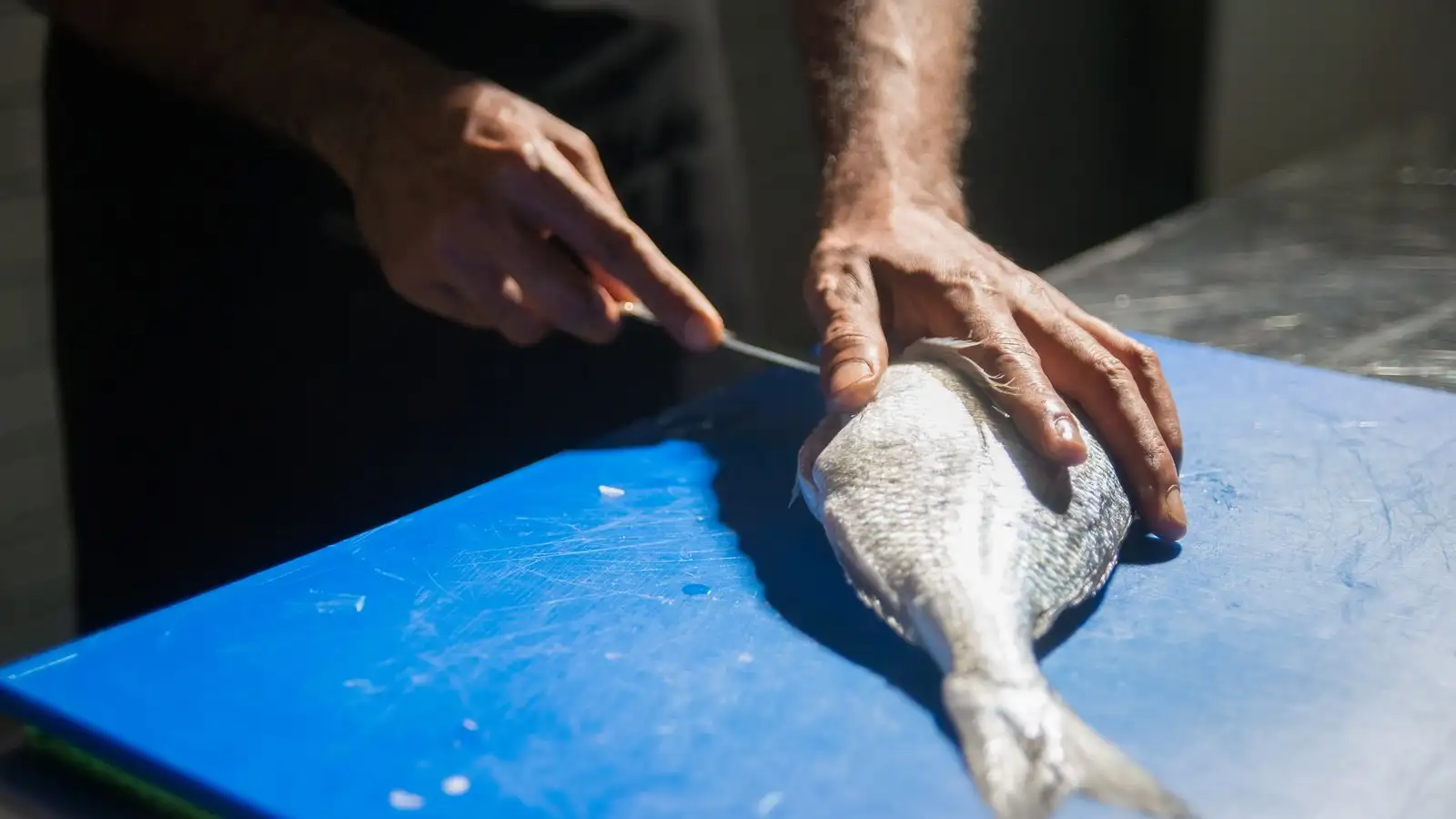
Now the belly. Slide the tip—only the tip—in at the vent and draw it forward to the gills. Shallow. You want to part the skin, not plow through the guts. A blade buried to the spine in a small trout will nick the bile sac, and bile is bitter enough that you'll taste it in the fillet no matter how well you rinse.
The viscera comes out warm. That warmth is the point: digestive enzymes in a gut cavity keep working after death, and they work fastest while the fish is still warm. Leave them in for two hours on a summer afternoon and the belly meat starts to go soft and sour before the rest of the fish shows any sign of trouble. That's the meat closest to the bone on the fillet you were most looking forward to.
Most of the contents will come out in one pull if you grab the gills and draw them back toward the tail. Then look along the spine—there's a dark line of kidney tissue sitting in the groove under the backbone. Thumbnail it out. It's the last thing holding onto blood and bacteria in there.
Rinse it. Cold, clean, and not the muddy water at your feet if you can help it. A few feet upstream is fine. If you're on saltwater, a bucket of clean seawater beats dunking it in the slick at the dock. You're rinsing the cavity, not soaking the fish. Thirty seconds and you're done.
Leave the skin on. It's a lid. It keeps dirt and grit off the flesh, holds the slime layer as a barrier, and stops the surface from drying and going tacky while the fish waits in the cooler. You'll take the skin off at home, with a board under it and a light that's actually good.
Shade, then cold, in that order
Everything above buys you time. Shade and ice are what spend it well.
Do the work in the shade if there's any to be had—under a cut bank, under the alders, on the lee side of a boulder. A gutted fish in direct sun on a July gravel bar is losing ground faster than you'd think. Gutting reduces the bacterial load dramatically, but it doesn't make the fish cold. Those are two different problems and only one of them is solved by the knife.
If you carry a cooler, an ice slurry is better than loose cubes. Ice water gets into the body cavity and pulls the core temperature down fast; cubes piled around a fish leave air gaps. I've also had plenty of days where the cooler stayed in the truck and the fish rode home in a wet burlap sack in the shade of a tailgate. That's not ideal. It's still a long way ahead of a fish sitting in a plastic bucket in the sun.
This is triage, not processing
Field dressing gets confused with cleaning. It isn't. You are not producing a finished product on the bank. You are removing the two things that ruin a fish fastest—blood and gut contents—and then getting it cold. The final clean, the fillet, the trim, all of that happens later on a board.
Strong-flavored, oily fish are where this stops being a preference and becomes close to mandatory. Mackerel, bluefish, bonito, anything with dark meat along the lateral line. Their blood goes rancid quickly, and a mackerel that wasn't bled can turn in the time it takes to drive home. For those, the gill cut the second the fish is in the boat isn't optional.
Where this falls apart
I won't pretend it's universal. In August, pulling largemouth out of bathwater, bleeding and gutting helps but the deck is stacked against you—the fish came out of water that was already warm, and the flesh was already softening before it hit your hand. There, the priority flips: get it on ice immediately, whole, and deal with the guts later. A whole fish on ice beats a gutted fish in the sun every single time. If you can't do it properly, do the next best thing rather than the half-measure.
And if you're eating within the hour—a shore lunch on a small stream—the calculus is different. You can skip the cooler. You still don't skip the bleed. That's the one step that has no substitute at any point in the process.
Ninety seconds on the bank. That's what all of this costs you. The same ninety seconds at the kitchen sink, plus the two hours of waiting in between, is what everyone else pays—and they pay it with a fish that's already started to turn. I know which one I'd rather eat.