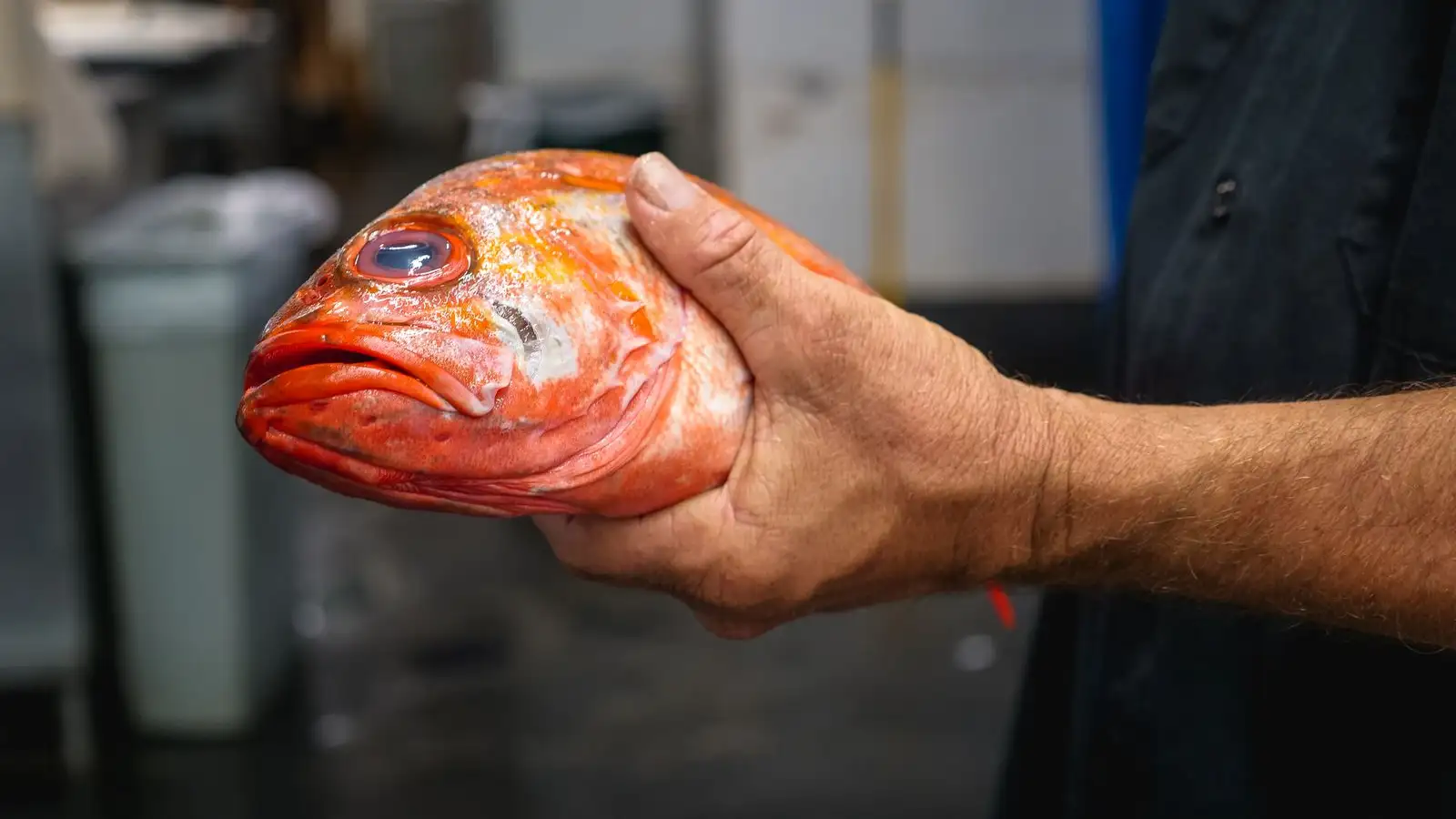
A fish is at its best in the first few minutes after you land it, and everything you do after that is an attempt to hold that line. Bleed it in moving water, get it onto ice fast, dress it before rigor mortis stiffens the muscle, hold the flesh between 32 and 40 degrees Fahrenheit, then choose the cut and the heat that suit the species. Those are not five tips. They are one chain, and each link protects the one behind it. Break a link early and no amount of skill at the end repairs it.
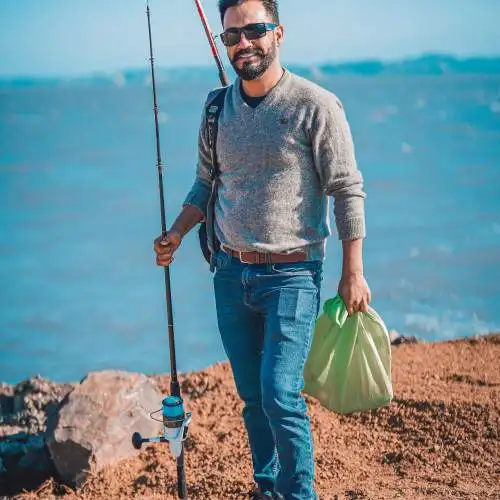
I am thigh-deep in the tail of a run with the rod pinned under my left arm and the fish in my right hand. If you are the one upstream watching me, this is what you see: a short cut behind the pectoral fin, a turn of the wrist, and the fish held head-down in moving water until the red stops coming. Ninety seconds, maybe. Everything after that, the ice and the board and the skillet, only preserves what those ninety seconds decided.
Bleed it in the current, not on the bank
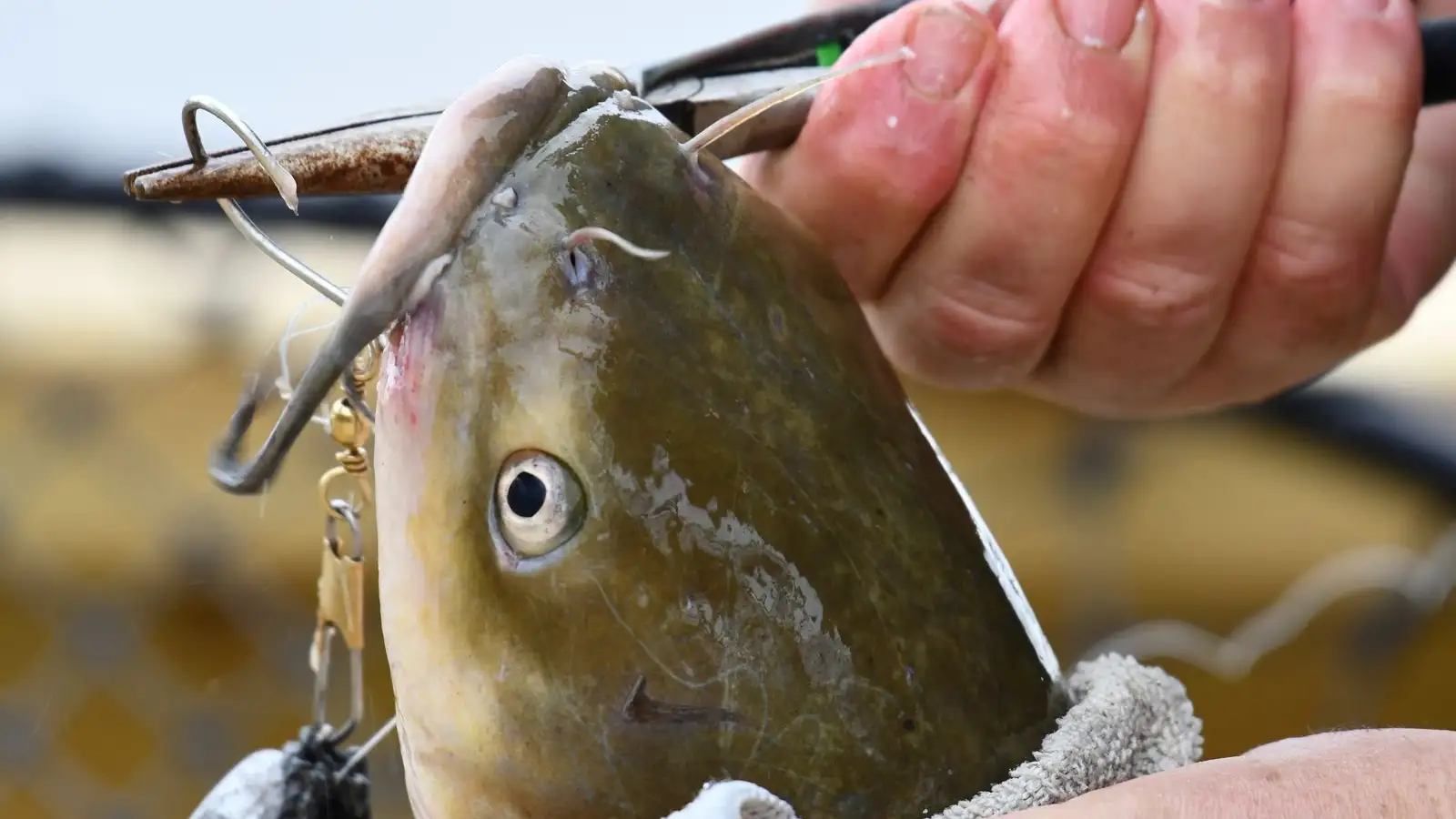
The blade goes in behind the pectoral fin and down through the gill arch, an inch or so, no more. Then the fish goes head-down into the flow. Not the slack water pooled behind your legs, but the actual current, where the water is moving and cold and carries the blood away instead of letting it sit. Out of the water, the gills keep working for a while. In the water, you watch them go from deep red to pale pink to almost white, and every shade of that color is leaving the vascular system instead of soaking into the fillet.
You will hear that this only matters for salmon and trout. It matters for anything you intend to eat as a fillet. A walleye bled in the lake and a walleye left flopping in the bottom of the canoe until you get back to the truck are not the same piece of food. That difference shows up on the plate as a metallic edge that no amount of lemon covers.
Here is the honest limitation for those of us who fish with wet feet: we do not have a cooler. A stringer or a soft basket in the water keeps a fish alive and, in a cold tailwater, reasonably chilled. A stringer in warm summer water is a delaying tactic, not refrigeration. When the water heats up I keep one fish for dinner and stop fishing. I also do not keep a fish I am not going to clean that day.
The ice is the second half of the bleed
A cooler with a slurry, ice plus just enough water to make it slushy, chills a fish far faster than ice cubes alone, because slush touches the whole surface instead of a few contact points. The target is 32 to 40 degrees Fahrenheit, and the goal is to get through that range quickly, not to park the fish there for six hours. Down in that window bacterial growth slows to a crawl and the texture of the flesh holds. A fish chilled in thirty minutes and a fish chilled in three hours are different products, and you can taste which one you are eating.
Rigor mortis is already running
Dress the fish before it stiffens, ideally within the hour, on the tailgate or at the cleaning station. A warm fish goes into rigor quickly; a fish that has been lying on ice gives you more room. The reason to beat the clock is not superstition. Gut enzymes keep working from the inside, and they attack the belly meat first, where the flesh is thinnest and closest to the cavity. Split from vent to throat, pull the viscera out whole, and scrape the dark kidney line along the spine with a thumbnail or the back of a spoon. Then it goes back on the ice.
Scaling, gutting, and filleting are three different decisions
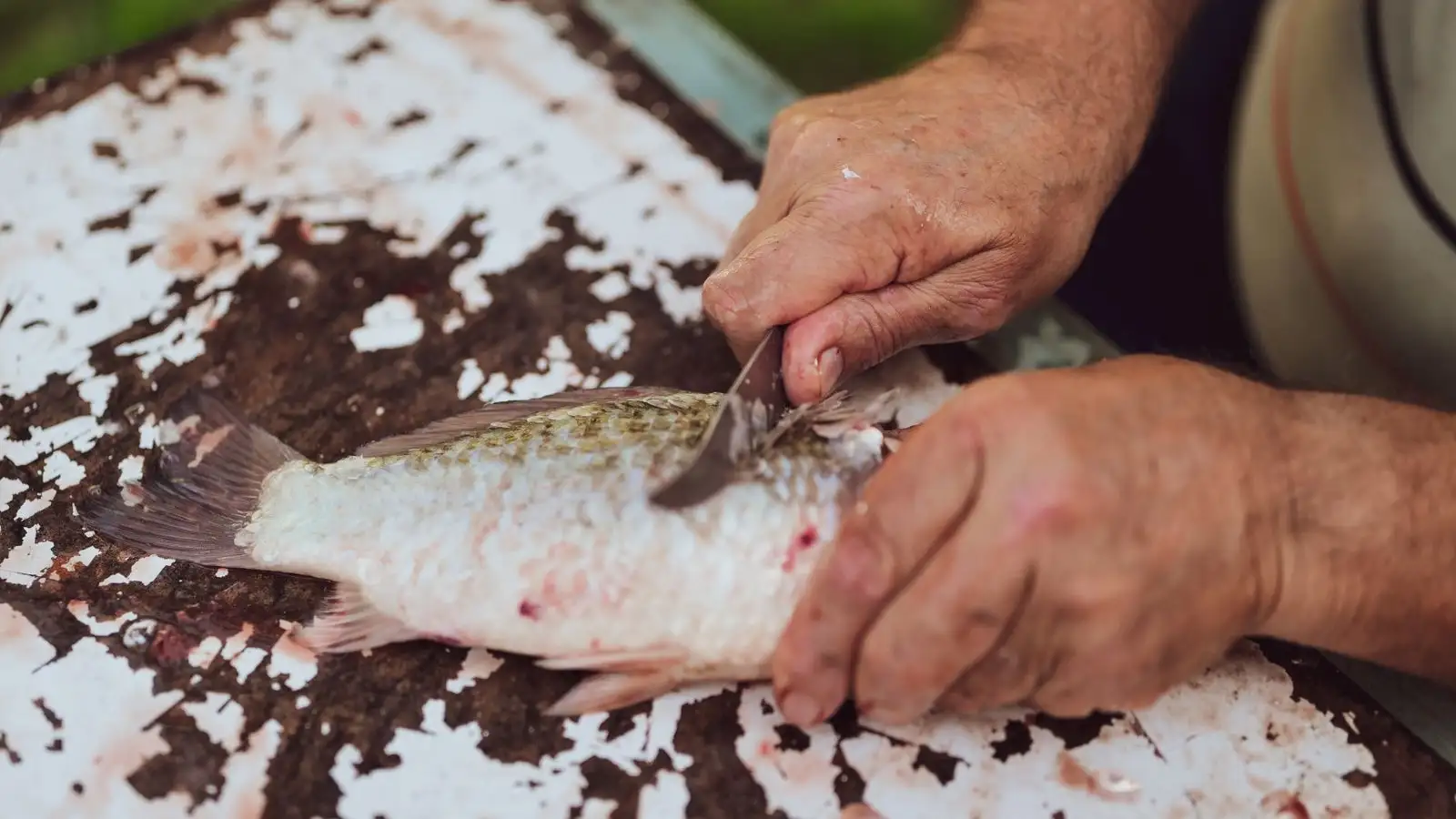
Nothing says you have to do all three, and the fish plus the plan should decide. A trout or a mackerel headed for the grill gets scaled, gutted, and cooked whole, because the skin and the frame are what keep it from drying out. Scales come off tail to head with a dull spoon or the spine of a knife, worked in short strokes so they do not fly. A fish you are going to fillet and skin does not need scaling first, but it does still need gutting, especially if it will sit on ice for more than a few hours, because an intact cavity holds heat and enzymes in the one place you least want them.
Round fish, flat fish, and the bones that hide
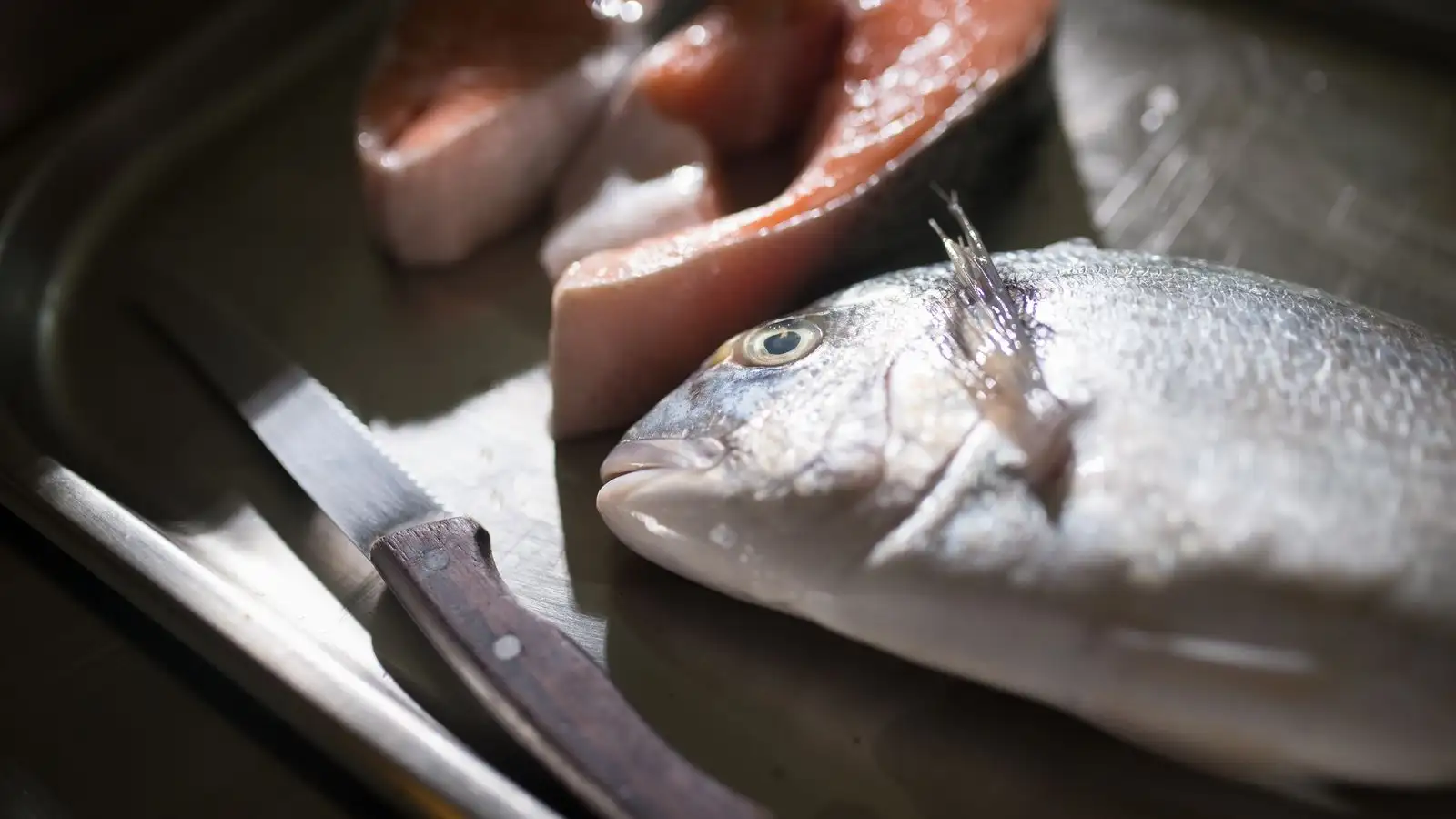
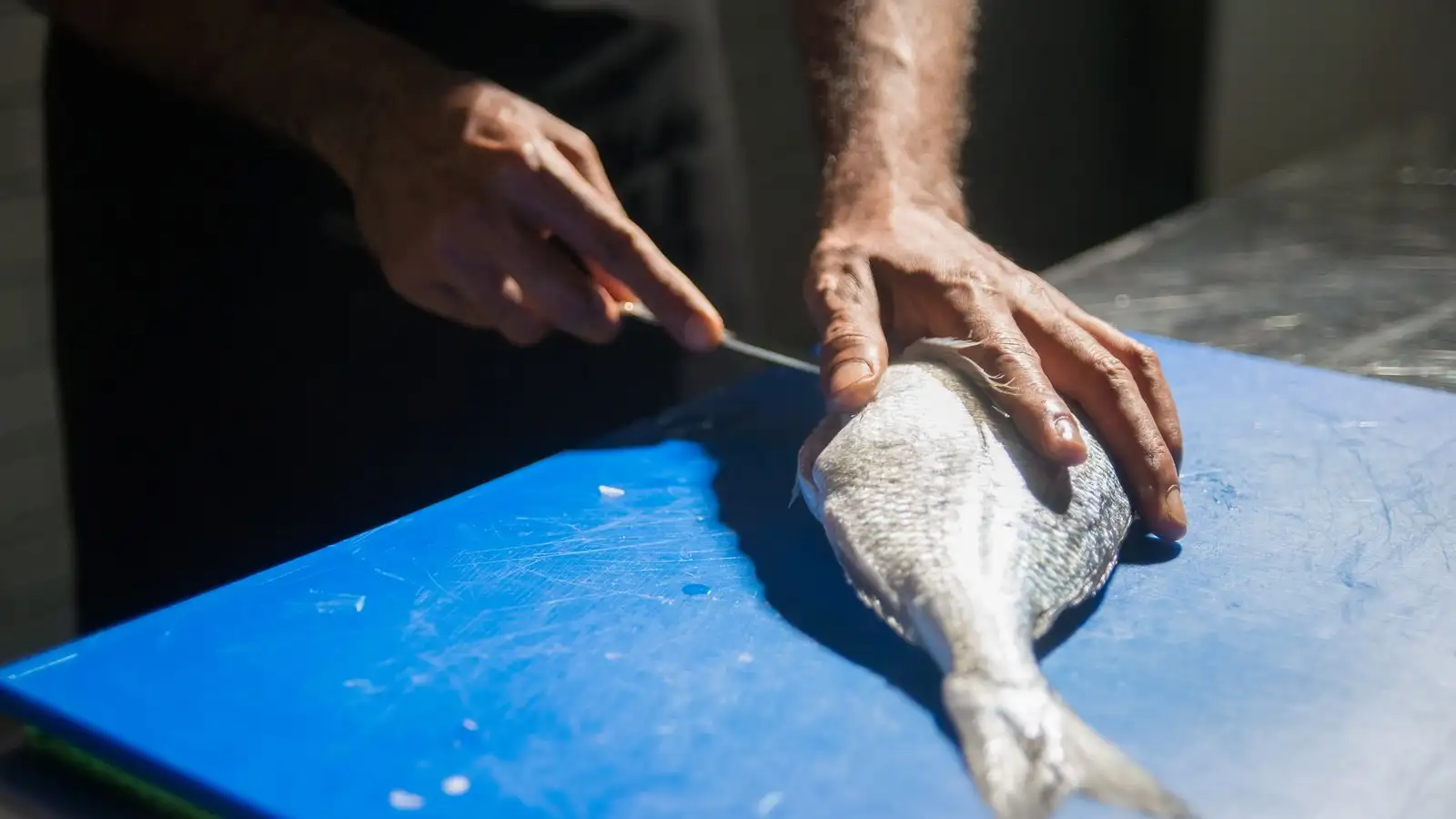
On a round fish, meaning bass, trout, walleye, salmon, mackerel, the knife runs along the top of the back, behind the head, and follows the rib cage down and back to the tail, and the fillet lifts off the frame in one piece. Flip it and repeat. Flat fish work differently. Both eyes ride on one side, so a flounder or a fluke gives you four fillets, two per side, cut from the center line outward.
Pin bones are the ones people leave behind. On most round fish they run along the lateral line through the front third of the fillet, angling slightly toward the head. Run a fingertip down the fillet from the head end and you will feel the tips standing proud. Grip them with pliers and pull toward the head; they come easier with the grain than against it. Or cut that strip out with the knife, which is what I do when the fillet is destined for a chowder anyway.
Skin is a judgment call. Leave it on for the grill and crisp it hard. Take it off when the fillet is thin and delicate, or when the skin carries the muddy note that some species pick up in some water.
Cook the fish you have, not the fish in the recipe
Lean white flesh, the walleye and flounder and perch and small bass and trout, carries almost no fat to protect it, so it wants high heat and a short time. It goes from translucent and flaking to dry and cottony in about ninety seconds of inattention. Oily, dark-meat species, mackerel and bluefish and salmon and tuna, bring their own fat and moisture to the pan. They take a hard sear, a hot grate, or a smoke box, and they stand up to acid and heavy seasoning without being buried by it. Cook a lean fillet the way you would cook a bluefish and you will decide you do not like fish.
Dark meat, milk soaks, and what they will and will not fix
Oily fish carry a strip of dark muscle along the lateral line and a dark belly flap, and that is where the strong flavor concentrates. If strong flavor is your complaint, cutting that strip out is the single biggest improvement available to you. After that, a soak in milk or in saltwater in the refrigerator, anywhere from half an hour to a couple of hours, takes the edge off. Milk pulls some blood and loose pigment out of the surface, and a light saltwater brine firms the flesh so it holds together under heat. Neither one performs miracles. If the flesh has gone soft and the smell has turned, a soak does not rescue it, and nothing does. And a fish that was bled and iced properly in the first place needs the soak far less often. That is the chain doing its work.
Nothing goes in the trash
Frames, heads, and trim become stock. Cover them with cold water, bring it to a bare simmer where the bubbles only break at the edges, and pull it in thirty to forty-five minutes for lean fish. Oily frames go bitter if you simmer them long, so pick the meat off those and turn it into fish cakes bound with potato or breadcrumbs and an egg. The cheeks on a large fish are worth the thirty seconds it takes to cut them free.
The last link: 145 degrees and clean hands
Cook fish to an internal temperature of 145 degrees Fahrenheit, checked with an instant-read thermometer in the thickest part of the piece. That is the number the USDA publishes and the one I use, and it removes all the guessing about whether a fillet is done.
Before the fish ever reaches heat, the cleanliness half of the chain matters just as much. One board for the raw fish. A knife that gets washed before it touches anything else. Hands washed before you reach for the salt, the platter, the salad. And no rinsing fillets in the river you just fished, because that water puts back everything you spent the last hour getting out.
Every step here fits on a tailgate or a camp table. None of it is difficult. What is difficult is refusing to skip a link when your hands are cold, or the light is going, or the fish are on the feed and you want one more cast before you walk back. The chain does not care about any of that. Bleed it, chill it, dress it early, cut it to fit the fish, cook it to temperature, and the plate takes care of itself.