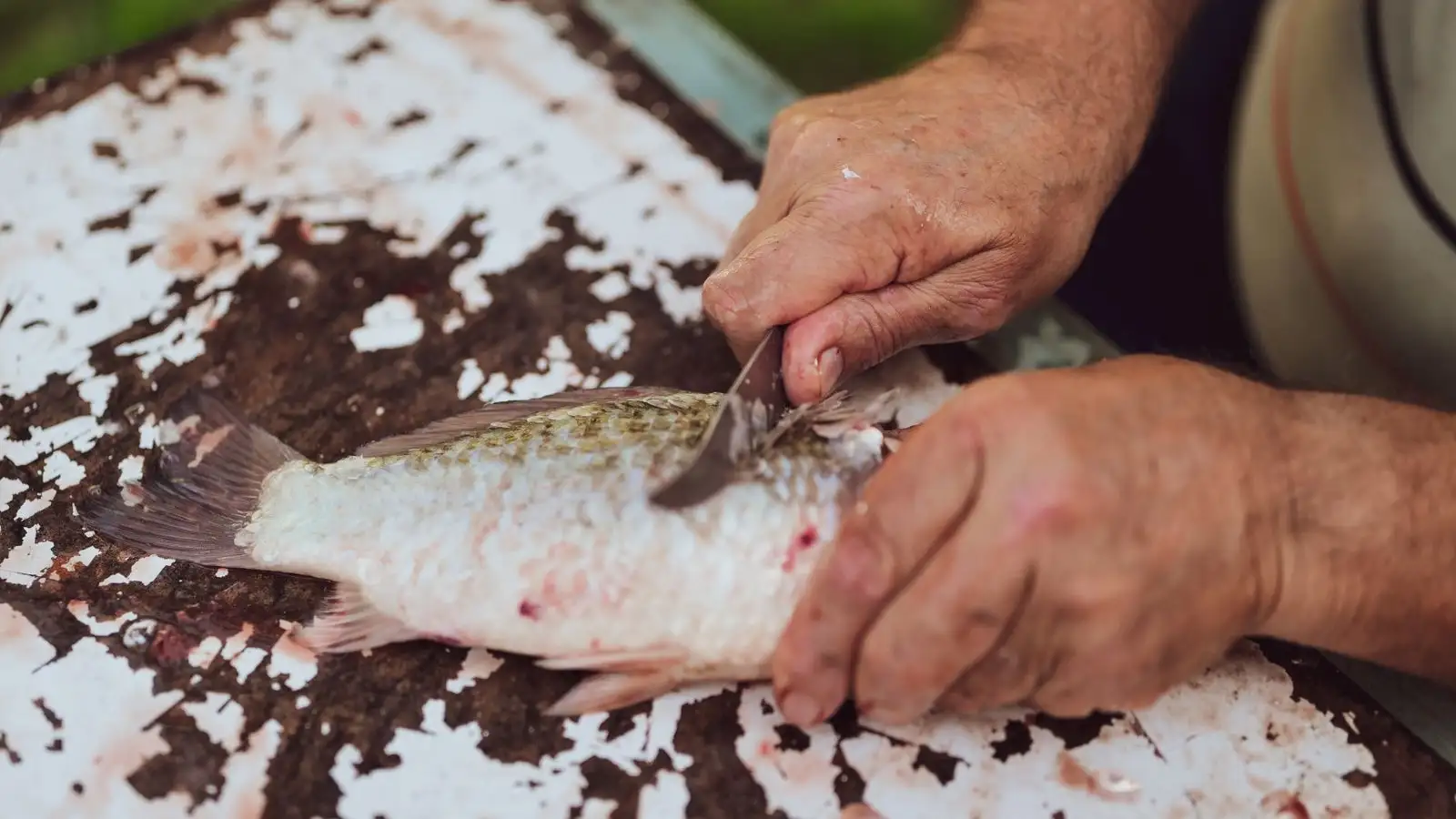
Match the tool and the direction of travel to the shape of the fish and the flesh stays intact. Scale a round fish — bass, trout, panfish, walleye — from tail toward head with a dull-edged scraper held nearly flat to the skin. Skin a flatfish instead of scaling it, because flounder and sole carry scales too small and too tightly set to lift cleanly. Take the hide off a catfish completely, since it has no scales to scrape at all. Gutting is the same three moves on every one of them: a shallow slit from the vent forward to the gills, the viscera lifted out without puncturing anything, then a light rinse that clears the blood and the dark kidney tissue packed along the spine. Fins come off with shears before the pan. Heads and tails stay on small fish like trout, which cook better that way.
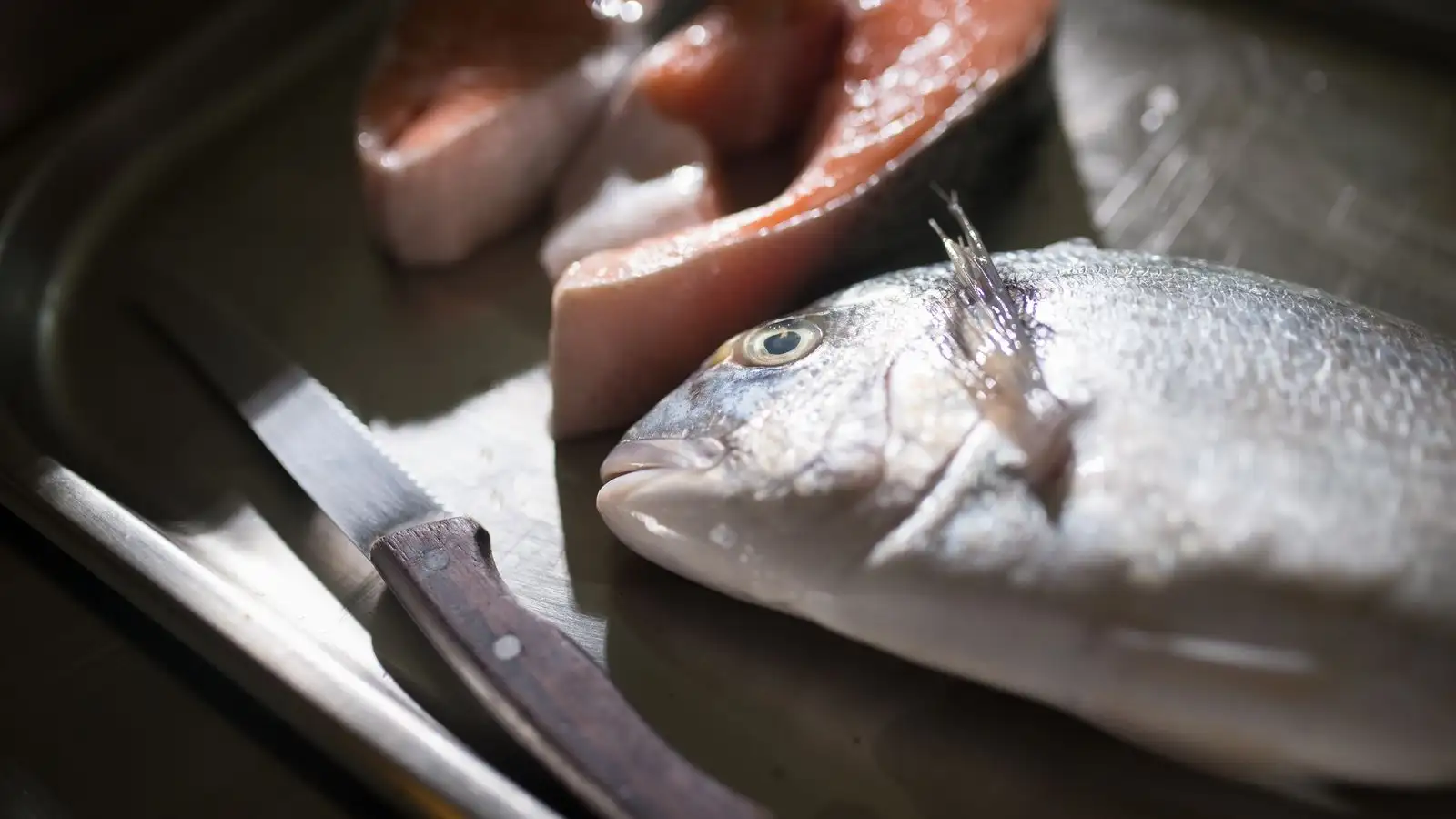
Come stand at the tailgate with me. Late October, a skim of ice on the reservoir in the mornings, and the fish in the bucket still cold enough that my fingers stiffen every time I reach in. There's a hose coiled on the ground, stiff as a stick, and a trout on the board. You've got the scraper in your hand. You're about to start at the head, because that's where the fish starts.
Stop. Look at it first.
Run a thumb from the head toward the tail. Smooth, slick, like wet paint. Now run it the other way, tail toward head. There's the rasp — faint, like a match striking. Those are scale edges. They overlap like shingles, and every shingle points toward the tail. That's the entire reason for the direction rule. Go with the grain and the blade rides over the shingles and drives scale after scale down under the skin, where they lodge in the flesh and turn up later between your teeth. Go against the grain and each scale lifts at its free edge and flicks off onto the board, your forearm, the tailgate, your hair if the wind is moving.
The Direction Rule, and Why Your Scraper Isn't the Problem
Hold it flat. Almost flat, like you're spreading butter on toast you don't care much about. Angle it up and the corner shaves skin instead of lifting scales, and skin doesn't grow back. Short overlapping strokes, tail working forward. Keep the fish wet and rinse the blade now and then; wet scales release cleaner and the pile on the board doesn't blow around and stick to everything.
A heavy tablespoon does this as well as anything with teeth stamped into it. That's not a knock on purpose-built scrapers — it's just that the edge matters less than the angle and the direction, and I'd rather you learn those first.
The belly is easy. So is the strip along the lateral line. The shoulder and nape are not; those scales are smaller and set tighter, and that's exactly where people lose their patience.
Here's what actually ruins fish for people, though. It isn't the tool. It's the last third of the fish.
You get to the shoulder, you feel scales that don't want to come, and you lean on it. That pressure goes through the scraper into the muscle, and muscle that's been pressed bruises — fibers separate, and the meat goes soft and pale in patches that cook up mushy no matter what you do to them afterward. You also push the fish around the board, which makes you grip harder, which adds more pressure. Put a towel under it. Make a second light pass over the shoulder instead of one hard one. That single habit is worth more than any gadget you could buy.
Gutting: One Slit, One Rinse, One Thing Most People Miss
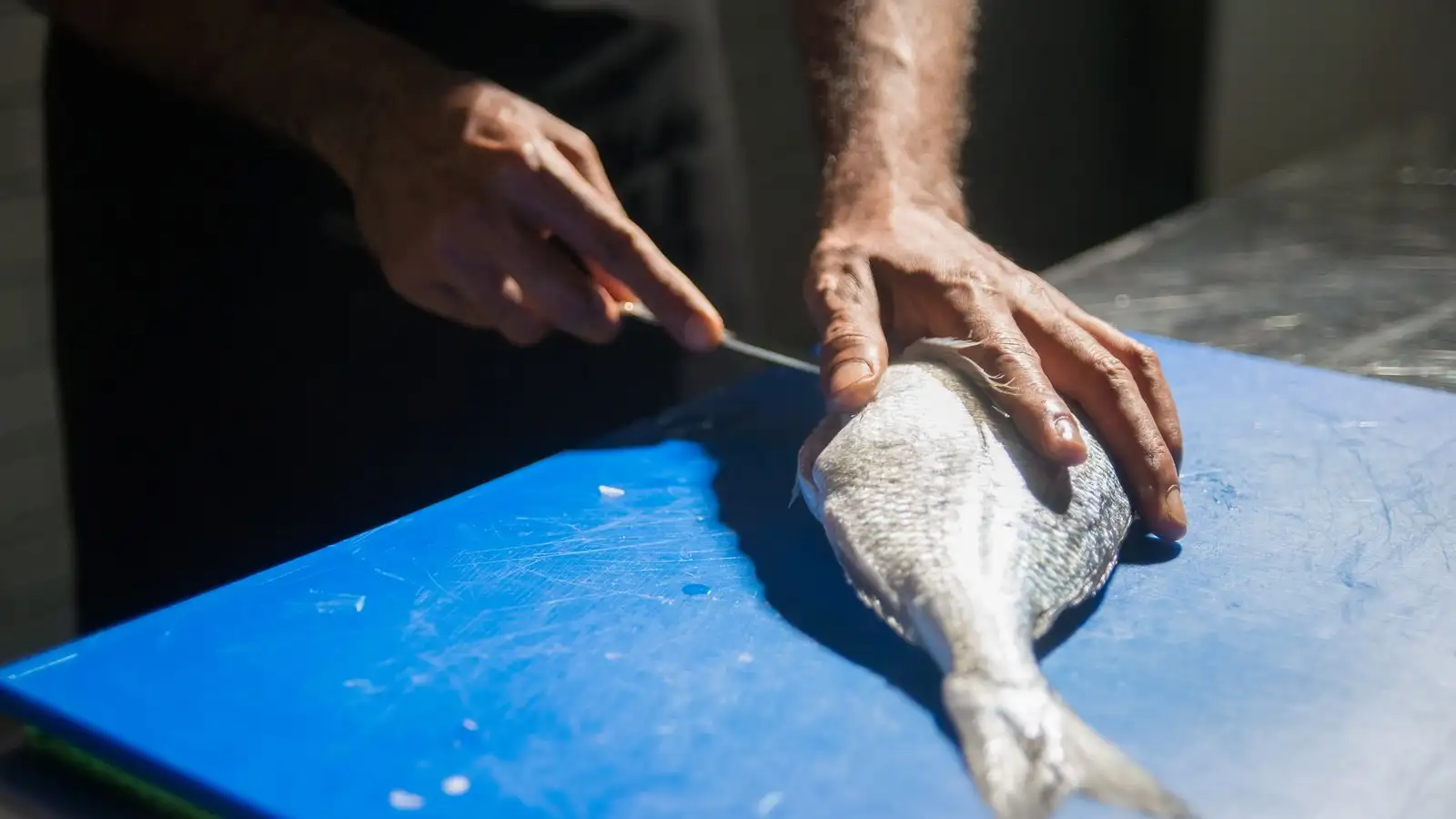
Slit from the vent forward to the gills. Shallow. Put the tip just under the skin, not into the cavity, and let the point ride the inside of the belly wall. You're opening a bag, not stabbing a fish.
Then don't grab a fistful. Reach up near the gills instead, find where they attach, and cut them free at the base. Pull the whole mass down and out in one piece, gills and all. It comes out cleaner than tearing does, and it means you don't have to go back for the gills later.
One thing to protect: the gallbladder. It's a small dark sac sitting in the viscera near the liver, and on a trout or a bass it's easy to nick. Break it and the bile spreads across the flesh and the fish tastes like it. If it happens, rinse fast and don't wipe it around — wiping just pushes it further.
Now the rinse, which is the part most people skip entirely.
A hard stream of water doesn't clean a body cavity. It pushes blood deeper into the flesh and leaves the cavity looking pink while the meat underneath holds it. Light stream, your thumb, and patience. What you're after is the dark line in the groove running along the inside of the spine. That's the kidney. It's packed in there, dark red, almost purple-black, and it's the taste people describe as muddy or fishy when they can't figure out why a fish that looked clean tastes off. Scrape that groove out with a thumbnail or the bowl of the spoon under a trickle of water until the spine reads white or pale pink. That's the finish line. Everything past it is a waste of water.
Flatfish Get Skinned, Not Scaled
Flounder, fluke, sole. Same water, completely different job.
Their scales are tiny, set deep in the skin, and locked tight. Take a scraper to a flounder and you'll spend ten minutes, get maybe half of them, and abrade the skin in the process. There's no version of that where you come out ahead.
So skin it. Dark side up on the board, tail toward you. Make a shallow arc through the skin only — not the flesh — just behind the head, running from the top edge to the bottom edge. Work a thumb or the tip of your pliers under the corner and peel toward the tail. It usually comes away in one sheet with a sound like tape off a box. Flip it and do the white side if you want it clean, though plenty of people only skin the dark side because that's where the slime and the color live.
Gutting a flatfish is a shorter version of the same job. The cavity is small and set forward near the head, so it's a short slit on the belly side and one pull. There's less to get wrong.
Catfish Have Nothing to Scrape
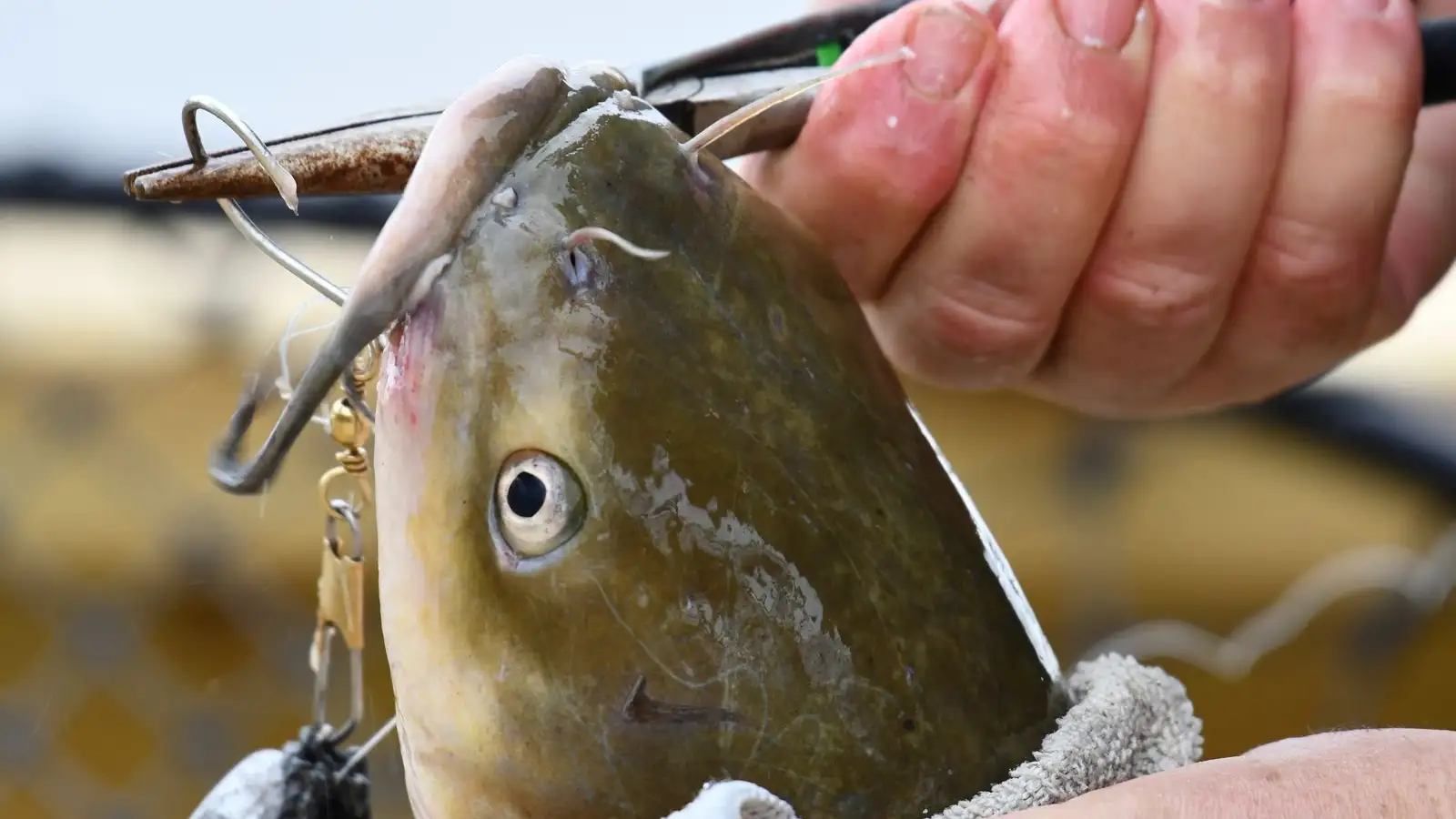
No scales. The hide is the whole problem, and the answer is a flat board and a pair of pliers.
Cut through the skin in a ring around the head, behind the gill plate and behind the spines. Then grip the skin with the pliers at the nape and pull. Some fish come off in strips, some in one sheet — that varies by species and by how cold the fish is. Either way, once it starts, it goes fast.
After the skin, the head comes off just behind the pectoral fins. Cut at the right depth and the viscera come out with it, which leaves you a body cavity that needs a rinse and not much else. Then the same scrape down the spine. Catfish carry a heavy dark line in that groove, heavier than a bass or a trout, and it's worth the extra ten seconds.
As for the spines: they're why you cut around the head deliberately instead of grabbing and yanking. Work the blade, not your hand, and take the extra second to position the fish flat before you pull anything.
Fins Off, Heads On, and the Cold-Fish Rule
Shears. Dorsal, pectoral, pelvic, anal, and the tail fin if you want it gone. Fins are thin and dry out fast, so they scorch well before the flesh is anywhere near done, and a burnt dorsal fin tastes like exactly what it is. Twenty seconds of trimming fixes a whole category of disappointing fish dinners.
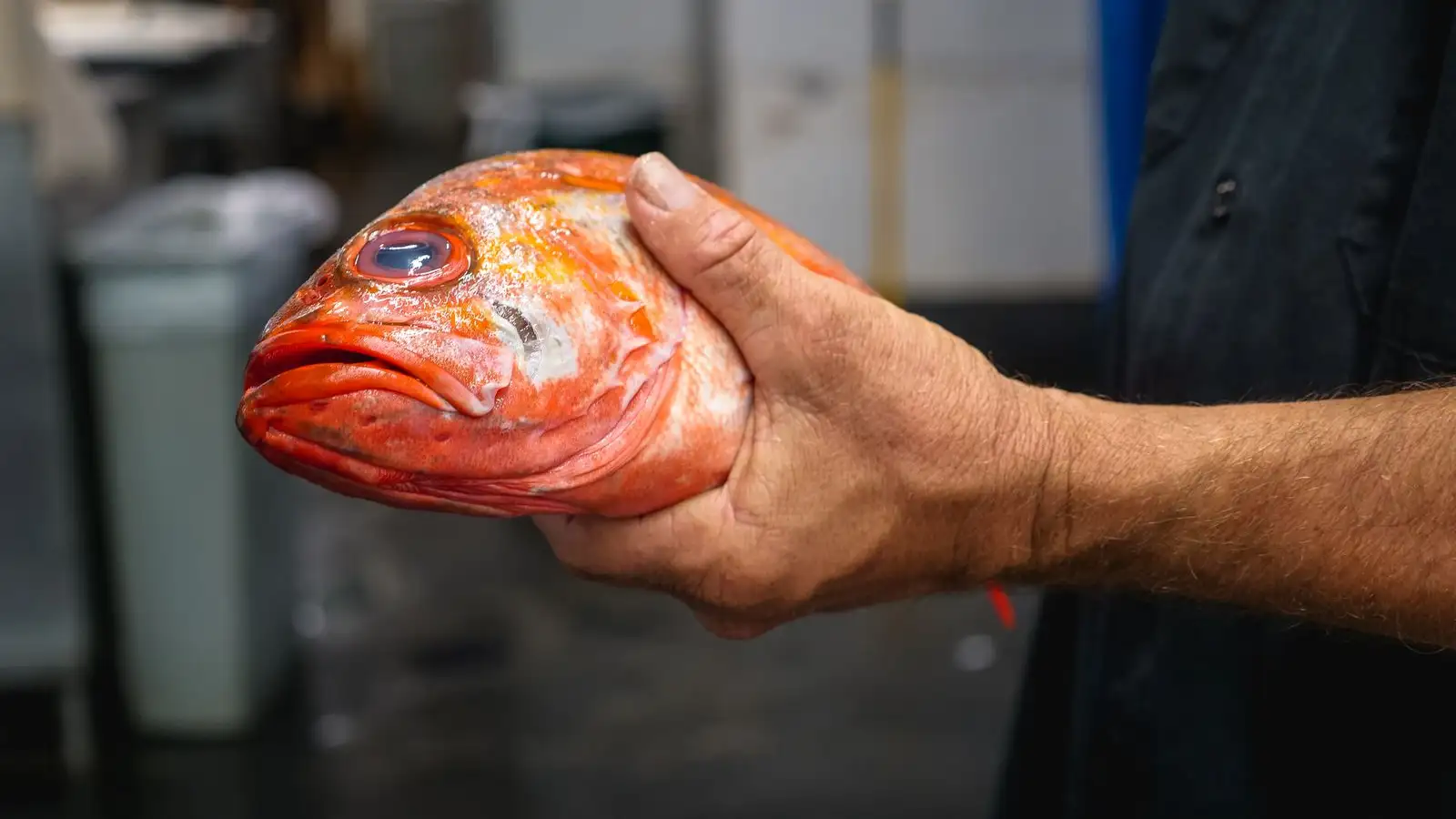
Leave the head and tail on small whole fish, trout especially. It holds moisture, and the meat at the collar is the best bite on the fish. If the head stays, the gills don't — you already pulled them if you did the gill-base cut, and that's not a coincidence. Gills left in place hold blood and go bitter.
On scaling trout: this one honestly depends. Small trout, a lot of people don't scale at all, because the scales are fine enough that they cook soft and disappear. If you want a crisp skin, scale it, and use the same tail-to-head direction as anything else round. If you're poaching it or cooking it in foil, skipping the scraper is a defensible call.
And the rule that underlies all of it: cold fish clean clean. Warm flesh tears, bruises, and the viscera rip instead of pulling free. Get the fish on ice before you clean it and clean it before it warms back up. If you can't clean right away, ice isn't optional — it's the difference between a clean job and a mess.
Where the Scales Go
Scales and guts left on the ground at the cleaning area bring raccoons, skunks, flies, and the neighbor's dog, and by mid-afternoon they smell like something died, because something did.
One bucket. Scales and viscera go in it, the bucket goes into a bag, the bag goes into the trash. At a cabin or a ramp with no dumpster, the bag goes in the freezer until trash day — frozen guts don't stink and nothing digs them up. Hose the board and the tailgate right away, too, because dried scales set like glue and you'll be chipping them off with a putty knife next spring.
None of this is complicated. It's a direction, a pressure, and a rinse. Look at what's on the board before you pick up a tool — round, flat, or nothing to scrape at all — and the fish tells you which job you're doing.