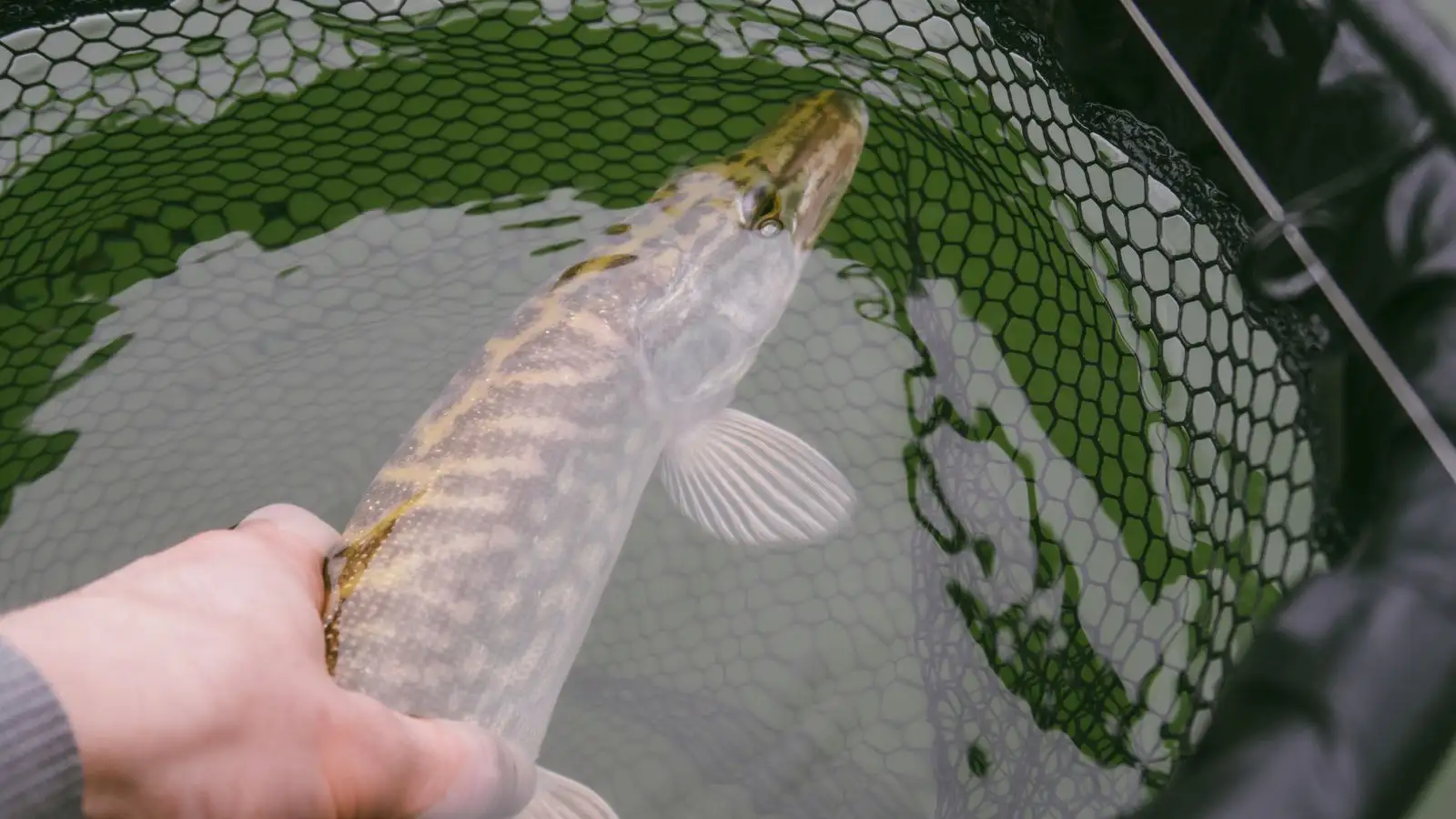
Yes, in most cases where the hook has gone past the bend and down into the throat or gullet, cutting the line as close to the hook as you can reach does less damage to the fish than working it back out, and the fish is more likely to swim off and feed again. The catch is that this is a removal decision, not a rescue decision. It gets made in the same second you would otherwise reach for the forceps, and it turns on one thing you can actually see: where the bend of the hook is sitting.
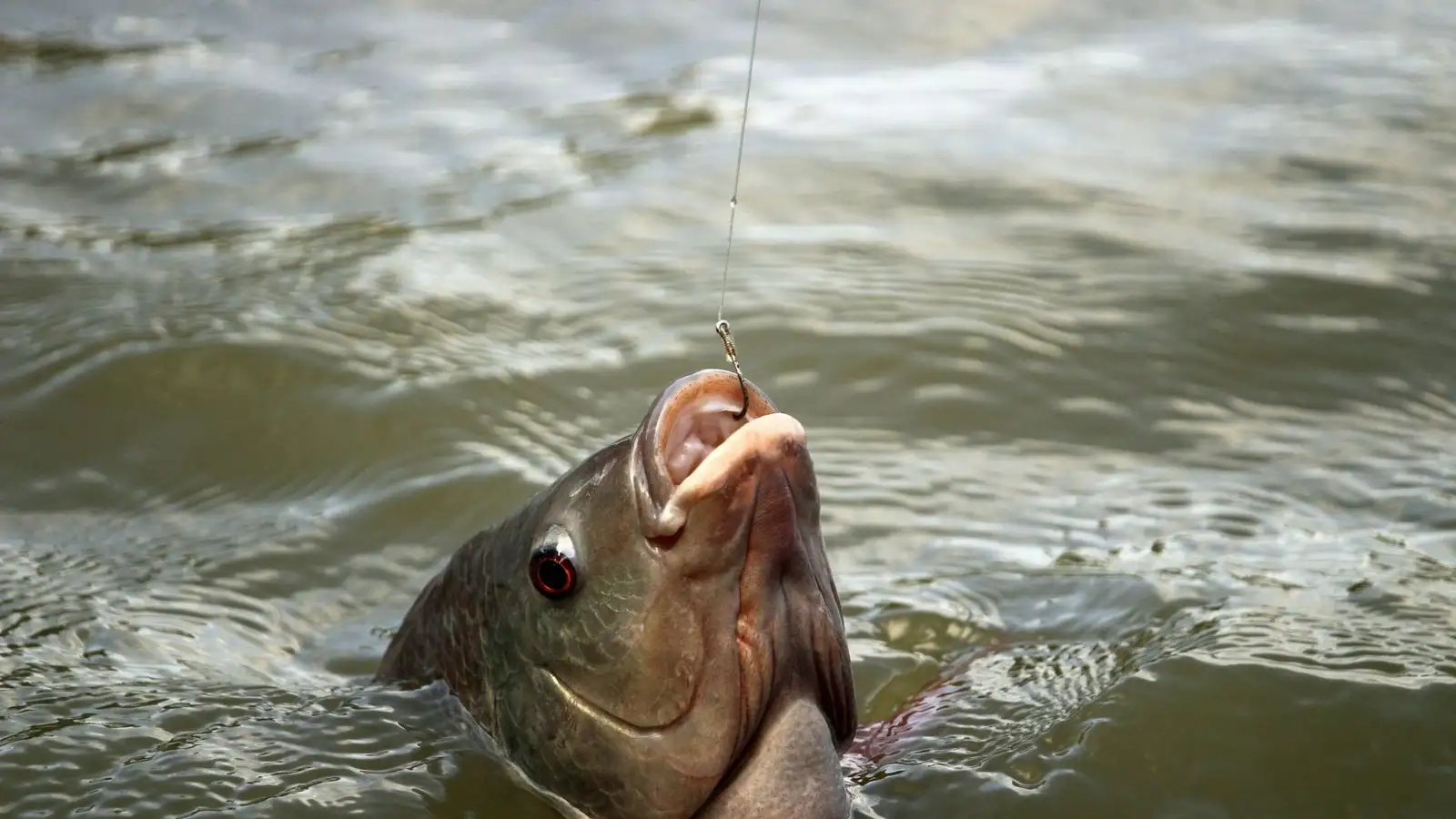
I'm on my knees in the shallows with the water past my wrists, the net still submerged so the fish is lying broadside in the mesh and its gills are working. A smallmouth, maybe fourteen inches, ate a streamer and kept going. The light is low across the surface and I can see the leader vanish into its throat. I can see maybe a quarter inch of hook shank. The bend, the point, the barb, all of it is somewhere I can't see, and the only way to find out is to go in after it with forceps and start moving things around. That's the moment the whole question lives in.
The forceps are not the decision
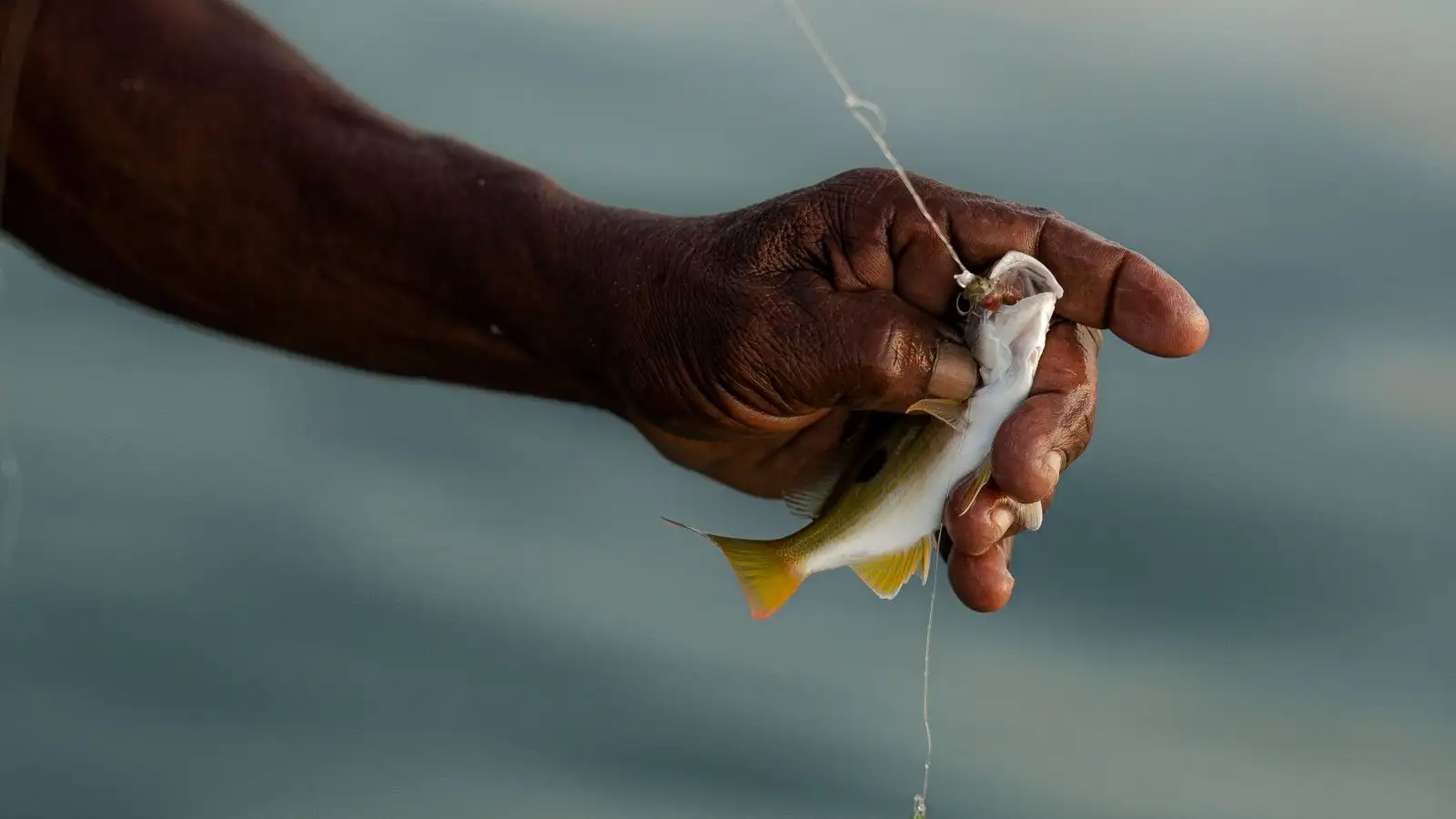
Hands first. Long-nosed pliers or forceps, not fingers. Fingers are short, blunt, and they put your knuckles up against gill plates and teeth, which is bad for both of you. Forceps give you a straight line of pull down the shank, and a straight line of pull is the only kind that does what you want it to do.
Then the part people skip: read the bend before you touch anything.
If I can see the bend, I can get the hook out. The mouth, the jaw hinge, the back of the mouth, the roof, all of that is reachable, and the mechanics are the same every time. Grip the shank with the forceps, push forward slightly to disengage the barb, then back the hook out the way it came in. Reverse along the entry path. That matters more than it sounds like it does. The hook already made one hole going in. Dragging it forward through tissue that never had a hole in it makes a second one, and that second path is where the bleeding and the tearing come from.
If the hook is sitting shallow and it's barbless, I don't even need the forceps. Pinch the line, give it slack, and twist. A lot of the time the hook just drops. That's a big part of why some waters require barbless hooks. Not because it's gentler on the angler, but because it shortens the entire event down to a couple of seconds, and seconds are what the fish is spending.
Where the bend sits decides everything
Now the case that brought you here. The shank disappears, you can feel the bend but you can't see it, and it's low. Throat. Gullet. Past the point where the hook can be rolled out with the forceps.
That's a cut. Not a maybe. Cut the line as close to the hook as you can get, and let the hook stay where it is.
Why: everything I'd have to do to reach that hook involves levering the fish's throat open, pushing a tool past the gills, and dragging a barbed bend backward through tissue that is thin, folded, and full of blood vessels. I've done it. I've pulled hooks out of places I had no business reaching into, and the fish looked fine in the net and then rolled over thirty feet out. The removal is what killed it. The hook wasn't.
I want to be honest about what leaving it costs, because the tidy version of this advice pretends it's free and it isn't. A hook left in a fish is still a hook. In fresh water they corrode slowly, a lot slower than the old saying suggests. Some fish pass them. Some carry them. I've cleaned fish with hooks in them, walled off in tissue, that had clearly been eating fine for a while. And some fish aren't fine. What I do know is that cutting close to the hook, right at the eye or the shank, beats leaving a foot of line trailing out of the mouth. That line snags, wraps, and keeps working the hook around. Cut short. Leave the metal, take the line.
The tidy extraction is the thing to be suspicious of
Here's what took me a long time to admit. The removals I was proudest of, the ones that looked clean, hook out, nothing torn, fish back in the water, were often the ones where the fish had been out of the water longest, rolled around the most, and handled the hardest. A neat outcome on the bank is not the same thing as a good outcome for the fish.
So before I decide anything, I count what the fish has already paid. Was it played long on light line? Is the water warm, which means less oxygen and less margin? Is it bleeding from the gills rather than the mouth? Has it already been in my hands for thirty seconds while I worked this out?
That budget is what I'm actually spending. Not the hook. The clock.
Never lift the fish by the hook or the line
This belongs in a piece about removal because it happens during removal. The moment you start swinging a fish up by the leader to get a better look at the hook, the hook is holding the entire weight of the fish by a piece of tissue that was never built for it. It tears. Every time. If I need to see something, I support the belly with one hand and keep the fish over the water, in the net, low. Nobody looks good holding a fish up, and it isn't worth the photo.
Treble hooks deserve their own warning
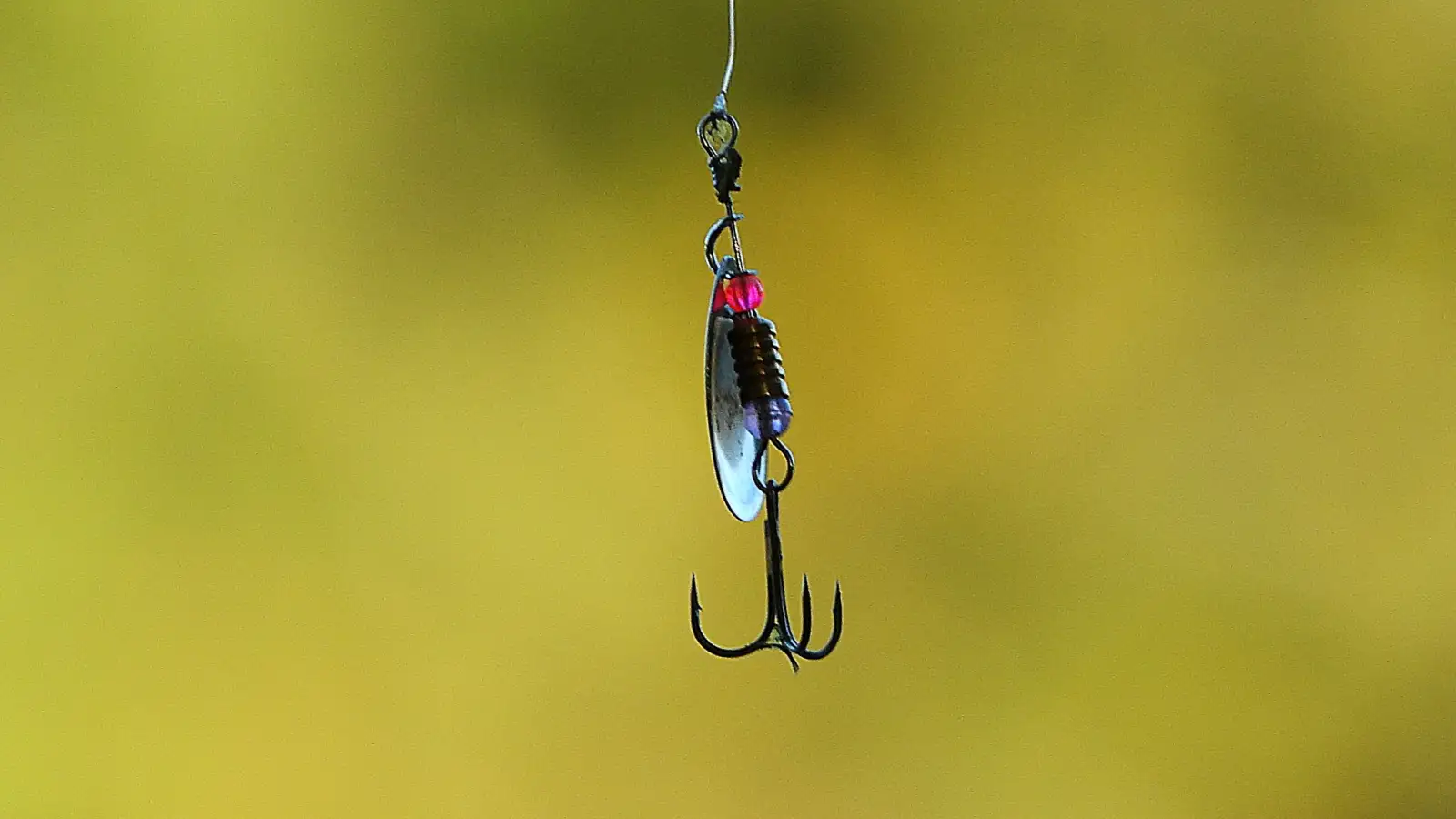
A single hook is one problem. A hard bait with two trebles is three problems, and they are all tangled in your net at once. Pulling treble hooks out of a rubber net takes longer than pulling a single hook out of a fish. When they're in the fish, it's worse.
If you're throwing hard baits in water where you expect a lot of short strikes and deep takes, crushing the barbs down on the trebles you can reach buys back most of the time you'd otherwise spend untangling. It doesn't make the hook safe. It makes the removal short, and short is the whole point.
After the cut, your job isn't over
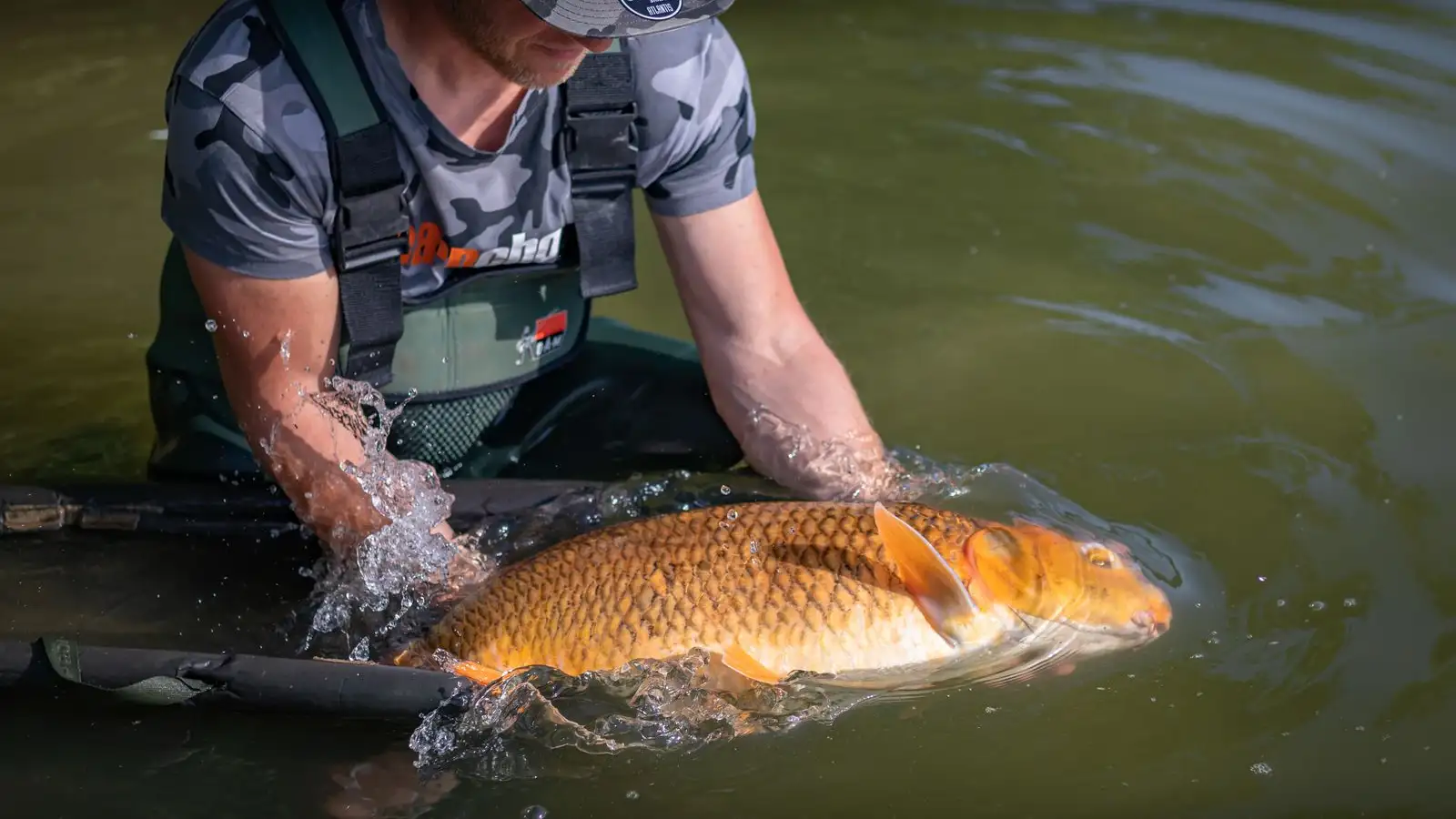
Cut the line, and then get out of the way. Keep the fish in the net, in the water, upright, and let it tell you when it's ready. If it's holding itself and its gills are moving steadily, open the net and let it swim out under its own power. If it rolls, hold it upright in the current until it doesn't.
And if it's bleeding hard from the gills rather than the mouth, that's a different decision than a hook down in the gut. That fish is probably not going to make it, and turning it loose so it can die out of sight isn't a kindness. Where it's legal and you'll eat it, keep it. That isn't a failure of catch and release. It's part of it.