Keeping a fish for the table is a quality decision, and it happens fast. A firm blow to the top of the head, between and just behind the eyes. The gill arches cut so the fish bleeds out in the water. Then onto ice or into an ice-and-water slurry within a few minutes of coming aboard. That sequence, in that order, is what decides how the fillet tastes three days later. Everything downstream of it — the knife work, the trim, the seasoning, the cook — is just managing what those first ten minutes preserved or threw away.
I have done this wrong for years, and I know exactly what wrong tastes like. The fish comes over the gunwale, and because I haven't decided yet, it goes into the livewell "for a minute." A minute becomes twenty. Two more casts, a photo, a retie. By the time I open the lid, that fish has been swimming laps in water the same temperature as the lake, and the lake in August is bathwater. Fillets off that fish come out soft, a little gray along the lateral line, and they taste like the bottom of the lake no matter what I do to them afterward.
Then there's the other version. Same lake, same week, same size fish. Net, blow, gills cut, over the side to bleed, into the slurry. Ninety seconds, end to end. Those fillets were pale, firm, and clean, and they made me wonder why I ever tolerated the first kind. There was no secret technique in between. It was the clock.
Decide Before the Net
The decision to keep a fish has to be made before the fish is in the net, because an undecided angler holds a fish in the air while thinking about it. That's the worst thing you can do to a fish you plan to eat, and it isn't much better for one you plan to release.
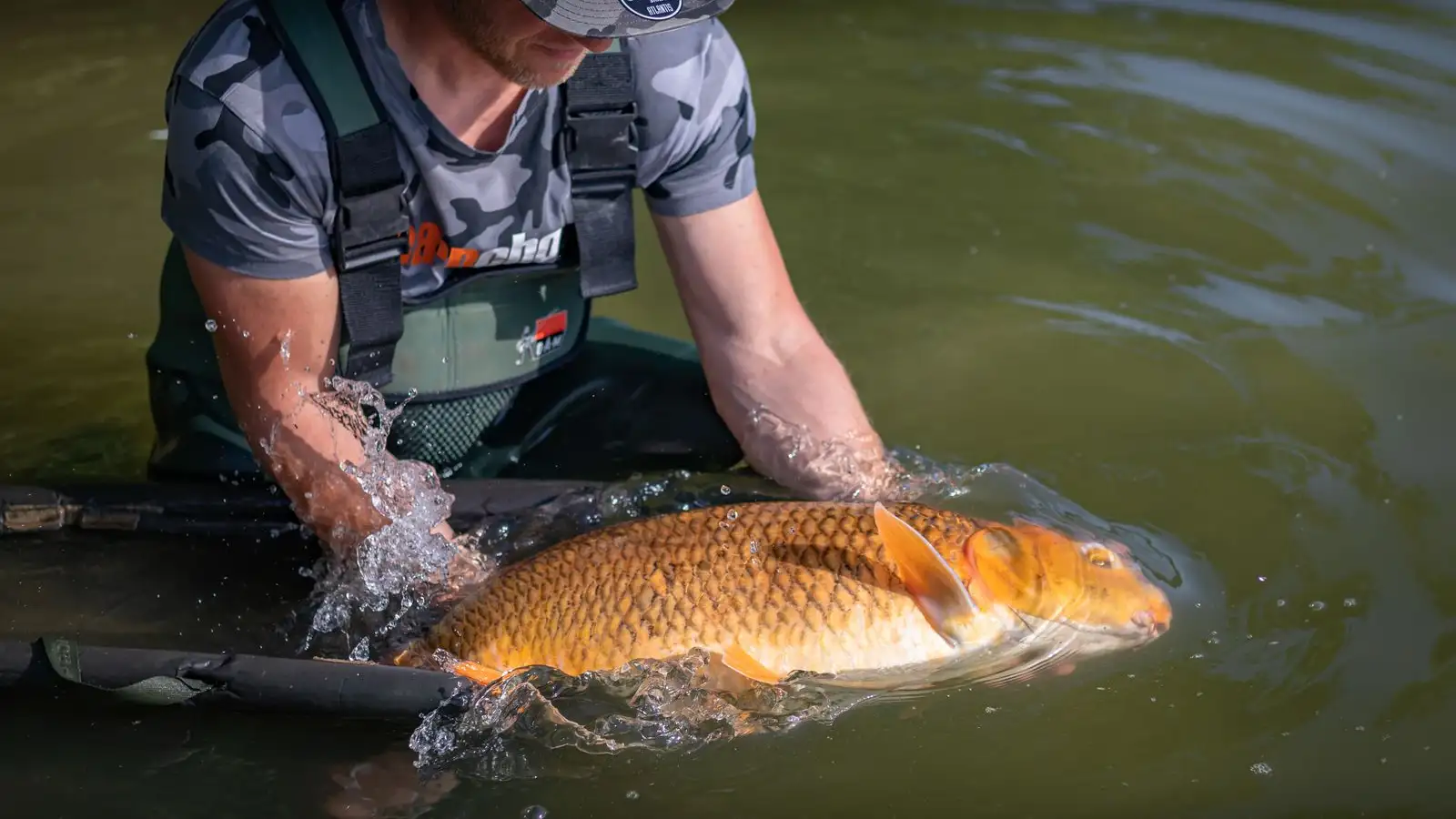
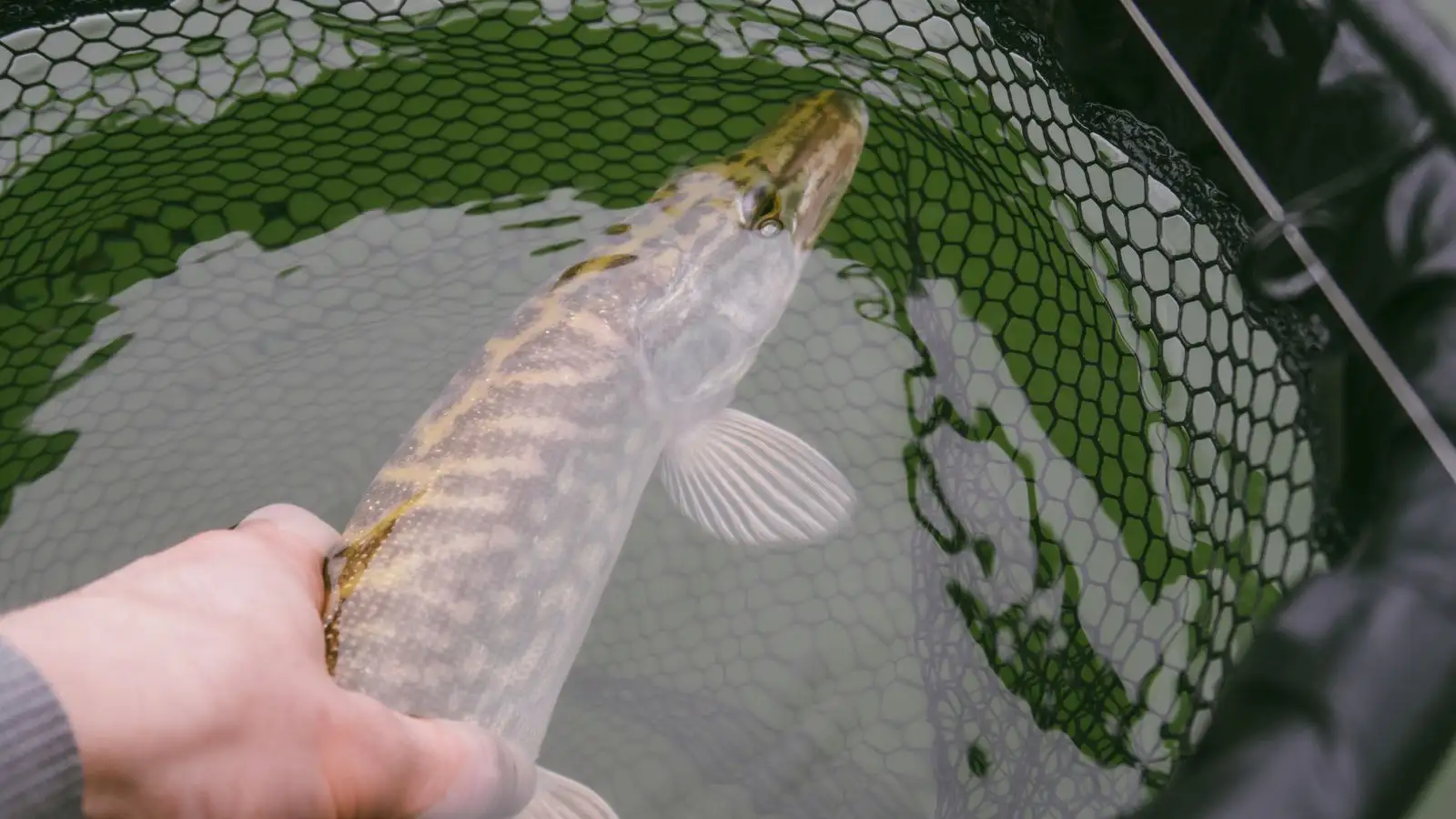
So I run it as a binary. If it's going back, it never leaves the water — unhook at the side of the boat, wet hands, quick, no hero photo. If it's staying, the clock starts the moment it's netted, and from there it's a sequence I don't have to think through, because I've run it enough times that my hands know it.
Part of that decision is the fight. A fish played for three minutes on light line in warm water is already spent by the time it reaches the net, and spent means warm and soft. When I'm fishing to keep, I fish heavier than I would for pure sport and I lean on them. Land them fast, decide fast.
The Blow, and Where It Goes
The spot is small and specific: the top of the head, halfway between and just behind the eyes, right where the skull flattens. Not the nose, not the back of the neck. That flat spot.
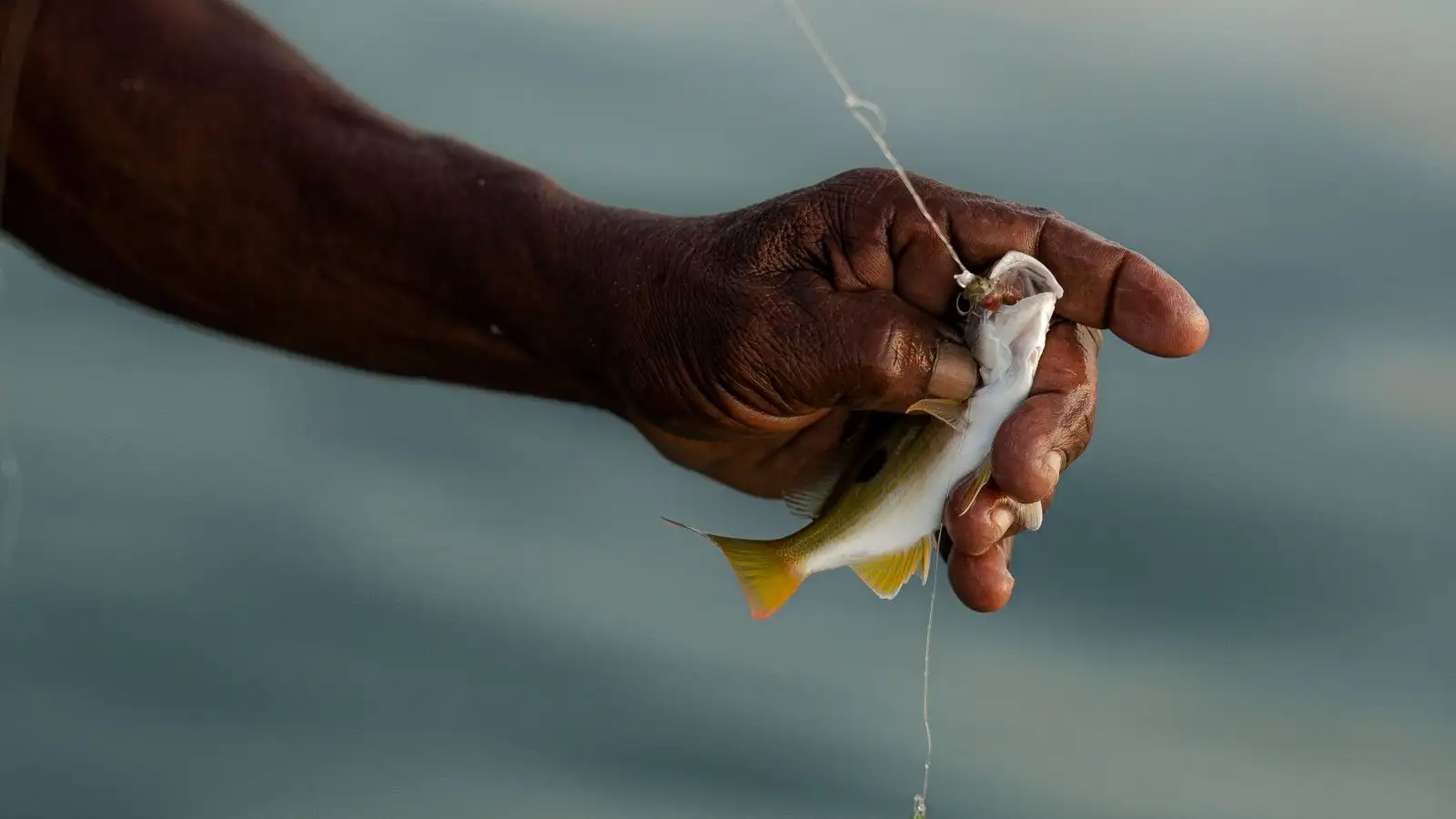
You want one decisive strike with something solid — a fish billy, the butt of a heavy knife handle, a length of hardwood dowel kept in the gunwale tray. Not a tap. Not three uncertain pokes, which is what most people do the first time, because it feels violent and they hesitate.
You'll know when it lands. The fish goes slack. The fins lay down, the mouth opens, the whole body stops resisting. If it clamps down, flares its gills, or keeps working, you hit soft tissue or the wrong angle — reset and do it once, properly. The point isn't ceremony. Every second a kept fish spends struggling adds heat and stress chemistry to meat you're going to eat, and you can't take that back at the cleaning table.
Bleeding Is the Part People Skip
Reach under the gill plate, find where the arches come together under the lower jaw, and cut through that. Some anglers cut both sides; I usually cut the throat latch and one arch. Then put the fish back in the water head down and let it pump — over the side on a short line, or in the livewell, anywhere it can run water across the gills.
What you're watching for is the plume. First it's a dark red cloud, then it thins, then it stops. A minute, maybe two, longer when the water is cold. Pull it out when the bleeding stops. That's it.
Why bother: blood left in the flesh is where the strong, muddy, iron taste lives. A bled fish fillets cleaner — the meat is pale instead of pink-streaked — and it sets up firmer, which makes it easier to get a clean cut along the rib cage and holds together better when it hits heat. This is a flavor and texture argument, not a ritual one.
The exception is a panfish you're going to scale, gut, and drop in hot oil within the hour. A bluegill doesn't have much blood to lose and you aren't aging it. I still bleed them if it costs me ten seconds, but I don't lose sleep over it.
Cold, Fast, and Wet
Slurry beats dry ice. Ice alone in a cooler leaves air around the fish, and air is a terrible conductor — a fish lying on a bag of cubes is mostly sitting in air. Ice plus a little water is a different animal: it conforms to the shape of the body, gets into the gill cavity and the belly, and pulls heat out of the fish much faster. I mix it wet, somewhere between a snow cone and a slushie, and I leave a little standing water in the bottom.
Timing is where people fool themselves. "A few minutes" in eighty-degree surface water means minutes — not twenty, not "after this drift." In cold water you have more slack, and that's a real difference: a fish kept in fifty-degree water on a November morning has more room for error than the same fish in a weedy August bay. But the summer version is the one that matters, because that's when most fish get kept and most fish get ruined.
The other thing: a cooler that lives in the back of the truck is already hot inside. The one going on the boat gets loaded with ice at the gas station, not at the ramp.
Gilling and gutting in the field
If the ride home is long, or the day is hot enough that the cooler is working hard, field-dress the fish. The body cavity is the deepest and slowest-cooling part of a fish — a warm core wrapped in muscle. Gilling opens it from the front; gutting from the vent up to the gill plate empties it.
This doesn't replace the slurry. It makes the slurry work faster, because now cold water is touching the inside of the body as well as the outside. It also means you're not asking the same ice to cool a pile of viscera and the fish you actually want cold.
The Fish That Already Spent Itself
Here's the thing that took me longest to accept: by the time some fish reach my hand, they've already lost most of what I'm trying to protect. A long fight in warm water, a lot of handling, a minute or two flopping in the bottom of the boat while I find the pliers — that fish is done before the knife touches it.
The two habits that cause most of it are stringers and livewells. Both keep a fish alive, and alive feels like fresh, but alive isn't the same as cold. A stringer in a warm, still bay holds the fish in the warmest layer of water there is, and the fish works against the clip the whole time. A livewell recirculating eighty-degree water is a warm bath with a current. If the water the fish is sitting in is warm, the fish is warm, and no amount of ice later undoes the hour it spent that way.
What the First Ten Minutes Won't Fix
I'd rather be honest about the limits, because the sequence isn't magic.
If a fillet sat warm for an hour, a later ice bath doesn't rescue it. If the fish hung on a stringer all morning, the slurry at the ramp is damage control, not repair. If your cooler is a five-gallon bucket in the shade with a handful of cubes, you're getting a fraction of the benefit — better than nothing, and I've done it, but it isn't the same as a proper slurry.
And the sequence scales with the fish. A brook trout from a spring creek in April barely needs any of this urgency. A bass off a shallow flat in July needs all of it. Cold water buys you time; warm water spends it fast.
So it comes down to one habit. When you decide a fish is staying, stop deciding and start the clock. Blow, bleed, ice. Three steps, ten minutes, one order. Do it that way and you'll stop wondering why your fish never tastes like the ones you remember.