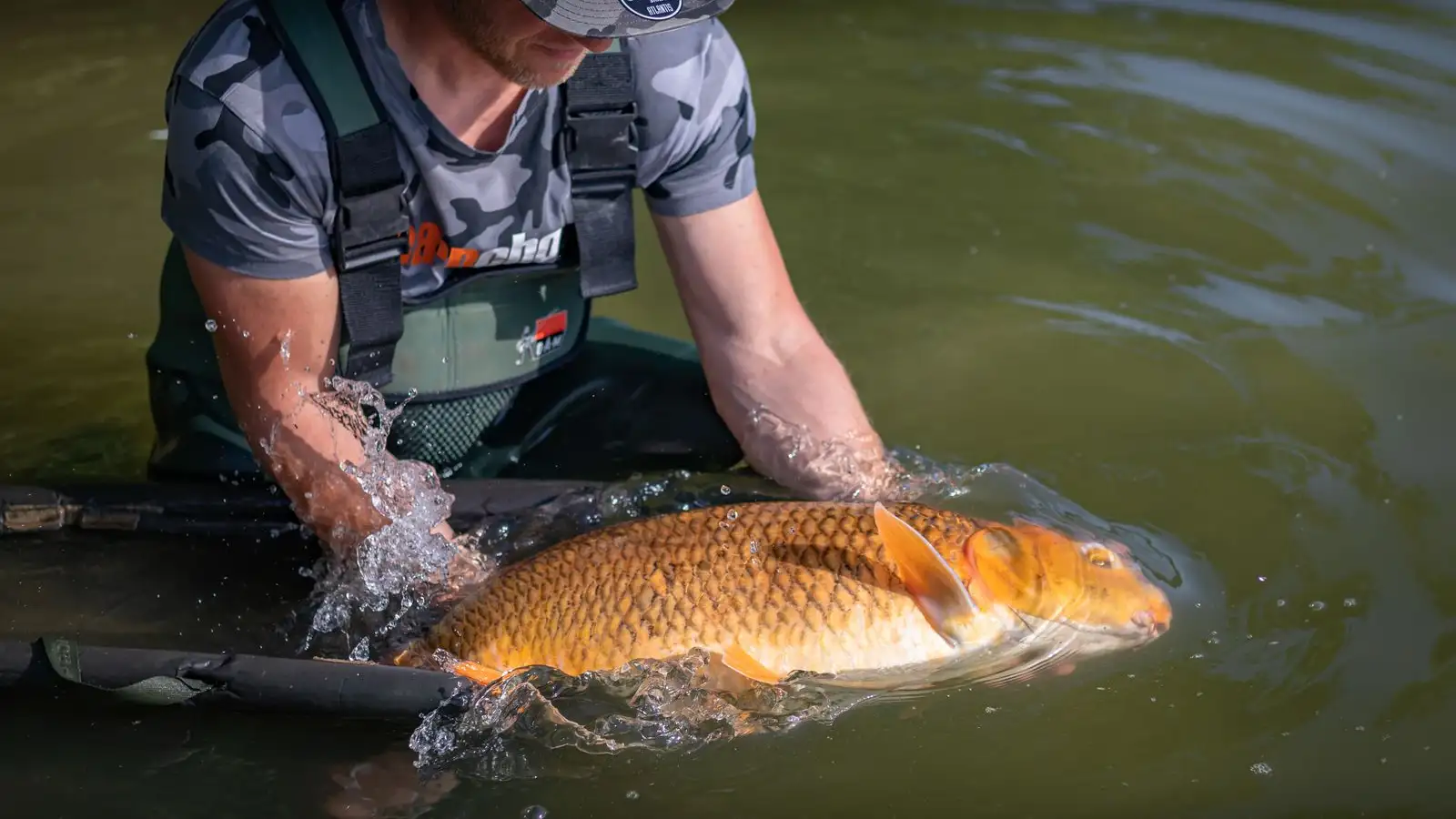
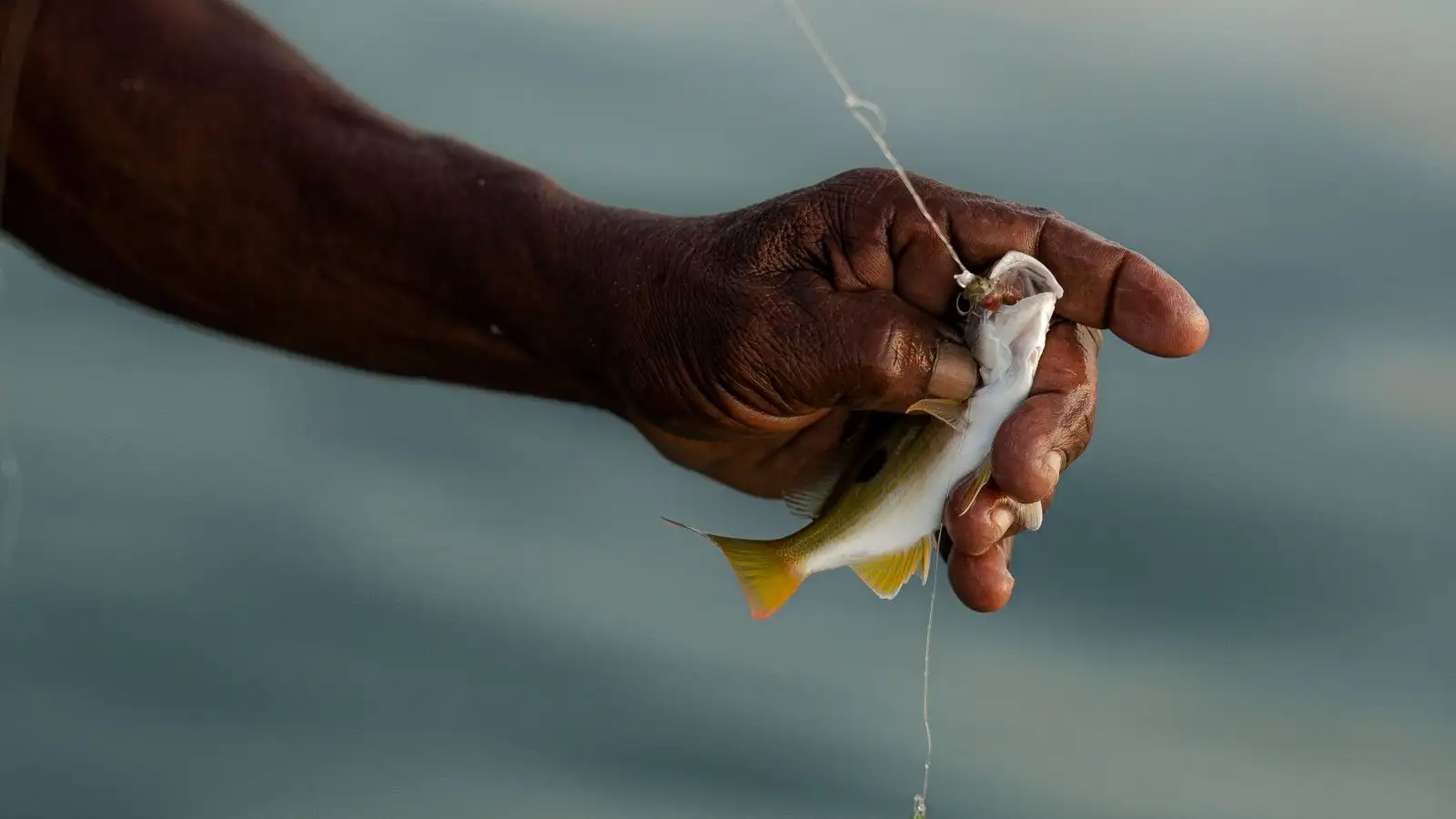
The slime layer is the one surface the rest of catch and release depends on, and that's why a jaw grip isn't harmless: the problem isn't the grip itself so much as what it does to the coat, and what a dry hand does to that coat on the way in. The layer is a living film of mucus a fish keeps producing, and it's the barrier that holds bacteria, fungus, and parasites off skin that doesn't have much else in the way of armor. Whatever comes off during the few seconds you're touching the fish has to be grown back, and until it is, that fish is swimming around with a thinner shield than the one it arrived with. Which makes the practical rules short: wet everything the fish is going to touch, keep fingers out of the gills and away from the eyes, carry the body's weight along its length instead of hanging it from the head, and shorten the whole encounter.
Put Yourself in the Water With Me
It's a fall tailout, the kind of morning where the air is colder than the river and the net has been hanging on your vest since dawn, dry as a towel. A fish eats. You've already made the decision that mattered, and you made it before the take: hands in the river up to the wrist, net bag dunked and lifted dripping, measuring board soaked or left where it stays wet. That's the move. Everything after it is easier than that one thing.
Now the fish is close and rolling on the surface. Here's what the next few seconds look like when they go right.
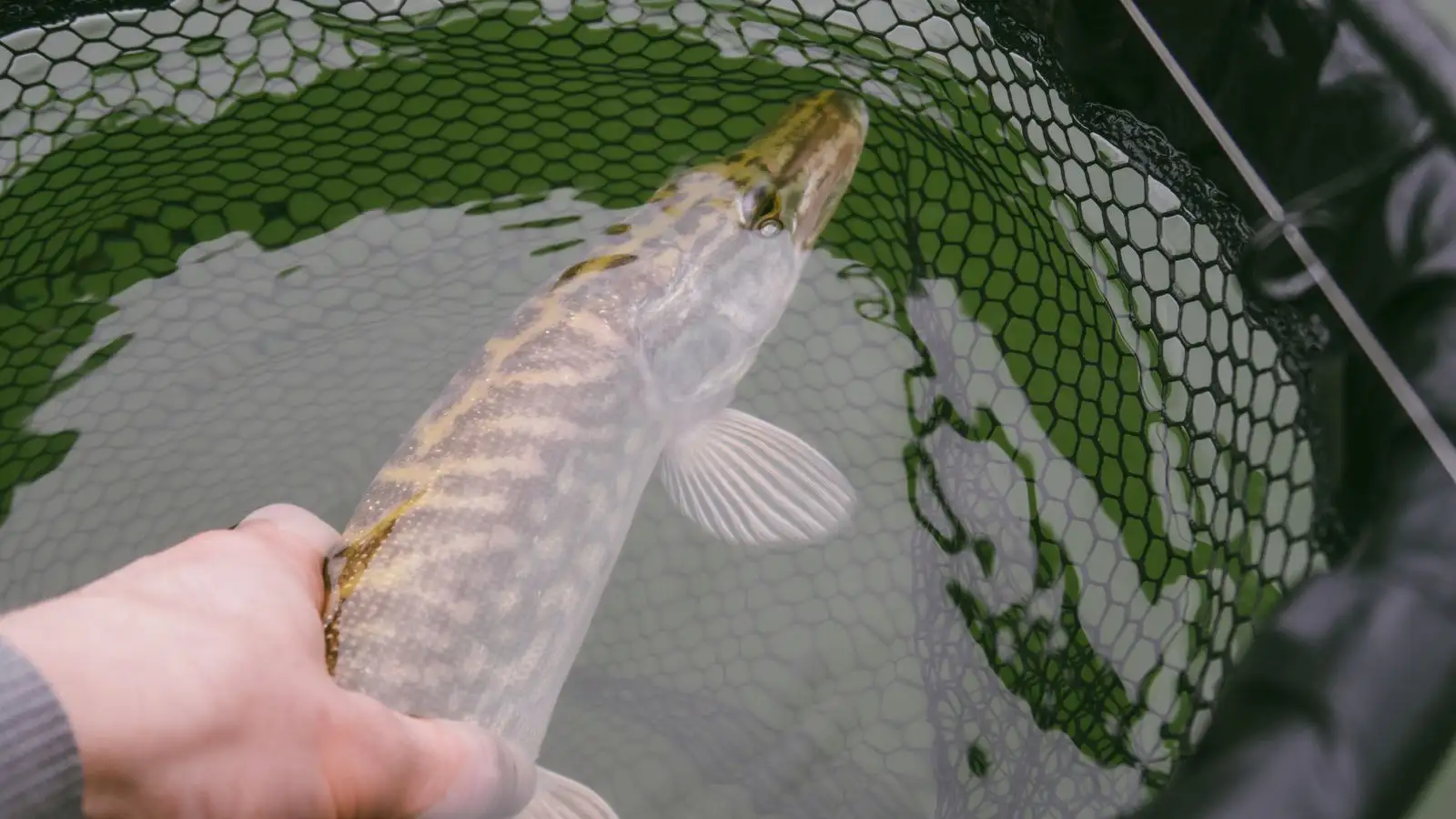
The net goes under and the fish slides into the bottom of it because the bag is already wet. That detail is audible. A dry bag is a rasp, the fish's own weight dragging its coat across the mesh, and you can hear a faint squeak as it goes. A soaked bag is a slide. Nothing about your intentions matters as much as that difference, and you get to decide it ten minutes before you ever hook anything.
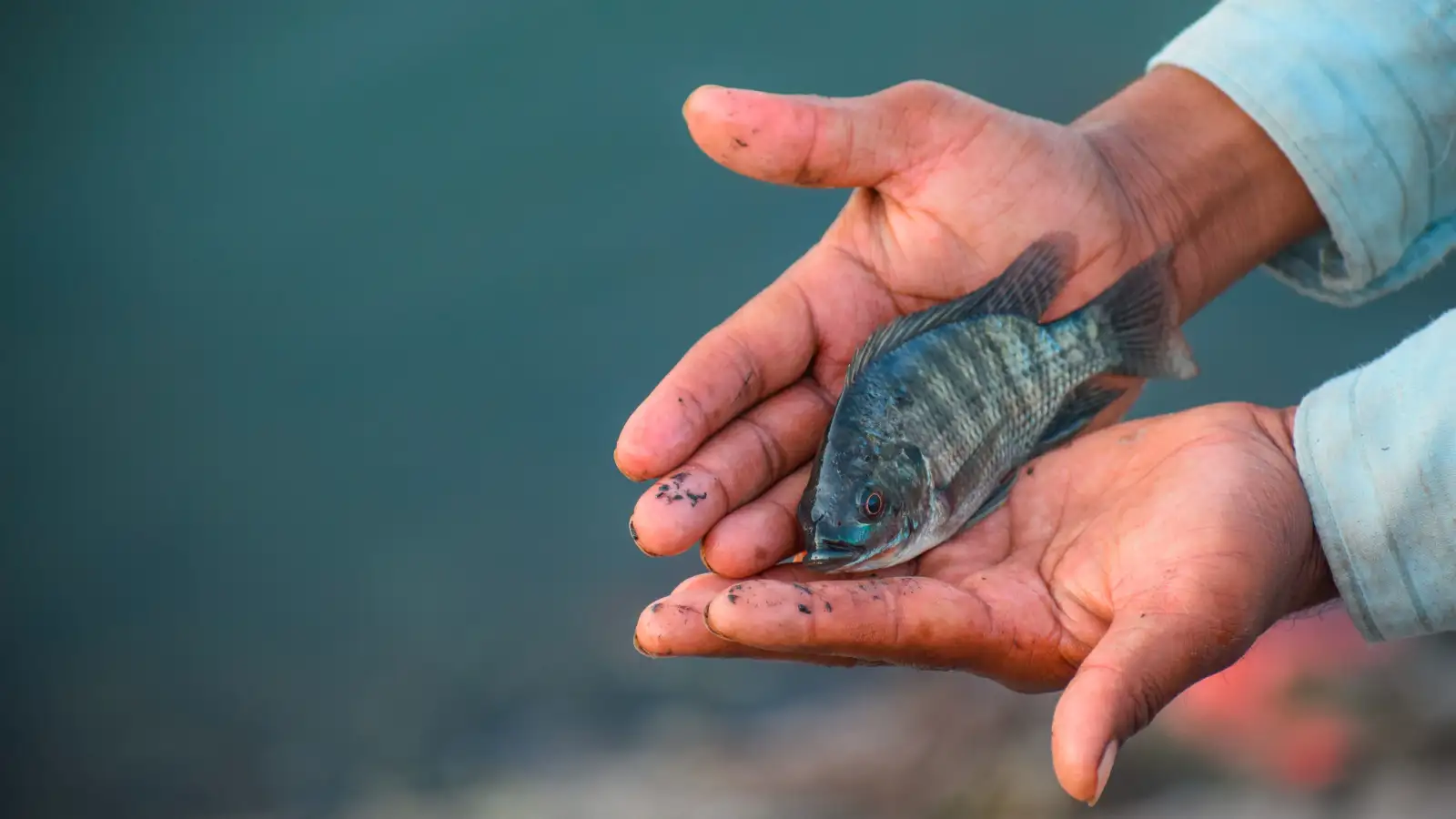
Now hands. Mine go under the belly, forward of the anal fin, palm open and flat, thumb outside the body, no squeeze. The second hand comes to the wrist of the tail, the narrow place just behind the anal fin, and closes loosely there, thumb and forefinger, no grip pressure. Then lift level. Not nose up, not tail up. The fish's weight spreads along its length, which is the direction the body is built to take it. Keep it a few inches above the water, not over the rocks, not over the deck. If something slips, it slips back into the river.
Where the Fingers Don't Go
The edge of the gill plate is thin, and immediately under it sit the rakers, soft and comb-like, built for straining water and not for being pushed on. A finger slipped under a gill cover is the fastest way to start a fish bleeding, and it's an easy mistake to make when a fish is thrashing and you're grabbing for a hold. My fingers stay outboard of that plate. Always.
Eyes are the other one. No thumb over the eye, no fingers across the head pressing it down to settle it. If a fish won't be still, the answer is a better support hand under the belly, not more pressure up top.
And nothing dry touches it. Not the ground, not grass, not the boat deck, not the dry part of the net. If you carry a measuring board, it's wet or the fish doesn't go on it. This is also the moment to think about what's already on your hands: sunscreen, bug spray, the sanitizer you used back at the truck. A mucus layer absorbs what it touches. Rinse your hands in the river before they go anywhere near a fish.
What a Jaw Grip Actually Asks of a Fish
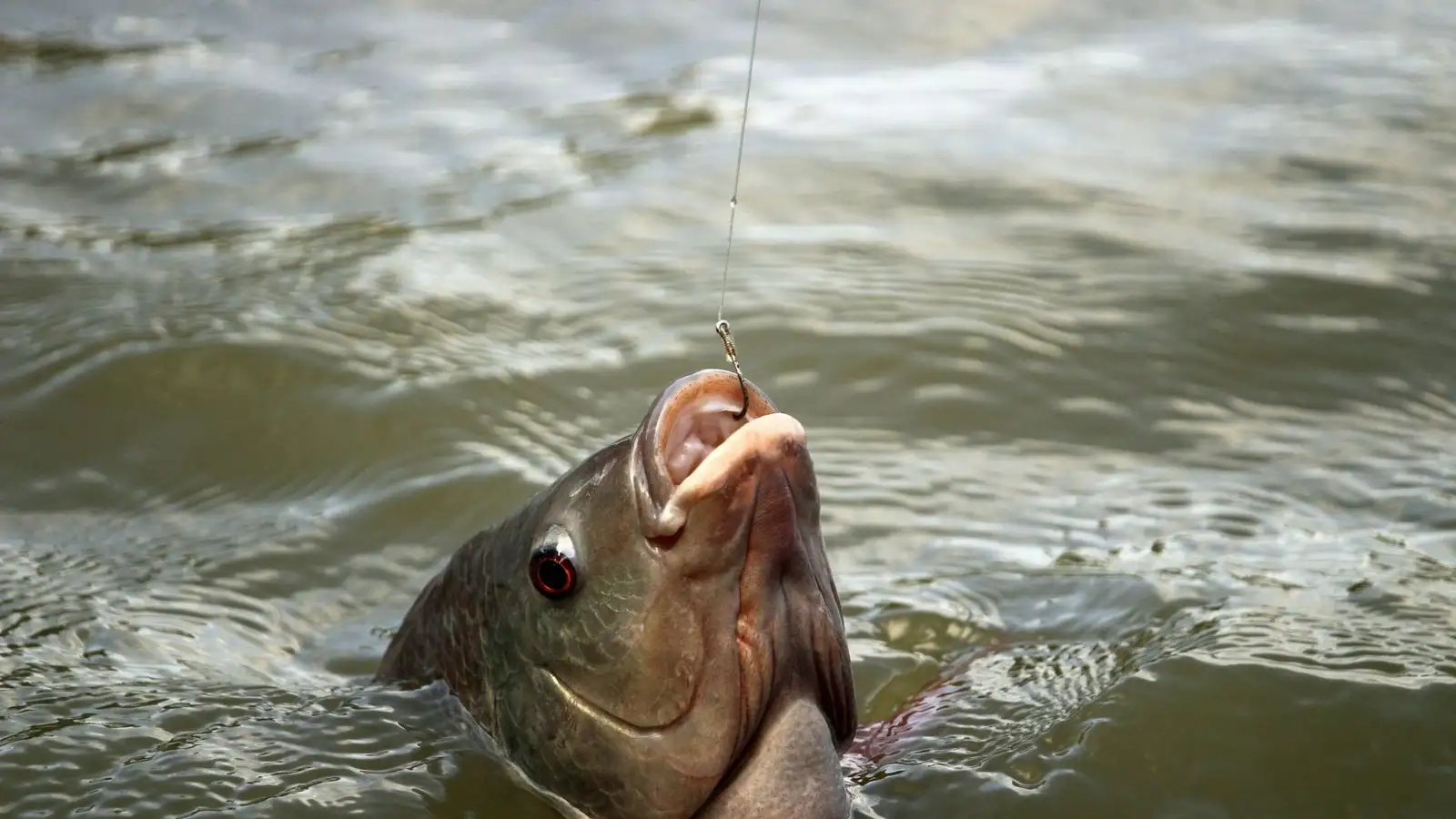
A fish's jaw is built to open, close, and clamp. On a bass, on a trout, on most of what we catch, it's a feeding tool, not a handle. Hang a fish vertically from that jaw and the entire mass of the body pulls down through the hinge, and from there into the gill arches and the spine. Those structures are braced for loads that arrive from the water, along the body, in the direction the fish swims. They aren't braced for a downward pull from a single point at the front of the skull.
That's the whole mechanical case, and it scales with size. A small fish held lightly for two seconds while you back a hook out is a small load, and it's very often the least-bad option, since a fish thrashing loose in a wet palm is scraping its coat on you anyway. A heavy fish hanging in the air by the jaw while somebody finds their phone is a different event entirely. The lever arm is long, and the load lands in a direction nothing in that body was shaped to carry.
So if you have to use the jaw, use the other hand too. Get it under the belly immediately and take the weight there. Jaw plus support is a different thing from jaw alone. What I don't do is hang a heavy fish by the jaw, lift with the jaw as a handle, or spin a jaw-held fish around for a better angle on a photo.
The Count Is Still the Count
Wet hands are necessary. They are not permission. The gills are the clock. Out of the water, the gill filaments collapse against each other and the surface area for gas exchange goes with them, and a wet hand does nothing about that. This is the part people forget while they're congratulating themselves on having wet their hands first.
I count. Not ritual, just a way to keep from drifting. Unhooking comes first, the photo comes second, and the photo is almost always the part that eats the time, because it's the one step with no ending built into it. If a measurement matters, take it against a wet tape or on a wet board while the fish is still in the net, in the water, before it's ever lifted. Water temperature belongs in the count too. Warm water holds less oxygen, and a fish that just fought in it is already behind on repayment, so the same handful of seconds costs more in August than it does in November.
Release is the simplest part. Lower the fish into the water, head into the current, hold it upright and let it breathe. Not the back-and-forth push-pull, which is an old habit that doesn't do what people think it does. Just hold it until it holds itself, then let go and let it pull out of your hand. If it rolls over and won't right, keep a hand under the belly and give it the time it needs.
One Hole, One Handprint
The layer comes back. That's the honest part of all this, and it's why a single clean release isn't a tragedy. But it comes back over days, not minutes, and the fish pays for it out of energy it wanted for other things: moving, feeding, staying away from whatever eats it. A fish caught and released properly in cold water paid a small tax. The same fish caught twice in an afternoon and handled on dry hands both times paid something else.
That's what the usual conversation misses. Everyone worries about the hook, and the hook, if it comes out clean, makes one small puncture. Your hand makes a handprint. The slime layer is the surface that actually gets damaged in a catch and release, and it gets damaged in the seconds when you're holding the fish, which means it's the one part of this whole process you fully control.
Next time you reach for a fish, look at the coat before you touch it. Wet your hands, wet the net, get the weight into your palm, get your fingers clear of the gills, and count. You're not protecting the jaw. You're protecting the layer.