A bass breaks your line because the knot failed. Hard hooksets and cover friction destroy weak connections. Three knots fix this when you match them to the line and cover you're fishing.
Three Knots That Handle Bass Shock and Cover
The Palomar dominates with braid in heavy vegetation. The Improved Clinch works for mono and fluorocarbon in open water. The Uni covers abrasive cover and works with any line. No other gear needed besides line, a hook, and a read on the cover.
What You Need Before Tying
- The line you fish: braid, monofilament, or fluorocarbon
- A hook or lure
- Awareness of whether you're fishing grass, timber, rocks, or open water
Tying the Three Bass Knots That Won't Break
Step 1: Check Your Line and Cover First
Braid is slick and won't hold a slipping knot; heavy cover scrapes at the knot constantly. Choose a knot that locks tight and sits close to the eye. Mono and fluorocarbon stretch, so pick a knot that tightens gradually—shock loading a stiff knot on stretchy line snaps it. Open water means less rubbing, but hooksets still spike tension.
Step 2: Tie the Palomar for Braid and Thick Cover
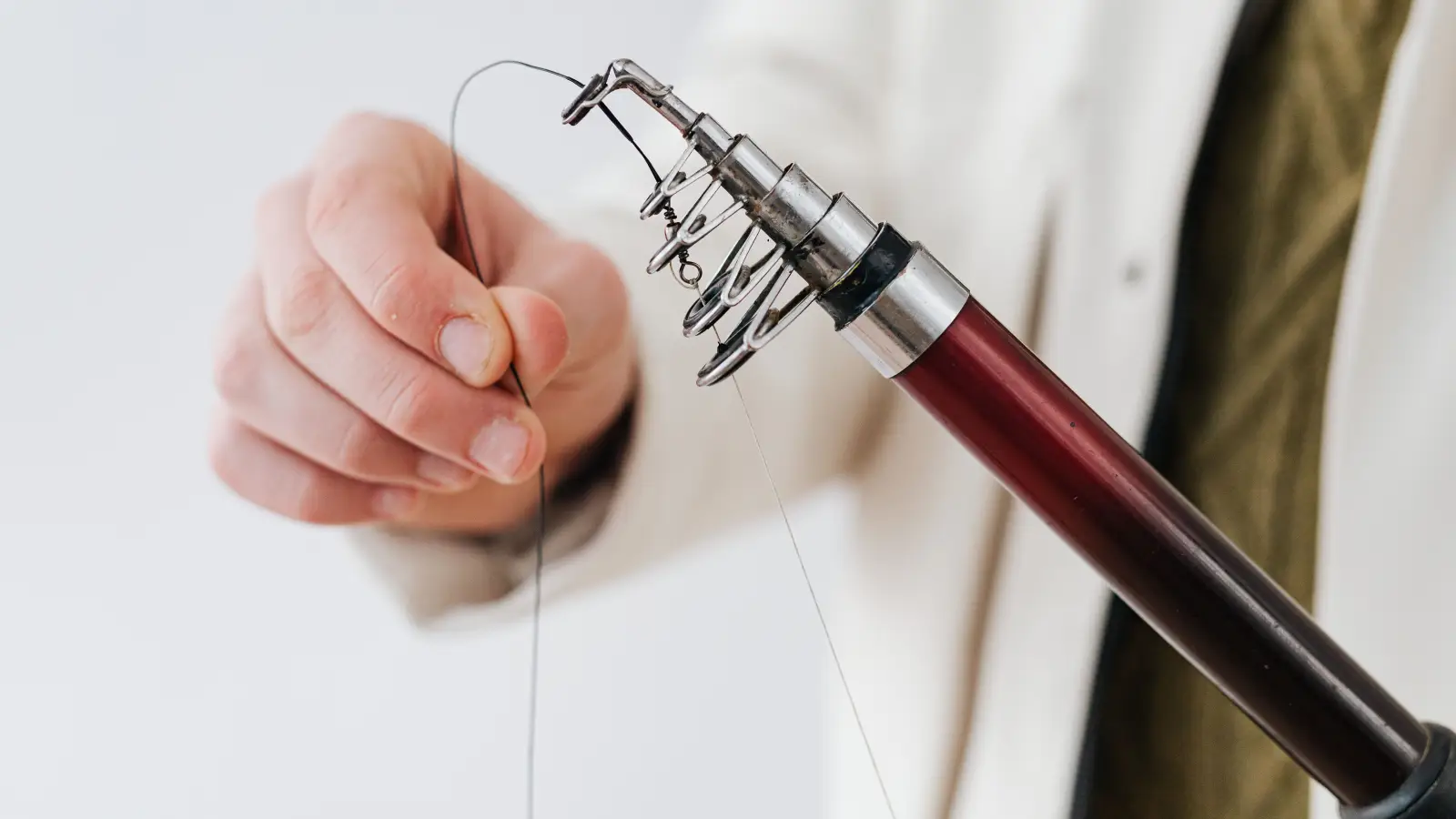
Double the line, feed the loop through the hook eye. Tie an overhand knot with the doubled line, leaving a loop large enough to pass the hook through. Pass the hook through the loop. Pull the standing line and tag end evenly while wetting the knot. Cinch until the coils stack flat.
This knot holds near full strength. Braid can't slip. The flat seat on the eye reduces abrasion from grass or wood.
Watch out: If the doubled loop twists before you pass the hook, the knot seats lopsided and loses strength. Straighten the loop.
Step 3: Tie the Improved Clinch for Mono and Fluoro in Open Water
Thread 8–10 inches of line through the hook eye. Wrap the tag around the standing line five to seven times, tight coils moving back toward the reel. Pass the tag through the small gap at the eye, then back through the big loop you just opened. Wet everything. Pull the tag slowly to cinch the coils down, then pull the standing line.
The coils tighten in sequence, absorbing shock without kinking. That's why it works for stretchy lines.
Watch out: Under five wraps, the knot pulls out. Over seven on 12-pound test and heavier, friction heat during cinching weakens the line. Wet it every time.
Step 4: Tie the Uni Knot for Abrasion Resistance and Versatility
Run the line through the eye and loop it back, leaving a doubled section. Wrap the tag around both strands five or six times, working away from the hook. Pull the tag end until the wraps form a tight barrel. Slide the knot down to the eye and pull the main line to cinch, lubricating as you go.
The long coil spreads load over more line, so rubbing against rock or wood doesn't cut it. It holds across all line types and can join lines in a pinch.
Watch out: Overlapping coils create weak spots. Pull the tag firm before sliding; a loose barrel won't seat.
Mistakes That Kill a Knot
Twisting the Palomar Loop
Even a small twist before tightening drops strength. Check the loop and straighten it before pulling.
Cinching Dry, Especially Fluoro
Fluorocarbon burns under friction. A dry cinch melts the line surface and creates a brittle point. Always wet it.
Skipping Wraps on the Clinch
With 10–17lb mono, five wraps minimum. Fewer, and the tag slips out on a hard hookset.
Loose Tag on the Uni Before Sliding
If the tag isn't tightened before you move the knot, the barrel won't grip. Pull the tag until the coils are snug, then slide and cinch.
Questions Bass Anglers Ask
Strongest knot for braid?
The Palomar, tied straight and wet, reaches line strength and won't slip.
Does wetting the line actually help?
Yes. It stops friction burn that weakens the knot. Especially important for fluorocarbon.
Can one knot do it all?
The Uni is the safest all-rounder. But braid in grass still calls for the Palomar. Match the knot to the situation.
How do I test a knot before fishing?
Pull slowly. A good knot breaks at or above line rating. If it pops early, retie.
What knot for rocks and timber?
Palomar on braid, Uni on mono or fluoro. Both handle abrasion.
Keep Landing Bass
Pick the knot for your line and cover, tie it clean, and check it after every fish or snag. The three knots here cover the failure points that cost bass. Get them automatic at home, and you'll never lose another fish to a knot.