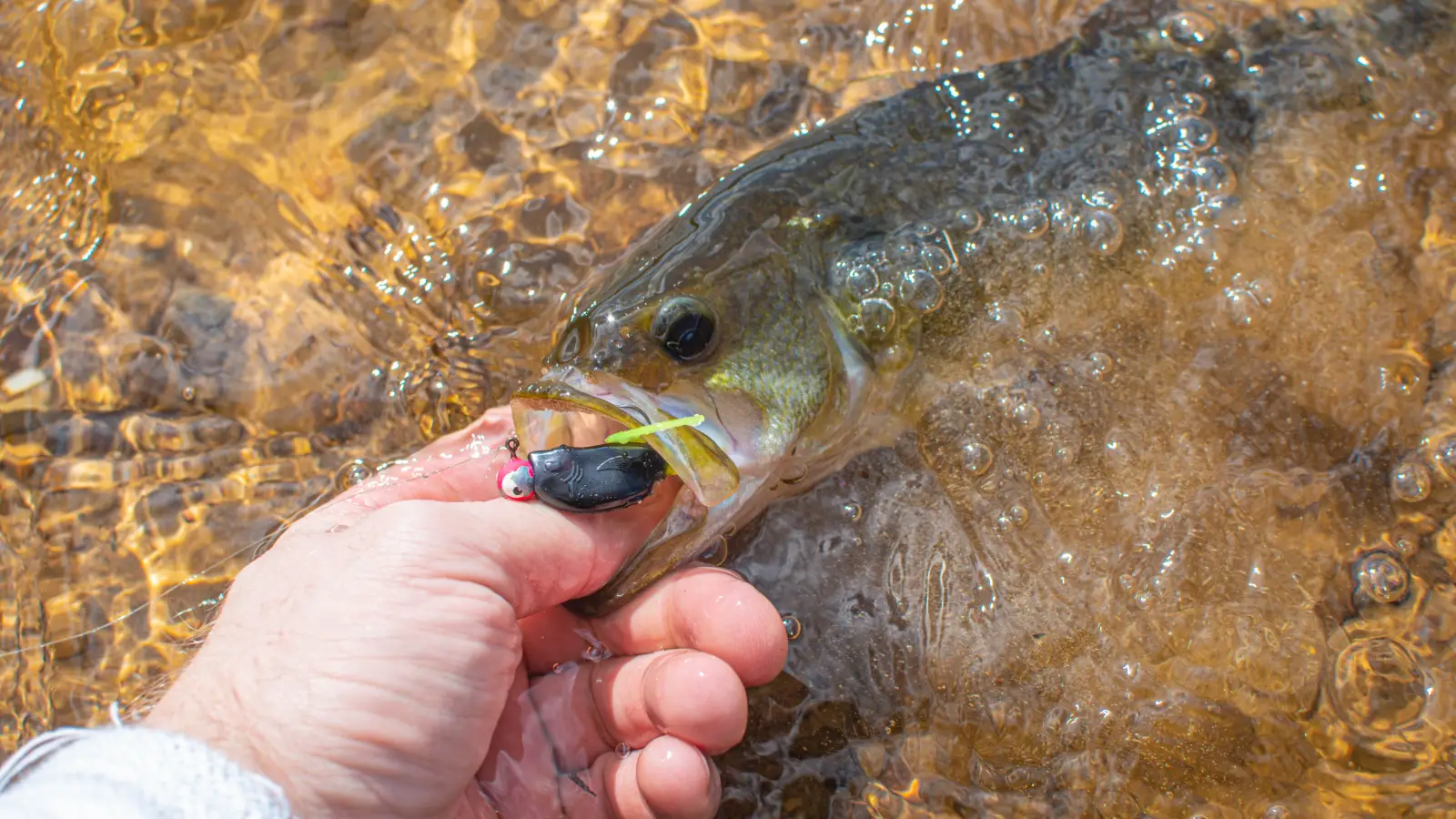
Ask a bass angler what releasing a fish well looks like, and many will describe a lip hold and a quick splash. The practice that thoughtful catch-and-release anglers are quietly adopting goes deeper: it’s a horizontal lip support that respects the bass’s body as a connected structure—its jaw, spine, and internal anatomy all reacting to how it’s held. When you handle a bass this way, you’re not just being gentle; you’re working with the fish’s biomechanics so that its skeleton never fights gravity at a single, vulnerable hinge.
Three Release Scenarios Where This Applies
Start by finding the situation that matches your own practice.
- You’re landing a bass and want it to swim away strong. Your route follows the biomechanics of the jaw and spine, so you’ll learn why horizontal support matters before ever touching the fish.
- You’ve been holding bass vertically by the lip and want to know what’s wrong with that. Your route compares the vertical hold to the horizontal one, using the fish’s own anatomy to show which posture protects the spine.
- You’re new to bass fishing and want a science-based release habit from day one. Your route builds the wet-hand, horizontal-grip motion as a single, repeatable pattern.
The Jaw as a Fulcrum: Why Vertical Holds Cause Injury
A bass’s lower jaw isn’t a handle; it’s a moving arm on a hinge. That hinge sits just behind the eyes, and the jawbone itself is designed to open, close, and absorb the shock of feeding—not to bear the fish’s full weight. When someone holds a bass upright by the lip, the weight hangs from that small pivot, pulling the mouth open and transferring load through soft tissue to the front of the skull. The skull tilts, the spine compresses at the junction called the craniovertebral joint, and the fish’s organs settle against the body wall.
The real trouble comes from leverage. Imagine the jaw hinge as a fulcrum with the fish’s body as the long arm of a lever. In a vertical hold, that arm is extended fully downward, magnifying the force on the attachment point with every gram of weight. A sudden thrash—common when the fish feels unsupported—can stretch ligaments enough to cause a dislocation or minute fractures that don’t kill immediately but lead to slow decline in the days after release.
What this stage aims to achieve: Recognizing that the bass’s body becomes a stressed lever the moment it’s held vertically.
What to do: No physical steps yet. Focus on building the mental picture of the jaw’s hinge and how the spine connects to it.
Ready to move on when: You can explain to another angler, in your own words, why a vertical lip hold loads the spine incorrectly, using the idea of the jaw as a fulcrum.
Wet Hands: Simple but Non-Negotiable
The slime coat that covers a bass is a glycoprotein barrier that blocks bacteria and parasites. A dry hand is abrasive enough to strip that layer, especially on the lip’s thin tissue, leaving the fish vulnerable to infection for days. Dry skin also creates a tacky surface that makes the fish thrash, which raises the risk of a dropped fish and more handling time.
Wetting the hand before contact solves both problems. The slick layer of water lets the fingers glide against the lip without sticking, which keeps the fish calmer. It also preserves the slime coat, reducing the chance of post-release mortality from secondary infection.
What this stage aims to achieve: Making wet hands an automatic habit before any fish is touched.
What to do: Submerge your hand in the lake for a moment or splash water onto your palm and fingers. Do this before unhooking, every time. Don’t wipe your hand dry first.
Ready to move on when: Wetting your hand feels natural, and you notice the bass’s lip doesn’t catch or tear against your skin.
Horizontal Lip Support: The One-Grip Release
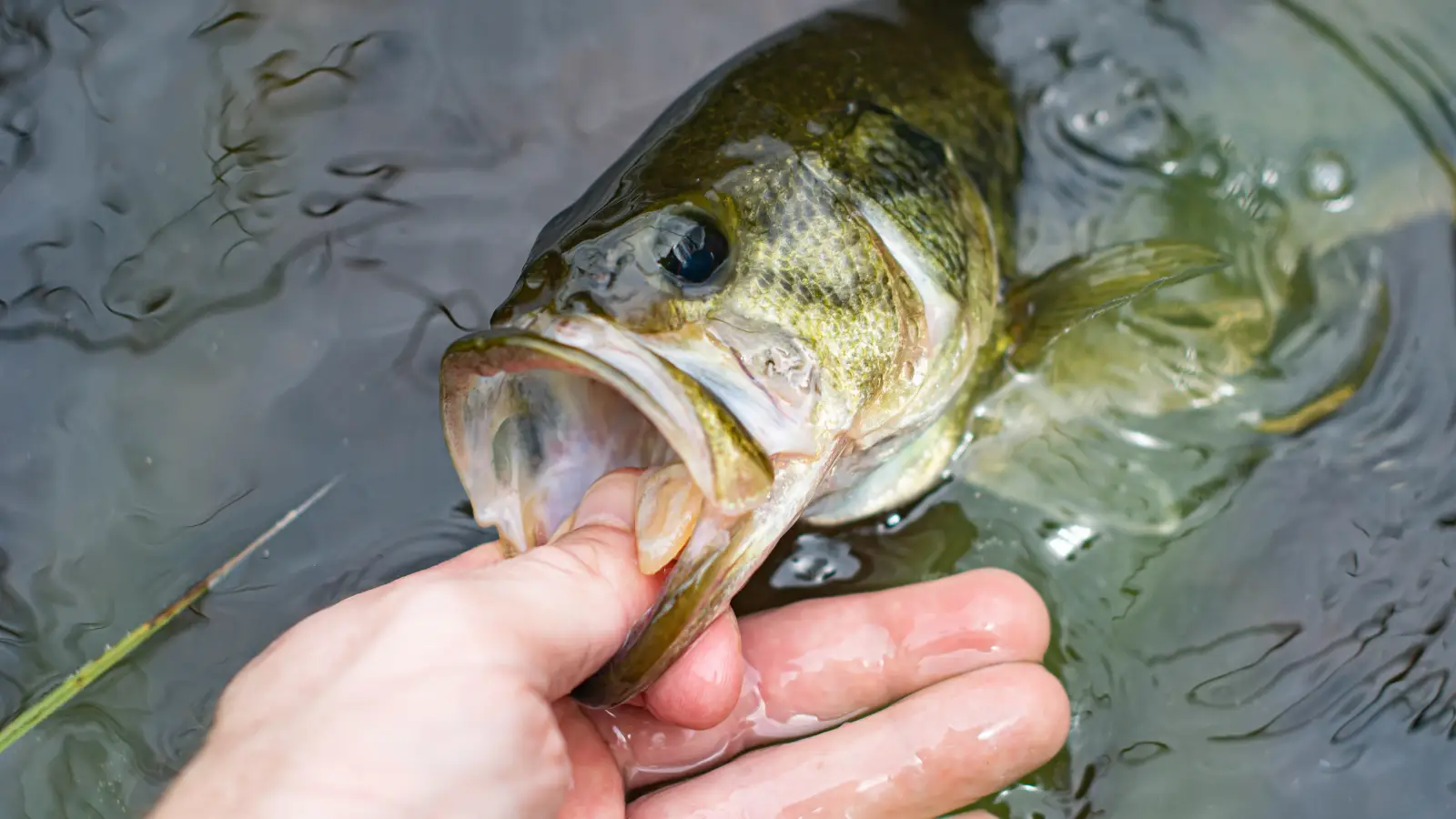
Here is the hold itself. Slide your thumb inside the bass’s lower lip near the tip, and curl your index finger outside the jawbone. Let the remaining three fingers cradle beneath the jaw, creating a broad support. Keep your elbow bent and bring the fish level immediately.
This horizontal position changes the load path. Instead of the fish’s body hanging from a single joint, the weight now rests along the length of the jaw and is partially carried by your cupped fingers. The spine stays in its natural, neutral alignment, and the fish’s internal structures aren’t pulled downward by gravity.
Two small actions can still defeat the purpose: twisting the jaw to look at the fish, and squeezing too hard. Both apply uneven force to the jaw’s lateral attachments, recreating the lever stress the horizontal hold is designed to avoid. Keep the fish straight, and use only as much pressure as it takes to prevent a slip—usually almost none.
What this stage aims to achieve: A controlled horizontal hold that distributes weight and protects the jaw joint.
What to do: After unhooking, lift the fish with the horizontal lip grip and keep it parallel to the water. If needed, slide your other wet hand under its belly for full-weight support.
Ready to move on when: The bass stays horizontal and still in your grip, without any need to tighten your hold.
The Release Motion: Slide and Observe
The final moment is not a toss. Lower the fish gently into the water, still horizontal. Once it’s submerged and its weight is buoyed, simply open your hand. The fish will feel the water and push off on its own.
Watch the first tail stroke. A healthy bass will dart away with a strong, straight kick. If it drifts to one side or lingers, that doesn’t automatically mean something went wrong, but it’s a hint to keep an eye on the fish—and perhaps to shorten your own handling time on the next catch.
What this stage aims to achieve: A release that requires almost no additional effort or handling.
What to do: Submerge, open your hand, and observe the swim-off without interference.
Ready to move on when: The fish departs with a deliberate tail thrust and does not hesitate.
Readiness Signs Recap
- You can explain why vertical holding stresses the jaw and spine.
- You automatically wet your hand before touching any bass.
- The bass stays horizontal and still in your grip without resistance.
- The fish swims away with a deliberate, powerful tail kick.
Deferred Concerns: What Not to Worry About Yet
Reviving a bass by moving it forward and back. When a horizontal release happens quickly, most bass don’t need revival. This concern becomes real only when a fish is lethargic after a long fight or an extended time out of water. For now, the priority is keeping your handling time short enough that revival isn’t necessary.
Using lip grip tools. Boga-style grips and jaw spreaders are overkill for bass and can fracture the jaw with their narrow contact points. Those tools have a place with toothy species like pike, or with extremely large bass that genuinely require extra control—but they aren’t a starting point.
Taking trophy photos. Extended photo sessions add prolonged air exposure and often pull the fish into awkward vertical postures. Hold off on photo practice until the horizontal release is second nature. When you’re ready, keep the fish horizontal and wet throughout the whole process.
Frequently Asked Questions
Why can’t I hold a bass vertically by the lip?
The fish’s full weight pulls on the jaw hinge and compresses the spine. That leverage can stretch ligaments and even cause spinal injury. A horizontal hold removes the long lever arm, so the jaw isn’t overloaded.
How long can a bass survive out of water?
Gills start drying in seconds, and oxygen exchange drops sharply after 10–15 seconds. Most bass survive a minute if handled well, but the safer target is under 20 seconds out of water.
Do I need to revive a bass after releasing it?
Not if the release is quick and the fish swims off strongly. Revival is for fish that have been exhausted by a protracted fight or that can’t orient themselves. Reduce air exposure first, and you’ll rarely need to revive a fish.
What if the bass is deep-hooked?
Deep hooking is a complication. Use long-nose pliers to remove the hook carefully, and if bleeding is heavy, cut the line close to the hook. Survival chances drop, but keeping handling time as short as possible still helps. In this situation, you may need to support the fish in the water until it regains its equilibrium.
Is it safe to grab a bass by the lip with bare hands?
Yes—their teeth are tiny and sandpaper-like, so they won’t break skin. The real danger is to the fish’s jaw if the hold is vertical or twisting.
What a Good Release Looks Like
A complete release takes only seconds: wet hands, a horizontal hold, a gentle slide into the water, and a strong swim-off. For the most common starting point—wanting the fish to thrive after release—the very first action is to ingrain the wet-hand habit before the next trip. Before you ever touch a fish, dunk your hand. That single gesture sets up everything else: the grip, the support, the release—all aligned with the bass’s own design.