Bass don’t scatter across a lake waiting for a lucky cast. They run on a tight schedule: water temperature tells you where they are this season; light tells you when they'll eat today. A guide’s first move on a new lake isn’t opening the tackle box—it’s checking the water temperature. Master that, pair it with the daily feeding window, then hunt structure. That’s how you find bass fast, every time. The rest is noise.
Water Temperature Is the Bass’s Master Clock
Bass are cold-blooded. Their metabolism, movement, and feeding all respond directly to water temperature. Five degrees can shift an entire lake’s population from inactive to chasing bait. A guide on unfamiliar water doesn’t guess—they get a temperature reading and instantly eliminate three-quarters of the lake. Surface temperature tells you which seasonal phase the bass are in, no matter what the calendar says.
48–55°F: pre-spawn, bass moving from deep wintering holes toward spawning flats. 55–70°F: spawn and immediate post-spawn. Above 75°F: summer pattern, fish heading deep or into thick cover to find cooler water. Fall: water drops back through the 60s and 50s, bass chase shad shallow. Below 45°F: winter, fish barely move and hold on deep structure. If the water reads 44°F in April, you’re fishing winter—adjust accordingly.
Light is the second lever. Bass have a visual advantage in low light and feed hardest at dawn, dusk, and under clouds. Bright sun pushes them deep or tight to cover, forcing you to slow way down. Recognize that light dictates when they’re willing to chase a fast-moving bait.
Structure and cover set the stage. Bass position on edges—depth changes, weed lines, laydowns—that give them ambush points. The exact spot they use depends entirely on temperature and light at that moment.
These three inputs—temperature, light, structure—form a simple targeting system. Use it, and you stop fishing hope and start fishing data.
Let Water Temperature Name the Season You’re Fishing
Water temperature slaps a seasonal label on every lake you approach. No calendars, no guesswork. Above 50°F and rising: pre-spawn. 60–75°F: spawn. Over 75°F: summer. 70 dropping to 50: fall. Under 45: winter. The bass follow these triggers predictably.
Check the temperature first. Dip a waterproof thermometer as soon as you hit the water or use your electronics. That one number eliminates dead water. If it’s 52°F, you narrow your search to staging areas—secondary points, creek channel bends, the first drop-offs outside spawning bays. You don’t waste casts on 30-foot ledges yet.
Match your target to the seasonal table:
- 45–50°F: transition from winter, fish main-lake points and deep-to-shallow travel routes.
- 50–60°F: pre-spawn, target wind-blown points and the entrances to shallow coves.
- 60–70°F: spawn, look for beds on hard, protected flats in 2–6 feet.
- 70–80°F: early summer, shift to deeper weed edges, humps, and docks.
- 80°F+: high summer, fish early and late only, hit deep brush piles or matted grass.
- 60–70°F (fall): bass crush bait on main-lake points and shallow weed lines.
- Below 50°F: slow everything down and target deep structure with compact jigs and drop shots.
Done well: You check 57°F, pick a north-facing bay with wind blowing in, and catch fish within the first 30 minutes. No wasted time.
Find the Bass’s Most Active Hours Every Day
Even in the right season, bass don’t feed nonstop. They have daily active windows—typically the first two hours after sunrise and the last two before sunset. Low-light conditions and overcast skies extend these windows. Bright midday sun shuts them down.
After you know the season, time your effort. Showing up at 10 a.m. in August means you’ve already missed the morning bite and the evening bite is hours away. You’re fishing to inactive fish, which requires painstakingly slow presentations. Plan around light. Launch at false dawn while it’s still dark. Fish hard until mid-morning, then take a break, or return at 4 p.m. for the evening feed. On a drizzly, overcast day, the window stays open all day—take advantage.
If you must fish under high sun, go tight to cover: under docks, inside thick weed mats, or into dark, deep shade. Slow your presentation to a crawl. A wacky-rigged stickbait dead-sticked beside a piling will outproduce a spinnerbait burned across open water every time.
Done well: You arrive at 6 a.m., throw a topwater along a shaded bank, and boat three fish before 7 a.m. By 9:30, you’re dragging a jig along a deep weed edge and still catching fish because you adapted.
Read the Water to Pinpoint the High-Percentage Spot
Bass don’t roam aimlessly. Inside the right seasonal zone and during the feeding window, they stack up on specific structure. Edges rule: points, drop-offs, creek channels, weed lines, laydowns, docks, and rock piles. The spot will be where shallow meets deep or where cover creates an ambush.
Scan the shoreline. On a new lake, spend the first 10 minutes looking for edges. A point jutting out, a visible weed line, a submerged tree, a dock—these concentrate fish. Then check how depth changes. A main-lake point that falls quickly into a creek channel is a highway. Any isolated stump on an otherwise featureless flat is a magnet. On weedy lakes, fish the outside edge where the weeds stop; that’s where bass ambush shad. Learn to break the lake into zones—main lake, secondary points, bays, spawning flats—and match them to the season.
If you have electronics, watch for depth changes and brush piles. If you’re on the bank, wear polarized glasses and walk the shoreline, looking for any break in the terrain. Put your lure right on that edge, not three feet off it.
Done well: You find a point with a quick 8-to-20-foot drop and a submerged stump right on the ledge. A creature bait pitched to the deep side gets thumped instantly.
Putting It All Together: A Morning on a Spring Lake
Early April, 6:30 a.m. Water temperature reads 58°F—pre-spawn. Bright sun is coming so the low-light window will close by mid-morning. On a map, you note a broad shallow bay on the north shore with a creek channel feeding it and two points at the mouth. A south wind has been pushing warm surface water into that corner for two days.
You start on the windward point. Tie on a squarebill crankbait and cast parallel to the rocky bank. On the third cast, a bass smashes it. As the sun rises and direct light hits the point, you move to the deeper outside edge and drag a football jig down the creek channel drop. Two more fish before 9:30 a.m. Twenty minutes on the water, fish located—because you layered temperature, light, and structure instead of guessing.
Three Mistakes That Keep You Casting at Empty Water
Checking the Air, Not the Water
Air temperature lies. A warm 70°F afternoon doesn’t mean a lake that was frozen last week has warmed up. You skip the thermometer, assume it’s pre-spawn, and fish shallow patterns. The lake’s still 44°F, bass are deep and dormant, and you burn hours with nothing to show. Always measure water first.
Fishing the Wrong Time of Day Because It’s Convenient
Arriving at the ramp at 9 a.m. and leaving at 3 p.m. on a summer day is a schedule for empty water. You miss both feeding windows. Bass have already fed and are locked in deep shade by the time you start. Rearrange your day: fish dawn, take a break, then fish dusk. Those extra two hours of low light change everything.
Casting to Open Water Instead of Edges
If your lure isn’t touching cover, a depth change, or a visible edge, you’re not fishing where bass are. Beginners often stand on a bank and heave a bait into the middle of a cove. Bass don’t cruise open water looking for meals; they sit on structure and wait. Find the edge—a dock, a weed line, a drop-off—and cast within inches of it.
At a Glance: The Guide’s Location Checkpoints
| Stage | Goal | Key Action |
|---|---|---|
| Season | Know which movement phase bass are in | Dip a thermometer; match reading to seasonal chart |
| Daily Window | Fish when bass are actively feeding | Plan trips around dawn, dusk, or overcast conditions |
| Structure/Cover | Put your lure on high-percentage spots | Find edges—points, weed lines, drop-offs, docks, laydowns |
Common Questions About Finding Bass Fast
How do I measure water temperature without an expensive fish finder?
Tie a floating or submersible aquarium thermometer to a length of string. Lower it a foot below the surface, wait 30 seconds, and read it. Cost: under ten dollars. Keep it in your tackle bag.
What’s the best water temperature for bass fishing?
Pre-spawn (55–65°F) and fall cool-down (60–70°F) produce the most aggressive feeding. Anything between about 50°F and 80°F is workable. Below 45°F or above 85°F, bass slow down and require precise, slow presentations.
Do bass bite when it’s raining?
Yes, often aggressively. Rain cuts light, disrupts the surface, and washes food into the water. It extends the feeding window. Throw a spinnerbait or a loud topwater into the shallows during a warm rain.
Can I find bass from the bank without a boat or electronics?
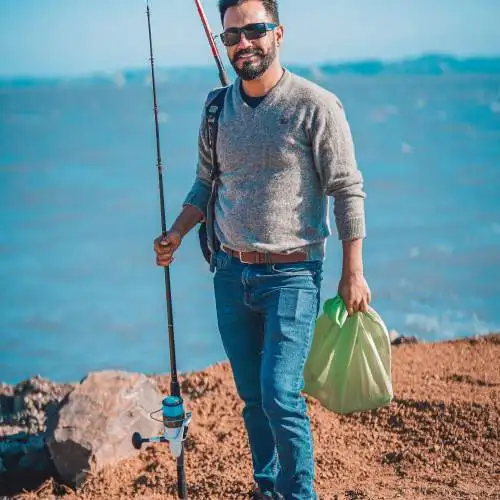
Absolutely. Walk the shoreline looking for any break: fallen trees, dock pilings, weed edges, points, or visible depth changes. Polarized sunglasses let you see structure underwater. A bank angler who reads the water will outfish a boat angler who just motors past good spots.
One Cast at a Time: Start Here Tomorrow
The guide’s system reduces to three steps: let water temperature label the season, time your trip to the daily feeding window, then dissect the structure. Start with one piece. Buy a thermometer. Check water temperature before you launch or walk the bank. That single number will tell you exactly where to begin your search. Everything else follows.