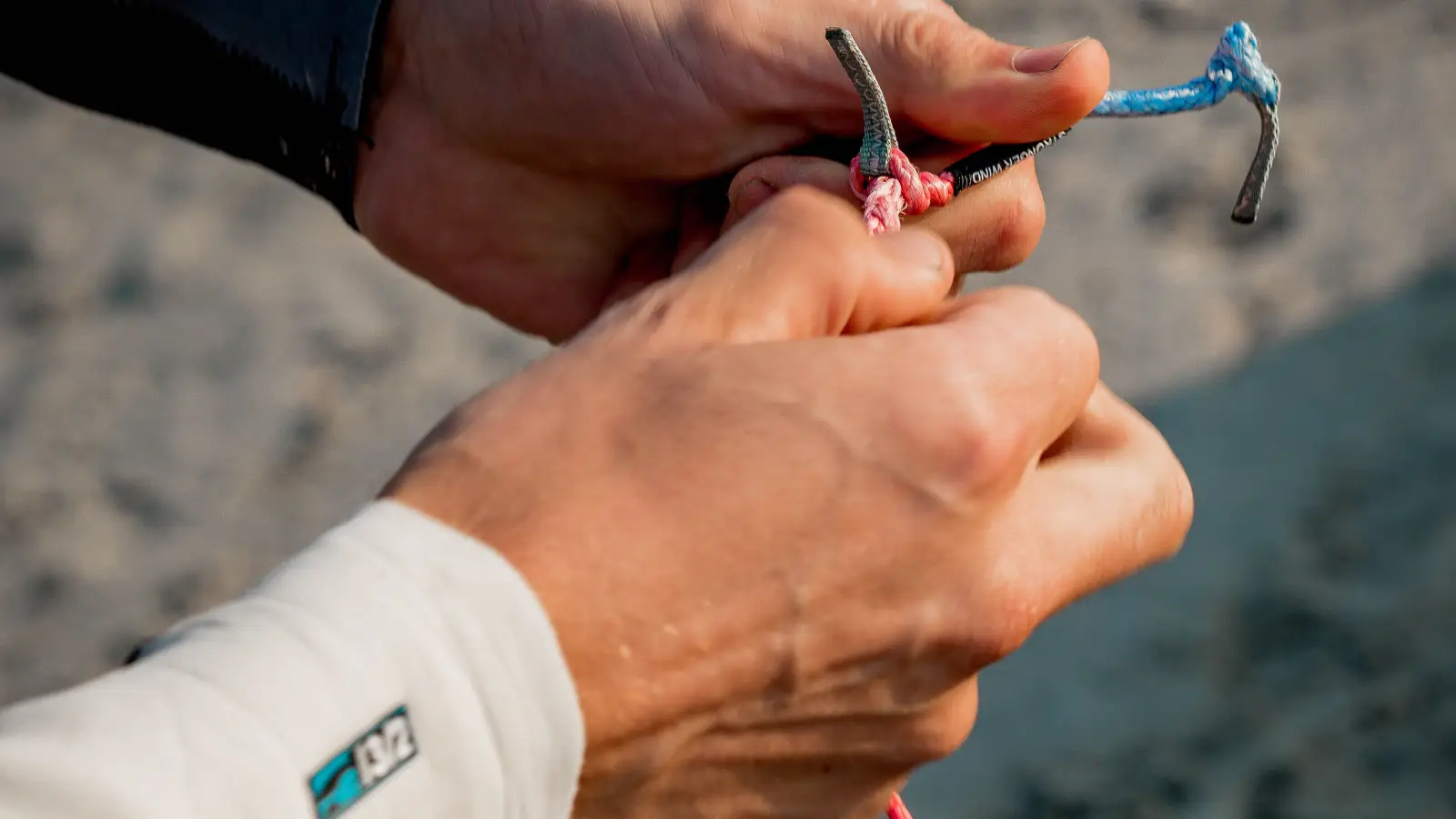
The Improved Clinch, Palomar, and Uni Knot handle almost every hook, lure, and line combination you face in fresh or salt water. Each works because its physics mates to specific line materials and hook styles—master that, and you pick the right knot without hesitation.
What These Three Knots Actually Let You Rig
Know these three, and you rig a circle hook on mono, a jig head on straight braid, a popping cork with a fluoro leader, and a crankbait clipped to a split ring—no chart needed. You choose by feel because you know exactly how each knot locks up under load.
Your Three-Knot Decision Sequence
- Read your line material (mono, fluoro, braid) and terminal tackle (eye shape, swivel, split ring).
- Select the knot with the matching grip mechanism.
- Tie the knot using its essential cinch direction and enough lubrication.
- Pull-test until it holds without shifting.
Step-by-Step: The Physics That Guides Each Knot
Step 1: Read Your Line and Terminal Tackle
Mono stretches and has surface texture—coils bite into it. Fluoro is hard and slick; friction ramps fast but can heat and burn if you rush. Braid has no compression and almost no surface grip, so friction wraps are useless. Terminal hardware matters just as much. A small turned eye lets coil wraps stack clean; a big round eye or split ring forces you toward a knot that grabs the hardware, not the standing line. You spot this in two seconds. The mistake is ignoring it entirely and tying the same knot for every situation.
Step 2: Match the Knot to Your Rig’s Grip Requirement
Improved Clinch coils tag around standing line 5–7 times, then passes through the loops. Pulling the standing line compresses coils into a friction lock. Mono’s pliability makes that lock solid. Fluoro works with heavy lube and a slow pull; without it coils slip or glaze. Braid just slips. Use it on hooks with small eyes where coils stay organized.
Palomar doubles line through the eye, ties an overhand in the doubled strand, then hooks pass through the loop. Tightening cinches the doubled line against the eye, distributing load over two strands. No friction wrap means it works perfectly on braid and fluoro because it locks onto the metal, not the line surface. Eye size doesn’t matter. For drop-shots, leave the tag long, then feed it back through the eye before final tightening to create a stand-off.
Uni Knot forms a sliding clutch: tag wraps 5–6 times around the doubled line, pull tag to compress wraps into a cylinder, slide it to the eye, then pull standing line to lock. Versatile—it grips braid, fluoro, and mono without deforming the line. Ideal for tying to swivels or joining lines. Slower to seat in heavy mono if you don’t work it down gradually.
Five seconds to choose. The error is grabbing the Clinch for braid out of habit, then finding your lure sailed off on the cast.
Step 3: Tie the Knot Using Its Designed Cinch Direction
These knots fail most often because of sloppy tightening, not because they’re weak.
Improved Clinch : After wraps and first pass, lube. Pull the standing line to slide and stack coils against the eye, then pull tag to lock. Tag first will trap coils unevenly.
Palomar : Doubled loop through eye, overhand, hook through loop, lube. Pull standing line and tag together. Pulling one side twists the knot and weakens it.
Uni : Wraps around doubled line, lube, pull tag to start clutch, slide it close, then pull standing line to seat. Standing line first prevents the wraps from compressing and the knot fails.
Takes 20–30 seconds with practice.
Step 4: Test Integrity Before You Cast
Pull the main line while holding the lure. The knot stays put, coils stay tight, tag doesn’t draw back. If anything shifts, re-tie. Skipping this turns a small error into a lost fish.
A 10-Second Final Check for Knot Integrity
- No discoloration or fuzzy line at the knot.
- Coils stacked evenly, no crosses.
- Knot flush against the eye, zero gap.
- Tag trimmed to ~1/8 inch, not slipping.
Common Questions Anglers Ask About These Three Knots
Which knot is strongest for braided line?
The Palomar typically breaks highest in tests because the doubled line and direct eye lock eliminate slip. The Uni is nearly as strong and slimmer for swivels.
Can I use the Improved Clinch with fluorocarbon?
Only with heavy lubrication and a gentle, controlled cinch. Fluoro’s surface fights the Clinch’s friction-based grip, so many anglers switch to the Palomar to remove that variable.
What’s the best knot for a drop-shot rig?
Palomar with a long tag. After forming the overhand and passing the hook through the loop, run the tag back through the hook eye front-to-back before final tightening. That angles the hook perpendicular.
How do I tie the Palomar with a tiny hook or split ring?
Double the line, thread the loop through the eye, hold the hook steady with a thumb or tool, and work a small overhand. Keep the loop short.
Do I need to re-tie after landing a fish?
Check every knot. Stretched and compressed fibers look fine but can fail under the next load. Retying is faster than replaying a missed strike.
The Speed Habit: Pre-Tied Leaders and Swivels
With the Clinch, Palomar, and Uni, you’re equipped for any rig. To cut time on the water, pre-tie leaders and swivels at home on foam spools or rig boards. Swap them on with loop-to-loop or snap swivels. Your knot knowledge becomes the backup for a custom tie, not the first thing you reach for every time.