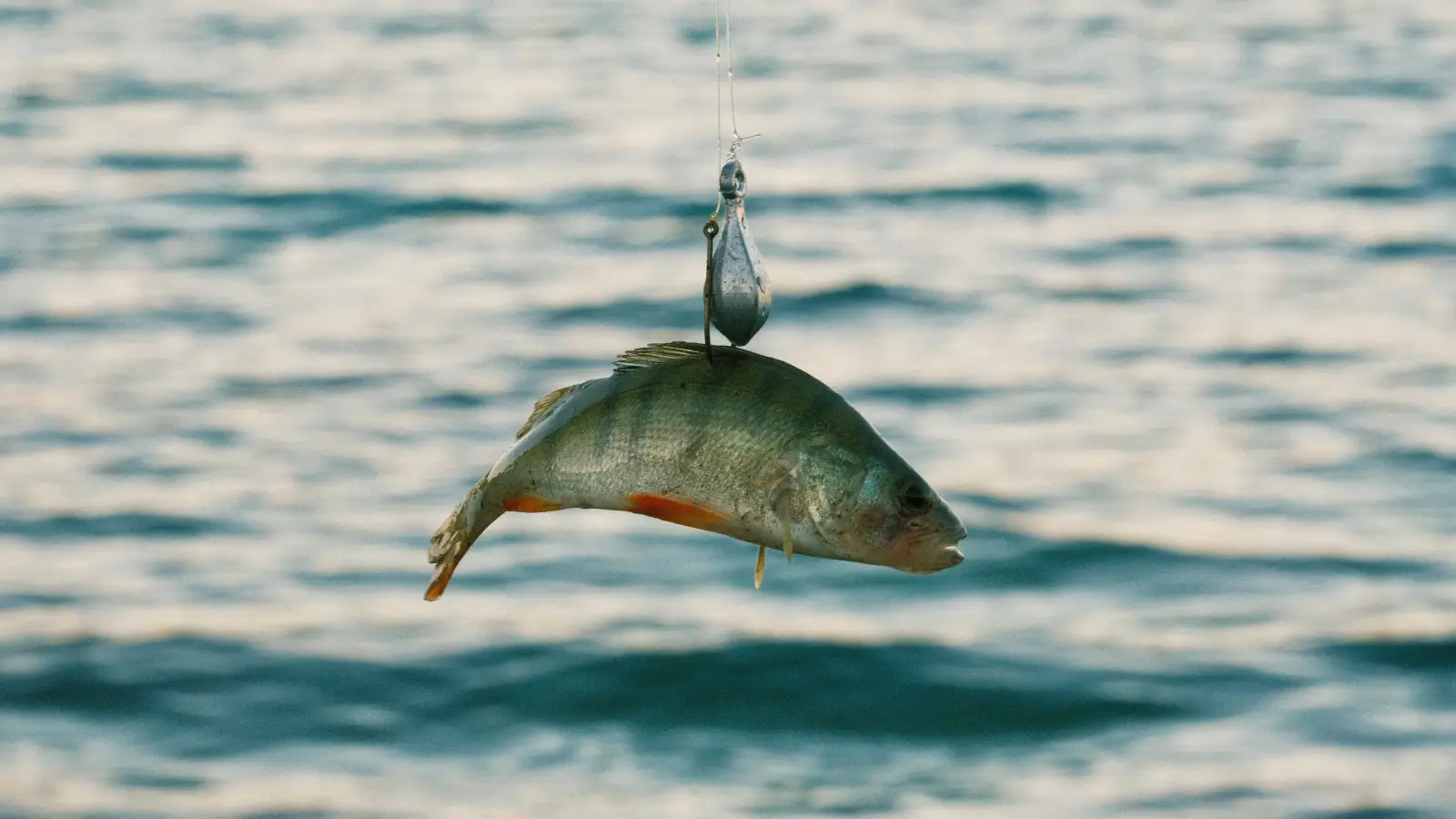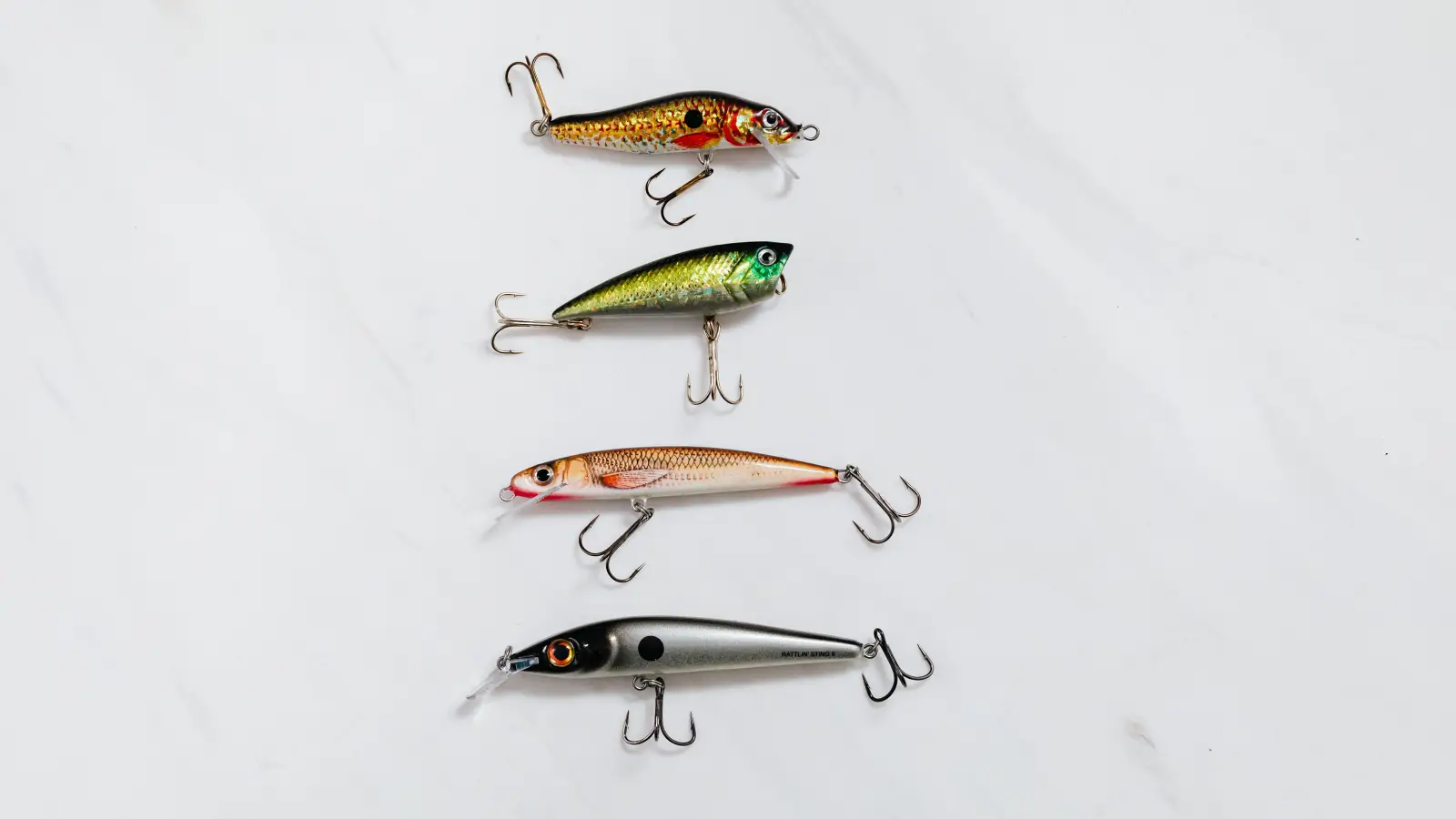
A bass doesn’t feel a hook by its size; it detects resistance the moment the hook’s weight alters the lure’s natural movement. For largemouth bass, the line is crossed when added mass changes the fall rate or action enough to look wrong — often when the hook weighs about 1/8 oz on a neutral-density soft plastic. Trout have a tighter window. They reject a presentation when a hook’s weight creates even a slight drag that doesn’t belong to the forage they’re tracking, and they notice it faster.
The difference comes from how each species feeds. Bass strike from cover or by reaction and tolerate more distortion if the silhouette still triggers an ambush. Trout hold in current and inspect every drifting item; the second something feels mechanically off, they turn away. This explains why one hook kills a trout spoon while a bass ignores an identical change on a jig. The Action-Detection Threshold model maps that split — and every hook decision sits on one side of it or the other.
The Action-Detection Threshold — Two Forces That Control the Outcome
Hook size and weight change two things at once: how a lure moves and whether a fish notices the difference. The Action-Detection Threshold is the point where added hook mass pushes a lure out of its natural motion and into a zone where the fish senses resistance it doesn’t expect. Stay below it and the fish commits. Cross it and the fish refuses or short-strikes.
The threshold rests on two pillars. First, how a specific hook’s weight changes a specific lure’s movement. Second, how a target species interprets that change. These pillars behave differently for bass and trout, which is why the same hook that destroys a trout presentation might go unnoticed by a bass on a flipping bait.
When Hook Weight Shifts Lure Movement — The Action Change
Every hook adds mass. That mass alters buoyancy, sink rate, and the way a lure twitches, glides, or suspends. On a weightless Senko, swapping a 1/0 EWG for a 4/0 turns a horizontal shimmy into a nose-down drop. The worm still sinks, but the wobble shortens and the angle shifts. A pressured bass often refuses that difference. Put the same 4/0 on a bulky creature bait and the extra weight gets masked by the lure’s own displacement — the action change shrinks, and the fish still eats.
With trout hardware, the margin is razor-thin. A size 10 treble on a 1/16 oz spinner weighs maybe 0.03 oz, but the blade is designed to spin at a precise speed. That tiny weight throws off the balance. The spinner hesitates, the blade stutters, and a trout tracking the flash sees something unnatural. More strikes are lost to hook weight than to bad casts.
Done well: After rigging, test the lure in shallow clear water. Verify the sink angle, the twitch response, and the suspension are what they should be. If the action looks dead, the fish will treat it that way.
How Bass and Trout Detect Unnatural Resistance — The Species Split
Bass and trout sit at opposite ends of the detection spectrum. Largemouth bass, especially in stained water or near cover, use lateral line input and vision to trigger reaction strikes. A moderate change in action doesn’t always register as a threat; if the profile holds, they’ll take it. The threshold here is surprise — a heavy hook that makes a weightless worm fall like a rock is too sudden. It’s the speed that alerts the bass, not the hook itself. A 3/0 round bend on a fluke, by contrast, keeps the bait darting side to side, so the fish never pauses to inspect.
Trout operate differently. Current, clarity, and constant particle-sorting shape their feeding. When a hook’s weight causes a nymph to drift slower than the surrounding current, a trout’s lateral line picks it up in fractions of a second. That fish often turns away before the indicator stops. Even on moving lures, a heavier hook can prevent a spoon from wobbling at the speed trout expect from a fleeing minnow. The detection threshold for trout is narrow — it sits right at the boundary between natural drift and artificial drag, and it doesn’t give second chances.
Matching Hook to Presentation — The Calibration Step
Calibrating hook to presentation means picking a size and weight that preserve the lure’s intended action while still being strong enough to land the fish. Start with the lure’s weight and buoyancy. A finesse worm under four inches does best with a size 1 or 1/0 fine-wire hook; the weight is minimal and the worm still quivers on the fall. A five-inch Senko can handle a 3/0 EWG because the bait’s own mass offsets the hook, so the fall stays horizontal. A six-inch glide bait for bass may tolerate a heavy 5/0 because jointed mechanics drive the action, not buoyancy.
Trout require finer calibration. A size 14 scud hook under a 1/64 oz jig head lets a nymph drift naturally. Switch to a thicker size 12 and the nymph sinks out of the feeding zone before fish can react. The aim is to get the lure’s response as close to unfished as possible while keeping enough hook strength for a solid set. Done well, a subtle rod tip lift produces the same movement it would without a hook attached.
Reading Resistance Signals — What the Angler Picks Up
Strike detection often starts not with a bite but with the absence of expected feedback. When a bass picks up a Texas-rigged worm and the line goes slack unexpectedly, the fish may have already felt the hook’s resistance and let go. The signal is a short, weightless moment that stops. With trout, it’s even softer — a micro-pause in the drift, a twitch upstream, or a vibration hesitation. Those signs mean the fish is testing and the hook’s resistance has already registered.
The angler’s role is to minimize the resistance a fish feels before the set. Light-wire hooks that penetrate with minimal pressure help. Fluorocarbon or thin braid-to-leader helps transmit feel, but if the hook itself is too heavy, no line sensitivity overrides the unnatural resistance the fish gets the instant it closes its mouth. Recognizing that split-second feel is the difference between a set and a guess.
The Model in Action: A Smallmouth Stream Scenario
A clear Ozark stream, smallmouth holding behind boulder seams. An angler fishes a weightless four-inch stick bait on a size 1 offset hook. The bait falls horizontally, wobbles like a dying shad, and smallmouth crush it immediately. Hook weight is minimal; action is intact. A switch to a 2/0 EWG adds roughly a tenth of an ounce. Now the bait drops nose-first and drifts faster than the current. Smallmouth follow but stop short, turning away at the last instant because the fall speed no longer matches what baitfish do in that flow. Switching back to the size 1 restores the action, and the fish resume eating. That’s the Action-Detection Threshold — a small hook weight change crossed the line from natural to unnatural, and the fish noticed.
Where Anglers Break the Model
Choosing a Hook Beyond the Lure’s Action Weight
The common error is picking hook size based on fish size instead of lure balance. A hook strong enough for heavy cover often outweighs a finesse presentation. The worm that should suspend now sinks fast, and the fish rejects it. A heavier hook also demands more force to set, pulling the lure away from a fish that hasn’t fully committed.
Overlooking How Line Diameter Adds Drag
Thick mono or heavy fluoro adds its own resistance in current. That drag stacks with hook weight to amplify unnatural feel. In clear water, trout especially notice the combined resistance — the hook drags, the line bows, and the entire presentation reads as foreign. Thinner line and light-wire hooks together keep the bait inside the fish’s acceptance window.
Assuming All Lures Ignore Hook Weight
Some anglers believe once a hook is tied, the action is the same as out of the box. Buoyant baits and delicate hardware prove otherwise. A heavy treble on a suspending jerkbait can sink it nose-down. A cold-front smallmouth will ignore that entirely. The only reliable check is testing the rig in clear water before casting to fish.
Quick Reference: Action-Detection Threshold Model
| Stage | Goal | Key Action |
|---|---|---|
| Hook Weight and Action | Understand how hook mass changes lure movement | Test lure action in clear water with chosen hook; verify sink rate, wobble, and twitch response |
| Species Detection Threshold | Know where bass vs. trout sense unnatural resistance | For bass, monitor fall speed and dart; for trout, eliminate micro-drag in current |
| Matching Hook to Presentation | Select hook size that preserves intended action | Use the lightest wire hook that still holds fish; match hook weight to lure buoyancy |
| Reading Resistance Signals | Detect fish rejection before it becomes a missed strike | Watch for line slack, twitch pauses, and hesitation; set at first sign of weight |
FAQ
What size hook can a bass actually feel?
A bass feels a hook when its weight changes the lure’s natural motion enough to trigger suspicion. On a weightless soft plastic, that usually occurs when the hook exceeds about 1/8 oz or when a heavy wire makes the bait fall too fast or nose-down. Size alone isn’t the trigger — the change in action is.
Do trout feel hooks more than bass?
Trout detect resistance at a lower threshold because they feed in current and constantly sort drift items by speed and drag. A hook that adds even a fraction of an ounce of drag to a nymph or spinner often causes a trout to refuse before the angler senses a bite.
How does hook weight affect a lure’s fall rate?
Added hook weight increases density, making a buoyant lure sink faster and at a steeper angle. The presentation shifts from a horizontal flutter to a sharp drop, which fish interpret as wounded or artificial. Matching hook weight to the original sink profile keeps the bait in the feeding zone longer and triggers more strikes.
What’s the best hook for finesse bass fishing?
Fine-wire, light-gauge hooks in sizes 1 to 1/0 preserve the subtle action of small soft plastics. They weigh less, so the bait shimmies and falls horizontally, and they penetrate on light pressure. Avoid flipping hooks for any presentation where a natural glide is critical.
Does hook size matter more than line visibility?
In clear water, both matter, but hook weight often matters more. A fish tolerates visible line if the lure acts naturally. If hook weight creates unnatural resistance, line visibility becomes irrelevant — the fish already turned away before registering the line.
Conclusion
Hook choice tracks the Action-Detection Threshold: pick a size and weight that keep the lure moving as intended and the fish never senses anything wrong. Start with the calibration step — matching hook weight to the specific lure’s intended action — because every other part of the sequence depends on getting that right first.