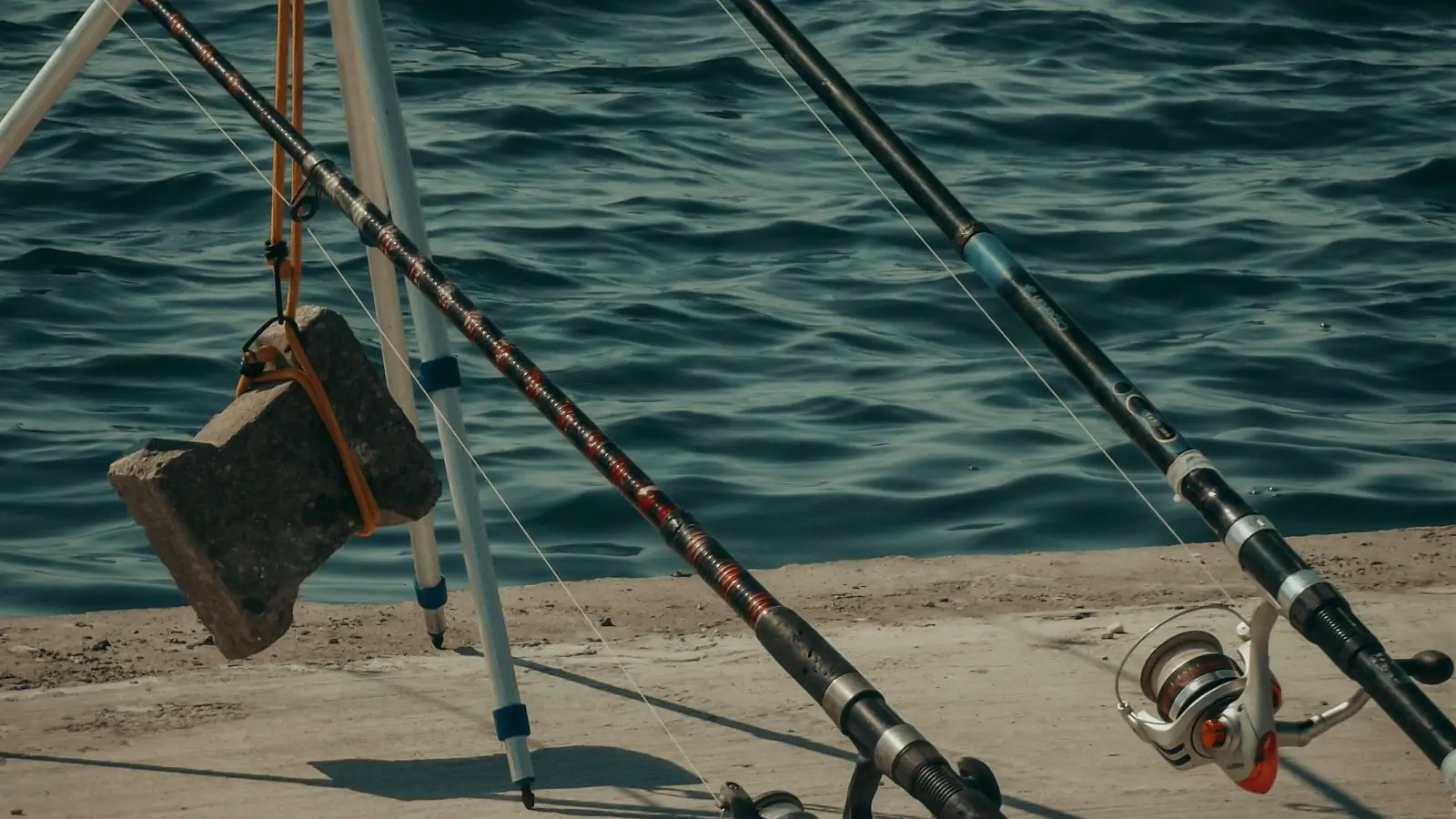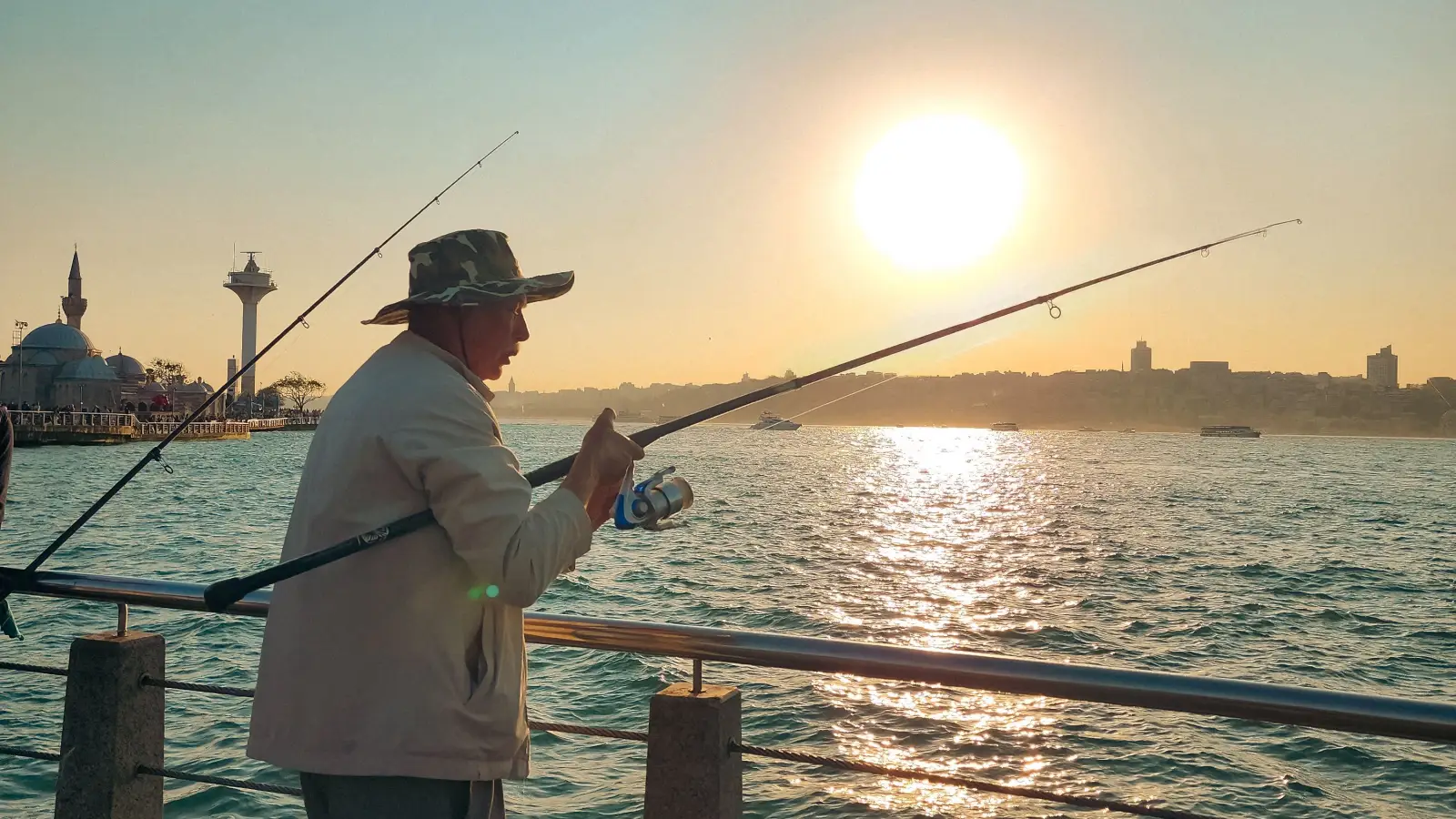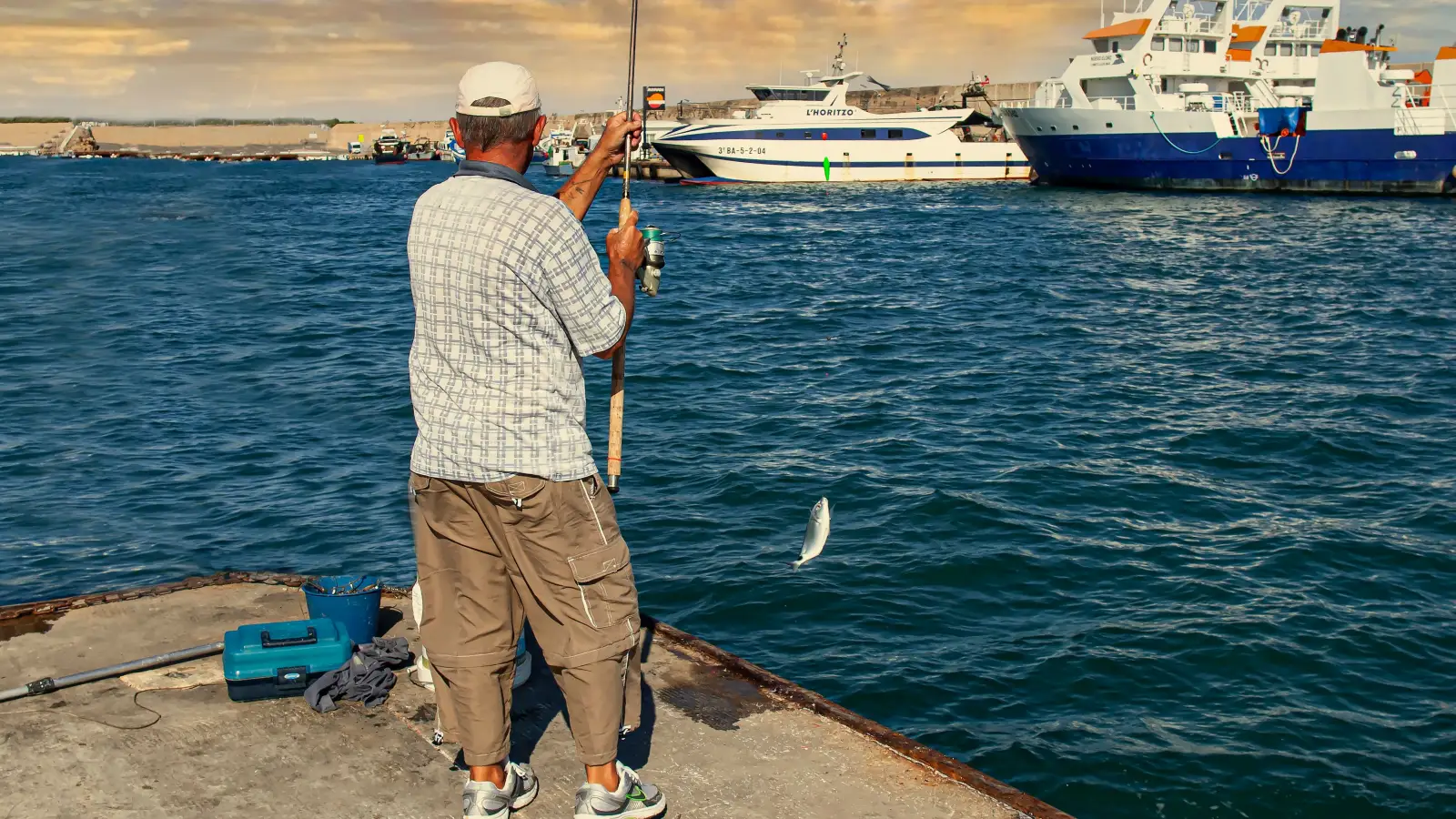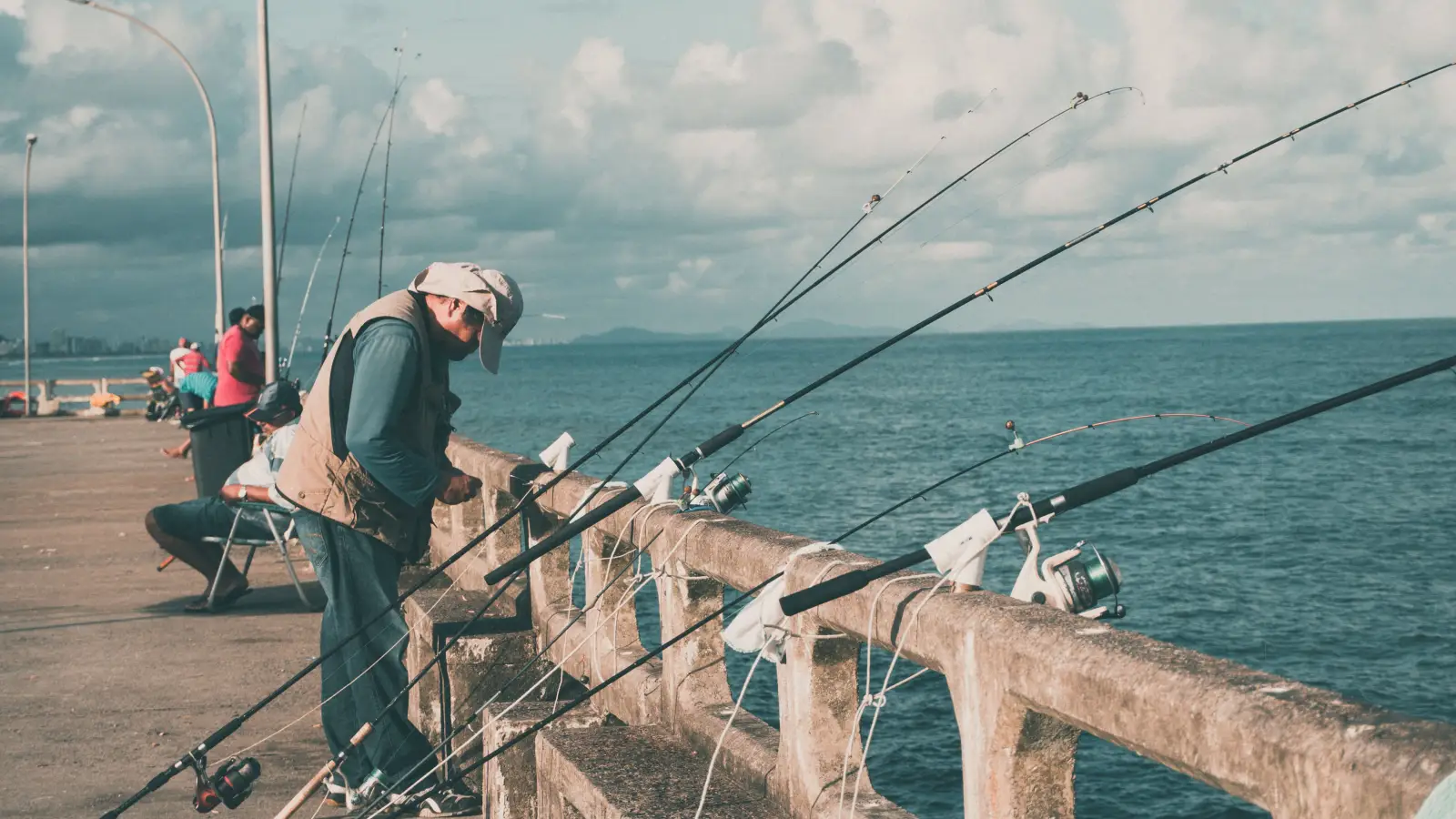
Pick the wrong rod length and you’ll fight the pier rail instead of the fish. For most pier fishing, a 7’ to 8’ medium-heavy spinning rod with a 4000-class reel and 20-30 pound braid gets the job done. But if you’re targeting spooky fish in clear water, or you need to lift a heavy fish high, the details decide whether you land it or lose it.
Three Forces That Shape Every Pier Setup
Rail height. Fish weight and the lift. Water clarity. Every rod and reel decision on a pier bends around these three. Ignore any one and the gear fails at exactly the wrong moment.
Rail height sets the minimum rod length. A high rail snags line, breaks light rods, and forces awkward high-sticking. The weight of the fish and the pier’s height determine whether a spinning reel can crank the fish up or whether you need a conventional winch. Water clarity and current dictate line thickness and color — too visible, and spooky fish won’t touch the bait. The right setup balances all three, not by being the best in any category, but by holding up against the weakest link.
The Pier Rod Decision Sequence
Don’t start by looking at species or rod brands. Work through these three decisions in order. Each one narrows the next.
Rail Height Determines Rod Length
Rod length on a pier is not about casting distance. It’s about keeping the line off the rail. A rod that’s too short forces you to lift the rod tip above your head to clear the rail; the line rubs, pinches, and breaks on the first hard run. A rod that’s too long becomes a long lever that tires your arms and makes it hard to steer fish away from pilings.
Stand at the rail and see where it hits your body. On a low rail (waist or below), a 6’6” to 7’ rod gives enough clearance without being cumbersome. On a high rail (chest height or higher), use a 7’6” to 8’ or 9’ rod. The benchmark: during a fight, you should be able to keep the rod at a 45-degree angle without the blank touching the rail. If you’re reaching over your head, the rod is too short.
Spinning or Conventional? Think Lift, Not Casting
This choice isn’t about which reel casts farther. It’s about how you’ll get a hooked fish from the water up onto the pier.
A spinning reel handles light baits, drops baits straight down next to pilings, and lets a spooked fish run without resistance. But when you need to lift a 10-pound fish vertically — on a high pier with no net — the spinning reel’s gears aren’t designed to crank dead weight. You end up lifting with the rod and straining the reel, and that shortens its life.
A conventional reel gives you direct cranking power. The lower gear ratio and solid retrieve let you winch fish up. Pair it with a softer rod tip to absorb head shakes, because slack line with a conventional reel invites backlash. For low to mid-height piers where you can net or slide fish, a spinning reel is simpler and more versatile. For high piers where lifting is the only option, a levelwind conventional reel earns its keep.
Line Color and Pound Test When Fish Get Spooky
In clear water, line that lights up like a neon sign will kill your bite. Pompano, whiting, and sheepshead won’t touch a bait tied to bright yellow braid on a sunny calm day.
The fix isn’t switching to monofilament and sacrificing sensitivity. It’s a fluorocarbon leader. Tie a 3- to 6-foot length of 20- to 30-pound fluoro to your braid main line with an FG or Alberto knot. That gives you an invisible connection near the bait while keeping the no-stretch sensitivity of braid.
Line diameter matters as much as color. Thick line catches current, creating a belly that pulls the bait out of the strike zone. When current sweeps parallel to the pier, thin 15-pound braid with a 20-pound leader drifts far more naturally than a heavy mono setup. Match diameter to the current first, then to the fish’s weight.
A Day on a High Pier: One Setup Walked Through
A high pier on the Gulf Coast in April. Crystal-clear water, sandy bottom 12 feet down. Target: sheepshead, 2 to 5 pounds, hugging pilings. The rail hits chest height.
Because of that high rail, the rod chosen is a 7’6” medium-heavy spinning rod. That length clears the rail without forcing the angler to reach up. A 5000-class spinning reel spooled with 15-pound moss-green braid and a 30-pound fluorocarbon leader. The thin braid slices current, and the fluoro disappears in the clear water.
A sheepshead hits with a light tap. The no-stretch braid sends the signal instantly. When the fish dives for a piling, the angler lifts the rod tip high — the 7’6” rod keeps the line off the rail — and applies steady pressure. Once the fish reaches the surface, the rod’s backbone flips a 3-pounder over the rail without a net. The whole sequence worked because rail height drove length, the fish didn’t demand a conventional winch, and the clear water required an invisible leader.
Three Setup Errors That Cost You Fish
Not Measuring the Rail Before Rigging Up
A fast 6’6” rod on a high pier. First fish runs, line scrapes the rail, leader pops. Lifting the rod overhead to gain clearance creates a bad fighting angle that pulls hooks. Measure the rail first. If the rod can’t clear the rail by a foot at a natural angle, it will cost you fish.
Using a Spinning Reel for Vertical Lifting
Spinning reels aren’t winches. When a keeper redfish or black drum needs to be lifted 15 feet straight up, cranking against the drag or lifting with the rod high strains the gears. After enough of that, the reel gets gritty. If no net is available, a conventional reel is the answer for high piers. Accept that big fish that need to be lifted belong on winching tackle.
Overdoing the Line Strength
Fear of break-offs leads to 50-pound braid on a pier where 20-pound handles everything. That thick line catches current, makes the bait behave unnaturally, and in clear water, looks like a rope. Fewer bites follow. Step up the leader strength if you need abrasion resistance; keep the main line thin to get bit.
Quick Reference: Rod and Reel Setup at a Glance
| Stage | Goal | Key Action |
|---|---|---|
| Rail clearance | Keep line off the rail during the fight | Choose rod length so you can hold a 45-degree angle without touching the rail |
| Reel selection | Match lifting method to the pier height | Spinning for low and mid-height piers; conventional for high piers where fish are lifted |
| Line choice | Get bites in clear water and strong current | Braid main line matched to current; fluorocarbon leader for invisibility |
Frequently Asked Pier Rod Questions
What size rod is best for pier fishing for beginners?
A 7-foot medium-heavy spinning rod with a 4000-class reel is forgiving and versatile. It clears most rails, handles common inshore species, and skips the conventional reel learning curve.
Can I use a conventional reel on a low pier?
Yes, but it’s often overkill. On a low pier where you can slide or net fish easily, a spinning reel is more versatile and easier to manage. Conventionals shine where lifting is the only option.
Does braid color really matter on a pier?
Yes, in clear water with bright sun. Dark green or gray braids are safer picks than hi-vis colors if you fish without a fluorocarbon leader. Always use a leader in clear conditions.
How long should my fluorocarbon leader be on a pier?
Three to six feet. Shorter leaves visible braid near the bait; longer becomes hard to cast and tangles in wind.
Start With the Rail: Your One-Sentence Plan
The pier rod decision sequence — rail clearance, reel lift type, line visibility — puts the unchangeable factor first. Measure the rail where you fish most often, pick a rod length that clears it, then match the reel and line. Walk to the rail right now, mark the height against your body, and write it down. That number decides every piece of gear that follows.