Line twist on a spinning reel comes from one of two places, and the two need different fixes. Either the line was wound onto the spool in a way that forced coils into it, or something on the other end of the line, usually a rotating lure, put the twist in while you were fishing. Spooling twist is there from the first cast and runs the full length of the line. Lure twist builds through a session and concentrates in the last few feet above the hook. Work out which one you have before you respool, because fresh line cures neither problem for long if the cause is still in play.
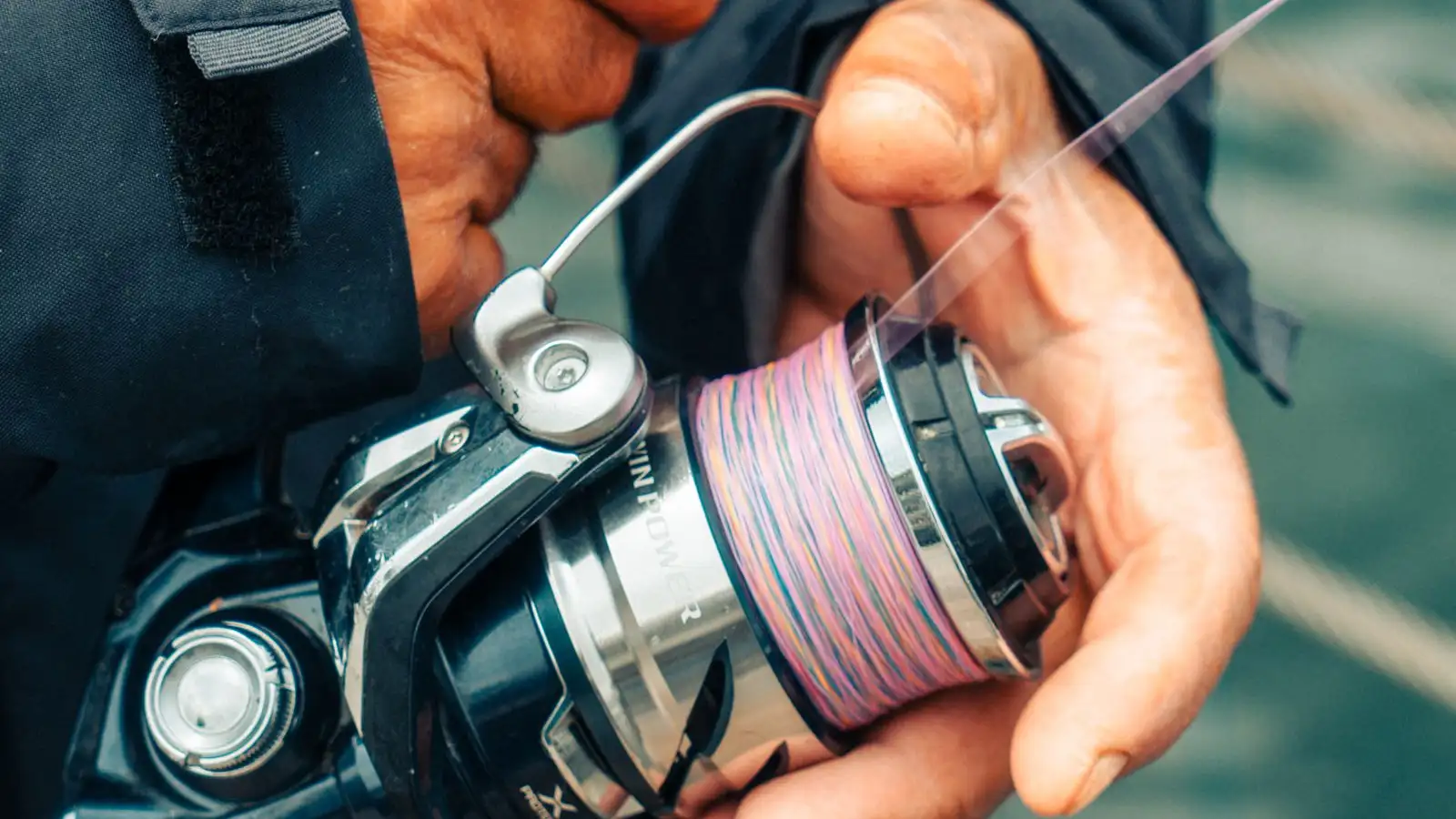
I have loaded enough spools the wrong way to feel it happening now. Not see it, feel it. Line coming off a filler spool at the wrong angle has a small tremble to it as it runs through your fingers, the coil it left the factory with fighting the coil you are asking it to take. You can ignore that tremble. You can fill the spool, drive to the water, and for an hour or two you will think you got away with it. Then you make a cast and the line comes off in a spring, three or four loops peeling away at once, and one of them finds the tip guide before the lure hits the water.
So here is the routine I run now, and it starts well before anything gets respooled.
Strip it and let it hang
Back the drag off, tie nothing on the end, and pull ten or fifteen feet of line off the reel. Hold the rod tip up and let it hang in a slack curve in front of you. What you are looking at is the difference between memory and twist, and they are not the same thing even though both look like coils.
Memory is a gentle arc. Monofilament and fluorocarbon take a set from the spool they sat on, so a length that has been wound tight for a week hangs in soft, wide, even loops that pull straight when you load them. Twist is tighter and meaner. Pinch the line between thumb and forefinger and pull it through, and twisted line will flip and roll between your fingers and throw a short doubled-over kink, a pigtail, that will not pull straight. That kink is what kills your casting distance and eventually your leader.
Where the mess sits tells you nearly as much as what it looks like. Two questions. Is it bad from the first cast of the day, or only after twenty? And is it uniform along the whole length, or is the last six feet above the lure worse than everything behind it?
The read I use is this. Bad from the first cast and even along the whole spool means it went on wrong. Clean early, ugly late, and worse after an hour of throwing the same lure means something on the end is spinning. Rough only in the last few feet, with the main line behind it clean, means your leader is eating the twist, which is exactly what it is there for, and you change it rather than the line on the reel.
Twist that came in with the line
A spinning reel is the friendliest design to cast and the worst design for twist, because the spool does not turn. Line pays off the lip of a fixed spool in a spiral. If it went on in a spiral that fights the one it wants to take, that difference gets stored in the line and springs off the spool a few casts later.
The orientation test takes ten seconds. Lay the filler spool flat on the floor, label up, and start winding with tension on the line. After twenty or thirty turns, drop the rod tip and watch the line between the reel and the first guide. If you can see it twisting up into coils as it goes on, the filler spool is wrong side up. Turn it over and start again. The rule underneath the test is simple: line should come off the manufacturer's spool in the same direction it is going onto your reel spool, so the coil it already carries matches the one it is about to take.
Then tension. Wind on with drag, never with slack. A damp cloth or a gloved hand pinched over the line a couple of feet above the reel gives you tension and wipes the grit off at the same time. Line that goes on loose takes a set in loose coils and buries itself under the wraps above it, and later it pops off the spool in a loop that looks exactly like twist.
Do not fill it to the lip. Leave about an eighth of an inch. An overfilled spool throws loops no matter how good the line is.
And do not store the reel in a hot truck cab or on a cold garage floor with the line packed tight and the drag cranked down. Heat and time press the set in deeper. If the line has been sitting a while, strip thirty feet and let that part go before you fish.
Twist that something on the end put there
An inline spinner blade makes a lot of rotations on a forty-yard retrieve. Every rotation that gets past your swivel goes into your line. The same is true of a spoon that rolls, a crankbait that will not track straight, and a swimbait with an off-center tail. You see the total at the end of the retrieve when the line coming off the spool is a corkscrew.
Here is the part that trips people up. A swivel only spins freely when it is unloaded. Under the tension of a retrieve, the bearing surfaces are pinched and the swivel stops turning, so the twist runs straight through it into your main line. Running a swivel and still watching your line corkscrew does not mean the swivel failed. It means you asked it to do something it cannot do under load.
So put the swivel between the main line and the leader rather than right at the lure, and let the leader be the section that takes the punishment. Then give the swivel its one free moment. When the lure gets within ten feet of the rod tip, dip the tip in the water and let the lure spin free for a second or two with no tension on it. That is the only chance the swivel gets to dump what it collected, and it is the cheapest fix in this whole routine.
Straighten a spinner that wobbles on its axis. A blade hanging off to one side spins harder and pumps twist faster than one that runs true. And if you plan to throw the same spinner all afternoon, accept that the twist will keep accumulating, or switch to something that does not rotate for a while. A jig or a soft plastic adds nothing, so the line gets a rest.
Long fights are the other place it creeps in. When a fish takes thirty or forty yards against a slipping drag, the line pays out off a fixed spool in a spiral and comes back with the shape of that spiral still in it. Whether you call the result twist or just a set taken on the spool, the fix is the same. Strip some line, and if it kinks, run the water drag before the next cast.
Getting it out without a respool
The water drag is the old fix and it still works. Tie nothing on the end, no lure and no swivel, just bare line. Idle the boat out and let sixty to a hundred yards trail behind at a slow troll for a minute or two. Water resistance untwists line the same way it went in. From the bank, let the line out into current, let the river take it downstream, then walk upstream to take up the slack.
The step people skip is the retrieve. Everything you just removed goes right back on if you wind in with no tension. Pinch the line above the reel and wind with steady light pressure. You will feel it flip between your fingers as the last of the twist comes out, and you will feel when it stops flipping. Take a few minutes over it, not a few seconds.
Braid behaves differently here, and this is worth knowing because it hides its problems. Braid has almost no memory, so it sits flat on the spool and people assume it cannot twist. It twists. It just shows it as kinks that will not lie flat, as tip wrap mid-retrieve, and as wind knots that appear out of a cast that looked perfectly clean. Braid also does not come back from the water drag as completely, because there is no memory or stretch to relax it straight again. With braid I strip more line, more often, and change leaders on a schedule instead of a whim.
Mono and fluoro hold the coil, which is a nuisance right up until you want it. The same memory that makes them hang in loops is what lets the water drag work. A spool soaked a few minutes in lukewarm water relaxes noticeably. Lukewarm, not hot. Hot water and a hot car both do real damage to the line.
Loops that are not twist
After the lure lands, close the bail by hand, then pinch the line above the reel and pull it snug against the line roller before you start reeling. Crank the bail shut with the handle and you lay a loop of slack line onto the spool on every single cast. That loop sits under the next several wraps and comes off all at once on some later cast and wraps your tip guide. It looks like twist from the outside. It is not, and no amount of fresh line will cure it. Same story with an overfilled spool and with a line roller that is gritty or frozen. Check that roller with a thumbnail. It should turn free.
When respooling is actually the answer
If the twist is uniform from the first cast, survives the strip-and-hang test past thirty feet, and the line goes back into corkscrews the first afternoon after a water drag, spool it fresh. Spool it with the right orientation and real tension this time.
If it comes back within two or three trips on new line, the source is the lure, or the drag, or the way you close the bail, and respooling is just a subscription you are paying. That is the thing I wish someone had told me early. The spool is the cheapest suspect and the most expensive fix, and the line rarely lies about which one it is.