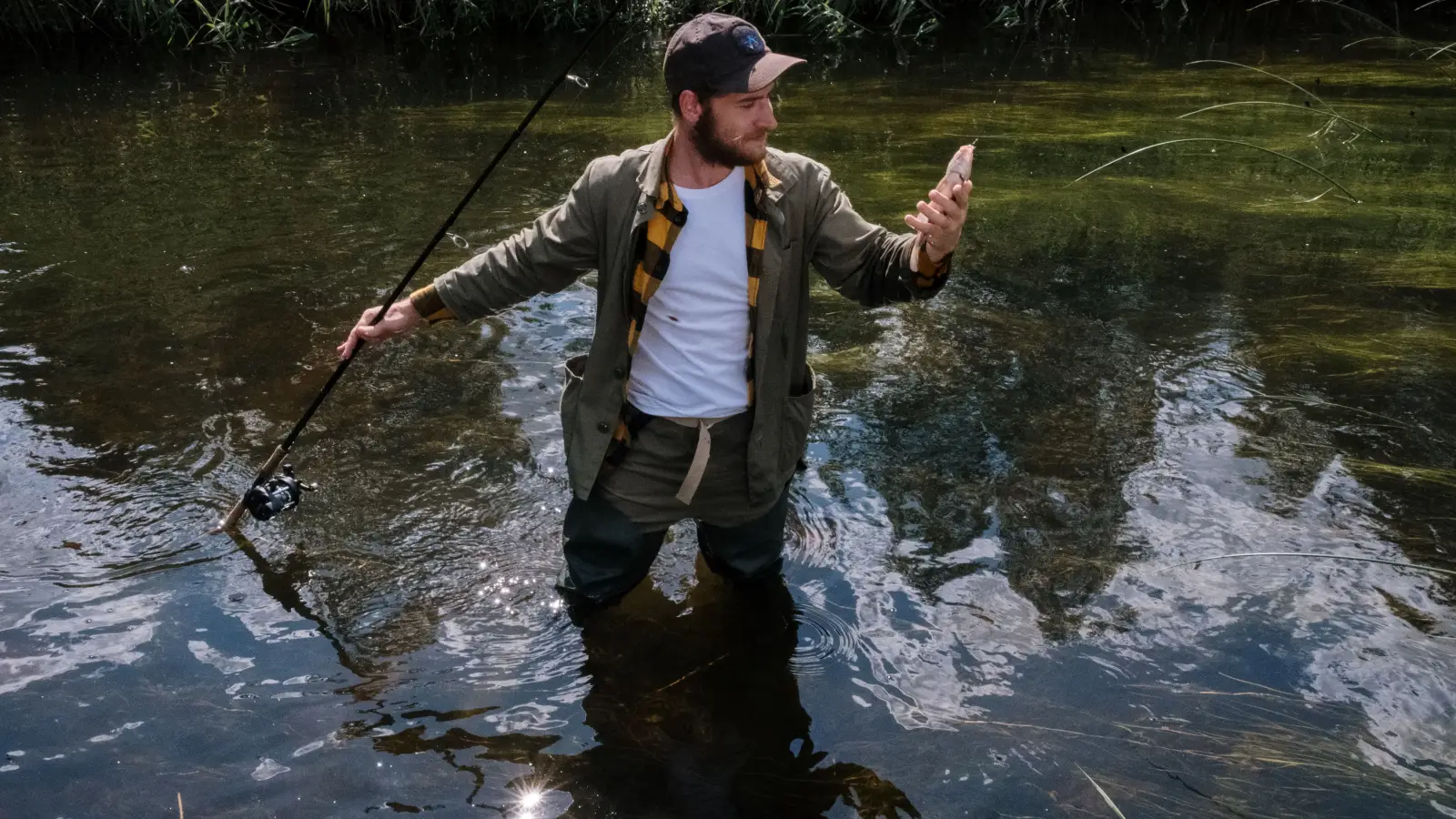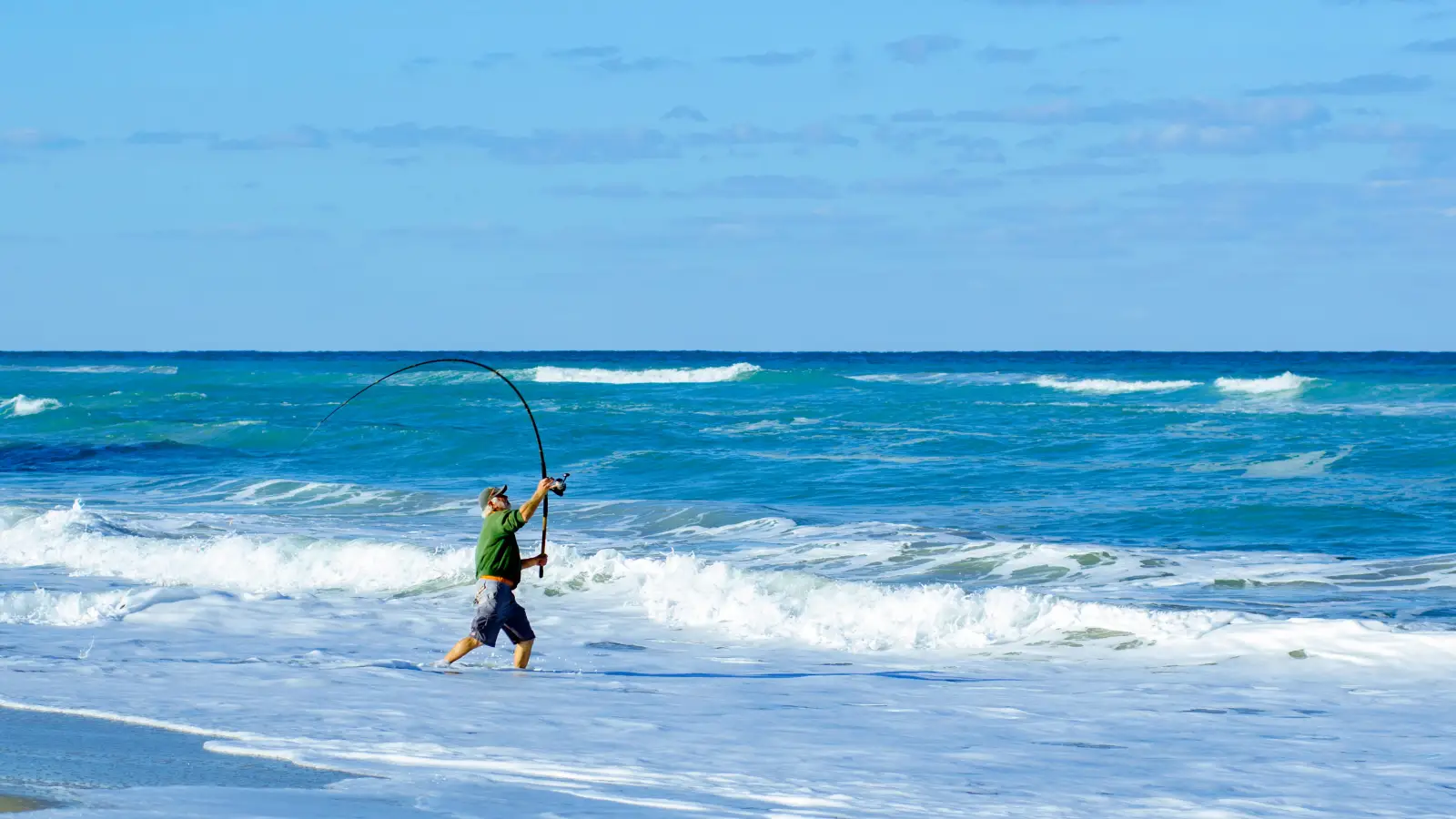
Shore anglers lose distance because they cast like the ground is flat and the air is still. It isn’t. The bank has brush behind you, sand that shifts underfoot, and a wind that punishes any open loop. These five fixes target those shoreline conditions directly. Apply them, and you’ll add a reliable 10–15 yards without needing more muscle.
Five Shore-Specific Adjustments That Add Yards
- Clear the backcast lane before every cast
- Tilt your trajectory and tighten your loop into the wind
- Brace your stance on whatever you’re standing on
- Accelerate the rod tip, don’t just muscle it
- Pre-manage the line at your feet before the forward stroke
Clear the Backcast Lane Before Every Cast
Step five feet behind your casting spot and look up. If brush, branches, or tall grass are in the line’s path, you have two choices: sidearm or roll cast. A backcast that clips vegetation doesn’t just dump energy—it turns the line into a snarl that costs you minutes. For a sidearm release, keep the rod tip at knee-to-waist height during the backcast; the forward stroke then clears open water. It feels odd for about a dozen throws, then locks in. The error? Assuming you can thread the backcast through a narrow gap. You can’t. The line drops, catches, and the cast dies.
Tilt Your Trajectory and Tighten Your Loop Into the Wind
A headwind over open water attacks distance in two ways: it balloons the line upward and widens the loop. Fix both by driving the forward cast toward a point just above the surface and shortening the casting arc. A tight loop cuts wind. A wide loop fights it and loses. Start in a light side-wind; you’ll feel the difference within a few minutes. The common mistake is trying to overpower the wind with a harder throw. That only flings the loop open and makes the line catch more air.
Brace Your Stance on Whatever You’re Standing On
Soft sand, slimy rocks, a steep bank—they all rob the lower body of the stability it needs to transfer power into the rod. Set your feet wider, dig in, and brace. On rocks, angle your lead foot against a natural edge. On sand, soften your knees and keep your weight over the balls of your feet. The stance won’t look textbook, but it will stop energy from leaking through a wobbly base. Thirty seconds to set, benefit on the very first cast. The mistake: standing narrow and tall as if on a boat deck. That collapses on uneven ground.
Accelerate the Rod Tip, Don’t Just Muscle It
Distance pressure tempts you to yank the rod harder. Don’t. A smooth, accelerating stroke—loading gradually to a sudden stop—sends the line farther than any jerky burst. Visualize pulling the rod against a resistance band, not snapping a whip. Building this feel takes a handful of sessions, but the line will fly flatter and farther right away. The classic error is equating loud arm speed with rod load. They’re not the same.
Pre-Manage the Line at Your Feet Before the Forward Stroke
Loose line on wet sand or rocks snags mid-cast. Even worse, slack anywhere between the reel and the first guide saps the forward stroke’s energy. Before you start, strip in excess line. If you’re in surf or wind, drop it into a stripping basket. In calm water, hold a couple loose coils in your line hand. This takes under ten seconds. The mistake: casting with a pile of slack hoping the rod tip will drag it all through. It won’t.
One Final Check Before You Cast
- Backcast lane is clear
- Trajectory and loop match the wind
- Feet are planted firmly, weight forward
- Arm motion is smooth acceleration to a hard stop
- Line at your feet is controlled and ready
Shore Casting Distance: Quick Questions
Do I need a longer rod to gain distance from shore?
A longer rod helps only if you manage the backcast space and wind load. An extra foot adds leverage but magnifies any flaw. Fix technique first; consider a rod upgrade later.
Is a stripping basket always necessary?
No. On a clean, packed beach with no surf, hand-coiling works. But in waves, rocks, or wind, a basket removes the number-one variable that kills distance: line catching at your feet.
Can I cast far in a crosswind?
Yes. Aim slightly into the wind. If it blows right to left, tilt your trajectory right so the line doesn’t sail wide. Keep the loop extra tight, and use a sidearm stroke to slice under the wind.
How long does it take to fix these mistakes?
Most anglers see a clear improvement in a single outing. The backcast check and stance fix pay off instantly. Smooth acceleration and wind adjustment take a few sessions to feel natural, but you’ll gain yards on day one just by applying the backcast and line-management fixes.
Does line weight matter for shore casting distance?
Yes. Heavier lines punch wind better, but only if the rod loads them properly. Don’t overline hoping for distance—you’ll lose feel and accuracy.
Nail these five adjustments and you’ll drive the bait past the breakers instead of dropping it in the wash. Next trip, spend 30 seconds scanning your casting lane for wind direction and backcast hazards before you rig up. That short walk will let you apply every fix without a second thought.