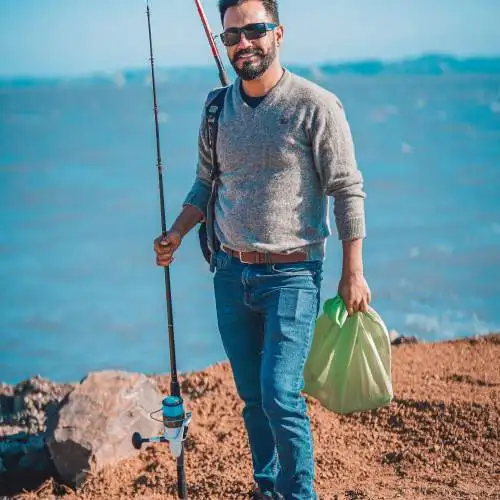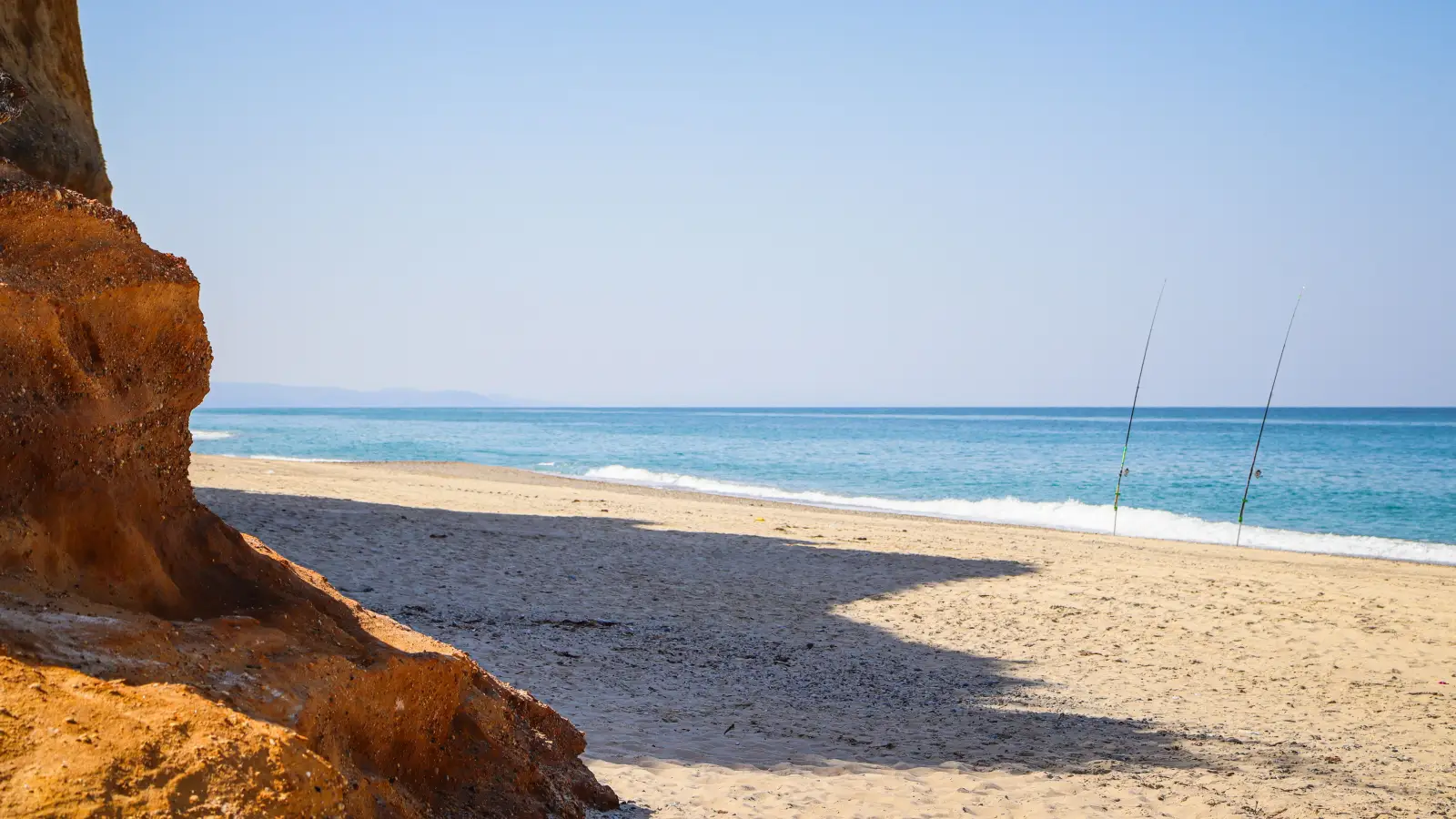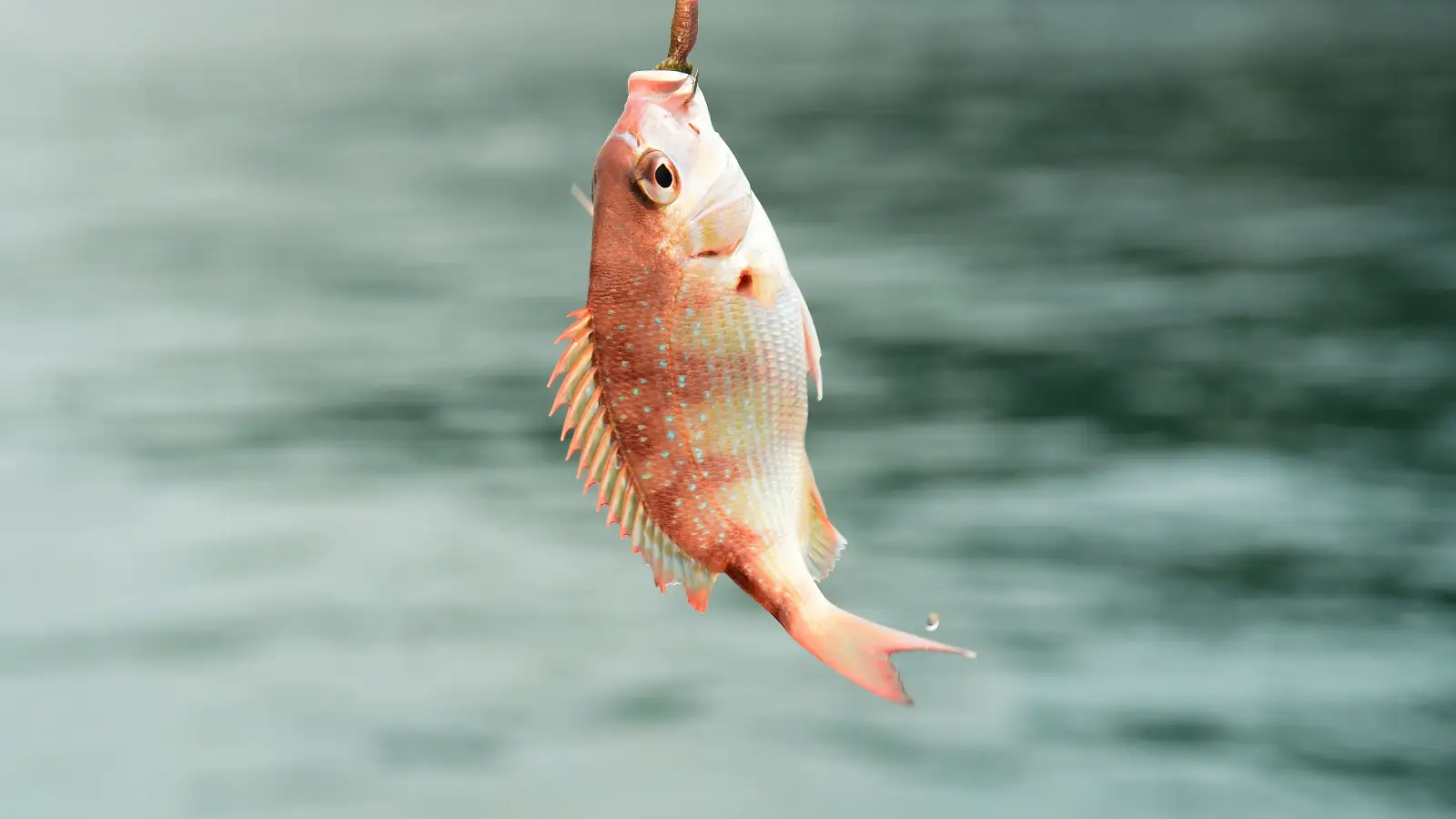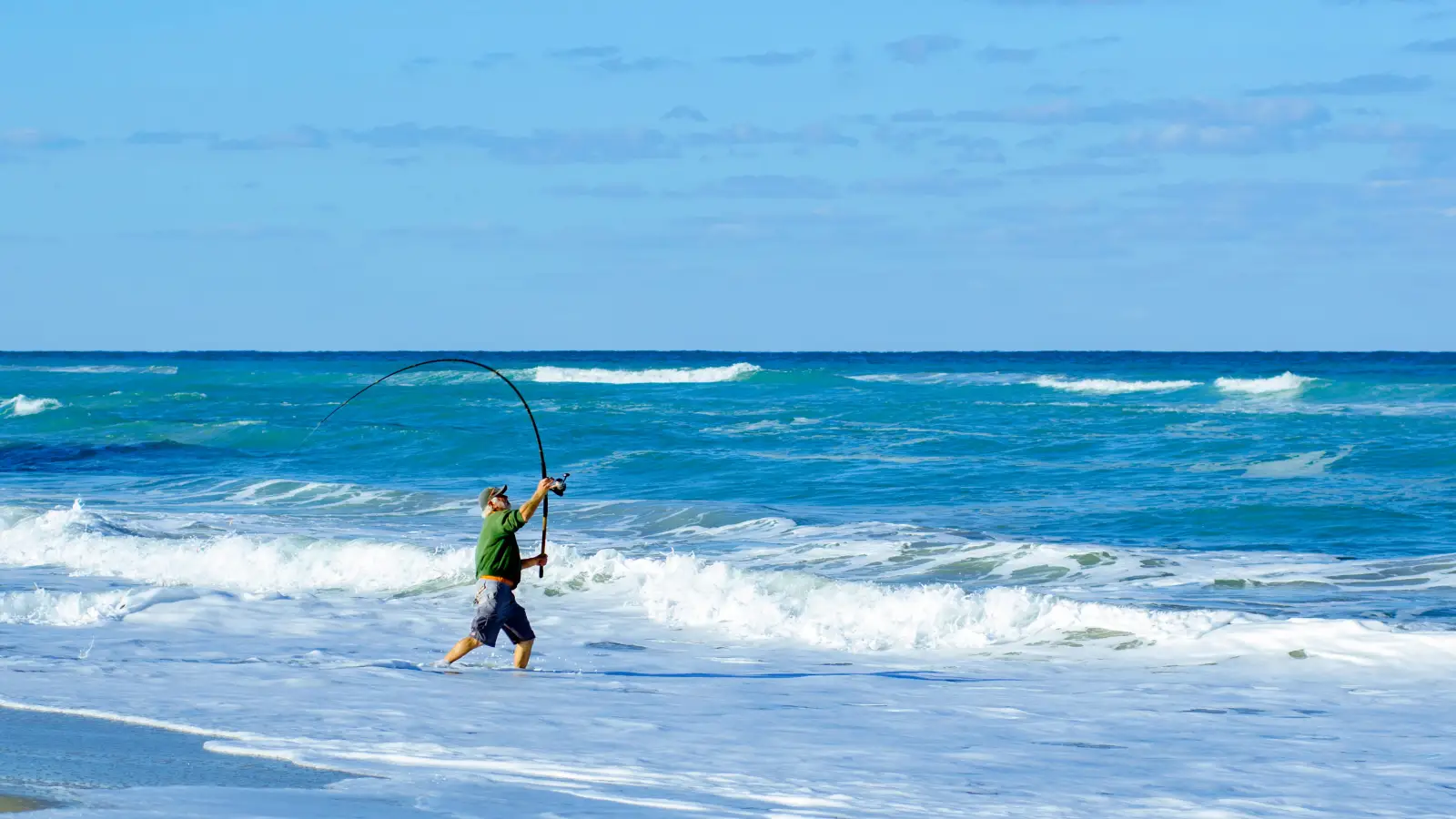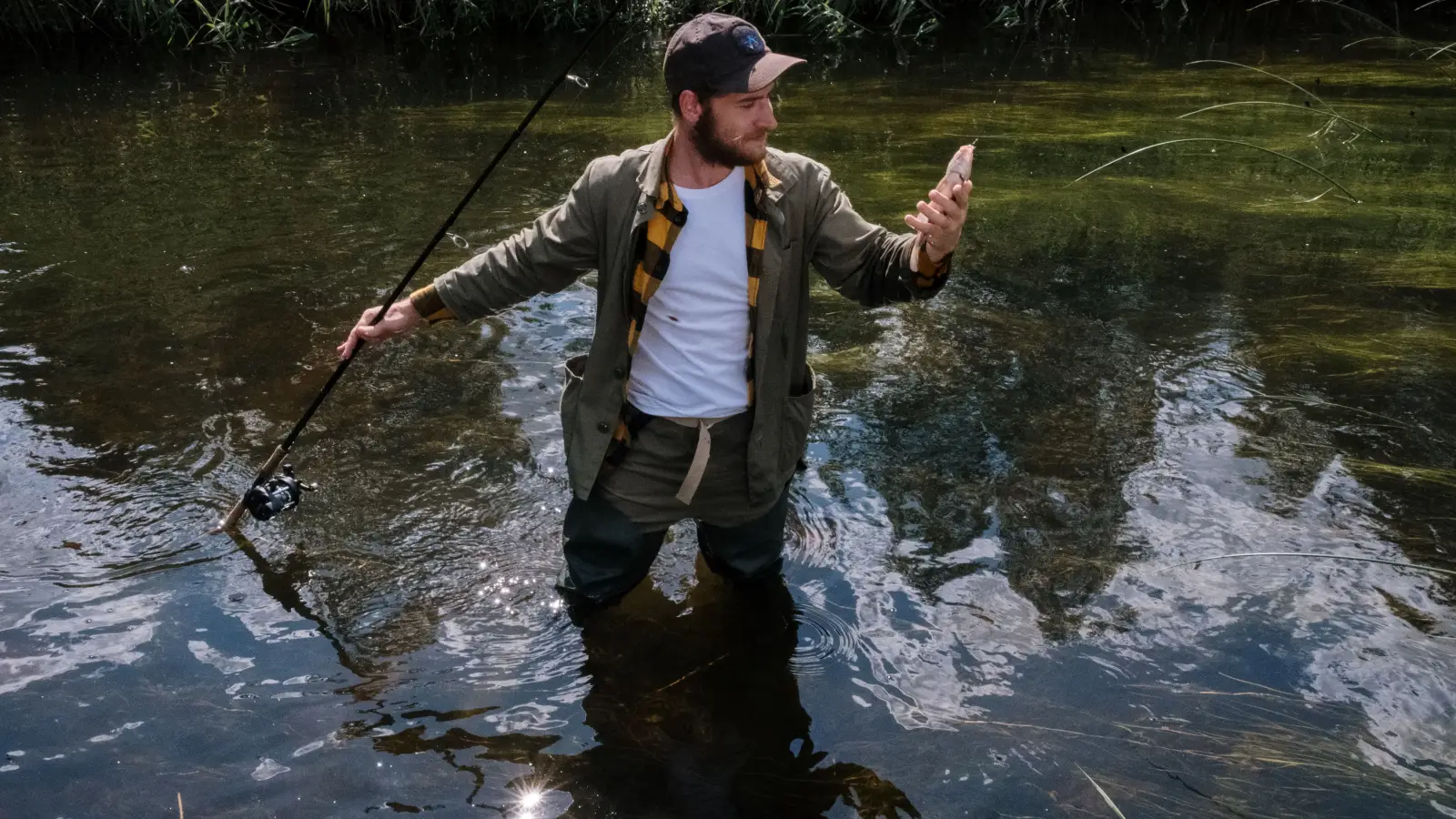
Bank anglers don’t need a boat or sonar to locate fish. Surface water features—current seams, eddies, foam lines, and shoreline structure—act as markers that predict where fish hold and feed. Reading these visual signals replaces random casting with a systematic approach based on observable water conditions.
What Finding Fish From Shore Actually Looks Like
An angler who reads water walks up to a stretch and first scans for current boundaries. Within minutes, they note the interaction of a current seam with a sandbar, the foam line trailing from a submerged log, and a small eddy behind a rock. The cast targets the transition zone itself, not the open water beyond it.
The Six-Step Water-Reading Sequence for Bank Anglers
- Scan for current seams where fast water meets slow
- Locate eddies and slack pockets behind rocks, points, or bends
- Follow foam lines and drifting debris to identify feeding lanes
- Read shoreline structure for drop-offs, undercuts, and cover
- Watch for surface disturbances, baitfish, and bird activity
- Interpret wind direction and light shadows to refine your target area
Scan for Current Seams
Current seams form where two water speeds meet—a main flow and a slower edge. Look for a line of bubbles, a change in surface texture (choppy on fast side, smoother on slow side), or a color shift from darker deep water to lighter shallows. This line indicates where current carries food, and fish often hold just inside the slower water facing the flow. Spend two to five minutes scanning a new stretch before casting. The most common mistake is ignoring the seam right along the bank itself, where a small eddy can hold fish tight to shore.
Pinpoint Eddies and Slack Pockets
Eddies appear as circular or reverse-flow patches behind obstructions—a rock, a downed tree, or a point. They show as smooth areas in otherwise moving water. Fish use eddies to rest and ambush prey washing past. To fish one, cast upstream of the eddy so your bait drifts naturally into it. It takes less than a minute to spot an obvious eddy, but learning to see smaller, subtle pockets along a straight bank may take a few minutes of observation. Many anglers make the mistake of focusing only on large, classic eddies and missing the small slack water that holds just as many fish.
Follow Foam Lines and Debris Trails
When two currents converge, they often create a foam line—a streak of bubbles, leaves, or scum that stretches downstream. This forms a feeding lane where drifting insects and bait collect, and gamefish patrol along it. Identify the foam line and cast parallel to it or slightly across it to drift your lure along the edge. It usually takes about two to three minutes to spot a foam line if one exists. A common error is dismissing thin or intermittent foam lines; even a faint trail of bubbles marks a current seam that can concentrate fish.
Read Shoreline Structure and Drop-Offs
From the bank, you can spot structure without getting wet. Look for changes in water color—darker, greenish water indicates depth, while lighter or brown-tinged water suggests shallows. Undercut banks show exposed roots or eroded dirt; overhanging trees offer shade and cover; submerged boulders create visible ripples on the surface. Cast parallel to shore to keep your lure in the strike zone along the drop-off where fish cruise. This reading is continuous as you walk a shoreline. The biggest mistake is casting straight out toward the middle of the lake or river before thoroughly working the bank edge, where many species hold within a rod’s length of shore.
Watch for Surface Disturbances and Baitfish Activity
Signs of life on the surface—splashes, swirls, frantic baitfish skipping, birds diving—point directly to feeding fish. Even subtle dimpling can indicate a fish picking off emergers. When you see activity, cast to that exact spot as quickly as possible before the fish moves. Keep your eyes moving and stay alert during your entire session. The mistake is dismissing small disturbances as “just shad” or wind; large predators often create subtle, quick swirls that are easy to overlook.
Interpret Wind and Light Conditions
Wind pushes surface plankton and bait, and gamefish often face into the wind to intercept the drift. Look for wind lanes—slick strips on the water—where bait accumulates. Similarly, light creates shadow lines along banks, docks, and overhanging vegetation; fish use those shadows for ambush points and comfort in clear water. When you first arrive, note wind direction and sun angle, and reassess them every 15 to 20 minutes. Anglers who stubbornly fish the same bank without adjusting to shifting wind or light miss the moving target.
Before the First Cast: Double-Check Your Water Reading
Before you make your first cast, run through this quick check:
- Have I identified at least two visible water features (seam, eddy, foam line, structure, bait activity)?
- Is my lure path going to intersect one of those features?
- If I’ve made 10 casts without a bite, have I re-evaluated the water?
Acquiring the habit of reading water turns the shoreline into a series of logical targets. One fast way to build accuracy is to walk a bank without a rod and call out features—seam, eddy, foam line—then return later to test with a cast. The pattern recognition becomes automatic with practice.