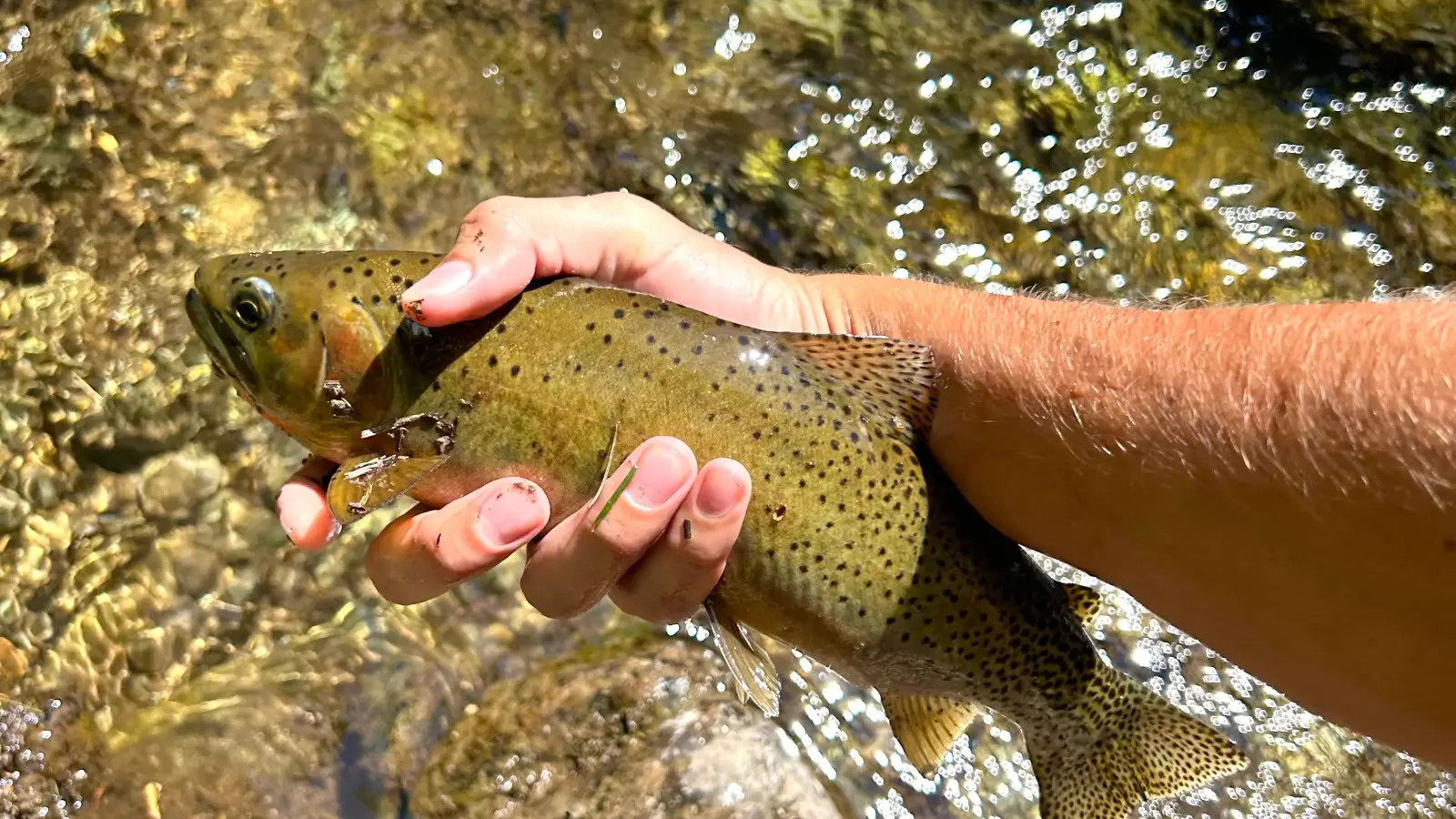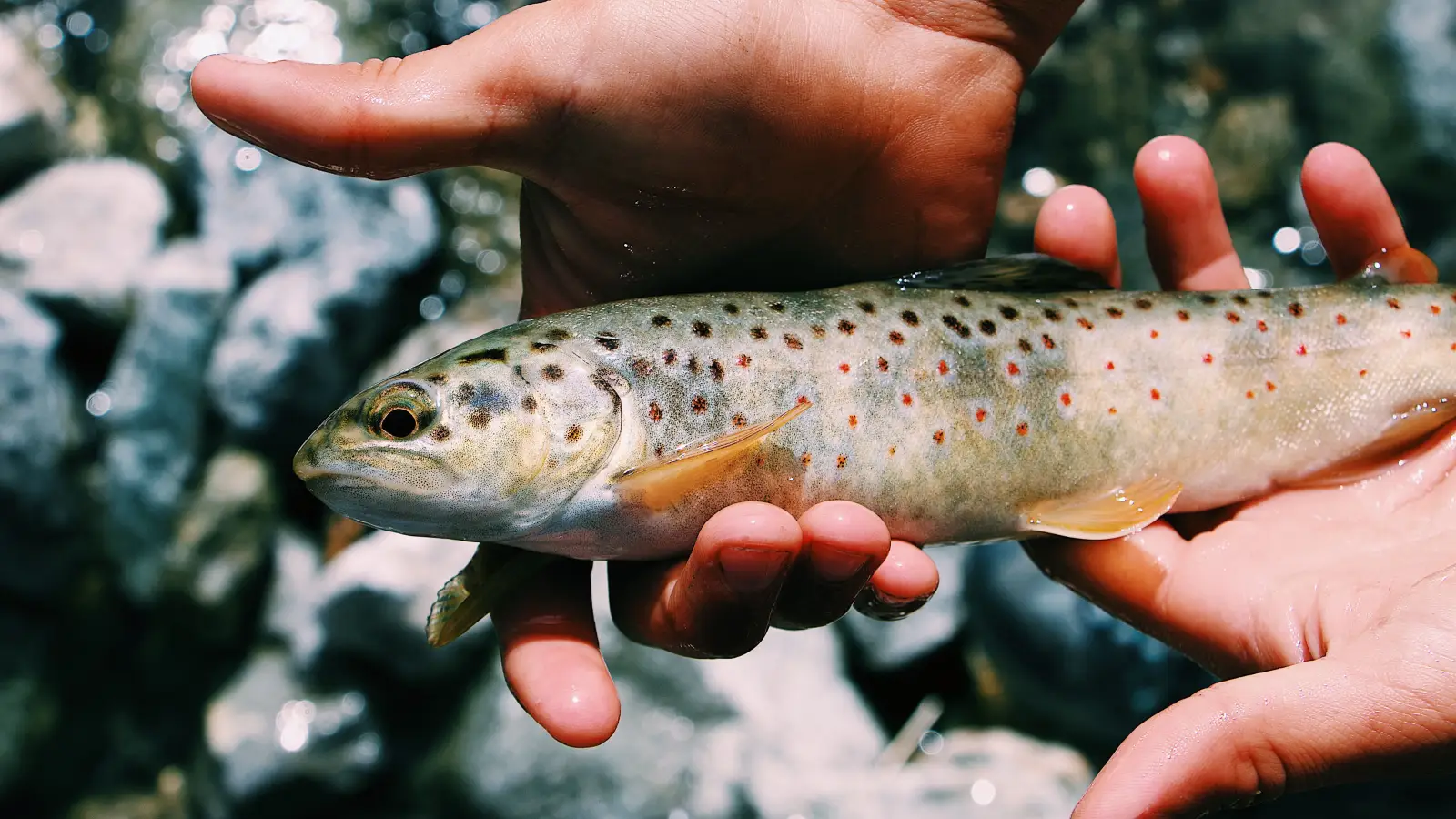
Trout return to the same stretch of river year after year, but their position inside that stretch reshuffles twice annually—not at random, but along two environmental lines: the spring runoff redistributes them into new holding lies, and the fall turnover triggers a feeding migration that redraws the best water. Once you learn to read these shifts instead of watching a calendar, the river stops feeling fickle and starts telling you exactly where the fish are.
The Spring Runoff Transition: A Full-System Reset of Trout Lies
When snowmelt and spring rain swell a river, cold, turbid water pushes through the channel and literally moves trout out of their winter lies. This isn't a temporary scatter—it's a reset. The fish are forced to find lies that offer cover from the current and a steady supply of drifting food while expending as little energy as possible. The pool that produced all winter may now trap debris or roar with a force no trout wants to fight.
Where Trout Go During High Water
Peak runoff drives trout toward the softest water they can find: edges tight against the bank, deep slots behind boulders the size of a truck, flooded backwaters that were dry ground a week ago. Cut banks that normally stand a foot above the surface become submerged sanctuaries. This is survival, not preference—colder, faster water demands more energy to hold position, so the fish prioritize current relief over feeding lies.
A long glide that held a dozen rainbows in February can feel empty in May because the main thread of current shifted only a few feet, carving a new seam on the far bank. The trout never left the river; they just followed the path of least resistance to the nearest soft water.
Reading the River as It Drops
When flows begin to recede, the redistribution locks in. Trout that sheltered in marginal cover won't race back to their pre-runoff lies. They settle into pockets and edges that the high water scoured clean—fresh gravel bars, undercut banks now served by a new current seam, deep slots where debris was swept aside. These are the holding lies that carry fish through the summer.
Clarity is the most honest cue. Once the river transitions from opaque brown to a stained green and you can see the bottom in twelve inches of water, the system is stabilizing. Trout will be along the edges of the new current, not in last year's honey hole.
Fall Turnover Triggers a Feeding Migration
Fall turnover begins in still water and reaches downstream into rivers with deep pools or reservoir-fed tailwaters. As the surface cools, it sinks and mixes the water column, breaking down the thermal refuge trout have depended on all summer. The event doesn't just move fish—it reorganizes the food web, bringing baitfish and oxygen into zones that were too warm a month earlier.
The Pre-Turnover Window
Before the water column fully mixes, the thermocline weakens in stages. Trout sense the instability and turn aggressive. They push into the tails of pools, the heads of runs, and shallow riffles that were off-limits during the heat. Streamers become the tool of choice because the fish are moving with intent, tracking displaced baitfish through seams that had been lifeless a week before.
Watch for water temperatures dropping into the low 50s after a string of cool nights, especially when a windy day churns the surface. That combination accelerates the turnover and concentrates feeding activity in transitional lies—current breaks and seam lines that act as funnels for drifting food.
Post-Turnover Calm
Once the water column stabilizes, the aggression fades. Trout become more selective, and a short burst of midge or blue-winged olive hatches often follows. The fish then settle into late-fall lies: moderate-depth runs with wood or boulder cover, usually closer to tributaries where they'll eventually spawn. These spots are nothing like summer haunts—they answer a different need, one centered on steady, low-effort feeding and winter preparation.
Reading the Water Without a Calendar
A calendar gives you a month; the river gives you the transition. Spring runoff broadcasts itself through flow gauges, water color, and the debris line left on the bank. Fall turnover speaks through dropping temperature, a temporary cloudiness as organic material mixes from the bottom, and small rises in the tails of pools at dawn and dusk.
Instead of asking "when does turnover happen," read the three field cues that matter: water temperature staying below 55°F for several days, a slight loss of summer clarity, and an uptick in surface activity in shallow tailouts. These signals are more precise than any average date.
For spring, the most reliable indicator is a sustained drop in flow after the peak, matched with visibility reaching at least twelve inches. Trout will be moving back toward the main flow's edges at that point, not waiting for a square on the calendar.
Quick Reference: Spring Runoff vs. Fall Turnover Cues
| Indicator | Spring Runoff | Fall Turnover |
|---|---|---|
| Primary trigger | Snowmelt and rain swelling flows | Surface water cooling to 50–55°F |
| Water temperature trend | Rising from near-freezing to low 40s°F, then slow warming | Dropping from summer 60s into low 50s°F |
| Effect on trout position | Pushed to soft edges, flooded cover, newly scoured slots | Movement into shallows, tailouts, riffles, and feeding lanes |
| Clarity changes | High turbidity, then gradual clearing to stained green | Often a temporary clarity loss, then rapid clearing |
| Best fishing window | As flows drop and clarity hits about 12 inches | Pre-turnover aggression and first stable days after mixing |
| Key insect cue | Stonefly nymph migration along edges | Midge and blue-winged olive hatches intensifying |
Key Takeaways
- Trout position reshuffles twice a year because of predictable environmental shifts, not random wandering.
- Spring runoff physically pushes fish into new soft-water lies; as the river drops, they settle into scoured structure rather than returning to old spots.
- Fall turnover destroys the thermal refuge, driving trout into feeding migrations toward shallower, oxygen-rich water.
- The pre-turnover window offers aggressive streamer action; post-turnover calm demands finer presentations.
- Water temperature, clarity, and insect activity are more reliable than a calendar for timing these transitions.
- Tailwater fisheries with constant cold releases may not exhibit a classic turnover—anglers must adjust their cue-reading accordingly.
Frequently Asked Questions
Why do trout suddenly abandon a pool they've occupied for weeks?
They leave when the energy cost of holding in that lie outweighs the food it provides. Spring high water can make a lie too fast or debris-choked; fall turnover shifts oxygen and temperature so another spot becomes far more profitable.
Does every river experience a fall turnover?
No. Bottom-release tailwaters often keep water at a constant cold temperature and may never stratify enough to turn over. In those systems, position changes are more gradual and tied to flow alterations and insect life cycles rather than thermal mixing.
How long does it take for trout to settle after spring runoff?
Active displacement occurs during the peak of the hydrograph, but full settlement into new lies can take several days to two weeks as flows recede and clarity returns. The timeline depends on watershed size and snowpack.
Is it worth fishing during high, muddy runoff?
Yes, but the tactics must shift. Focus on soft edges and flooded backwaters with large, dark flies that move water—streamers, San Juan worms, or stonefly nymphs fished within a rod's length of the bank.
Follow the River, Not the Calendar
Trout don't leave a spot because it's suddenly worthless; they leave because the river changed the math and another lie now offers more. If you learn to read the water's signals—temperature, clarity, current seams—a stretch that felt empty one week can feel generous the next, without ever knowing the date.
The single most important action: before you rig up, stand quietly for ten minutes and read the water. Note the temperature, the clarity, and where the soft edges form. That small habit will tell you more about where the fish are than any season chart.