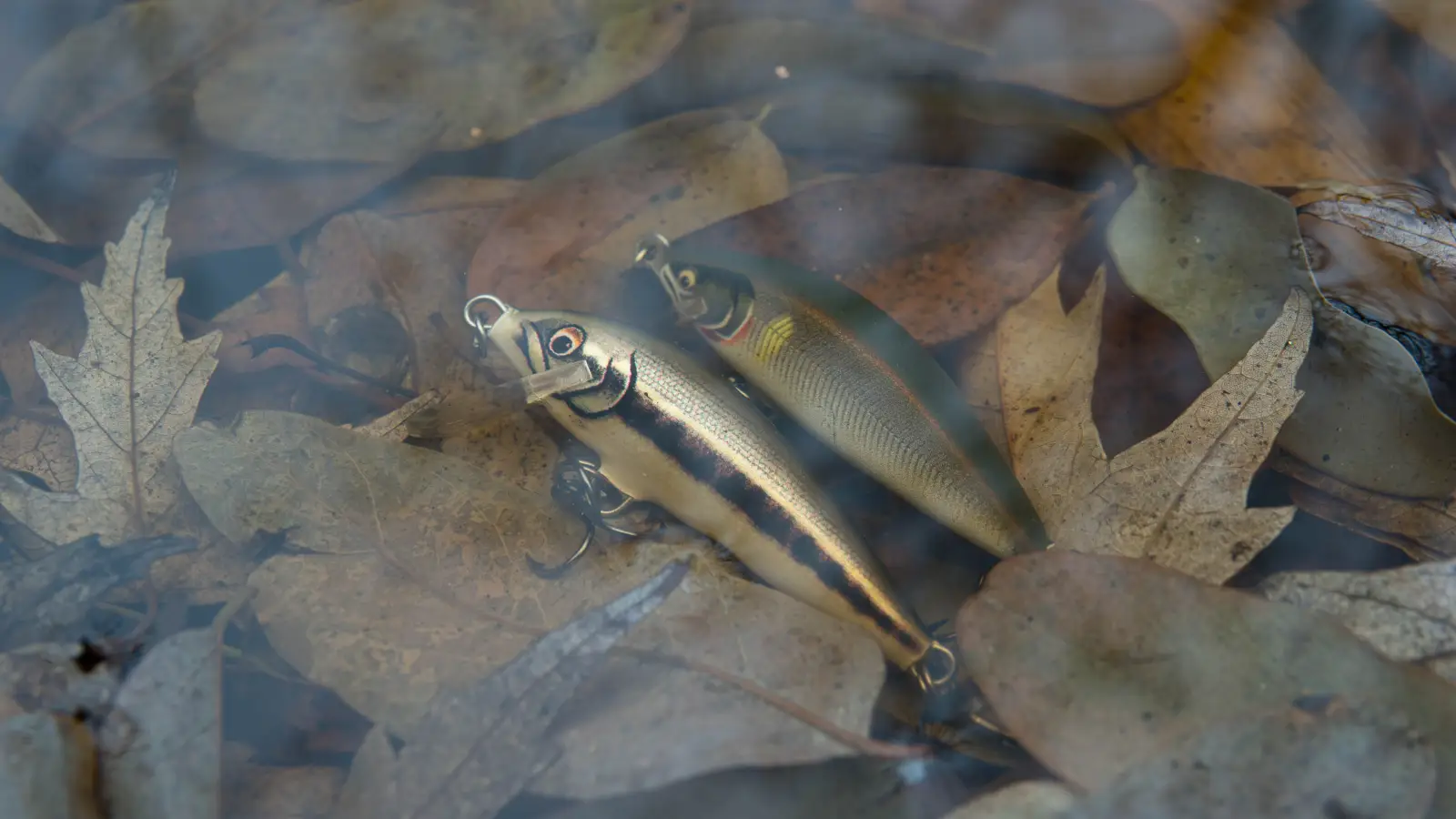
Anglers buy lures by label—Watermelon Red, Green Pumpkin, Chartreuse Pepper—as if the name on the bag meant more than the water they’re about to cast into. The fish doesn’t see a marketing term. It detects contrast against the background and a recognizable silhouette. Those two signals are controlled by three variables: water clarity, ambient light level, and the local forage base. This article lays out a repeatable framework that replaces the label habit with a system built on how a fish actually processes visual information—so you select a lure by reading the water, not the pegboard.
Which of These Patterns Describes How You Currently Pick Lure Colors?
- You buy by a specific color name on autopilot. Your route: absorb the full framework. Master contrast, clarity, and forage, and color names become irrelevant.
- You follow a rule (“stained water = chartreuse”) but can’t explain why it works—or why it sometimes fails. Skip to Stage 2 to lock in the clarity-to-contrast mapping, then circle back for light-level and forage adjustments.
- Your color choices succeed on some trips and flop on others, even in similar water. The missing variable is usually light level or forage. Start at Stage 3 and 4 to close the gap, then revisit the entire decision tree.
- You already know visibility outweighs hue, but you want a systematic method. Jump to the checklist, then scan Stages 2–4 for any loose ends.
1. Replace Color Names with Contrast and Silhouette Thinking
What this stage achieves: It dismantles the habit of categorizing by marketing label and replaces it with the habit of reading relative brightness against a water background.
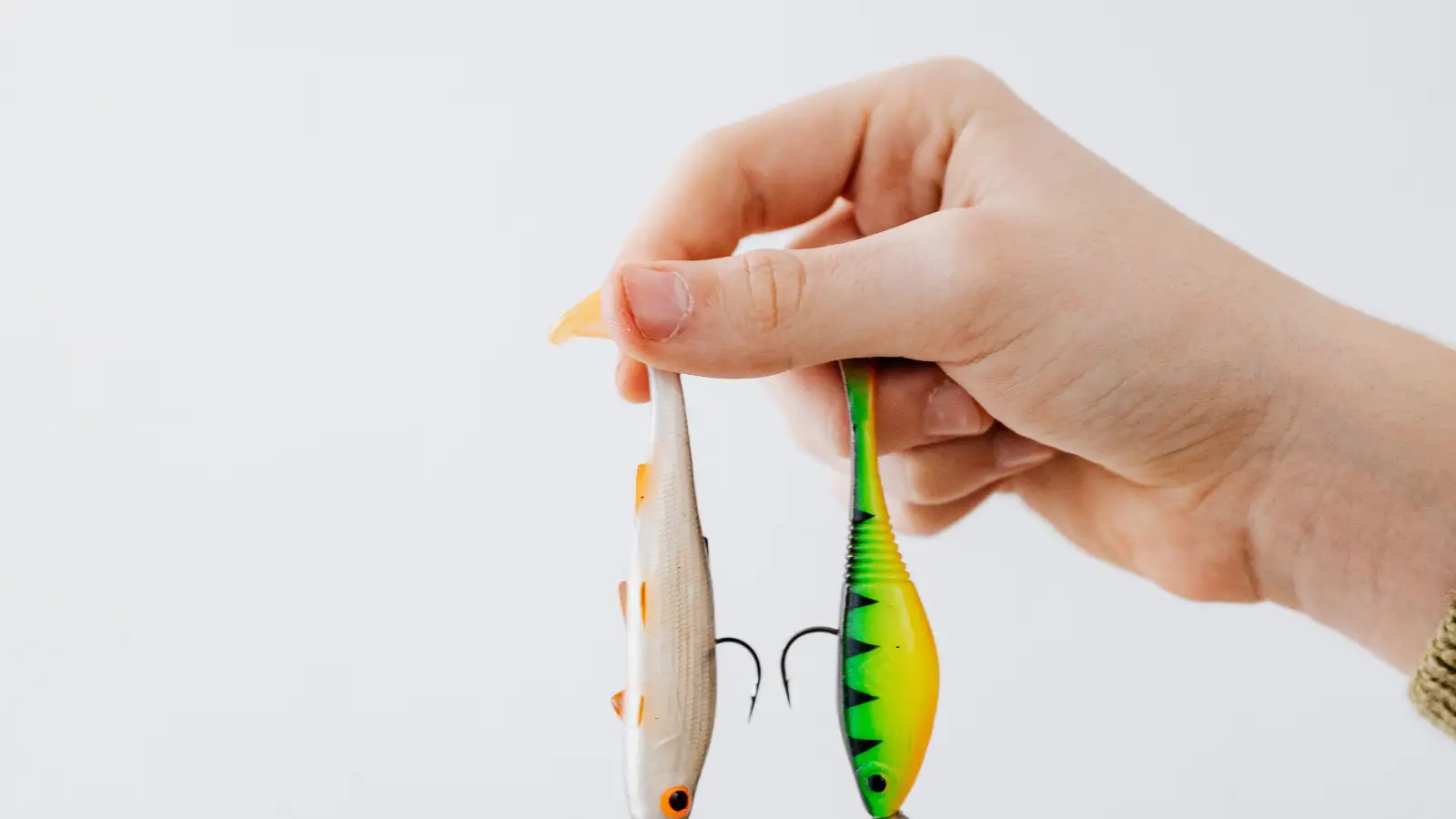
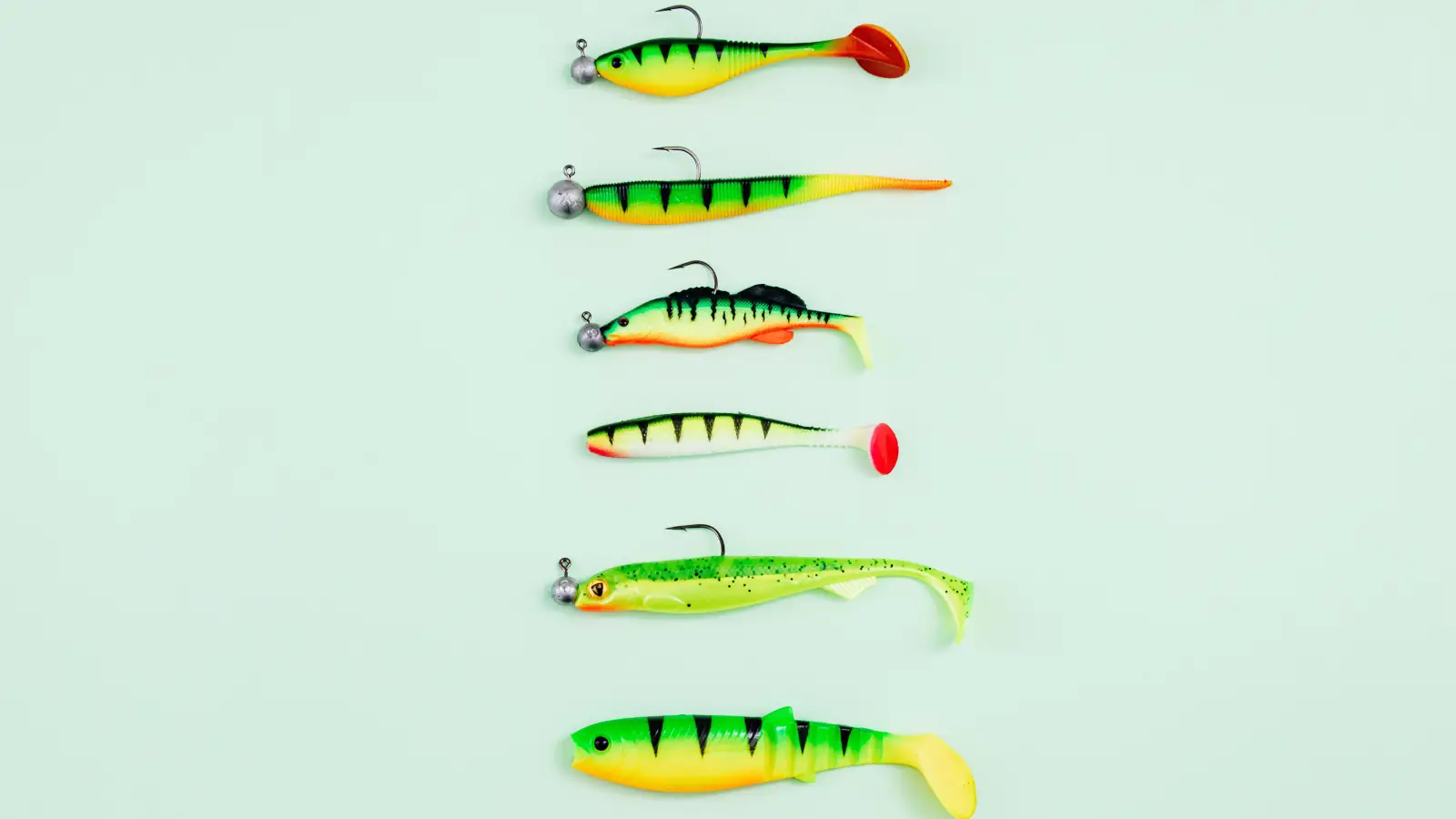
Concrete actions: Place several lures on a white sheet, then on a dark one. Observe which patterns stand out and which dissolve. Then picture clear water as a dark backdrop (it absorbs light) and stained or muddy water as a lighter, milky backdrop (suspended particles scatter light). In clear water, a dark lure produces a sharp silhouette; in turbid water, a light or fluorescent lure pops. The color name is noise; the contrast is the signal.
Readiness sign: You can explain, without reading a package, why a black-and-blue jig is easier to detect in clear sunlit water than a translucent green worm. More broadly, you can instantly categorize any lure in your box as high-contrast or low-contrast for a given clarity condition.
2. Connect Water Clarity Directly to Contrast Level
What this stage achieves: It builds a mental shortcut that links the first variable—clarity—to the contrast your lure needs to be seen, whether you’re on a gin-clear reservoir or a turbid pond.
Concrete actions: Work through three clarity bands.
- Clear water (visibility 10+ feet): Natural, translucent, or darker solid colors that silhouette against the dark background. Overly bright or opaque lures risk spooking pressured fish.
- Slightly stained (3–10 feet visibility): Strengthen contrast with opaque natural tones, a chartreuse tail, or a two-tone pattern that coaxes the lure out of the murk without breaking the natural profile.
- Muddy or heavily stained (under 3 feet): Dark solid colors (black, junebug) or high-opacity brights (chartreuse, white) generate an unmistakable block of contrast. The fish relies on lateral line sensing too, but the visual target has to be obvious.
Readiness sign: Given a clarity description, you can name two or three lure categories that would work and justify each one. You no longer default to a one-size-fits-all rule.
3. Layer Ambient Light Level onto Your Clarity Decision
What this stage achieves: It folds in the second variable—light—so your contrast choice remains effective from dawn glare to midday flatness and heavy overcast.
Concrete actions: Under bright sun, contrast is naturally high, so a slightly subdued pattern (dark back, light belly) often triggers more strikes. On overcast days or during twilight, the water loses its crisp background and silhouettes soften; you need a bolder, usually darker lure to keep the shape readable. In flat light, metallic flash or a faint glow can substitute for the contrast that sunlight normally carves out.
Readiness sign: You can look at the sky, factor in the water clarity, and decide whether to increase or decrease contrast from the baseline you set in Stage 2—and your choice is consistent with how the fish actually sees that water.
4. Steer Final Color with the Local Forage Base
What this stage achieves: It integrates the third variable—what the fish eats—so the lure is not only visible but registers as food, not a threat.
Concrete actions: Pinpoint the dominant forage in your fishery. In much of the U.S., that means shad (silver/white), bluegill (dark back, orange belly, vertical bars), crawfish (muted browns with red accents), or perch (green-gold with dark stripes). In clear water where fish hunt by sight, mimic the general tone of the forage, then apply the clarity contrast rules from Stage 2. In muddy water, prioritize silhouette over exact color—a black-blue jig can read as a crawfish even if the actual crawfish is brown.
Readiness sign: Standing at a lake, you can recall the primary forage species, choose a lure whose color profile fits both the forage and the visibility demands, and explain why you rejected other patterns in your box.
Checklist: You’re No Longer Picking Colors by Name When…
- You sort lures into light and dark piles before considering any label.
- You can predict which lures will pop in clear, stained, and muddy water without making a cast.
- You adjust contrast when the sky changes, sometimes before the next retrieve.
- You account for the local forage and decide whether to mimic or silhouette.
- You recognize a lure’s overall brightness relative to the water matters more than its fine color pattern, and you’re comfortable leaving half your box behind.
Put These Details on Pause Until the Framework Becomes Automatic
- Exact shade matching to a manufacturer’s coded color number: The biological range of a baitfish hue is less relevant than light/dark contrast. Until you read clarity instinctively, sweating a specific green shade diverts attention from the real signals.
- UV finishes and glow coatings: These matter in very deep or near-dark conditions, but they add noise before the fundamentals are solid. Only revisit them after Stage 3 is second nature.
- Scent and sound integration: If the fish can’t see a contrasting silhouette, no garlic or rattle will salvage the presentation. Lock in contrast first.
- Water temperature or barometric pressure as color pickers: Those influence activity levels and location, not which contrast pattern is detectable. Keep them separate from the visibility decision for now.
Frequently Asked Questions
What color lure works best in muddy water?
In muddy water, dark solid colors (black, junebug) or bright opaque colors (chartreuse, white) deliver the highest-contrast silhouette against the milky, light-scattering background.
Does lure color matter at night?
Yes, but contrast governs the outcome, not the hue. Dark lures create a strong silhouette against the faint surface illumination or sky glow, while translucent colors essentially vanish.
What’s the most versatile all-around lure color for unknown water?
A solid dark green-pumpkin or watermelon pattern with some flake and a contrasting belly covers a broad spectrum—stained to slightly clear water—mimicking multiple forage species while maintaining reliable contrast in average conditions.
How do I match my lure to the baitfish in my lake?
Identify the primary forage (shad, bluegill, perch, or crawfish). In clear water, mirror the general color tones while honoring the clarity contrast rules. In low-visibility water, use a high-contrast version of that forage’s overall silhouette rather than chasing an exact color match.
When the Label Loses Its Grip
You’ve left the trap behind when you can stand at the water, glance at clarity and sky, recall what the fish eat, and pull a lure from the box without squinting at its packaging—because the contrast pattern, not the printed name, made the decision. If your starting point is the name-only habit, the first move is a desk exercise: dump a tray of soft plastics, separate them into “dark” and “light” groups, and carry those two categories into every trip until the water itself tells you which pile to reach for.