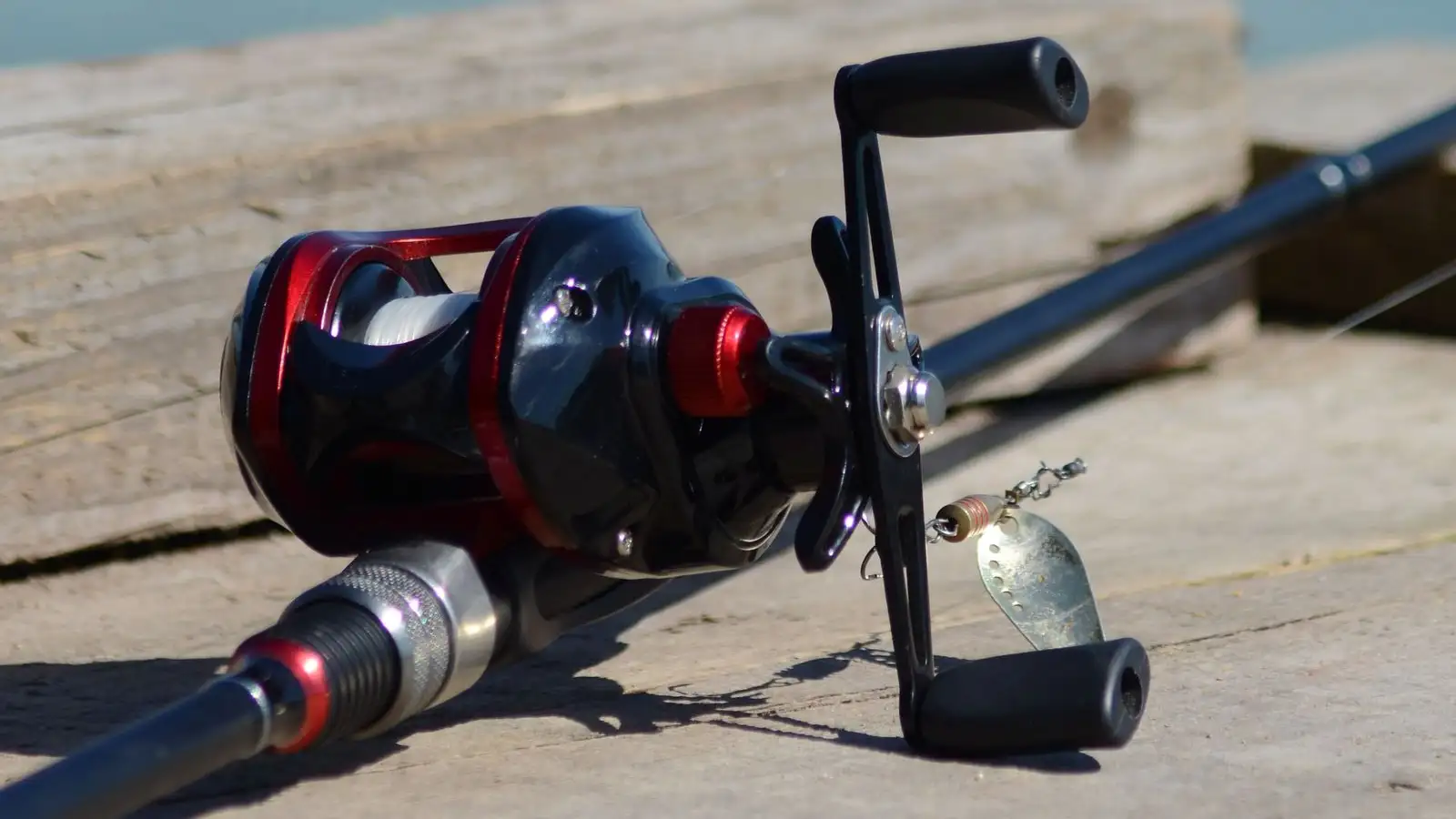
Baitcaster accuracy is trained on land, and it is trained as a progression: start at 15 to 20 feet where you can watch the lure land and correct your thumb on the very next cast, use targets of different sizes and heights, stand in the same low-rod-tip posture and line angle you would hold while wading, tally every miss by direction and distance to expose a bias, and only step back once a small target has been hit several times in a row. Distance is the easy half of this. Brakes and thumb pressure set it, and it improves whether anyone is paying attention or not. Accuracy is the half that needs a drill, because it is a decision about when to release and when to stop the spool, made in less than a second, and no brake dial makes that decision for you.
I built my own version of this in a mowed field, and I built it there for one reason: the water hid my mistakes. On a river, a cast that lands two feet long still catches fish sometimes, and the current drags the line around until I cannot tell what my thumb actually did. In the field, a paper plate leaning against a chunk of firewood sits still and tells me the truth every single time. I get a cast every eight or ten seconds. I see the lure the whole way. I hear the tick when it lands. And past about 30 feet, in flat evening light, that tick is the only feedback I get on real water anyway.
The field does one thing the river cannot
It compresses feedback. That is the whole argument for dry practice, and it is why I keep a hookless lure and a fistful of targets behind the seat instead of waiting for a free Saturday.
I tie on a plastic with the hook cut off, or a plain practice plug that matches the weight I actually fish. Same rod, same reel, same line. If I spend Saturday throwing a half-ounce plug and Sunday throwing a quarter-ounce bait, the thumb lesson does not carry over. The reel has to stay the same, and the brakes have to stay fixed.
That last part is the one I had to learn the hard way. For two seasons I adjusted the brake dial after every bad cast, which meant I was never learning what my thumb did. I was learning what the dial did. Now I set the brakes once at the start of a session, loose enough that my hardest cast gets a mild fluff, and then I leave them alone for the rest of the hour.
Start closer than feels useful
15 to 20 feet, and a target you can hardly miss
At 18 feet the lure is in the air for well under a second, and I can see the exact instant it touches down. That is the point. Short range lets me connect the landing spot to what my thumb just did, while the memory is still fresh. A coffee can lid, a five-gallon bucket lid, a paper plate. Something 10 to 12 inches across. I want a target I can hit on the first cast, because the first cast is where the lesson starts.
When the whole cast takes less than a second, I get forty or fifty reps in half an hour. That is more casts than I would get in a long morning of fishing, and every one of them gives me a clean read.
Target size is the difficulty dial, not distance
Once I am hitting the plate most of the time, I do not walk backward. I shrink the target. A six-inch plate. A soup can laid on its side. A plastic cup. When a small target gets hit three casts in a row, I move back five feet and expect my group to blow open again, because the release timing for a longer arc is a slightly different cast.
Two misses in a row on a target that small usually means I moved up too fast. I go back one size, hit it clean, then try again. That is not a setback. That is the drill working.
Height changes where the rod tip stops
A plate flat on the grass teaches distance judgment and almost nothing else. It forgives a flat, low cast. The accuracy skill I actually need is stopping the rod tip in the right place, and that shows up when the target is above the ground. I lean a plate against a piece of firewood, or set a bucket on top of a cooler, so the target sits at knee height or waist height. Now the rod tip has to stop higher, and a cast that flares or drops early gets punished instead of forgiven.
I mix heights into the same session. Flat target, then raised target, same distance. The difference between the two is worth more than another twenty feet of range.
Stand like you are wading, not like you are on a range
This is where most land practice quietly fails. On a lawn, the natural stance is square feet, upright, rod overhead, comfortable. That is not the cast. Wading puts me in moving water with an uneven bottom, so I cast crouched, with my feet staggered, my rod tip low, and the reel rolled toward horizontal. The line leaves the spool at a much shallower angle to the water than a range stance would produce.
So I force the posture. I string a length of rope between two stakes, or tie off to a fence post and a low limb, at about chest height. Every cast has to pass under it. If my rod tip climbs over the rope, the cast does not count, no matter where the lure landed. Crude, but it puts me in a crouch and keeps my line angle low, which is exactly what wading does. I also like a low branch for the same reason: it is the same problem as casting under overhanging brush on a river, and I would rather solve it in the field than in a tangle of alders.
Score the misses, not the hits
This is the piece I think most people skip, and it is the one that pays.
I keep four boxes, either chalked on a scrap of cardboard or marked out with tape on the ground: left, right, long, short. Every miss gets one mark. No hits get marked. After fifty casts I look at the sheet, not at how good I felt.
What shows up over and over is a bias, not random scatter. In my case, a consistent left drift turns out to be my wrist rolling at the end of the cast, not my aim. A consistent long pattern is a thumb problem: the lure arrives before I stop the spool. If the marks stack in one box over an entire session, that is not bad luck, that is a habit, and it will follow me onto the water if I do not hunt it down here.
Here is the rule I hold myself to. I fix bias with aim point and grip, not with the brake dial. The dial is off-limits mid-session. If I start reaching for it, I have stopped practicing accuracy and started practicing knob turning.
Add headwind as its own drill
A headwind is not just a harder version of the same cast. It changes the mechanics, so it deserves its own block of practice.
Wind at your face slows the lure down. That means the spool is still spinning when the lure has already arrived, which is the classic recipe for a backlash. The thumb has to be on the spool earlier and feather harder, and the cast itself wants to be flatter and lower, because a lofted cast gives the wind more to work on.
Same target. Same distance. Wind in my face. I expect to come up short at first, and I do not chase distance. I chase the timing: how much sooner does the thumb have to engage. Then I turn and let the wind come from my casting side, because a river bend rarely gives you a clean headwind, and a crosswind is the one that pushes the lure off line while the line belly drags the rest of it around.
While all of this is happening, I try to notice the spool's sound. When I am casting well, the whine dies right as the lure lands. When I am late with the thumb, it keeps singing after the tick. That sound is a free coaching cue, and I use it more than I use my eyes.
What the field will not teach you
I want to be straight about the limits. Dry practice does not reproduce current drag on the line, a shifting bottom under your boots, or the way your accuracy standard changes when a fish is about to eat. Those come back the moment you step in the water, and the first hour of a wade will feel worse than the field did.
The ground surface matters too. A driveway gives a false read, because the lure bounces and rolls, and the mark ends up nowhere near where it actually hit. Grass tells the truth and eats plastics, so use a hookless bait or a plug rather than your good soft plastics. Clean, honest, and cheap.
And twenty focused minutes twice a week beats three hours on a single Saturday. I have tested that one on myself more times than I care to admit.