A baitcaster's brake dial is only half the cast because spool tension and brakes are two separate controls solving two separate problems at two different points in the same cast, and they only work when you set them in that order. Spool tension puts constant pressure on the axle. It decides how fast the lure falls and how much the spool can slide side to side. Brakes are speed-dependent resistance. They push back harder as the spool spins faster, which means they do most of their work in the middle and toward the end of the cast, not in the first instant of it. Set tension to the lure that is tied on right now. Set brakes to the wind and to the way that lure behaves in the air. Expect both dials to move the next time the weight on the end of the line changes, because the brake dial is a guess about the whole cast and the tension knob is a guess about the lure alone.
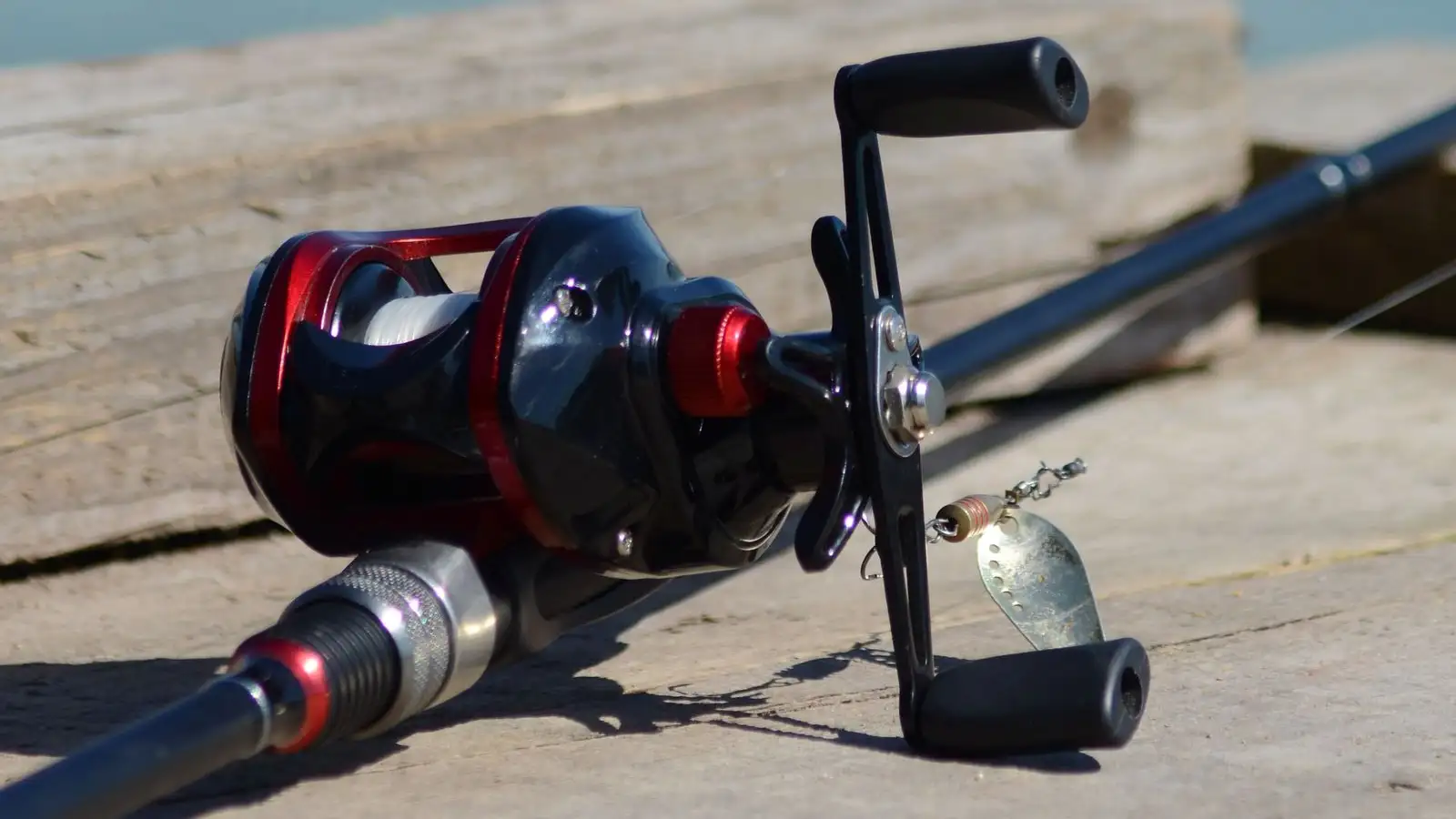
The wind was hitting me from the left at enough of an angle to bow the line before the lure ever landed, and I had just clipped off a heavy bait and tied on something less than half that weight. First cast, the lure flew out clean and then, two thirds of the way downrange, the line floated up off the spool in a loose puff. Not a full nest. A warning shot. I thumbed the spool, felt the line go slack under my thumb, reeled in, picked the fluff out with my thumbnail, and stood there for a second on wet grass doing the only thing that reel lets you do with that information: work out where in the cast it went wrong.
It went wrong late. Late is brake territory.
The fall test comes before the brake dial, every time
Tension and brakes overlap in exactly one place, the first half second of the cast, and that overlap is why people chase their tails. If I move both at once I never learn which one was wrong, so I settle tension first and leave the brake dial alone until the lure is falling the way I want.
Rod tip up, a little past horizontal, and held the same way every time, because the angle you hold the rod at changes the result and a test you run differently every morning tells you nothing. Push the thumb bar and let the lure hang with your thumb off the spool. What you want is a slow fall and a spool that stops about when the lure hits the ground. If line keeps coming off after the lure has landed, the tension is loose. If the lure hangs there or drops in slow motion, it is tight.
Then the part almost nobody does. Push the spool sideways with your thumb. On a reel with the tension set right, you should feel a sliver of movement, the smallest click you can barely register. If you can see the spool shift, there is side play, and side play is what turns a small puff into a nest once the spool is spinning fast.
That morning the fall was too quick and I got slack line back on the spool. I turned the tension knob in, a little at a time, until the lure fell slow and the spool stopped with it. Now the reel was honest about the lure. Everything left over belonged to the brakes.
Read the backlash by when it happened
The position of the fluff is the diagnostic. It is not a mood, it is a timestamp.
It blew up the instant the lure left your hand
That is the spool outrunning the lure at the start, and the start is where constant tension lives. It usually means the tension knob is too loose, or the casting stroke is too snappy. A hard, whippy stroke spikes spool speed before the lure has any speed of its own to pull line off the reel. Smooth the load and the problem often goes away without touching anything, which is worth knowing before you start cranking dials.
It blew up in the middle of the flight
That is brakes. The lure is decelerating as it flies and the spool is not decelerating nearly as fast, and the brakes are the only control that scales its resistance to how fast the spool is still turning. Lighter lures decelerate faster than heavy ones. Bulky lures decelerate faster than sleek ones of the same weight. Anything thrown into a headwind decelerates faster still. All of those ask for more brake.
After the fall test, my second cast was clean off the rod tip and still puffed at the far end. One click up on the brake. Then another. The third cast came back clean but short, and I could feel the lure muscling through the air like it was dragging something invisible behind it. That is the other wall. I came back one click and stopped there, on the edge where the cast is just barely clean.
It blew up as the lure hit the water
That one is the spool still carrying speed after the lure quit. Brakes help, but this is where the thumb finishes the job. Nobody casts with zero thumb, and pretending otherwise is how people end up frustrated with a reel that is actually working fine.
Centrifugal and magnetic brakes do not adjust the same amount per click
Both designs are speed-dependent and both live on the same dial, but they do not ramp the same way. Centrifugal weights swing outward as the spool spins and drag on a drum, so resistance builds fast and then eases as the spool slows. Magnetic braking resists the spinning spool more evenly across the whole cast. In practice that means one click of one is not one click of the other, and if you move between reels that use different systems you cannot carry a setting over. You start the fall test again.
Wind is a second lure weight
I stopped treating wind as weather and started treating it as weight. A headwind makes your lure behave like something much lighter, because the lure slows down fast while the spool keeps its speed. So the brake goes up before the first cast, not after the first backlash. If I can feel wind on my face, I add brake. If it is gusting, I set for the gust rather than the lull, because the gust is the cast that costs me five minutes of picking line.
A quartering wind is sneakier. It pushes the lure sideways, steals its speed, and the overrun shows up off to one side of your target instead of straight out in front. Same fix, same reason. The lure slowed down and the spool did not.
Over-braking feels safe and casts like a brick
The over-braked cast is quiet and comfortable. The lure lobs out, the line never threatens, and you lose a chunk of your distance without really noticing, because nothing bad happened. Then you start compensating with a harder casting stroke to get that distance back, and now you have a fast, jerky stroke feeding a spool that is already fighting resistance. The lure feels like it is dragging in the air, arcs down early, and the whole cast feels heavy on the way out. That is a brake setting stealing from you.
There is a real limit here and I would rather say it than pretend otherwise. Some reels are built with a floating spool, where the tension knob mostly exists to remove side play and does little else. On those, run tension just tight enough to kill the play and let the brakes do the work. And plenty of experienced casters deliberately run less brake than a beginner would, because they use their thumb as the third control and accept more risk in exchange for distance. That trade is real. It is just not the trade you want to make on the first morning with a new lure and a crosswind.
Move one dial at a time and the reel stops being a mystery
None of this needs a number. It needs an order. Tie on the lure you are actually starting with. Run the fall test. Feel the side play. Set brake for the weight and the wind. Then cast with your thumb hovering and read where it went wrong if it does. Tension for the fall. Brakes for the flight. Thumb for the finish. Change the lure or the wind and you are back at the top of that list, because a brake setting is not a property of the reel. It is a property of the cast you are about to make.