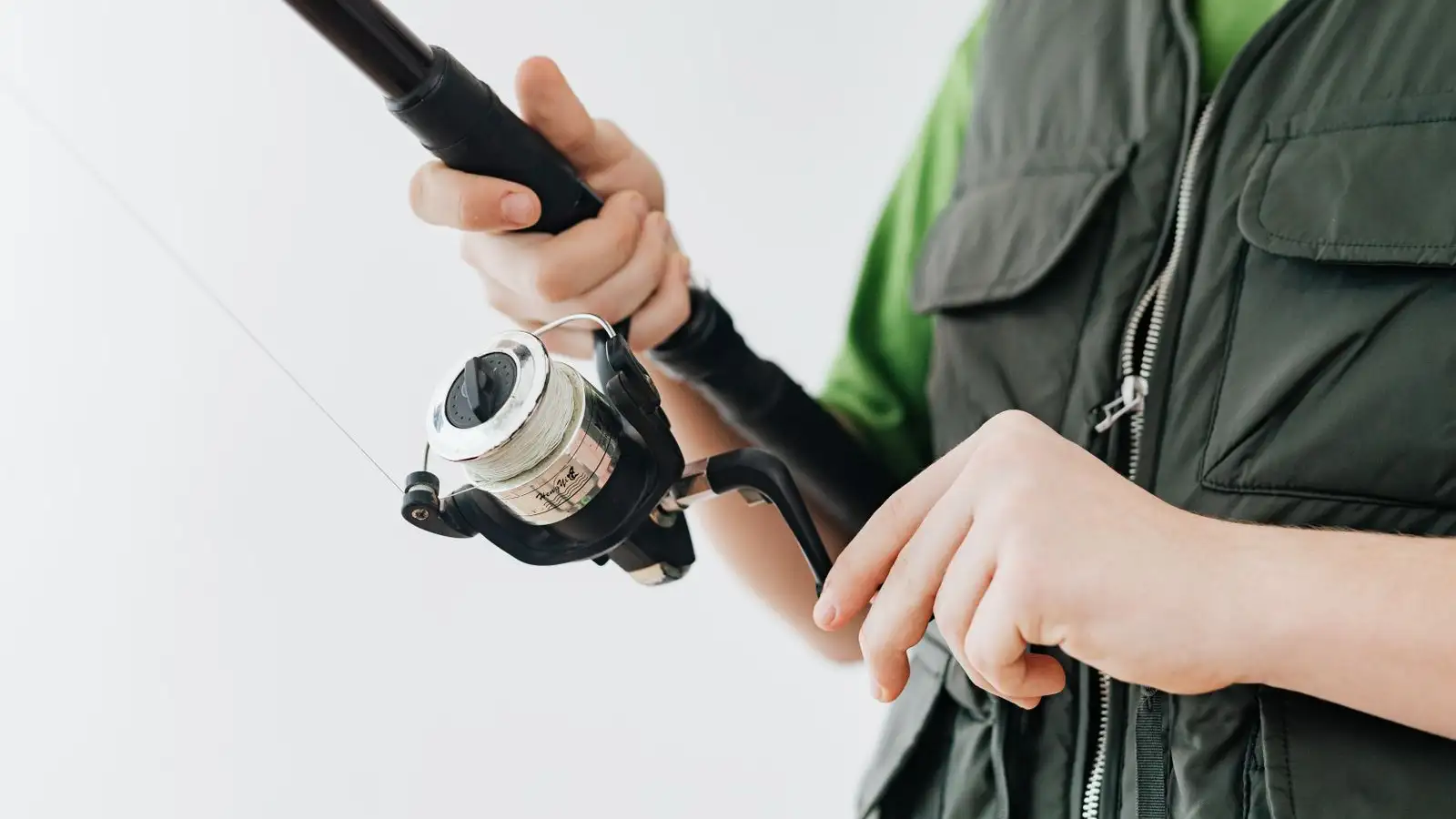
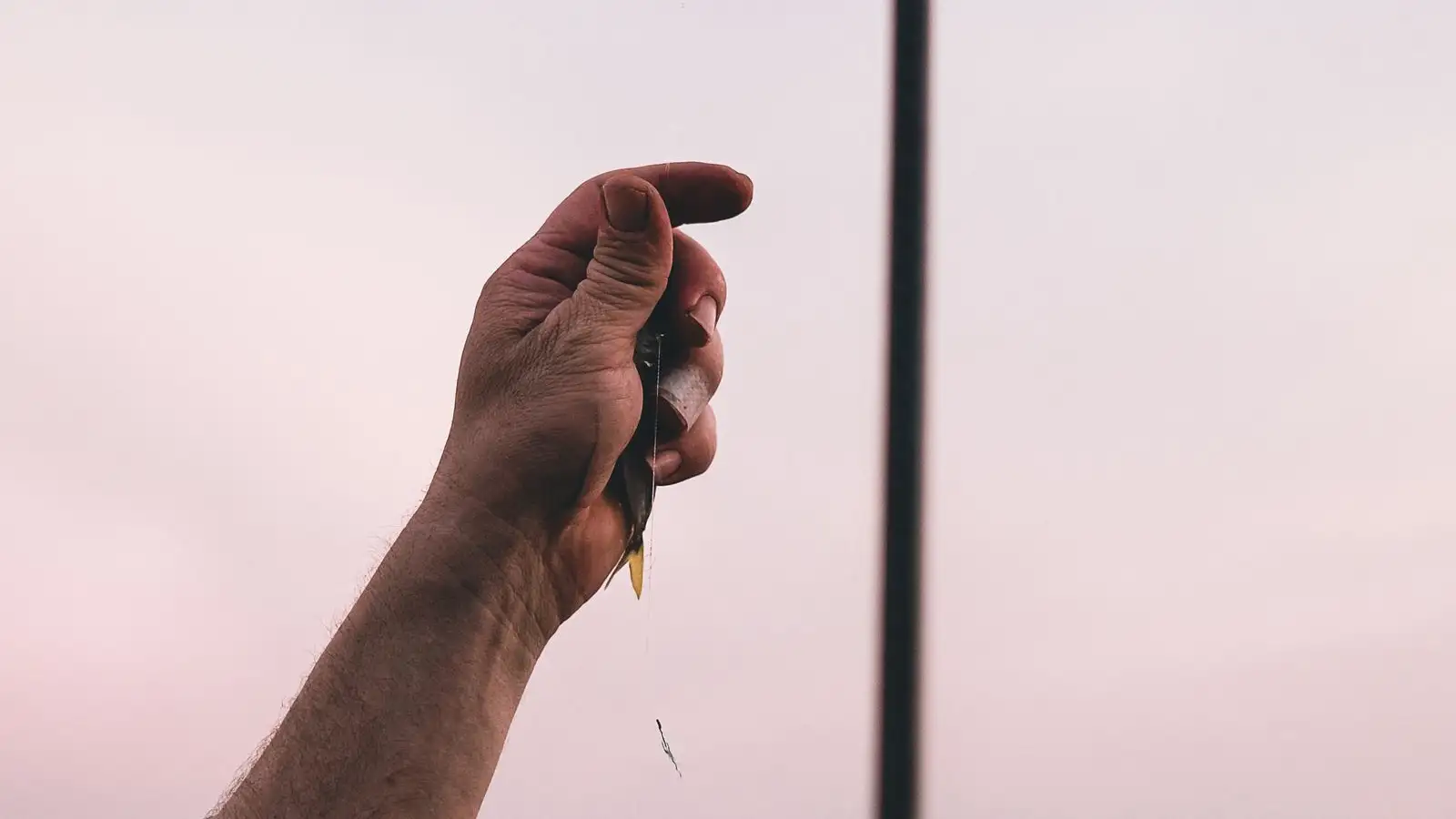
Line memory is set on the bench, not on the water. How full you fill the spool, how much tension you hold while the line goes on, what sits underneath it as backing, and where the reel lives between trips decide most of the coiling you will fight all season. The cast does not create the problem. It just shows you what you built the last time you spooled up.
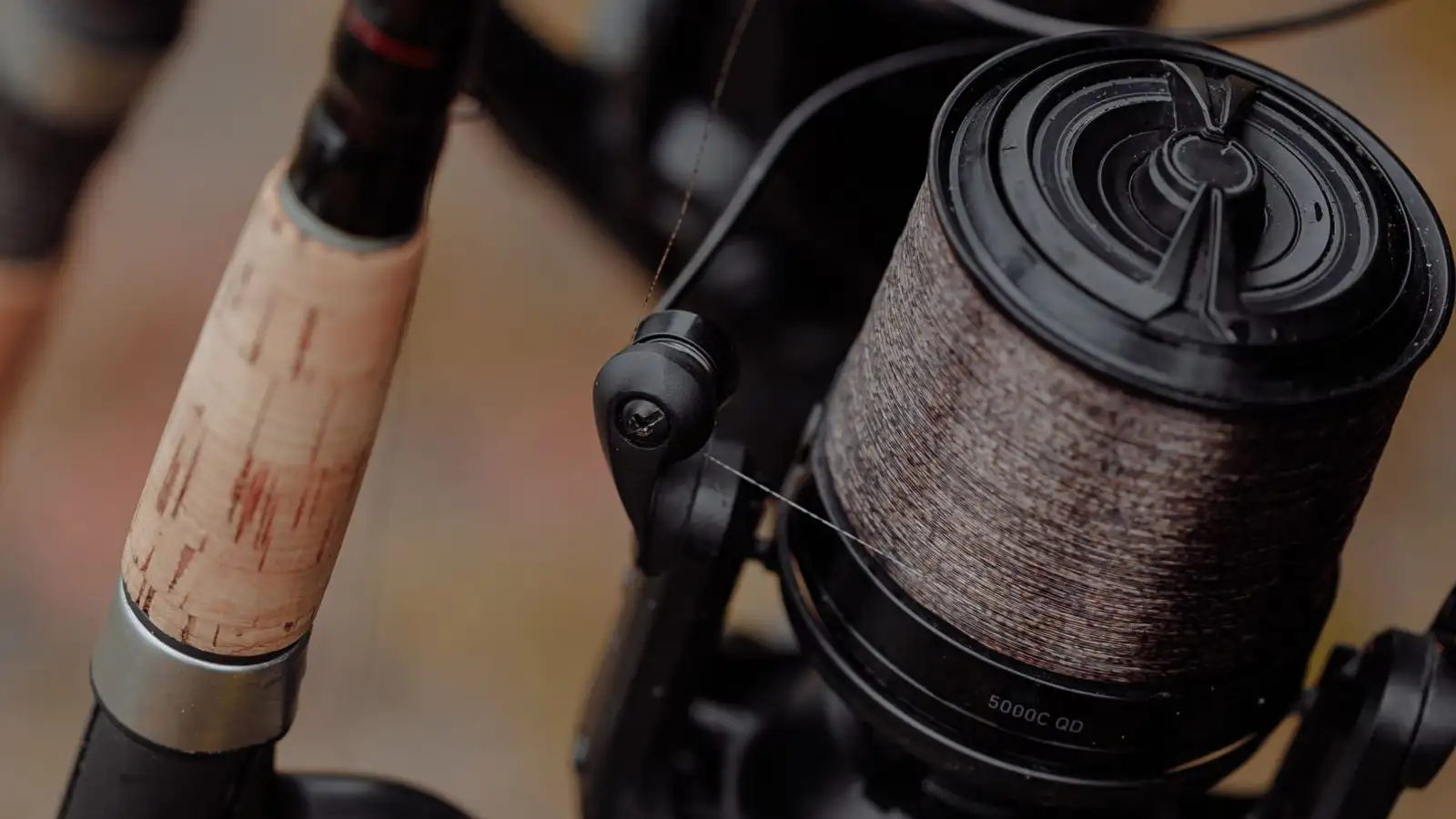
Stand at my bench with me for a few minutes. It is a Saturday in early March, the garage door is half up, and cold air is sliding in low across the concrete. There is a filler spool lying flat on the floor with a pencil through the hub. The reel is clamped to a rod butt, drag backed off, spool lip wiped clean. I have a damp rag folded in my right hand. The tag end runs through the butt guide, and my left hand pinches the line about a foot above the reel.
Then I start cranking, and almost everything that matters happens in the next three minutes.
The tension is the whole job
The rag is not for cleaning. I fold it wet and pinch the line inside it so the line goes onto the spool under steady drag. Not slack. Not winched down. When I get it right, I can feel the wraps bedding against each other, and the line squeaks faintly coming off the filler spool.
There are two ways to get this wrong, and they fail differently.
Lay the line down slack and you get loose wraps that shift and cross. Cast it, and the outer wraps drag the inner ones out with them. That is the loop that blooms off a spinning spool and turns into a tangle before the lure hits the water. Winch it down hard instead and you get the opposite problem: line wound onto a small-diameter spool under heavy tension takes a tight, long-lasting set, and the wraps bury into the pack so a fish pulling drag digs a groove instead of taking line smoothly.
Small arbor diameter makes both of those worse. Line bent around a tight radius holds that radius longer. That is worth thinking about before you start, not after.
Fill level is not a preference
The spool lip tells you when to stop. On a spinning reel I want to see a sliver of bare lip when the spool is full, roughly an eighth of an inch. Overfill it and the line has nowhere to go but off the front, so you shed loose loops on every cast. Underfill it and the line has to climb over the lip, which adds friction on the way out and lets the packed line dig down into itself under load. Both make whatever memory the line already has worse, because both force the line to work harder than it should.
Backing does double duty
Ten or fifteen yards of inexpensive backing under the main line raises the effective arbor diameter on a spinning spool. That matters more than people give it credit for. The first fifty yards of main line sit in wider coils than they would on a bare spool, and wider coils straighten out faster on the cast. It also means you are not burning half a filler spool of main line just to fill a deep spool before you get to the working line. One knot, two problems handled.
Keep the backing knot low and centered. A lump under the pack telegraphs itself through every wrap above it.
Direction matters more with mono
Monofilament already has a memory before it ever meets your reel. It was wound onto the filler spool at the factory and it wants to stay that way. So I lay the filler spool flat on the floor, look at whether the line is coming off the top or the bottom of that spool, and then check which way the reel's spool turns as I crank.
The line should go onto the reel in the same direction it comes off the filler spool. When those two directions fight each other, you do not just inherit the spool's coil. You add twist on top of it, and twist is what turns a manageable coil into a pigtail that wraps the tip guide.
When I am not sure, I spool about ten yards and stop. I let the line hang loose between the rod tip and my hand. Hangs straight, direction is right. Spirals into a curl, I flip the filler spool over and start again. Ten seconds of checking beats a whole season of picking loops out of your guides.
A spinning reel and a baitcaster need different hands
A spinning reel does not tension the line for you. The spool just sits there and takes whatever you feed it. You are the tension. Rag, pinch, steady crank, and watch the line lay evenly instead of stacking up in the middle.
A baitcaster's level wind lays line side to side by itself, which makes it feel like the reel is doing the work. It is not. The level wind spreads the line; your hand still sets how tight it goes on. Let your grip go light halfway through the fill and you have a loose patch surrounded by tight wraps. That is a trapped coil waiting for its moment. The loose wraps shift under the tight ones on the first hard cast, and the backlash looks like it came out of nowhere. It did not.
Two things undo the job after the fill
Both of them happen off the water.
The first is the rod tip. If I leave a lure cinched down against the tip guide for a week, the line at that point takes the shape of the guide and keeps it. Do that all winter and you have trained a permanent bend into the last six feet of line, which is the part that matters most on the cast and the part you can least afford to have misbehaving. So I loosen it. Hook the lure to a keeper or a guide foot with slack in the line, or take it off entirely and let the line relax.
The second is heat. Memory gets harder to work out as line ages, and heat accelerates that aging. A reel left on a dashboard, or in a black box in a garage that bakes all afternoon, comes back coiling worse than it went out. I keep my reels indoors between trips. It costs nothing and it is the cheapest thing on this list.
Stored tight or stored loose
Here is the tradeoff that nobody brings up. Line left loaded on a reel under tension holds whatever shape it was given. Line wound onto a spare spool with very little tension on it relaxes between trips, noticeably, over a few months.
So if a reel is going to sit through the off-season, I would rather pull the main line onto a spare spool with light tension and let it relax, then respool in the spring. The catch is that loosely wound line on a spare spool can cross and tangle when you go to wind it back on, so you have to feed it on with tension and actually pay attention while you do it. There is no free version of this. Pick which annoyance you would rather have.
If the line is staying on the reel, back the drag off and do not leave it tensioned against the tip all winter. That alone saves you part of the damage.
What this buys you
You can chase memory after the fact. Stretch the last stretch across a lawn, or let fifty yards trail behind the boat in open water. Both work, and both work briefly. But you are fighting something you already built, and you will be fighting it again next trip.
Do it the other way around. Fill to the right level. Wind on with even tension in the right direction. Put backing underneath so the coils start wide instead of tight. Keep the reel out of the heat and off the rod tip when it is not in use.
Then the coiling you deal with in July is small, and it shakes out in a cast or two. That is the difference between a line that annoys you and a line that ruins the first hour of every trip.