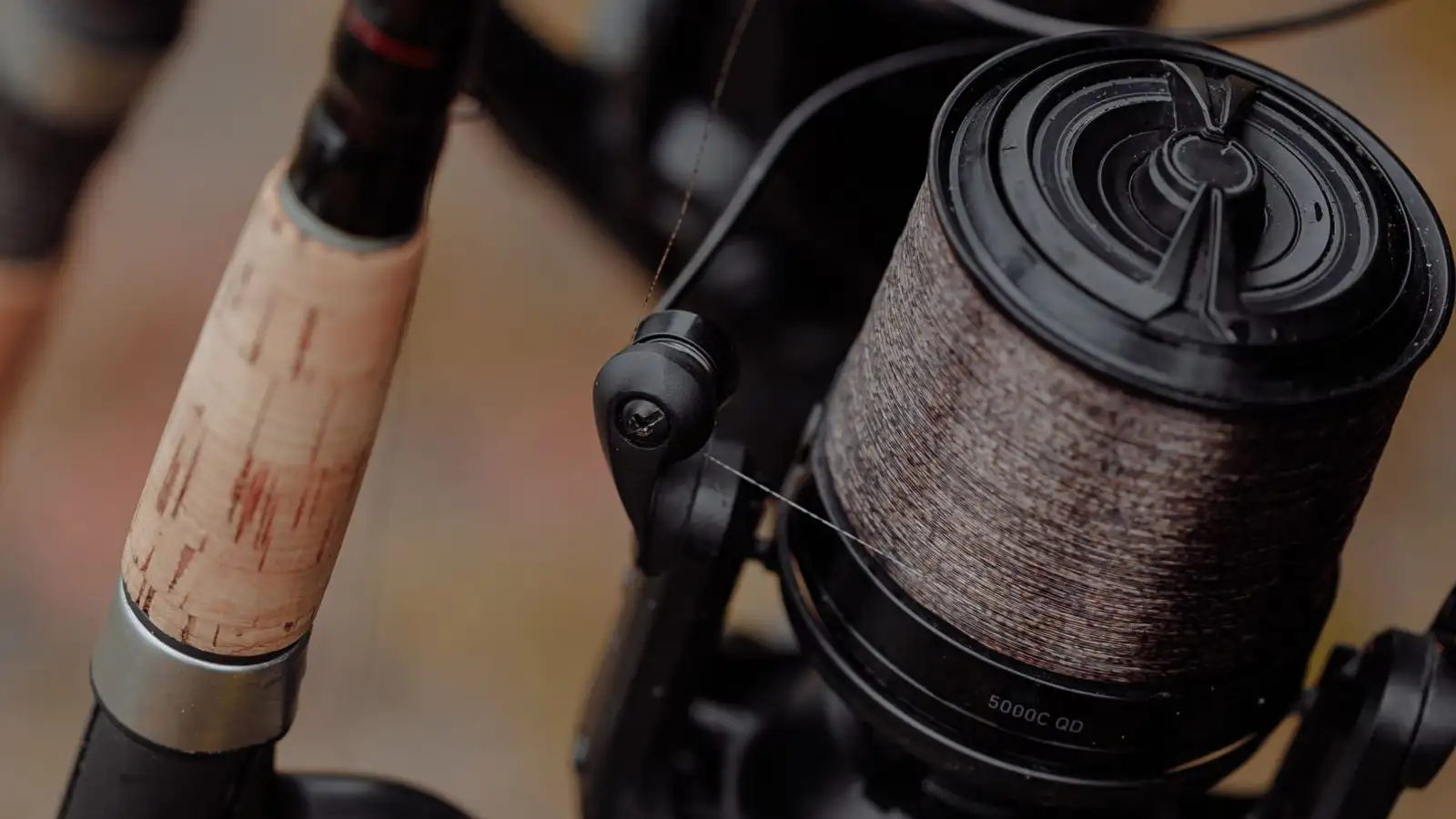
Braid doesn't coil because there's no single continuous strand inside it to hold a curve. Monofilament and fluorocarbon are each one extruded filament, so when they come off the filler spool wound tight, the whole cross-section of the line is bent and stays bent — that is memory. Braid is dozens of fine fibers twisted and woven together, and any bend in it has to live in the small gaps between those fibers, where it slides out as soon as the tension comes off. The pound test printed on the box doesn't enter into it.
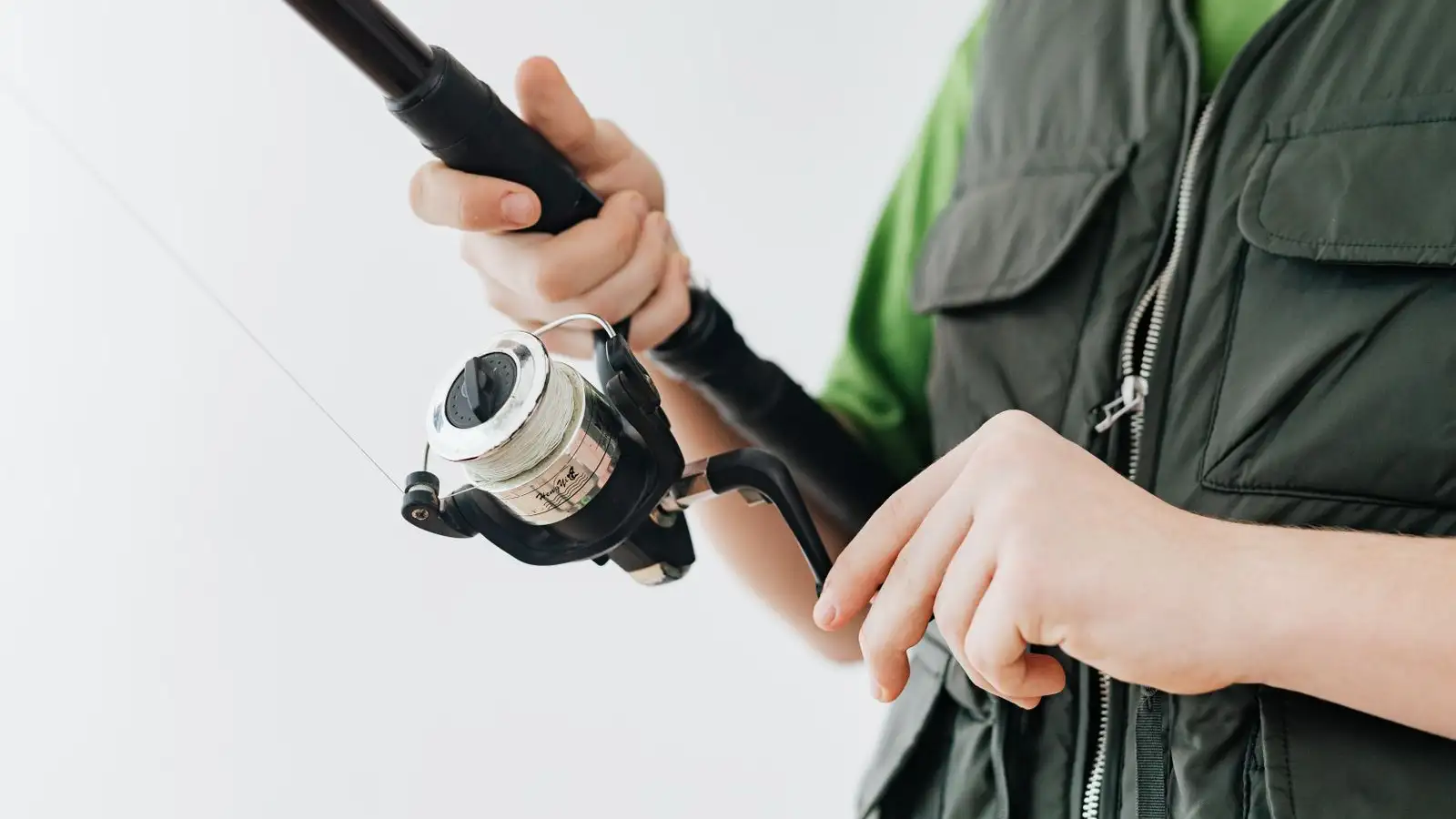
I keep a spool of each in the truck box. On a cold morning I'll pull a couple of feet off both, lay them side by side on the boat deck, and just watch. The mono arrives in a coil and stays in a coil — little loops that stand on edge and lean against each other, and if there's a breeze running down the deck they'll walk. The braid arrives and lies down flat like a length of thread. Same rated strength. Different animal entirely.
You can feel it before you see it. Draw a foot of mono between your thumb and forefinger and let it go: it comes off your hand still curved, like a ribbon off a scissors blade. Do the same with braid and it hangs limp. Pinch it and it flattens oval between your fingers, then rounds back up.
That's the answer, felt in the hand. The reason behind it is worth knowing, though, because it explains why the same reel can make one line behave and turn the other into a slinky.
One strand, one slow argument
Monofilament starts as nylon melted and pushed through a die. What comes out the far side is a single filament, one piece of material from end to end, and it gets wound onto a filler spool while it's still under tension. Because it's continuous, the curve isn't just a shape the line is sitting in — it's a shape the polymer chains are in. On the inside of the bend, chains sit pressed together. On the outside, they're stretched. They don't care for it. Given time, warmth, or a long steady pull, they rearrange back toward straight, which is exactly what's happening when you stretch a coiled line out behind the boat or hook it to a post and walk it out across the yard.
The same process runs the other way, too. Leave mono wound tight on a spool in a hot truck all summer and the chains creep deeper into the coiled arrangement and take a harder set than they had when the line was new. Warmth cuts both ways, depending on whether the line is loaded or relaxed when it warms up.
Fluorocarbon has the same architecture — one strand — but it's denser and stiffer, and stiffness is what holds a bend. At the same diameter, a fluorocarbon filament usually comes off the spool in a tighter, angrier spring than nylon. Where nylon has some give and will relax under a light pull, fluoro argues back. That stiffness is a feature in some jobs and a nuisance in others, and it's also the reason a fluoro leader can deaden the action on a finesse presentation that wanted a soft, lively bait.
Copolymer and hybrid lines blend nylon with other polymers in the same single strand, and they land in between. Less retained set than straight fluoro, usually a bit more than a soft nylon. If you've ever bought two spools of the same rated mono and wondered why one handles like wire and the other like rubber, the material and the blend are the answer far more often than the number is.
Why a weave can't hold a bend
Braid isn't extruded. It's assembled. Fine fibers get twisted into strands, and the strands get braided around each other, often over a core running down the middle. Nothing in that construction is fused into one solid piece — which is the point. The fibers can move against each other.
A bend in braid is absorbed by thousands of tiny adjustments between fibers instead of by stretching and compressing the material itself, and those adjustments cost almost nothing. The line conforms to whatever it's wrapped around and then forgets. Same reason a length of rope doesn't remember the shape of the cleat you tied it to.
That's also why braid is so limp, and why it flattens. It isn't really a cylinder, it's a soft bundle, and it behaves like one.
The pound test trap on the same reel
Pound test rates breaking strength. It does not rate diameter or stiffness, and diameter and stiffness are the things memory actually cares about. That's the whole confusion in one sentence.
Braided line is thin for its strength. A braid rated at 30 pounds is commonly about the diameter of a 10-pound nylon monofilament. So when you compare "the same pound test" on the same reel, you aren't comparing similar objects — you're comparing a thin, limp woven line against a solid filament two or three times thicker. Two variables differ at once, and only one of them is material. A braid of that diameter would coil less even if it were extruded.
Within monofilament alone, the spread between weights is just as big. A 4-pound nylon is a noodle. A 30-pound nylon from the same family is stiff enough to hold a hoop and will come off the spool in one. Same material, same construction, completely different handling. If you concluded that "mono coils" from a heavy spool and "mono is fine" from a light one, both observations were correct.
The reel's own spool diameter matters too. The same mono wound onto a small-diameter baitcaster spool is bent more sharply with every wrap than it would be on a wide spinning spool, and it comes off with a tighter set. Put a given line on a different reel and you've changed its memory without changing the line at all.
Braid's shape problems aren't memory
None of this makes braid shape-proof. Its failure mode just isn't a coil.
Packed hard onto a small spool under heavy tension, the weave flattens, layer presses into layer, and the line takes the profile of the spool — a hard, glossy, spool-shaped mass. Leave it there over a winter and it can end up looking like a roll of tape. Cast it after that and it doesn't spring; it comes off in a spiraling ribbon, and then a loop grabs the layer underneath and pops.
Digging is the other one. Braid under tension buries into the layers below it, and on a hookset the line can cut down into the spool and lock instead of peeling off. That's compression, not memory, and it gets fixed a different way: load the line evenly and under real tension, use enough backing that you're not winding a thin line onto a bare arbor where the whole spool can slip, and don't leave it packed that way for months. The wind knots and mystery loops people blame on braid come out of the same limpness that keeps it from coiling.
What I actually do with it
If a mono or fluoro spool has been sitting, I stretch it before its first cast. Hook a swivel to something solid, walk off two casts' worth, and pull — steady, not a jerk. On a warm afternoon most of the set comes out in a few minutes. On a cold morning it comes out slower and I plan on it. A hard set that's been in a line since last fall isn't going to come out in the twenty feet I have time to stretch at the ramp, so I'd rather just respool than fight it all day.
I also don't store line wound tight. If a reel is going to sit through the winter, the line comes off onto a large-diameter spool or gets left loose on the reel. It's cheap insurance against a hard set.
When I'm fishing a spinning reel from the bank in February and the mono is leaping off the lip in loops, I'll switch to braid for that trip — not because braid is somehow the better line, but because it's the same in the cold and the mono isn't. On a baitcaster I'll sometimes live with a firmer line, since a stiffer line comes off the spool more predictably under my thumb, and I'd rather deal with a little wire than a loop that buries.
Two lines on the deck, then: one that was bent and remembers it, and one that was never bent in the first place. Once you've seen that, the labels stop being the interesting part.