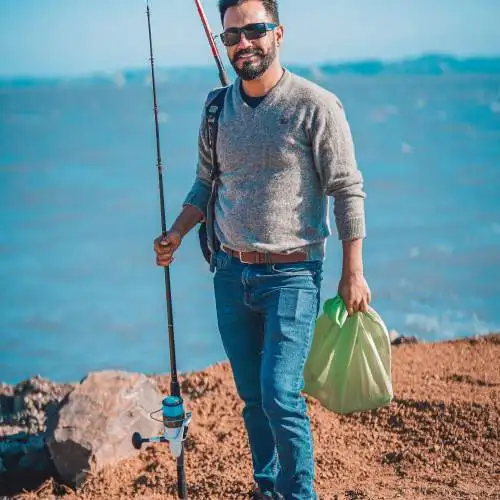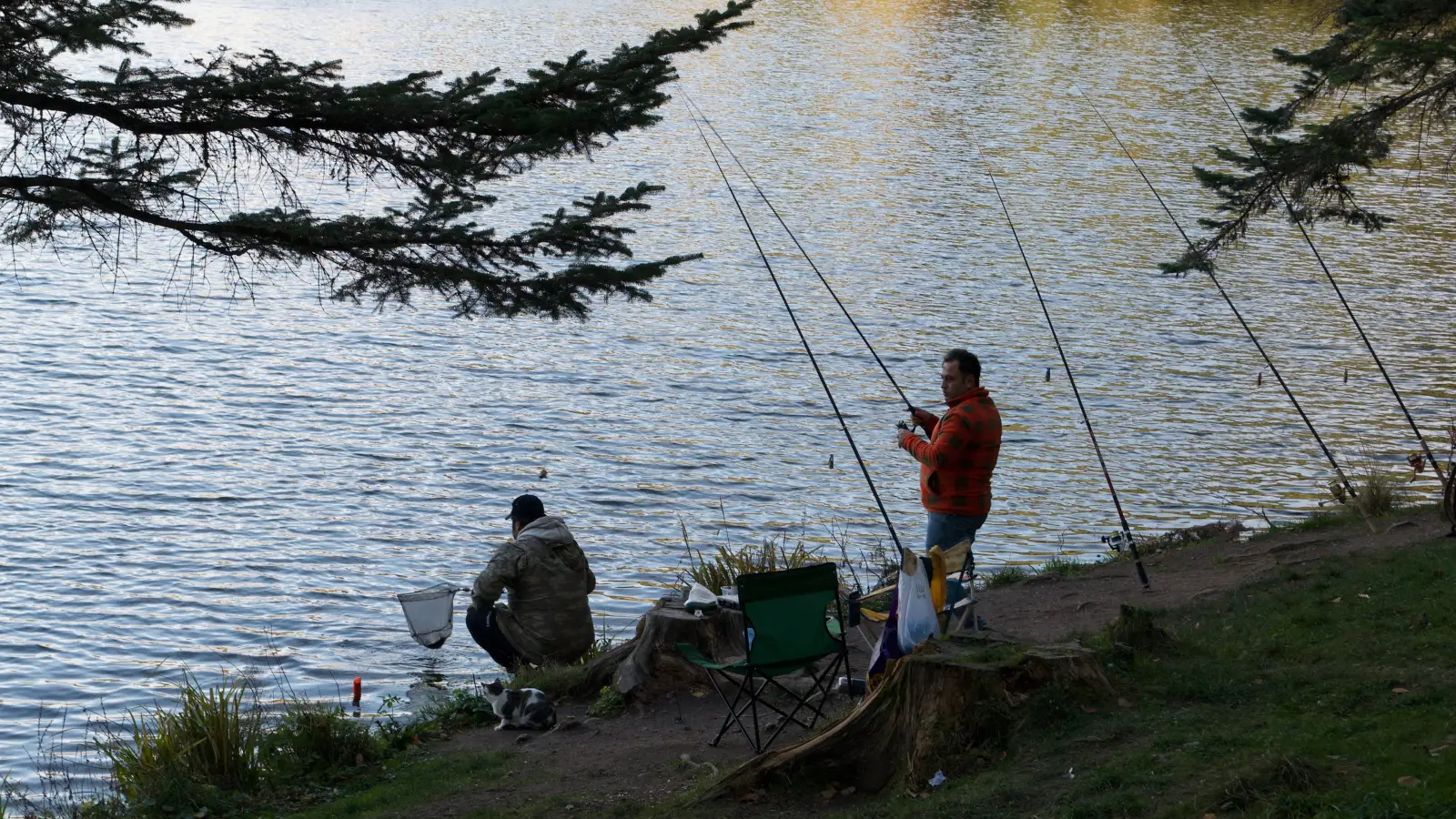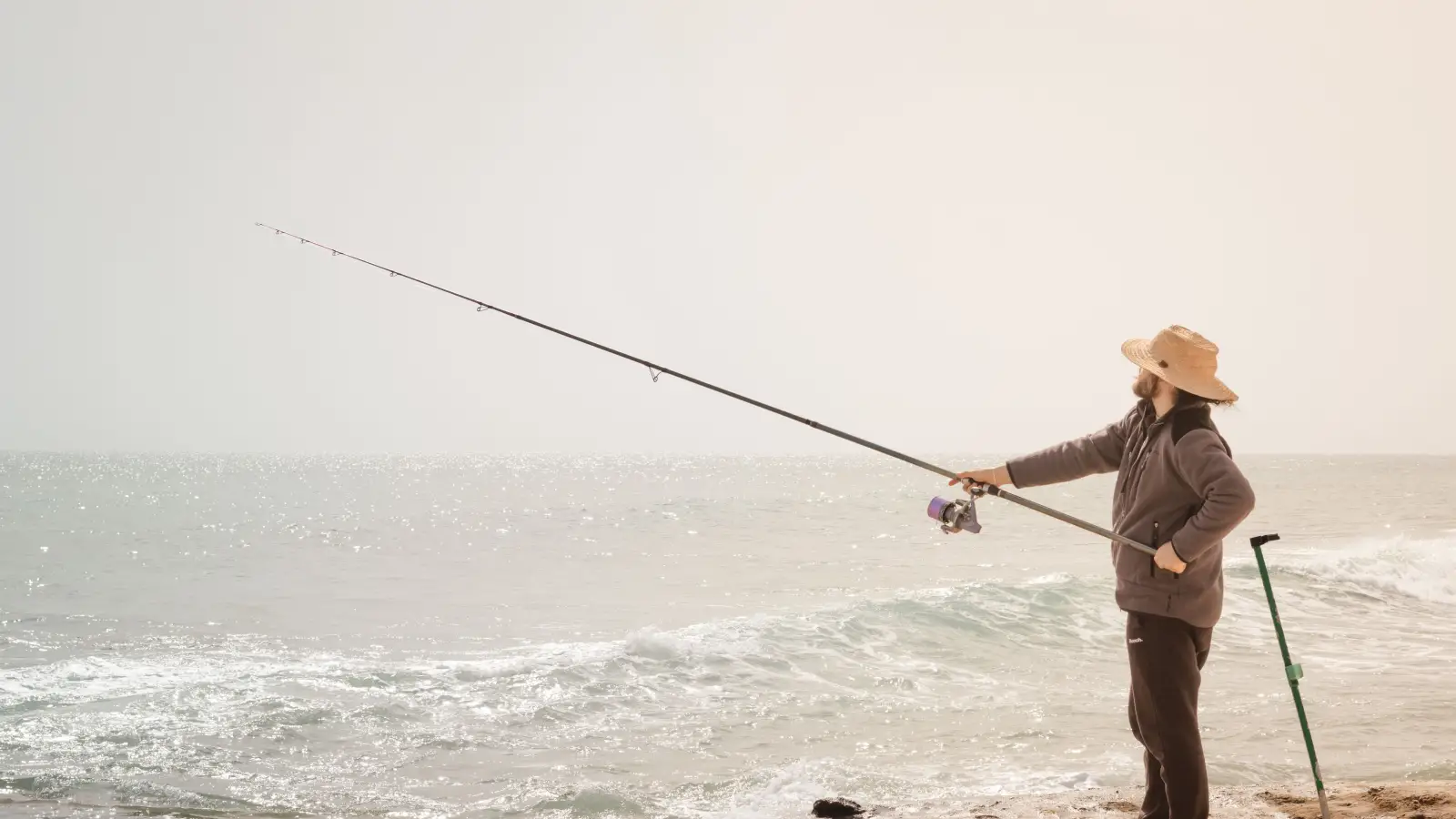
Casting farther from shore usually has nothing to do with muscle. It’s about clearing the brush, limbs, or bank that sits directly behind you. Standard overhead casting advice assumes empty air in back, but most shoreline spots jam you tight against something solid. If you want distance, you need two casts that don’t swing high and wide—the sidearm and the steeple—and some drills you can run in a driveway.
A medium-heavy spinning rod, a practice plug, and fifteen feet of clear lane are all it takes. The goal is to add 10–20 yards by keeping your backcast out of the trees, and you can build the core rotation for it in a space barely bigger than a parking spot.
Gear and Room to Swing: What You Actually Need
The starting setup isn’t complicated. A 7- to 8-foot medium-heavy or medium-power spinning rod gives you the control you need in tight quarters—anything longer fights you when there’s no room to swing. Braided line from 15 to 30 pounds cuts air resistance so a short stroke carries farther. You’ll also want a practice plug or a ½- to ¾-ounce hookless weight and a target—something like a bucket lid works fine.
Space is less of a constraint than it feels. A driveway or a narrow strip of grass works if you can swing the rod parallel to the ground without hitting a wall. Stand with your back a rod’s length from a fence and try a slow sidearm; if the rod clears, you have enough room to run every drill in this article.
Step-by-Step: Learning the Obstacle-Beating Casts
The six steps below go from baseline setup to full-speed practice. Spend the bulk of your time on the wall drill and the chair drill—they’re what overwrite the overhead habit fastest.
1. Set the Rod Up for Low-Distance Loading
Start with a braid mainline and a short fluorocarbon leader tied to your practice plug. Grip the rod so the reel stem sits between your middle and ring fingers; that grip naturally angles the rod tip lower, which is what you want for a sidearm. Make a few slow half-strokes to feel where the rod first loads—that’s the point you’ll work from in every drill.
2. Sidearm Cast: Keep the Backcast Below the Branches
Plant your feet shoulder-width with your casting shoulder toward the target. Rotate your torso back—don’t lift the arm—so the rod tip moves at waist height on a flat plane behind you. Accelerate forward on the same level line and release as the rod tip passes your body. The whole stroke stays low, enough to slip under most overhanging branches, and the hip rotation generates the line speed.
3. Steeple Cast: Shoot the Line Up When Space Above Is Tight
When something vertical blocks a low backcast—a rock face, a wall, a thick stand of brush—switch to the steeple. Lift the rod tip high and to the rear, almost as if you’re tracing a line straight up a wall behind you, then punch the rod tip down and forward toward the target. This keeps the entire backcast above the obstacle and sends the forward cast in a lower, wind-cut trajectory. The timing is the only tricky part; wait until the line straightens overhead before driving forward, or you’ll lose the load.
4. Wall Drill: Lock in the Low Backcast Path
Stand a rod’s length from a wall, fence, or garage side, facing away from it. With the practice plug, make slow sidearm strokes. If the rod tip pops above your shoulder, the line taps the wall. Do this for ten minutes, gradually ramping up speed until you can run a full-speed cast without contact. The wall drill bakes in the low plane faster than any other practice method.
5. Chair Drill: Build Core Rotation Without a Full Backswing
Sit on a sturdy armless chair with your feet flat and your back straight. Make sidearm casts from this position, aiming 30-40 feet out. The chair removes your legs and lower back from the equation, so all the power has to come from torso rotation and a smooth arm stroke. You’ll quickly learn that a wrist snap fails here; a longer, smoother rotation is what gets the line out. When you stand up, that same core-driven stroke adds yards without widening your arc.
6. Add a Tiny Double Haul for Extra Yards
Once the sidearm and steeple casts feel consistent, add a short double haul. On the backstroke, pull the line down sharply with your off-hand for about six inches, release, then pull again as you drive forward. This tension loads the rod deeper and shoots the line faster. With a sidearm stroke, keep the hauls short so they don’t pull the rod off its low plane.
Mistakes That Send Your Line Into the Trees Behind You
Overhead Habit: Swinging the Rod Like You’re on a Field
Beginners default to a high, looping overhead arc because that’s what they’ve seen. On a brushy bank, that loop catches everything behind you. Replace it with a sidearm or steeple whenever there’s an obstacle. The wall drill is the quickest way to break the habit.
Not Rotating Your Hips Far Enough
A sidearm cast that uses only the arm produces a short, stiff stroke that runs out of gas fast. Rotate your hips until your belt buckle faces the backcast before you start forward. Full rotation loads the rod smoothly and gives you distance without fighting the rod.
Starting the Forward Cast Too Early
Wait for the line to straighten out behind you. Rushing the forward stroke—especially with a steeple, where the line travels a longer path—snaps the leader and kills distance. A half-second pause is all it takes.
Using a Rod That’s Too Long for the Bank
A 9- or 10-foot rod that works on open water becomes a problem when you have brush at your back. Stick with a 7- to 8-foot rod for most bank fishing with tight cover. The shorter lever is easier to keep low and accelerates faster, which matters more than raw length when clearing obstacles.
Questions Shore Anglers Ask About Sidearm and Steeple Casts
Will a sidearm cast cost me distance compared to an overhead cast?
No, if the rod loads correctly. A well-timed sidearm stroke generates the same line speed as an overhead cast; the only difference is trajectory. In a headwind, the low line path often cuts through air better, which can add yards.
Can I use a sidearm cast with a baitcaster?
The mechanics are identical, but you have to control the spool more carefully because the low rod angle can cause backlash if the line doesn’t strip cleanly. Crank the brakes one notch higher than usual and learn the low plane with the wall drill before pushing distance.
How do I know whether to use a sidearm or a steeple cast?
Check the obstacle behind you. If it’s low branches, go under with a sidearm. If it’s a solid vertical barrier—bluff, wall, dense brush—use the steeple to lift the backcast over it. When you’re unsure, the sidearm is simpler to control and should be your default.
Do I need a special rod for steeple casts?
A fast-action rod helps, but a standard 7- to 8-foot medium-heavy rod works. The steeple’s effectiveness comes from timing the forward punch, not from a specialty stick. Practice the motion with a light weight first.
Your Next Step: From the Driveway to the Water
You now have two casts built to clear shoreline obstacles and a pair of drills that fit into a tight practice space. The chair drill and wall drill are your shortcuts to killing the overhead habit. Run them fifteen minutes a day for a week, then take the mechanics to a bank you know.
When you get to the water, glance at the cover behind you, pick the cast that fits, and focus on smooth acceleration. Power isn’t the answer—clearing the backcast is. Once that’s automatic, fish that were out of reach become reachable, from spots you’d stopped fishing altogether.