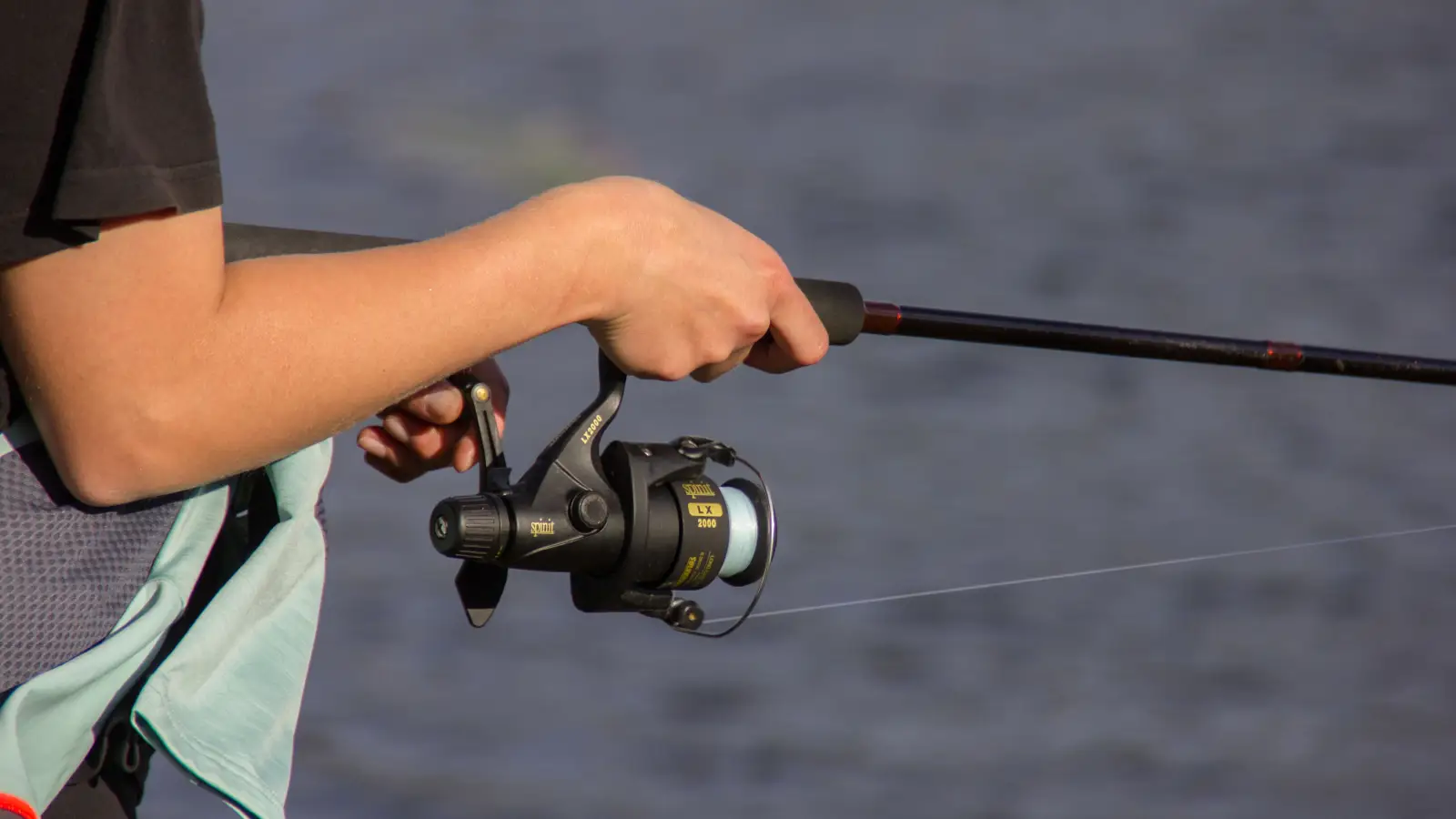
Most beginners abandon baitcasters not because they lack coordination, but because they try to substitute thumb pressure for the mechanical brakes that the reel requires. Backlash is a failure of spool-speed regulation. When the spool tension and braking system aren’t balanced against the lure’s flight, the spool overruns and line piles slack that the thumb can’t correct in time. The real cost of trying to learn without setting those brakes is a reel that never works reliably, wasted line, and enough frustration to quit the whole category. Get the mechanical balancing step right first, and thumb control becomes a refinement, not a desperate correction.
Spot Your Backlash Pattern Before Adjusting Anything
The pattern of backlash points to which part of the system is out of order. Match the behavior you’re seeing before making any adjustment.
- The mid-cast explosion: The cast travels fine, then birds-nests violently near the end of the flight or as the lure splashes down.
- The instant overrun: Line lifts off the spool and tangles the moment the rod accelerates forward, before the lure even leaves the tip.
- The subtle loop: A small, loose loop appears on the spool during flight and only becomes a tangle when the reel is engaged and line is retrieved.
- Wind and light-lure chaos: The setup casts heavy lures in calm air without issue but fails completely with anything light or any headwind.
The Mid-Cast Explosion: Overrun at the End of the Throw
Why the spool outruns the lure mid-air
A flying lure decelerates from drag. The spool, unless braked, maintains its initial rotational speed. If centrifugal or magnetic brakes are set too low, or the spool tension knob is backed off too far, the spool will eject line faster than the lure can draw it out. Slack accumulates mid-flight and snags the moment line tension returns.
Confirm the brake setting is the culprit
Cast normally but arrest the spool with your thumb just before the lure hits water. If the backlash occurs while the lure is still in the air, the braking is insufficient. If it only happens on splashdown, the spool tension knob is likely too loose—the spool continues spinning after the lure stops.
Fix the brake balance in order
- Hold the rod at about 45 degrees and disengage the spool. The lure should descend slowly and the spool should stop rotating the instant the lure touches the ground. Tighten the spool tension knob until that condition is met exactly.
- Set the centrifugal or magnetic brake to its maximum setting.
- Make several soft sidearm casts. Reduce the brake by one increment at a time, watching for the first sign of a slack loop on the spool. When it appears, increase the brake setting by one.
- Train with that setting until the thumb begins to feather the spool automatically at the end of each cast. Only then lower the brake further.
After this sequence, expect the overrun to stop; at most, a single loose loop may form that the thumb can easily handle.
The Instant Overrun: Line Jumps Off the Spool on the Forward Swing
Why the spool overspins before the lure ever leaves
When spool tension is so loose that friction is negligible, the initial rod stroke alone is enough to accelerate the spool and dump line. The lure’s weight hasn’t yet begun to pull line at that point, so there’s no controlling force at all.
Check the spool side-to-side play
With the reel engaged, try to move the spool left and right. Any detectable play means the tension knob is far too loose. Even without play, the setting can still be inadequate.
Tighten the spool tension to the drop-test baseline
- Disengage the spool and tighten the tension knob until the side play disappears.
- Slowly back off the knob while pressing the thumb bar, observing the lure fall. Stop when the lure descends under its own weight and the spool halts the moment the lure contacts the floor.
- If the instant overrun persists at this setting, set the centrifugal or magnetic brake to maximum and test again.
After adjustment, line should release only when the rod loads and the lure’s momentum pulls it—not from the rod’s acceleration alone.
The Subtle Loop That Becomes a Bird’s Nest
Why a tiny loop turns into a tangle
When spool tension is nearly correct but centrifugal or magnetic braking is too weak, the spool spins slightly faster than the exiting line, leaving a small slack loop. Engaging the reel and cranking pulls that loop down into the line layers, tightening it into a knot.
Confirm it’s the brake, not the tension
Run the drop test; if the lure falls and stops correctly, the spool tension is appropriate. Then cast a moderate distance and watch the spool during flight. A loop forming before the lure lands indicates the brake is failing to control over-spin.
Add brake force incrementally
For centrifugal brakes: engage all pins or blocks. For magnetic: turn the dial to maximum. Cast and look for the loop. Reduce brake force one step at a time until the loop reappears, then increase back by one step. The loop will disappear, and the spool will maintain a light but consistent tension throughout the cast.
Wind and Light Lures: When the Reel Won’t Cooperate
Why some baitcaster setups struggle with light or wind-resistant baits
Light lures carry less momentum, so pulling line consistently requires very low spool tension. But low tension also makes the spool susceptible to overrun if the wind suddenly slows the lure. Many reels have spools too heavy to start and stop quickly enough for baits below 1/4 ounce, making balance nearly impossible.
Is your gear the problem?
Cast a 1/2-ounce practice plug with brakes set to a moderate level. If that works perfectly and the backlash only occurs with baits lighter than 1/4 ounce or into a headwind, the reel or line is the limiting factor, not the caster’s skill.
Adjust expectations and settings for light-bait scenarios
- Increase the brake setting significantly—often nearly maximum—for light baits.
- Switch to thinner line (10–12 lb test) to reduce spool inertia.
- If you intend to throw light lures regularly, use a reel with a shallow, lightweight spool designed for finesse.
- Keep casts compact and controlled; avoid snapping the rod tip.
Expect shorter distances and more brake dependence with light lures. This is a physical constraint of the tackle, not a deficit in ability.
Reset the Reel to Its Most Forgiving State
Several resets apply across most backlash patterns and should be performed when nothing else seems to work.
- Spool tension baseline reset: Return to the drop-test baseline: lure falls slowly, spool stops on ground contact without overrun. This is the only universal starting point.
- Brake maximum then dial back: Set centrifugal/magnetic brakes to maximum, then reduce with test casts as described.
- Line spooling check: Unevenly wound or twisted line creates loops on the spool. Respool under tension with a line winder or have a shop do it.
- Clean and lubricate: A dry or contaminated spool bearing spins erratically. Apply one tiny drop of lightweight oil to each spool bearing and wipe off excess.
These resets fix most backlash when the reel is mechanically sound. They will not help if the reel cannot physically handle the lure weight (e.g., a heavy-bait model forced to throw 1/8-ounce lures) or if the braking system is mismatched to the application.
Stopping Backlash Before It Starts
Prevention means treating the setup as a required step every time you change a lure, not a one-time configuration.
- Reset spool tension and brake for each different lure weight, because the balance point shifts.
- Begin each session with brakes tighter than you estimate you need, then loosen only after several clean casts.
- Practice on land with a practice plug, casting to a bucket. This builds thumb timing without the distraction of water.
- Replace line that shows kinks or memory; loops from old line catch on the spool during retrieves.
- Recognize that thumb control is the final adjustment layer. Its role is to feather the spool gently at splashdown, not to fight a runaway spool mid-flight.
Common Questions Baitcaster Beginners Ask
Do I still need to use my thumb at all?
Yes, but only for the final stop and minor corrections. With the mechanical brakes set correctly, the thumb feathers the spool as the lure lands or adds brief pressure if a gust catches the bait. It shouldn’t have to combat a spool that’s already overspeeding.
What’s the ideal spool tension setting?
The lure should fall at a steady, controlled speed when the spool is released, and the spool must stop rotating the instant the lure hits the ground. Any faster and backlash is probable; any slower and casting distance is sacrificed for no gain.
Why does my reel bird-nest even with the brakes on maximum?
Typically the spool tension knob is still too loose, allowing the spool to spin freely despite full braking. Re-establish the drop-test baseline. If that fails, inspect the brake ring for damage or missing brake blocks.
Can I practice casting on dry land?
Yes. Use a practice plug or an unweighted hook cover. Being on land removes the pressure of fishing and lets you isolate the reel’s adjustments.
Do baitcasting reels with DC braking eliminate the need for this setup?
DC systems reduce the need for fine thumb control, but they still depend on a proper spool tension baseline. If the tension is too loose, the digital brake may work inefficiently or fail to compensate, especially with light lures.
What to Do When Nothing Fixes the Problem
If you’ve applied the pattern-specific fixes and universal resets and still get persistent backlash, collect specific data before seeking help: reel model and brake type, line type and pound test, the weight range of lures you’re casting, and a description of when the backlash happens.
Take that information to the manufacturer’s support page for model-specific tension settings, post it on a forum (BassResource, Reddit’s r/Fishing_Gear), or visit a local tackle shop for a hands-on inspection. In rare cases, a bent spool shaft, defective brake, or improperly matched line can cause continuous problems that require repair or a gear change. If the reel proves fundamentally unforgiving for your application, consider a reel with a dual-braking system or a DC chip that automates much of the spool-speed management.