You can cast a spinning reel this afternoon. Spinning gear doesn’t punish small timing mistakes, so focus on one release motion and one bail habit — that’s all you need to avoid tangles and start fishing.
The Minimal Setup That Forgiving Reels Demand
Keep the gear simple. You want a setup that covers up sloppy casts, not one that punishes them.
- Rod and reel – A 6’6″ to 7′ medium-power spinning combo. The longer rod loads gradually, which smooths out jerky motions.
- Line – 8–10 lb monofilament. It stretches, cushions mistimed releases, and costs little to replace when you cut out a tangle. Braid digs into itself on the spool; fluorocarbon holds coils. Mono forgives.
- Practice weight – A ¼-oz rubber casting plug or a bell sinker, no hook. You’ll cast it dozens of times without snagging.
- Open space – A mowed field, empty parking lot, or long driveway with no overhead branches. Grass is kinder to line than pavement.
The One Motion and the One Habit That Make It Click
Two things determine whether your afternoon succeeds or ends with a ball of twisted line: when you release the line and how you close the bail. Get these right and you’ll have a fishable cast in under an hour.
Step 1: Grip the Rod and Pin the Line
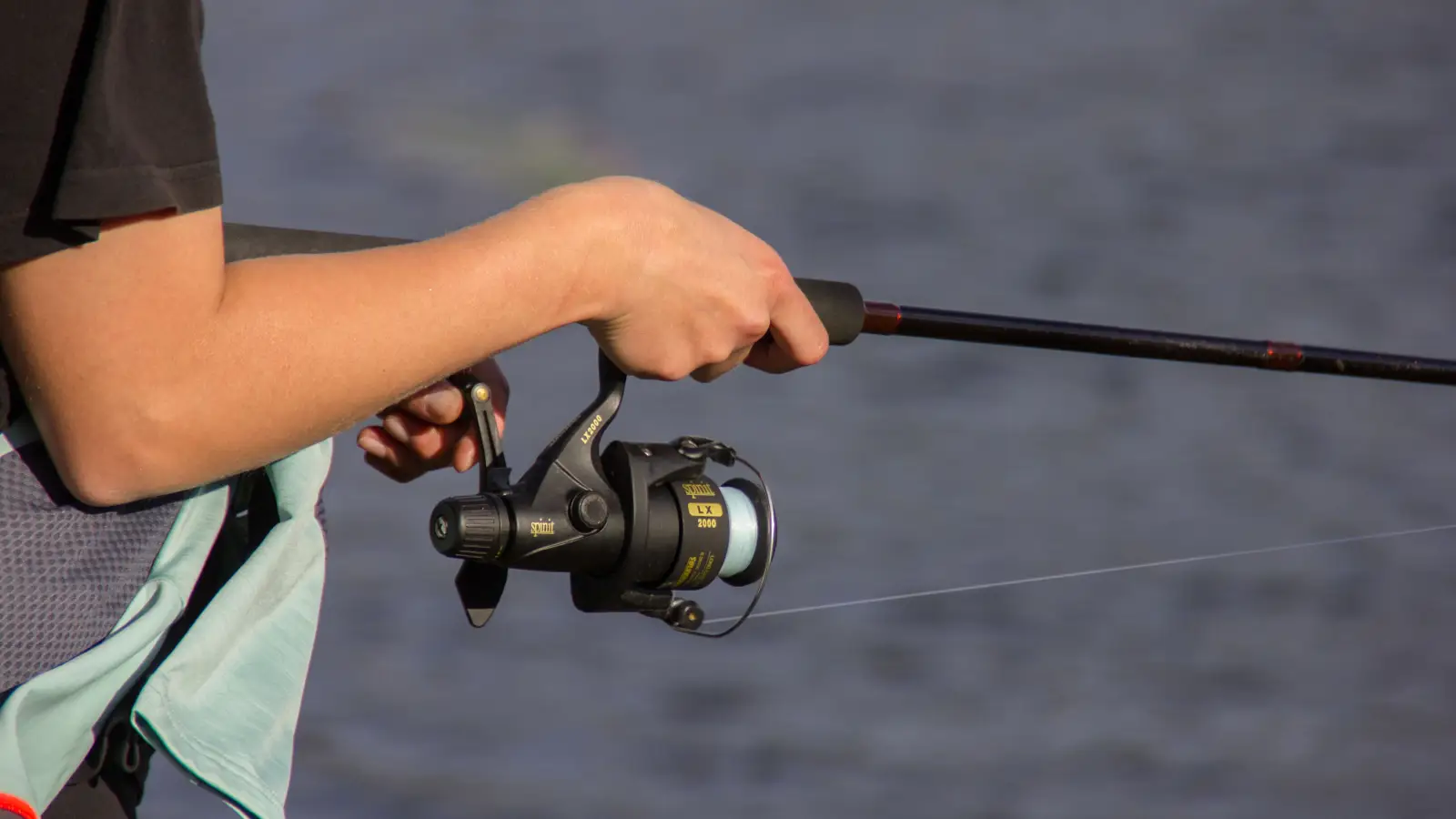
Hold the rod with the reel stem between your middle and ring fingers. Extend your index finger and press the line firmly against the rod grip, right where it leaves the spool. This grip gives you complete control over the release. Without it, line spills off the spool early and tangles before the cast begins.
Step 2: Open the Bail by Hand — Every Time
Flip the bail wire fully open with your free hand. Do not try to open it by turning the reel handle. That habit twists the line on every cast because the rotor rotates as it opens, adding a half-twist each time. After a dozen casts you’ll have a nested mess. Manual opening avoids all of it.
Step 3: The Smooth Backcast
With the bail open and line pinned, raise the rod tip to about 10 o’clock. Sweep it backward in a smooth, accelerating arc to roughly the 2 o’clock position. No snapping, no sudden stops. A fluid backcast loads the rod with the plug’s weight and sets up a clean forward throw.
Step 4: The Forward Cast and the Release
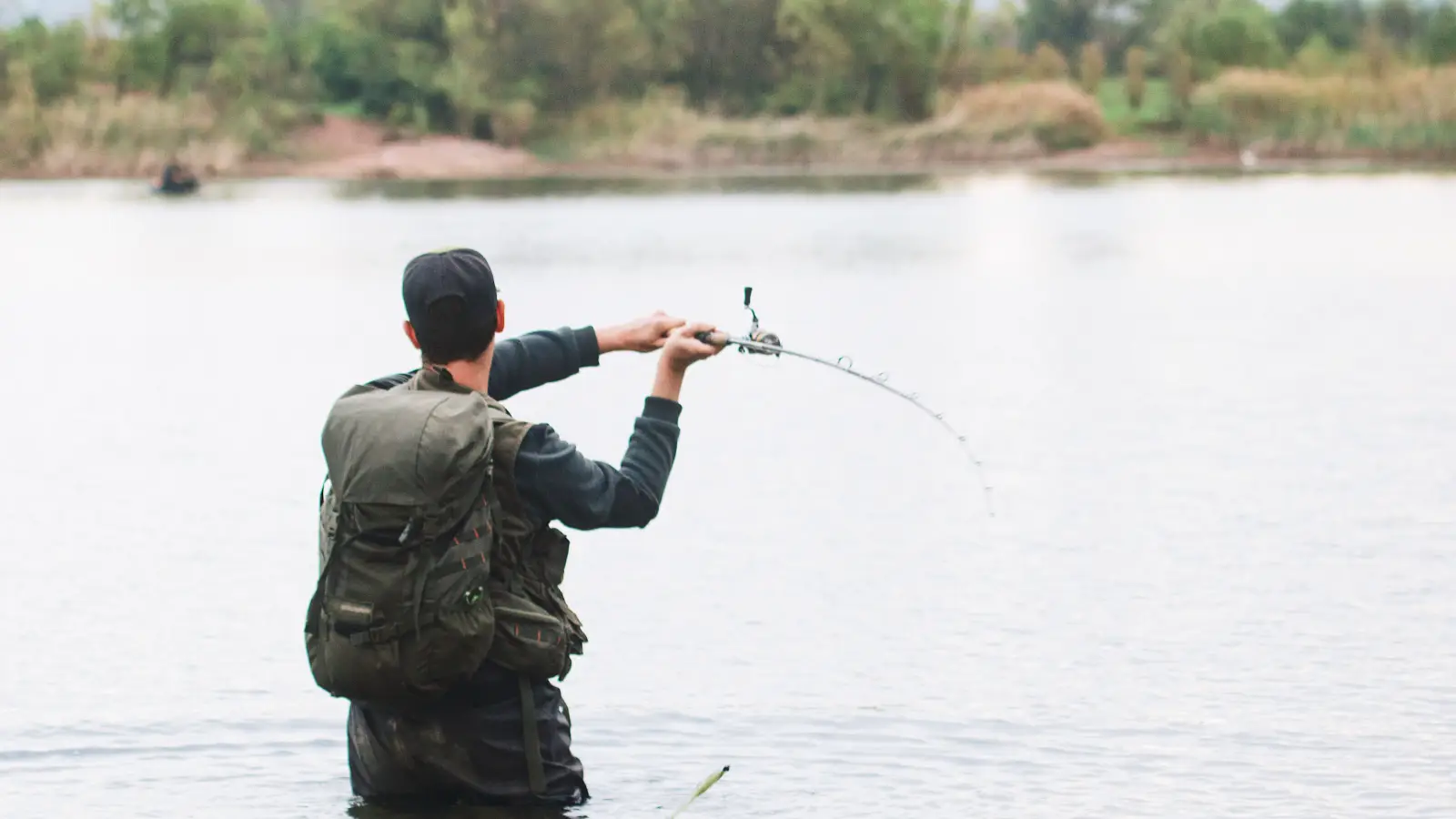
Immediately after the backcast, accelerate the rod tip forward. When the rod reaches around 11 o’clock — a 45-degree angle — simply straighten your index finger and let the line slide off. That is the critical motion: don’t flick or snatch, just relax the finger. The spinning reel’s fixed spool peels line off freely even if your timing is a fraction off. That’s the forgiveness built into this gear.
Watch the plug fly. If it goes straight, your release point was good. If it veers left or right, the release drifted off-angle, but you won’t get the full-backlash nightmare a baitcaster would hand you.
Step 5: Close the Bail Manually — This Is the Critical Habit
As soon as the plug lands, reach down and flip the bail closed by hand. Do not turn the reel handle to do it. Manual closing wraps the line onto the roller in a straight path. Handle-closing snaps the bail shut while the rotor is turning, which catches the line at an angle and twists it. That twist compounds until the spool is unusable.
Step 6: Check for Loops and Reel In
Look at the spool before you crank. If you see a loose loop sitting above the lip, pinch it out. Then reel in with light finger tension so the line spools tight. A clean spool means your next cast starts fresh.
Mistakes That Turn Forgiveness into Frustration
A forgiving reel can still bite you if you skip the basics. These are the three that show up on the first afternoon.
Overpowering the Cast Creates Slack and Wind Knots
Snapping the rod forward throws the plug fast but leaves a trail of slack behind it. That slack slaps the rod blank and wraps loosely around the spool, forming wind knots. Slow the stroke down. A controlled, accelerating cast throws just as far without the tangles.
Letting the Handle Close the Bail Invites Line Twist
Closing the bail by cranking the reel handle is the fastest way to fill a spool with twists. The line catches at an angle, and every retrieve cranks the twist deeper. After 20 casts you’ll be stripping off line and starting over.
Releasing Too Early or Too Late Creates Wide Errors
Release too early and the plug launches straight up or behind you. Release too late and it drives into the ground. A spinning reel handles these errors better than a baitcaster, but the slack can still loop around the spool. Aim for the 45-degree release point and accept that a few wild throws are part of learning.
Questions That Come Up After Your First Afternoon
Can I learn with braided line instead of monofilament?
You can, but braid is thinner and slicker. It digs into itself on the spool and is harder to grip for the release. Mono stretches, cushions mistakes, and costs far less when you cut out a tangle. Start with mono; switch later if you want more sensitivity.
Why does line twist still happen even when I close the bail by hand?
Manual closing removes twist from the bail mechanism. Twist can also come from reeling against a slipping drag, a lure that spins underwater, or spooling line on incorrectly. Check that your lure runs straight and that the drag is tight enough to prevent slipping.
How do I fix a wind knot without cutting the line?
Pull main line off the spool until the knot is exposed. Grip the line on both sides and pull slowly — most wind knots pop free with steady tension. If it shrinks tight, cut it. Prevent them by keeping tension on retrieves and avoiding overpowered casts.
What rod length is easiest to learn on?
A 6’6″ to 7′ medium rod gives the most forgiving learning curve. Shorter rods demand a faster, more precise release; longer rods are clumsy in tight spots. That mid-range length balances feel and control for a beginner.
Where to Go from Your First Clean Cast
After one afternoon you have a cast that puts a bait where you want it without tangles. The rod loads, the line flies straight, and the reel stays clean because you close the bail by hand every time.
Now take the cast to a target. Set a bucket at 20 feet and hit it until it’s automatic. Move to 30 and 40 feet, adjusting the release slightly earlier or later to shift the landing point. When accuracy feels natural, tie on a real lure and go to any pond or lake — the mechanics don’t change, only the water underneath.