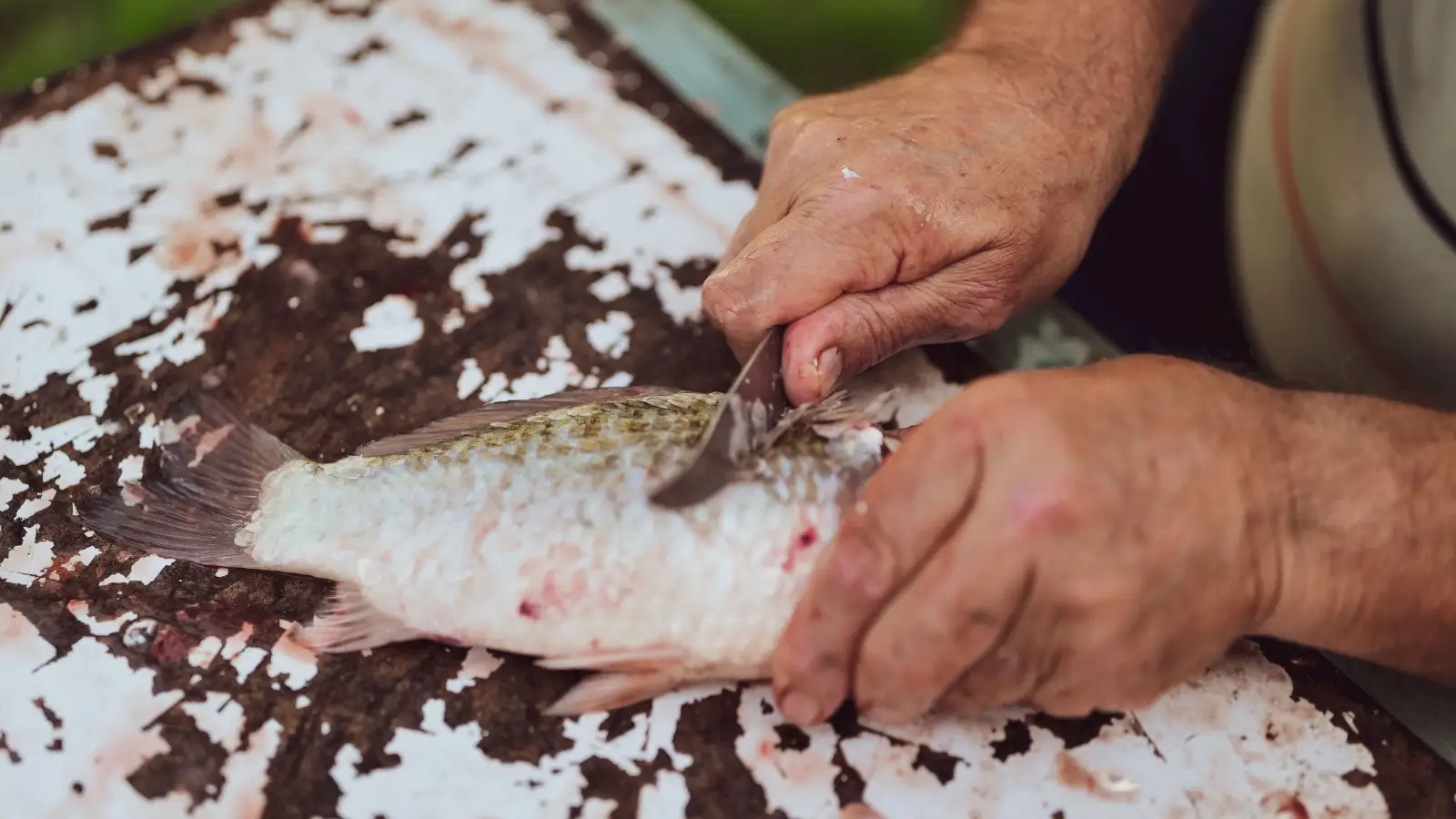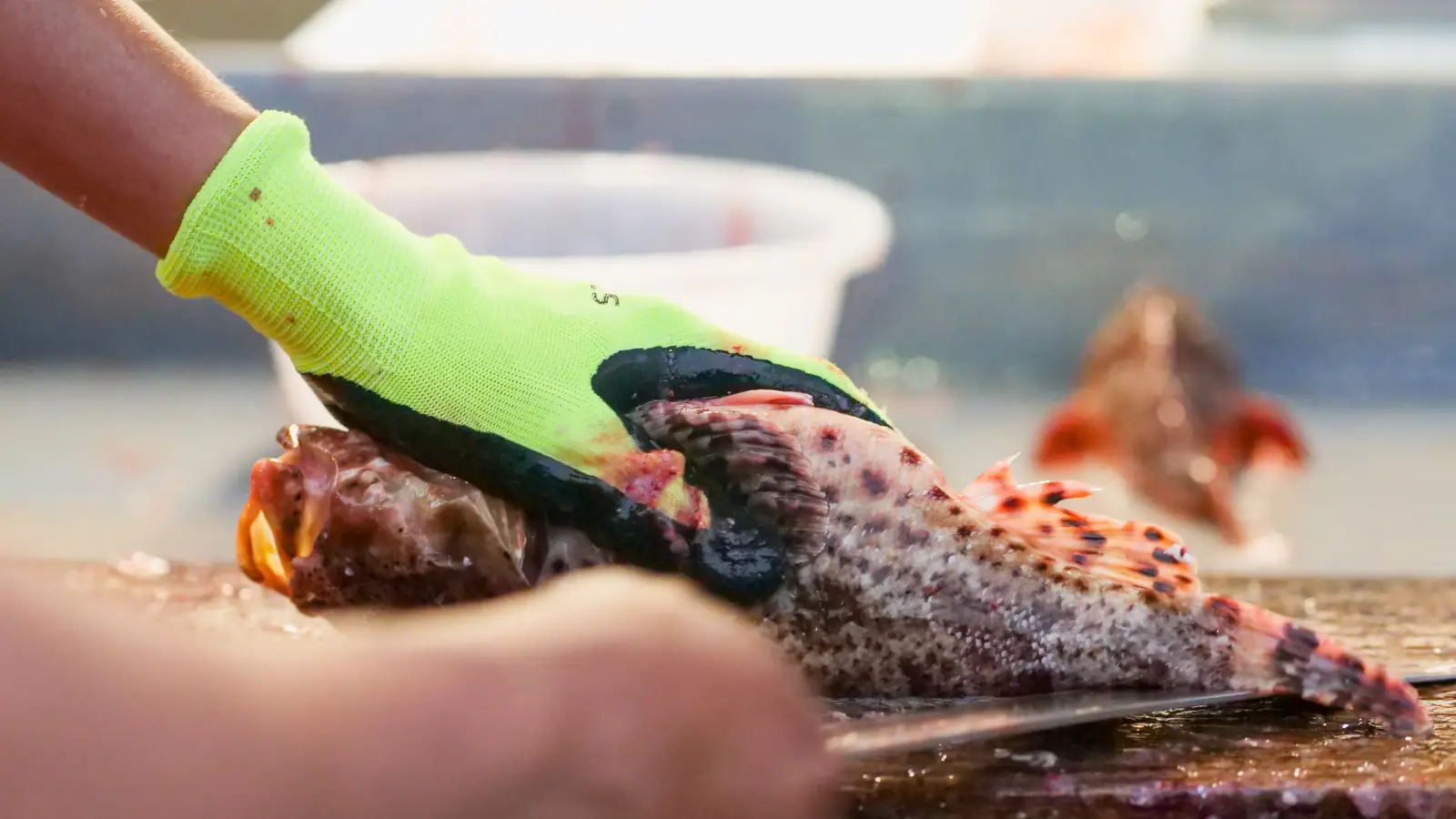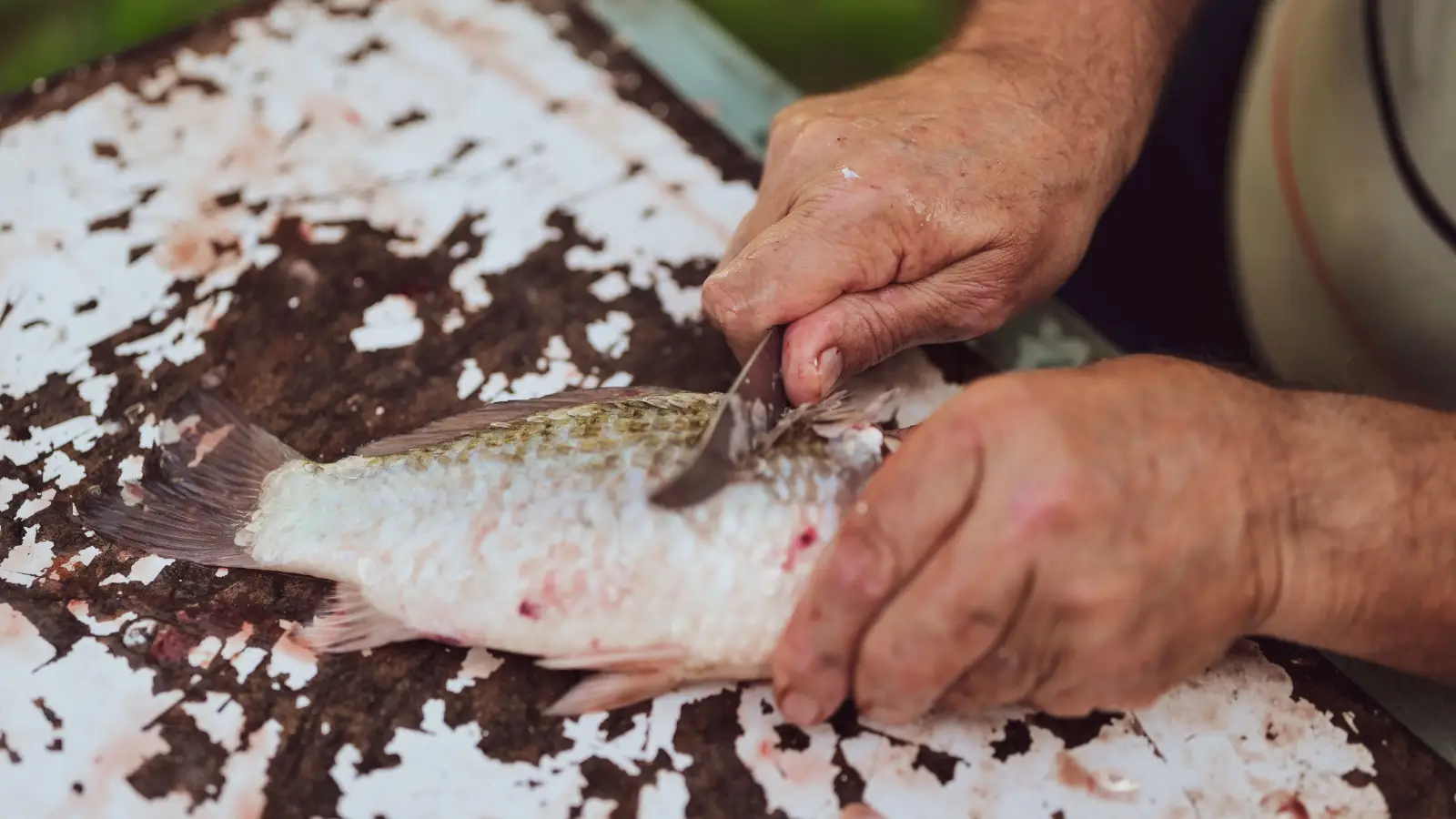
The mistake isn’t cooking technique — it’s a fundamental misunderstanding of what fish skin is doing during heat transfer. Cooks yank it off because they know wet skin steams, not crisps. But removing it throws away the only built‑in thermal buffer the fillet has. The correct fix: leave the skin intact, dry‑brine it, and let it perform precisely the protective‑then‑crisping sequence physics already built it for.
| Skin‑Off Cooking | Skin‑On + Dry Brine | |
|---|---|---|
| Crispiness | Flesh may brown, but no distinct crackling layer develops | Thin, glass‑like shatter once the skin renders |
| Moisture retention | Flesh loses moisture directly to the hot surface, often dry | Skin seals juices; internal moisture loss drops measurably |
| Ease | No prep, predictable poor outcome | Requires 15–30 min dry‑brining plus air‑drying; the payoff is a reliably crisp exterior |
| Risk of overcooking | No buffer — flesh overcooks by the time a sear appears | Skin crisps quickly; flesh cooks gently in the shielded zone beneath |
| Best for | Fillet with off‑flavored skin, sous‑vide without searing, wafer‑thin cuts | Scaled, skin‑on fillets of medium thickness (salmon, trout, snapper, bass) |
What Happens When You Strip the Skin
A skinless fillet places raw protein directly against a 375 °F surface. The outermost muscle fibers expel water instantly; that water flashes to steam, and the flesh poaches in its own liquid until the surface finally dries enough to brown. By then, the interior has passed medium and is heading for chalky. Without skin, there is no insulating layer, no fat to render, and no structural lattice to capture the Maillard reaction in a thin, suspended sheet. You get browning, yes, but it’s a thin, tough veneer — never crisp.
Many home cooks assume fish skin is inedible because their only experience is steamed‑then‑chewy. Chewy skin is a water problem. The hypodermis — the layer right under the scales — is dense with water‑wedded collagen. When heat hits wet skin, the water vaporizes and lifts the skin off the pan surface, preventing conductive heat from crossing that gap. The skin hovers, basting in its own steam, while the flesh cooks through underneath. The solution isn’t removal; it’s dehydration.
How a Dry Brine Rewires the Thermal Gradient
Salt on fish skin isn’t seasoning — it’s a physical intervention. Coarse salt draws free water from the epidermis and outer muscle through osmosis, then that brine partially reabsorbs and restructures proteins, and the rest evaporates during the air‑dry phase. After 20–30 minutes on a rack, the skin feels tacky, not wet. A drybrined fillet meets a hot pan with almost zero surface water. There’s no steam blanket to separate the two. Conductive heat flows directly into the skin’s collagen matrix.
At roughly 300 °F, collagen denatures and fat melts. The skin contracts, its fibers kink, and thousands of tiny voids fill with escaping steam — puffing the skin into a brittle lattice. Because the skin is now a dry, stiff shield, it absorbs the brunt of the pan’s energy. The flesh, only millimeters away, heats gently by conduction from the skin upward. The thermal gradient is inverted from the skinless scenario: hot side near the pan, gradually cooler toward the top. That’s why a dry‑brined fillet can sit skin‑side down for 5 minutes without a gray, overcooked band.
One numeric detail worth noting: the difference in surface water between a freshly patted‑dry skin and a dry‑brined skin isn’t marginal — it’s often a few grams of water removed from the surface alone. That small weight is what makes or breaks the crisp.
Where the Two Approaches Diverge: The Variables That Matter
Thermal Buffering
Skinless fillets offer zero buffering. A 30‑second lag in pulling the pan off the heat turns moist into dry. Dry‑brined skin‑on fillets create a built‑in insulator that buys several minutes of flexibility, especially with thicker cuts.
Crisp Formation
Crispness emerges from thin, dehydrated protein structures — exactly what skin becomes after dry‑brining. Without skin, you’d need to dredge the fillet in starch to simulate that layer, and even then it won’t match the natural collagen‑fat matrix.
Preparation Overhead
Skin‑off is instant. Dry‑brining adds wait time, but wait time isn’t active work. The active labor is salting and racking — perhaps 90 seconds. The difference is planning, not effort.
Failure Tolerance
The typical pan‑fried skinless fillet is unforgiving. With a correctly dry‑brined skin‑on fillet, the auditory signal (a shift from wet sputtering to a crackle) and visual cues (edges curling, color deepening) give a clear feedback loop. Even if the pan runs hot, the skin buys time.
Choosing Based on Your Target Outcome
Scenarios That Favor Removing the Skin
– The fish carries an off‑flavor in the fat layer beneath the skin (some pond‑raised tilapia or catfish).
– Cooking method is poaching, steaming, or sous‑vide where skin adds no texture benefit.
– Fillets are extremely thin (under ¼ inch); the skin would burn or toughen before the flesh sets.
Scenarios Where Dry‑Brining Wins
– Pan‑searing or roasting any scaled fish fillet at least ½ inch thick.
– Serving guests who “don’t eat fish skin.” Proper crisp converts belief.
– Building a dish where texture contrast matters — think crisp‑skinned barramundi over silky puree.
Frequently Asked Questions
Why does my dry‑brined skin still stick to the pan?
Sticking is almost always a sign of insufficient heat at the moment of contact, or residual moisture on the skin. The pan and oil must be hot enough to create a sear within the first 10 seconds. If the fillet doesn’t release with a gentle nudge after a minute, don’t force it — wait.
How long is too long for a dry brine?
Beyond 8 hours, the flesh starts to cure; texture turns firm and slightly chalky. Stay under 6 hours for most home fillets, and rinse off excess salt before drying if you brine longer than one hour.
Do I have to scale the fish?
Yes. Scales scorch and leave a gritty mouthfeel. The skin must be completely descaled before brining. A butter knife or dedicated fish scaler under cold running water handles it in under two minutes.
Stop Removing the Only Tool the Fillet Gives You
Fish skin isn’t a wrapper — it’s an engineered thermal barrier that, when properly dehydrated, delivers the crispest surface you can get without a deep fryer. The one mistake that ruins it is the instinct to pull it off. Leave it on, salt it ahead of time, and let the heat gradient do what it’s meant to.