Slash through the gill arch as soon as you land the fish. That one cut drains the blood out of the meat, killing the metallic, muddy flavor before it sets in. It takes under a minute, and it’s the single biggest thing you can do for taste.
The flavor upgrade starts the moment the fish hits your hand, not at the cleaning table. Let blood sit inside the muscle for even a few minutes, and you’ve already baked in the off-tastes that make people say they don’t like fish. Bleeding right away stops that process cold.
What You Need to Bleed a Fish Right After Landing
- A narrow, sharp knife: Thin blade, good point. A 4- to 6-inch fillet knife is right. Skip the thick survival knife — it rips instead of slices.
- A bucket, live well, or stringer: Water or a way to hang the fish head-down. A 5-gallon bucket half-filled with water does the job.
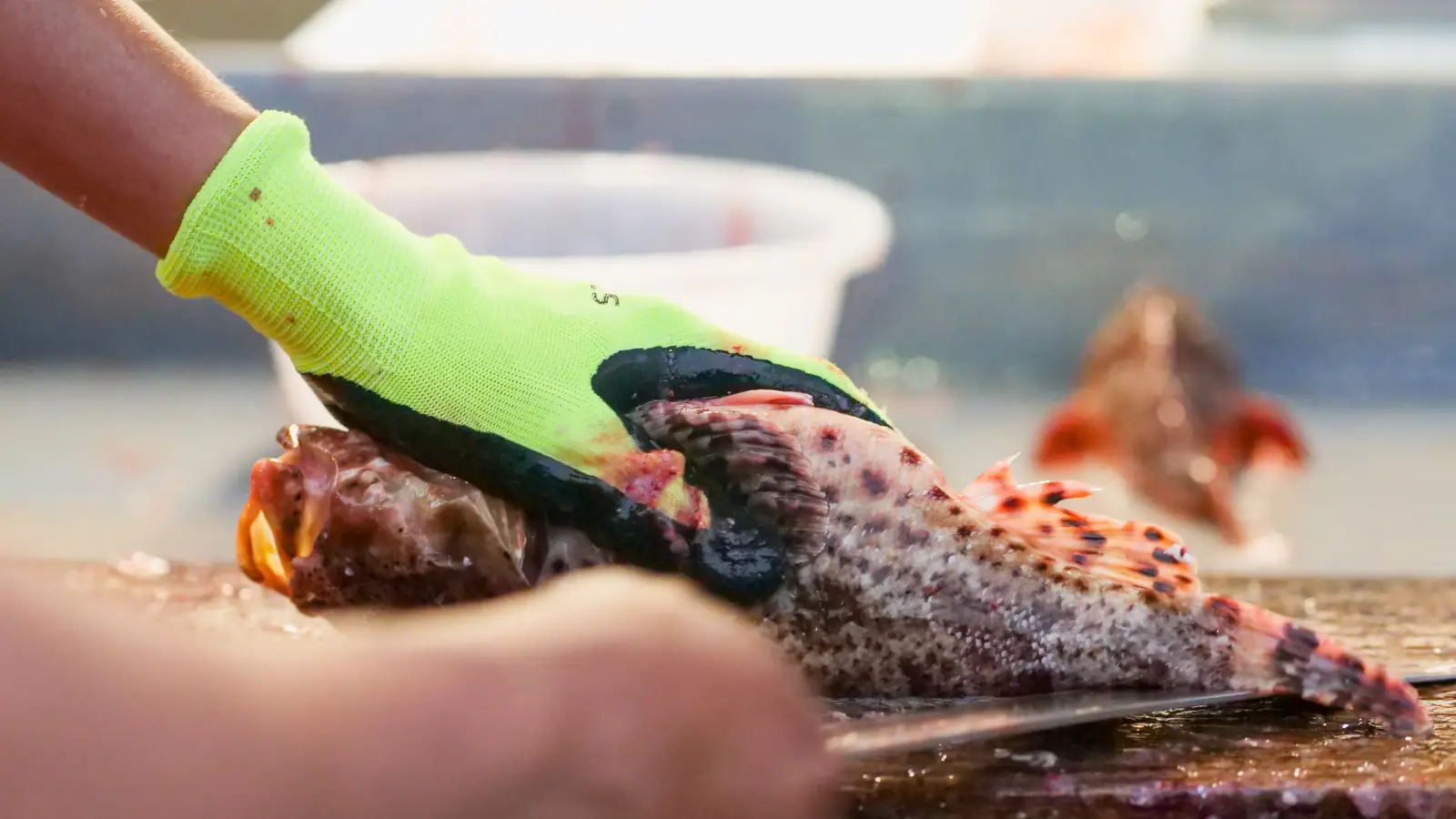
- Gloves (optional): Gill plates are sharp. A cut-resistant glove on your off hand saves nicks.
- A steady grip: Pin the fish. A wet rock, a boat deck, a rag — whatever holds it still.
How to Make the Gill-Arch Cut Step by Step
Step 1: Subdue the Fish and Secure It
Stun or dispatch the fish with a quick rap. Thrashing pumps adrenaline into the meat, which toughens it. Once it’s still, grip it hard behind the head with your off hand — a wet cloth helps — and control the tail. You don’t want a reflexive twitch to send the knife somewhere you didn’t plan.
Watch for: The gill plate’s edge. It’s as sharp as your knife and will open a finger just as fast.
Step 2: Locate the Gill Arch
Lift the bony flap behind the eye and look inside. The red, feathery filaments attach to a cartilage loop — the gill arch. That’s where the main blood vessels run from the heart to the gills. Feel it as a firm ridge just inside the opening.
Why this matters: Cut the filaments alone and you’ll get a slow, messy bleed. Go too deep and you’ll open the body cavity, spilling gut contents. Hit the arch and you open the highway.
Step 3: Make One Clean Cut Through the Gill Arch
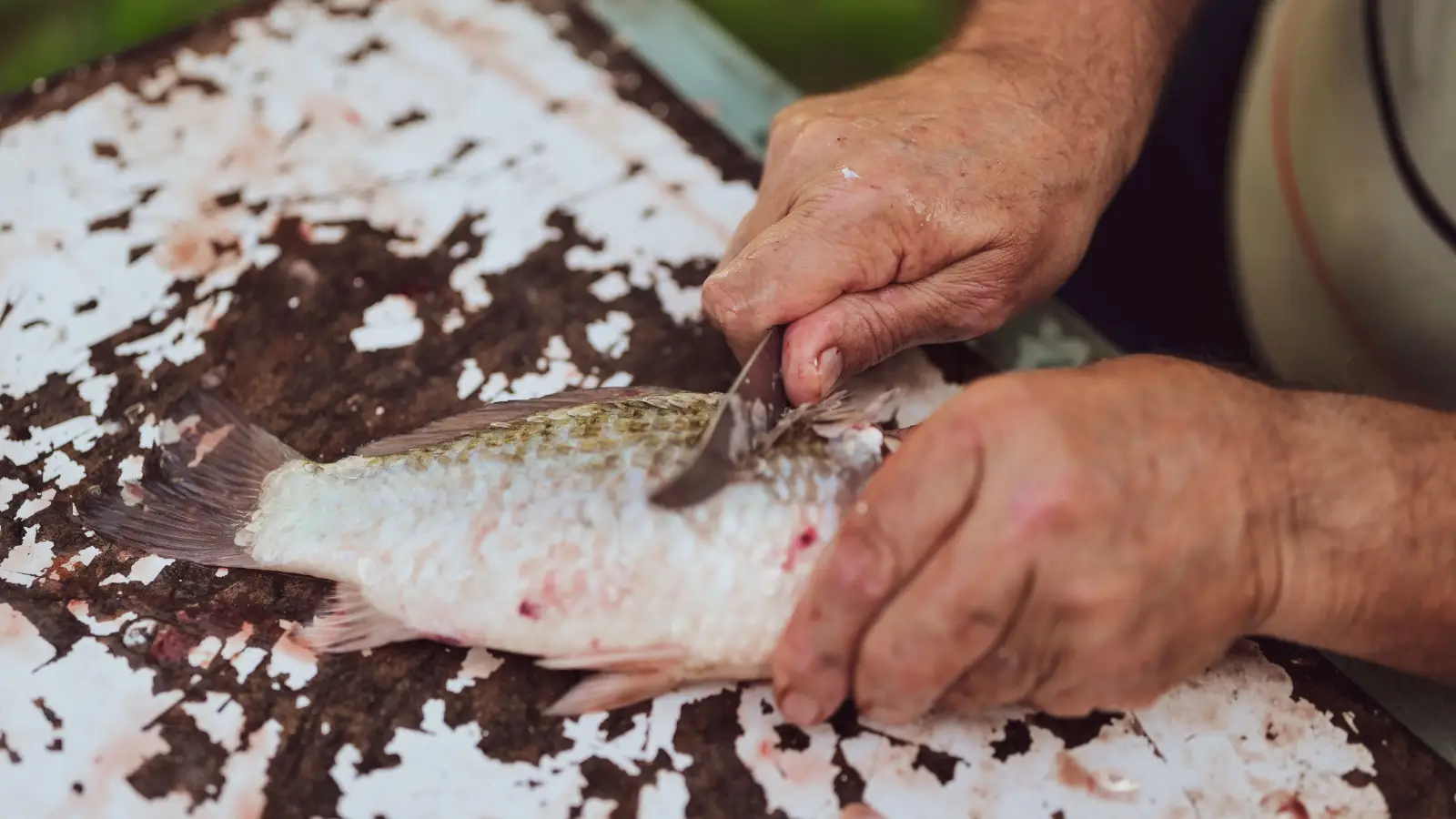
Slide the knife tip under the gill plate and slice across the arch in one steady motion. Sever the tissue connecting the gills to the head. Depth? Just the arch — not the spine. On a panfish or trout, that’s maybe half an inch. On a striper or catfish, you might need a second pass.
Watch for: Cutting the head clear off. Unnecessary, messier, and you lose the handle for the next step.
Step 4: Let the Blood Drain Completely
Put the fish head-down in a bucket of water, or hang it by the tail. The water should be cool. Wiggle the fish every minute to keep blood moving. For freshwater fish, 5–10 minutes is plenty. Dark-fleshed saltwater species — bluefish, mackerel, small tuna — go 15–20 minutes. Swap the water if it goes dark.
Why the bucket matters: Water flushes blood out of capillaries. A dry bucket lets it clot in the vessels, and you never get a full bleed.
Common Pitfalls That Wreck the Bleed
Waiting More Than 30 Seconds After Landing
Blood clots fast. Once the heart stops, gravity alone can’t push much out. Bleed the fish while it’s still reflexively pumping — within a handful of seconds. A fish that sat on a stringer for five minutes will bleed poorly no matter how deep you cut.
Cutting Too Shallow or in the Wrong Spot
A timid nick severs a few superficial vessels and leaks blood slowly. Go for the arch. No fast, strong flow? Lift the plate and make a second cut right at the arch.
Skipping the Water Rinse
A dry bucket traps blood inside the gill cavity. Even a gallon of water in a bucket flushes it out. If you’re without a bucket, hang the fish by the lip over moving water so the flow washes the gills.
Assuming Small Fish Don’t Need Bleeding
Bluegill, crappie, perch — their mildness comes from clean handling, not from a lack of blood. A bled 6-inch bluegill stays sweeter and firmer than one tossed in a cooler whole. Five extra seconds per fish adds up.
Other Bleed Cuts Worth Knowing
The gill-arch cut handles most freshwater and smaller saltwater fish. For certain situations, other cuts work:
- Throat cut (big fish): Slice across the soft underside of the jaw where the gills meet — not through the arch, but straight across to sever the main vessels. Good when the gill plate is thick or hard to lift: salmon, large stripers, bluefish. The bleed is a bit slower but gets the job done.
- Tail bleed (no knife): Snap the tail joint and twist until the artery tears. Messy, incomplete, only realistic on small panfish. Last resort.
- Pectoral slit for pelagics: For tuna, mackerel, and similar species, a deep cut behind the pectoral fin opens the lateral artery. Follow with an ice-saltwater slurry to chill rapidly. The combination of bleeding and flash-cooling is critical for oily fish.
Frequently Asked Questions About Bleeding a Fish
Does bleeding a fish actually change the taste?
Yes. Blood holds iron and amino acids that turn rancid and metallic when cooked, especially in oily fish. Removing it gives you a cleaner, less gamey flavor. It also slows spoilage — blood is bacteria’s fuel.
Can I bleed a fish that’s already dead?
Some blood will drain by gravity, but without the heart pumping, results are spotty. The best window closes in under a minute after landing.
Do I need to bleed every fish I catch?
Very mild white fish like flounder show less difference. Most freshwater species — trout, bass, catfish, perch — and all oily saltwater fish taste noticeably better bled. If you aren’t sure, bleed it.
How long should I leave the fish in the water?
5–10 minutes for freshwater. Dark-fleshed saltwater fish can go 15–20 minutes. Change the water if it gets too bloody. Spoilage from warm water is the only limit — overbleeding isn’t a thing.
Is bleeding the same as gutting?
No. Bleeding removes blood from the muscle; gutting removes organs. Bleed first, then gut. That keeps the body cavity cleaner.
What’s the best knife for the gill cut?
A short, thin blade with a sharp point — a 4- to 6-inch fillet knife. No special gear. Control matters more than the knife’s name.
From Bleed to Fillet: Your Next Move
You’ve made the cut that keeps fish tasting clean and firm. The blood is gone, and the flavor window is open. Next step: gut the fish, then fillet it while the meat is still tight. Keep a sharp fillet knife and a clean surface ready, and you’ll turn that catch into table fare that tastes like it came from clean water, not a muddy bottom.