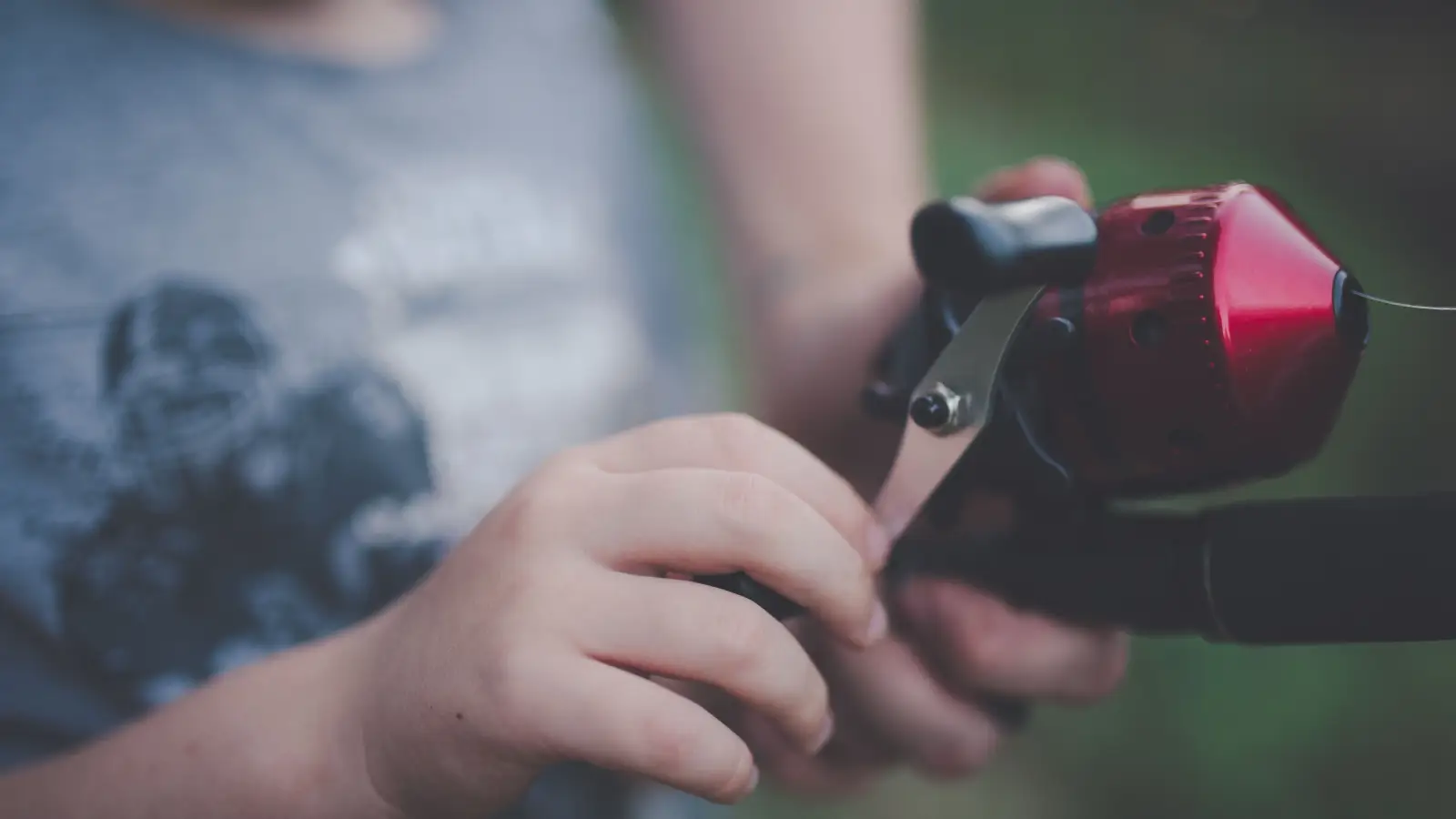
In under 10 minutes, a spincast reel takes you from a box on the kitchen table to a cast in the water. Thread the line, tie a knot, press the thumb button, swing, and release. That's it — no bail tangles, no bird's nests, just fishing.
A lot of people talk about spincast reels as if they're training wheels, something you outgrow on the way to "real" gear. Set that idea aside. For a kid holding their first rod at a pond, or an adult who's never fished before, a spincast reel is the real deal. It's the fastest way to get a line in the water and a fish on the hook — and that's exactly what you came here to do.
This guide walks through the full 10-minute setup-and-cast sequence step by step. It assumes a pre-spooled spincast combo, which is what almost every beginner buys off the shelf. If yours arrived without line, spooling takes a few extra minutes and there's a dedicated guide for that when you need it. For now, let's get you casting.
The Seven Steps to Spincast Fishing in 10 Minutes
- Attach the reel to the rod and lock down the rings.
- Unscrew the nose cone and pull out 12–18 inches of line.
- Feed the line through all rod guides, from the closest one to the tip.
- Tie on your hook or lure with an improved clinch knot.
- Set the drag so line pulls out under moderate pressure.
- Press the thumb button, make a smooth forward cast, and release near the top of the swing.
- Start reeling to retrieve, keeping light tension on the line.
Details That Make Each Step Go Right the First Time
Locking the Reel Down Tight
Line up the reel foot with the slot in the rod's reel seat, then turn the front locking ring clockwise until it's snug. Give the reel a firm wiggle side to side; if there's any movement, keep tightening. A loose reel throws off every cast.
Getting the Perfect Pull of Line
Twist off the nose cone — the cap at the front of the reel — and look inside. You'll see the spool and a small pickup pin. Pull about 12 to 18 inches of line free, then screw the cone back on. Too little line makes threading the guides awkward; too much gets in the way.
Feeding Line Through the Guides Without Fuss
Start at the guide closest to the reel handle and thread the line through its opening toward the rod tip. Move to the next guide and repeat, all the way to the tip-top. If the line snags, check that the thumb button isn't partially pressed — that can pinch the line inside the reel.
Tying a Reliable Knot — The Improved Clinch
Pass the line through the eye of your hook or lure. Double it back and make five wraps around the standing line. Feed the tag end through the small loop near the eye, then through the big loop you just formed. Moisten it, pull tight, and trim the tag to about an eighth of an inch. If it's much shorter, it could slip under load. Give it a firm pull test before you cast.
Dialing in the Drag
The drag knob sits on the face of the reel, usually with a plus/minus indicator. Turn it all the way tight, then back it off roughly a quarter turn. Grab the line between the reel and the first guide and pull. It should resist, then give smoothly. If it slips with barely any pull, tighten it a bit. If it won't budge, loosen it more. A fish needs a little give to run without breaking the line.
The Cast: Push, Swing, Let Go
Hold the rod with your casting hand and press the thumb button firmly. Bring the rod tip back to about 10 o'clock. Swing forward in one easy motion. When the tip reaches roughly 2 o'clock — think of pointing at the treetops — release the button. The line flies out in a clean arc. If it splashes short, you released too late; if it shoots upward, too early. After a couple of tries, the timing will feel natural.
Reeling In — Keep Contact with the Line
As soon as you release the button, turn the reel handle. The pickup inside grabs the line and wraps it onto the spool. Keep a light finger on the line as you reel; that prevents slack loops from forming. Slack is the enemy — it leads to tangles on the next cast.
How to Know You're Ready to Fish
- Reel security: Try to twist the reel on the rod. It shouldn't move at all.
- Line flow: Pull line from the rod tip. It should come off smoothly, without catching or jerking.
- Knot strength: Pull the hook and the main line away from each other with steady pressure. The knot holds; if it slips, retie.
- Drag function: Pull line from the reel by hand. It gives with moderate effort — not too loose, not locked down.
- Clean spool: After your first cast, look down into the nose cone opening. No loops or tangles should be visible on the spool.
A Couple of Common Snags and How to Clear Them Fast
No Line Comes Out When You Press the Button
Press the button all the way down until it clicks or bottoms out. Some models need a bit more travel than expected. If that doesn't free it, unscrew the nose cone and look for line wrapped around the pickup pin. Gently unwind it by hand, then reassemble and try again.
Line Twists and Bunches Up at the Front
If you see loops of line curling around the nose cone after a retrieve, the line is twisting. This happens most often when you reel against a spinner or a lure that's rotating freely — the rotation works its way into the line on the spool. The easy fix: tie a small barrel swivel between your main line and a leader. After that, every retrieve rolls the swivel, not the line. Also, keep the line tight when reeling; slack invites loops.
Answers to the Questions You're Probably Already Asking
Is a spincast reel actually good for beginners?
Yes, and it's not even close — it's the simplest reel to learn. One button controls everything. Most new anglers make their first decent cast in under five minutes.
How far will it cast?
With standard 8- to 10-pound monofilament and a quarter-ounce lure, expect 30 to 50 feet. That's plenty for most bank fishing. Heavier lures go farther; ultralight rigs won't.
Can I throw spinners, crankbaits, or small jigs with it?
Yes, and many do. Stick to lures between 1/16 and 3/8 ounce for reliable casting. Below 1/16 ounce, the lure may not have enough weight to pull line off the spool nicely. If you plan to fish ultralight a lot, a specialized ultralight spincast reel is available.
What about saltwater — will it hold up?
Some models are designed for salt, with sealed bearings and corrosion-resistant parts. Check the manufacturer's specs. If you use a freshwater spincast in salt, rinse it thoroughly with fresh water right after and lubricate it, or it will corrode fast.
Which line should I spool it with?
8- to 10-pound monofilament is the sweet spot. It's supple enough to cast well, tough enough for most freshwater fish, and the stretch helps absorb head shakes. Fluorocarbon can be too stiff to lie flat on the spool, and braid can dig into itself and cause problems.
Once your spincast reel is dialed in and you can put a cast where you want it, you're ready to actually fish. Bait your hook, drop it near cover, and wait for the tug. The next thing you'll want to know is how to set the hook and land a fish — that's where the real fun starts, and now you have gear that won't get in the way.