The first cast often ends with loops of line piled around the reel like tangled thread. That mess is not a lack of talent—it is a signal that the timing and feel are still missing. This article walks a complete novice through the exact mechanics of casting, line management, and drag adjustment on a spinning reel, zeroing in on the quiet breakthroughs that turn awkward fumbling into steady muscle memory. In a single afternoon, those loops disappear and are replaced by a cast that lands softly, tracks straight, and leaves nothing to pick at on the spool.
The Moment It All Turns Quiet on the Reel
After a few hours of deliberate work, a cast unfolds as a single, unbroken motion. The line hisses off the spool without a twist, the lure lands within a foot of intention, and the hand closes the bail before any slack can settle. When a fish takes, the drag gives—a smooth, steady yield that feels like a deep exhale, not a sudden snap. That calm consistency is the yardstick.
The Afternoon Session, Step by Step
Each action below targets a specific habit that replaces a tangling pattern. Go in order; each one builds on the feel of the last.
- Spool the line with steady, even tension so no twist enters the reel
- Set the drag using the rod-bend test so the fish can take line before the leader fails
- Pinch and release the line at the exact instant the rod unloads
- Throw a smooth sidearm arc instead of a sharp wrist snap
- Close the bail by hand the moment the lure touches down
- Retrieve with the rod tip low to purge slack from the system
Spool the Line with Steady, Even Tension So No Twist Enters the Reel
Open the bail, tie the line to the spool arbor with an arbor knot, then close the bail. Place the filler spool on the floor label facing up. Run the line through the lowest rod guide and then up the rest. Pinch the line gently between your thumb and index finger about a foot ahead of the reel. Turn the handle at a steady rhythm—no pauses, no sudden bursts—and watch the line lie flat across the spool. Stop filling about 1/8 inch below the lip.
Time: around 5 minutes.
Most common mistake: Letting the filler spool spin or flip so the line twists as it comes off. Keeping it label-up and maintaining light, constant pinch pressure prevents that twist before it ever reaches the reel. That single habit stops most wind knots before they start.
Set the Drag Using the Rod-Bend Test So the Fish Can Take Line Before the Leader Fails
Tie on the practice lure. Point the rod tip down, grab the line just above the reel with your free hand, and pull steadily—no yanks, just a firm, growing pull. Watch the rod bend. A well-set drag begins to slip as the rod loads deeply, right around the point where the blank’s backbone truly engages. If the line refuses to slip until the rod feels overloaded, back the knob off. If it slips with barely a bend, tighten it.
Time: 5 minutes of pull-and-feel testing.
Most common mistake: Setting drag by a rough guess and then cranking it down tight “just to be safe.” That defeats the mechanism entirely. Drag exists to protect light line and small hooks; a quick, hard run should peel line smoothly, not pop the knot. Feeling that first smooth slip is one of the afternoon’s most important ah-ha moments—it redefines the reel as a partner, not a clamp.
Pinch and Release the Line at the Exact Instant the Rod Unloads
This is where most of the morning’s frustration melts away. Hold the rod with your dominant hand. With the bail open, trap the line against the rod grip with the pad of your index finger. Sweep the rod back, then swing it forward in a smooth acceleration. Release the line exactly when the rod tip passes about 45 degrees—the split second the rod is unloading its stored energy and the lure is moving fastest. The line should whisper off the spool, not pop.
Time: 15 to 20 minutes of short, deliberate casts with a ¼-ounce weight or a practice plug.
Most common mistake: Releasing too early from sheer eagerness. The lure rockets upward, falls short, and the line piles up. If that happens, mentally count “one-one-thousand” through the forward stroke and let go on “one.” If the lure smacks the ground at your feet, you held on too long. The sweet spot reveals itself not by trying to throw harder, but by listening for the line’s quiet hiss.
Throw a Smooth Sidearm Arc Instead of a Sharp Wrist Snap
A beginner’s instinct is to snap the wrist like they’re cracking a whip, but that creates a wide loop and scatters accuracy. Stand so your casting shoulder points at the target. Start with the rod tip low, behind you near waist level. Bring it forward in one clean, accelerating sweep—like drawing a long, flat brushstroke. The wrist stays firm until the very end, when it can hinge a little to steer the lure. Power lives in the forearm and shoulder, not in the wrist.
Time: roughly 20 minutes of dry-land casting, no water needed.
Most common mistake: A steep overhead heave that opens the rod’s arc too wide and lets the line slap the blank. The sidearm arc keeps the line traveling parallel to the rod. Once the angler feels the lure pull the rod tip forward naturally, the urge to muscle it evaporates.
Close the Bail by Hand the Moment the Lure Touches Down
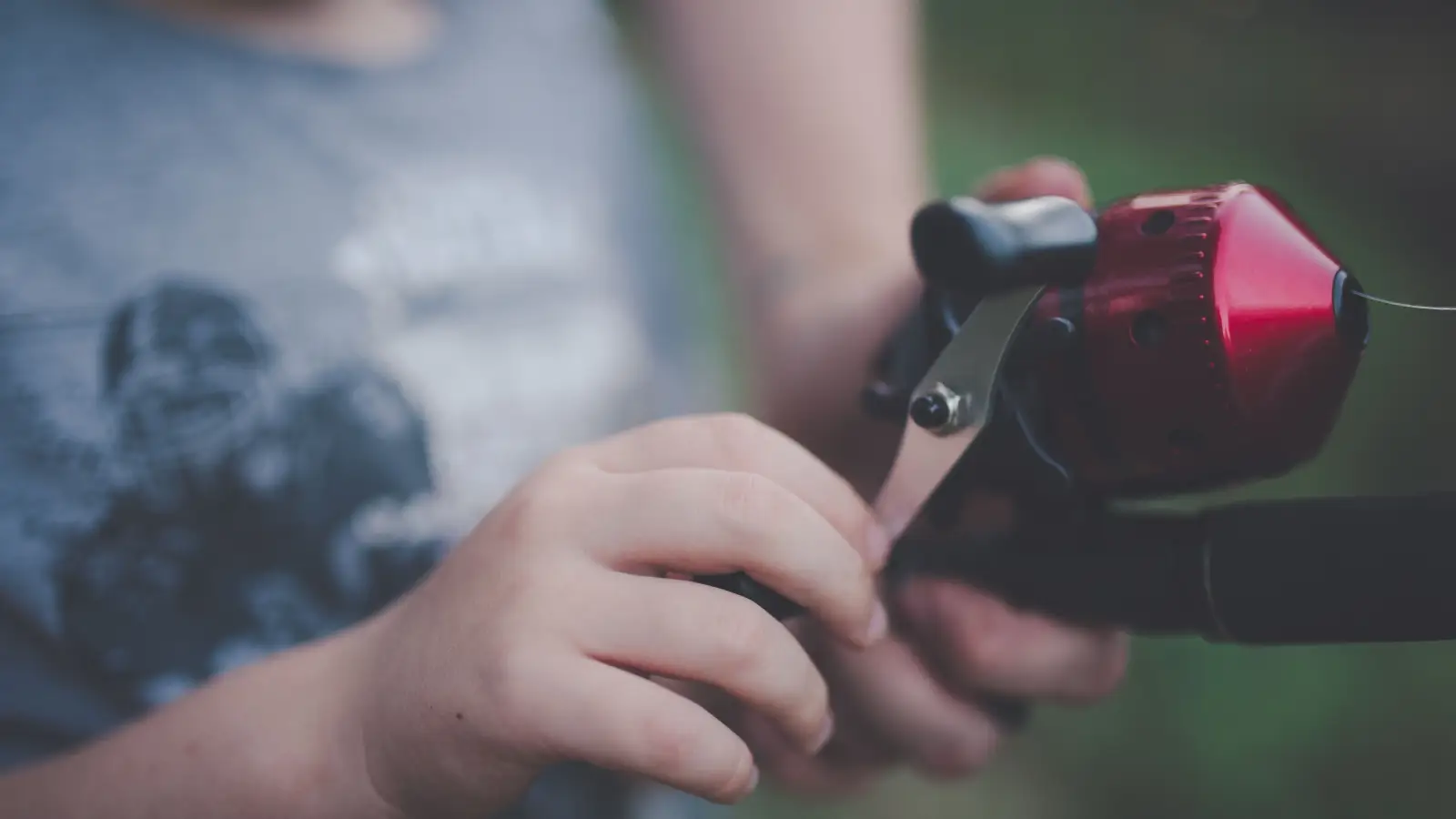
The instant the bait touches the water, reach up with your free hand and flip the bail wire closed. Never turn the reel handle to close it. Cranking the handle leaves a tiny loop of slack wrapped loosely around the spool—next cast, that loop becomes a tangle. Closing by hand lets you apply a whisper of finger tension, so the line is already tight as you begin the retrieve.
Time: Becomes automatic after around 50 practice casts.
Most common mistake: The deeply ingrained habit of cranking the handle to shut the bail. Every time that happens, a potential wind knot gets tucked away for later. Break the pattern by pausing after each cast and deliberately reaching for the bail wire before your hand drifts to the handle.
Retrieve with the Rod Tip Low to Purge Slack from the System
Keep the rod tip pointed toward the water during the retrieve—somewhere between the surface and about 45 degrees downward. This takes up any sag and layers the line onto the spool under constant light tension. Holding the tip high creates a belly of slack that the next cast will grab and twist.
Time: An ongoing discipline.
Most common mistake: Jerking the rod tip upward at every tap, thinking it’s a strike. That motion dumps slack into the system when no fish is there. Wait until you feel a solid, pulling weight before lifting the rod to fight.
Before You Cast for Real: A Final Check
Run these four checks before you pack up the practice session—and again before the first real cast on the water.
- Pull line against the drag by hand—it slips before the rod fully loads.
- Five consecutive casts land with zero line loops or twists.
- The bail is closed by hand on every cast and no slack sits on the spool before retrieving.
- The spooled line looks flat, even, and fills to within 1/8 inch of the lip.
If any check feels shaky, loop back to the corresponding practice step until it feels dependable.
A Pocket Card for the Tackle Box
This is the whole sequence, stripped down. Print it or write it down and keep it with the reel.
- Spool under steady tension, label up.
- Drag slips before the rod bends deep.
- Release at 45 degrees, not early.
- Smooth sidearm arc, no wrist snap.
- Close bail by hand, never crank.
- Retrieve low tip, no slack allowed.
Questions That Surface While Getting the Feel Down
Why does my line twist into a knot even after spooling it carefully?
Line twist can still accumulate if you reel constantly against a rotating lure like an in-line spinner without a swivel. Adding a small barrel swivel 18 to 24 inches above the lure lets the rotation spin freely without winding twist into the main line. Additionally, if the reel handle ever spun backward during spooling—even briefly—tiny hidden loops may be buried in the spool.
Is it okay to start with braided line?
Braid casts easily because it has no memory, but it is also slick and can slip on the spool if not backed with monofilament or a strip of tape. For a first afternoon, monofilament in the 8- to 12-pound range is far more forgiving and cheaper to cut and retie when tangles happen. Save braid for when the bail-handling habit is already second nature.
How can I confirm the drag is set correctly without a scale?
The rod-bend test is the field method. Tie the line to a solid anchor, walk back, and lower the rod into a deep bend. When the tip points straight at the anchor and the blank is fully loaded, the drag should start slipping smoothly. If it jerks or won’t slip, adjust it until the release is clean and steady.
Should I reel with my left hand or my right?
Most spinning reels let you swap the handle. The simplest rule: match the reel handle to your opposite hand so you never switch hands after the cast. If you cast right-handed, put the handle on the left. That eliminates the moment of slack that happens when you pass the rod from one hand to the other. Decide before the practice session and stick with it.
What should I do when a wind knot appears while I’m fishing?
Stop reeling at once. If the knot is small, open the loop gently with your fingers and pull the tag end through. If it is tight and deep, strip line off the reel by pulling steadily until you pass the knot, then re-spool the loose line under finger tension. Packing a spare spool of line makes it painless to cut the knot away and retie.
After One Afternoon, the Reel Moves with You
By the time the checklist is complete, the spinning reel should feel like an extension of the arm—the release point, the arc, and the bail closure flowing into one quiet motion. The next session will be faster. To cut the setup time in half on a future reel, spool the line with the filler spool submerged in a bucket of warm water. The gentle tension from the water seats every wrap snugly from the very first turn, and the afternoon starts already ahead.