Saltwater fish identification usually begins with color. That's a mistake. Color shifts with water turbidity, time of day, and spawning condition; it's the least stable trait any fish offers. The feature anglers consistently overlook—and the one that would change their approach in the first five seconds of a sighting—is mouth position. Mouth position doesn't just help you label a species. It tells you exactly where in the water column that fish feeds, how it takes prey, and which presentation will trigger a strike before you make a single cast. This article builds a functional morphology framework centered on three unchanging hard parts—body shape, mouth position, fin configuration—so you can read any saltwater gamefish as a set of behavioral instructions instead of a photograph.
The Three Anchors That Shape a Fish's Entire Life
Every gamefish is a product of three forces that never stop interacting. Form follows function: a body is a tool, shaped by what it must accomplish day after day—chasing, ambushing, crushing, or vacuuming prey. Habitat imposes the template: open-water runners look nothing like structure-hugging ambushers because water resistance and cover favor different proportions. Behavior leaves a direct signature in anatomy: feeding strategy, depth preference, and escape response are all encoded in a few hard parts visible from a boat deck or a pier. These forces mean a fish's body is not random variation. It's a consistent signal. Learning to read that signal shifts you from memorizing a thousand patterns to recognizing a few functional families.
Body Shape as a Blueprint for Hunting Style
Body shape is the broadest filter in a fast ID. The cross-section, the length-to-depth ratio, and the overall silhouette expose whether a fish is designed for sprinting or drifting, for open water or tight cover. For inshore and nearshore anglers, the categories that actually matter are fusiform, compressed, depressed, and elongated.
Fusiform fish are torpedo-shaped: round in cross-section, widest near the center, tapering evenly toward both ends. Tuna, mackerel, little tunny. This shape minimizes drag and enables sustained high-speed cruising. A fusiform body almost always means a pelagic predator that chases baitfish in the water column. That demands a fast-moving presentation—a quickly retrieved spoon, a trolled plug, or a high-speed jig.
Compressed fish are flattened side-to-side, like a pancake standing on edge. Permit, angelfish, many jacks. A compressed body trades straight-line speed for sharp-turning agility. These fish work around structure, reefs, or flats where quick directional changes matter more than top-end velocity. The technique shifts immediately: slower, more erratic retrieves; baits that dart and pause. A permit on a flat is not built for a drag race; it maneuvers over crab beds, so a twitching crab fly succeeds where a constant retrieve fails.
Depressed fish are flattened top-to-bottom and hug the substrate. Flounder and stingrays are extremes, but redfish and black drum carry a slightly depressed head and body profile that aids bottom foraging. A depressed profile signals a bottom-feeder. The mouth will almost always sit on the underside (inferior), and the feeding strategy involves rooting, crushing, or suction. Keep the bait on or just above the bottom, move it slowly, and rely on scent or vibration.
Elongated fish stretch the body into a near-cylindrical form. Barracuda, needlefish, some eels. The elongation signals an ambush predator that relies on a burst of acceleration from cover, not sustained speed. These fish often lie motionless, then strike with a fast forward lunge. The retrieve should mirror that: long pauses interrupted by sudden, sharp movements.
Body shape alone won't name a species, but it narrows the possibilities to a small behavioral clan. Add mouth position, and the picture locks into focus.
Mouth Position: The Trait That Hands Over the Feeding Strategy
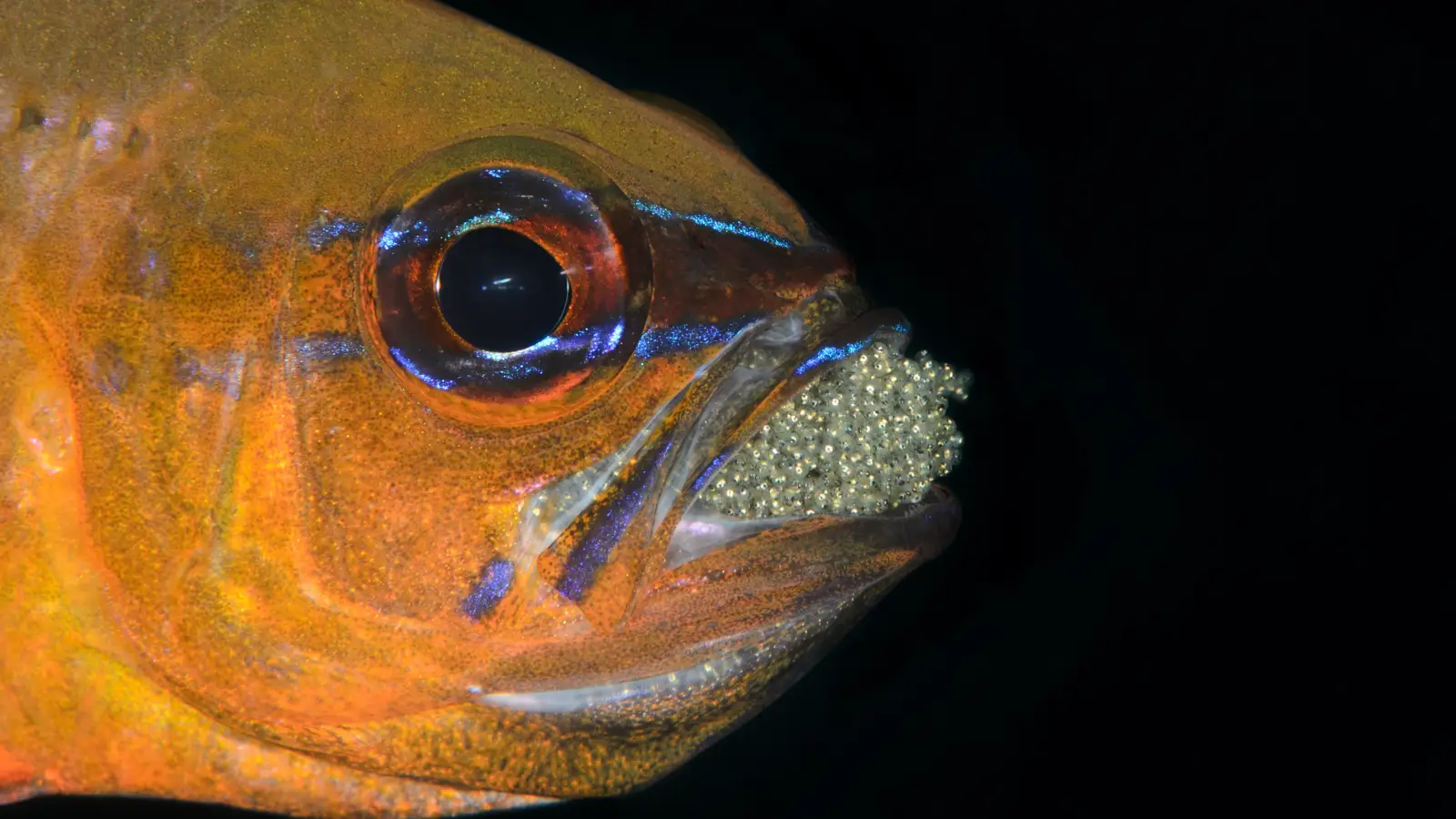
If body shape is the silhouette, mouth position is the tool the fish uses to eat. Anglers often glance at mouths to pick hook size or check for teeth. That misses the larger value: mouth orientation reveals where a fish feeds in the water column and how it captures prey.
A superior mouth angles upward, with the lower jaw projecting past the upper. Tarpon, snook, ladyfish. A superior mouth means the fish feeds primarily above its own head—on surface prey or baitfish backlit against the sky. These fish are upward-gazers. Plan on topwater lures, poppers, or flies that skate. The strike comes from below as the fish tilts its body.
A terminal mouth sits at the tip of the snout, where upper and lower jaws meet evenly. Mid-water predators that chase baitfish—mackerel, small tuna, bluefish—carry this design. They feed straight ahead on fleeing prey, and a straightforward, steady retrieve often matches that profile.
An inferior mouth points downward, with the snout overhanging the lower jaw. Redfish, black drum, bonefish, grunts. These fish are engineered to feed on the bottom—crabs, shrimp, worms, mollusks. A downward-facing mouth renders surface or mid-water presentations largely ineffective unless the fish is aggressively feeding in extremely shallow water. The bait should be on the bottom, hopped or dragged. Scent grows more important, and the hookset must anticipate that the fish inhales downward, not forward.
A subterminal mouth is set slightly behind the snout tip but not fully underneath. Some snappers show this arrangement. It indicates a mixed strategy—picking prey from the bottom while also intercepting mid-water items. Technique adjusts by degree: a barely subterminal mouth can still take a slow-sinking mid-water offering; a strongly downturned one demands frequent bottom contact.
The mouth-position rule holds even when color fails. A redfish and a black drum both have inferior mouths; despite different coloration, they occupy the same feeding niche and respond to similar bottom tactics. A snook and a tarpon both have superior mouths and will rise to surface presentations. Recognizing this pattern lets an angler switch techniques confidently when a new shape flashes by, rather than waiting for a color confirmation that stained water may never provide.
Fin Configuration: Speed, Habitat, and Retrieve Cadence at a Glance
Fins refine the predictions from body and mouth into precise retrieve decisions. Three features carry the most weight: caudal fin shape, pectoral fin placement, and dorsal fin shape. Together they specify how fast a fish moves, how much energy it burns, and what retrieve rhythm it expects.
Caudal fin shape is the primary speed gauge. A high-aspect-ratio tail—tall, narrow, deeply forked—belongs to sustained cruisers like tuna, wahoo, and jacks. Water slips cleanly off the trailing edge, reducing drag at speed. That tail signals high-speed retrieves, trolling, or vertical jigging where the lure must match the pace. A truncate or slightly emarginate tail, as on a snapper or grouper, indicates bursts of speed but no endurance; the fish ambushes or cruises short distances, then stops. A rounded tail, typical of groupers and many bottom fish, announces a sedentary life near structure with only short lunges. Slow, deliberate presentations tight to cover win here.
Pectoral fin placement separates open-water runners from structure specialists. High-mounted pectoral fins, like those on tunas and mackerels, are stiff and function as lift surfaces for stability at speed. These fish can't turn sharply in tight quarters. Low-mounted pectoral fins, as on many snook and juvenile groupers, are more flexible and permit tight turns around docks, mangroves, and rocks. Low-slung pectorals almost always mean the fish inhabits structure, so the retrieve should incorporate sudden direction changes, bounce-offs, and pauses that mimic a disoriented baitfish near cover.
Dorsal fin shape adds a final layer. A long, continuous dorsal with many spines and soft rays—sheepshead, spadefish—often suggests deliberate movements and the ability to hover in current while picking at stationary prey. A high, triangular dorsal that can be raised or lowered, like a permit's or jack's, adds stability during fast turns, confirming the compressed body's agility. A small, low dorsal set far back, like a barracuda's, cuts drag for a straight-line explosive strike.
When the three fin signals combine, the result is a complete picture: the caudal sets the top speed and cruising style, the pectorals reveal the maneuvering environment, and the dorsal hints at the fish's normal activity level. This snapshot prevents the common mistake of using one retrieve speed for every fish with a similar body outline.
Reading a Fish in Real Time: The Permit Example
A wading angler on a clear Florida Key flat in late spring sees a dark shape ghost over white sand—roughly 15 pounds, moving slowly, tilting its body side to side. The sun puts the silhouette in full view, but color detail is absent.
First, body shape: deeply compressed laterally, almost round when viewed head-on, with a high back and steep forehead. Not a fusiform runner; a maneuverable shallow-water specialist. The slow tilting motion—rocking to pick things off the bottom—confirms the compressed body's design for agility over sand.
Second, mouth position: as the fish dips its head, the mouth points downward, like a short tube. The snout overhangs the lower jaw. Inferior mouth. It feeds on crabs and shrimp on the bottom, not on baitfish in the column. Mid-water or surface tactics are now off the table.
Third, fin configuration: the deeply forked tail might suggest a speedster, but the high sickle-shaped dorsal and the low-slung pectorals tell a different story. The large dorsal acts as a rudder during tight turns; the pectorals allow precise hovering and quick pivots over crab holes. The forked tail is for rapid bursts when the fish spooks or chases a fleeing crab a short distance—not for sustained runs.
The integrated read: permit. Optimal technique: a small crab imitation, cast several feet ahead of the fish's path, allowed to sink to the bottom, then twitched twice and paused. Any retrieve that lifts the fly off the bottom misses the feeding zone the mouth position and behavior demand. A high-speed retrieve—suggested by the forked tail alone—spooks the fish because the body and mouth confirm it is not in chase mode.
This scenario demonstrates why isolating one trait fails. The forked tail alone suggests a jack; the compressed body alone suggests an angelfish. But the combination of compressed body, inferior mouth, and high dorsal with forked tail locks in the ID and forces a bottom-oriented, twitch-and-pause presentation.
Where Anglers Undermine the Framework
Chasing Color Instead of Shape
Spot patterns, stripes, and iridescence become the primary ID marker for many anglers. Water turbidity, distance, and lighting strip out color long before they obscure silhouette. A permit's silver flank flashes blue or green depending on the sky; a redfish's copper turns gray in deep water. Color is variable—body shape, mouth position, and fin configuration are constants. When identification rests on color, the correct species is missed half the time in murky conditions. Never make color the first checkpoint. Anchor the ID on the three permanent traits, then use color as a secondary confirmation when visibility allows.
Stopping After One Trait
A forked tail alone doesn't confirm a pelagic speedster; a compressed body alone doesn't confirm a permit. The traits form a system. Remove one leg, and the prediction collapses. An angler who spots a superior mouth and immediately ties on a topwater plug while ignoring the elongated, barracuda-like body is likely fishing the wrong retrieve speed. Barracuda have superior mouths but are horizontal ambush predators, not vertical gulpers. The mouth position reveals where the fish could feed, but the body and fins tell how it feeds. Skipping body shape and fin read leads to half-right techniques that break the moment the fish's behavior contradicts a mouth-only assumption.
Forgetting That Juveniles Don't Match the Adults
Many saltwater gamefish shift body proportions dramatically as they grow—especially snapper, grouper, and drum species. A juvenile mutton snapper is more streamlined, almost fusiform, compared to the deeper-bodied adult; a young grouper may sport a more rounded caudal that becomes more truncate with age. The framework still holds, but the reference points shift. When handling a small, unidentifiable fish, compare it to adult proportions after adjusting for ontogenetic changes: head-to-body ratios typically shrink, and fin shapes may elongate or deepen. The core functional signals—mouth position foremost—remain consistent from juvenile to adult. In doubt, trust the mouth over body shape for species placement, then adapt technique to the current body's capabilities.
Quick Reference: The Saltwater ID Framework
| Feature | What to Observe | Behavioral Prediction |
|---|---|---|
| Body Shape | Cross-section (round, compressed, depressed, elongated) | Hunting style: chasing, maneuvering, bottom-grubbing, ambushing |
| Mouth Position | Orientation relative to body axis (superior, terminal, inferior, subterminal) | Feeding zone: surface, mid-water, bottom, mixed |
| Caudal Fin | Shape (forked, truncate, rounded, lunate) | Speed and endurance: sustained cruiser vs. burst ambusher |
| Pectoral Fins | Placement (high vs. low on body) | Habitat and maneuverability: open water vs. structure |
| Dorsal Fin | Shape and position (high and triangular vs. low and elongated) | Stability and activity level: fast turns vs. hovering |
FAQ
Why do experienced anglers focus on mouth position first instead of color?
Mouth position is a structural feature that doesn't shift with lighting, water clarity, or mood. It is linked directly to feeding mechanics, so it reveals where the fish lives and how to present a bait even when visibility is poor.
Can two completely different fish share the same mouth position?
Yes—tarpon and snook both have superior mouths, but their body shapes (elongated and heavy vs. compressed and flat) and fin configurations differ enough to demand different retrieve speeds and strike-zone approaches.
How do you identify a fish when it's too far to see fin details?
Begin with body silhouette and movement pattern. A round, thick cross-section moving with a steady, straight trajectory points to a fusiform pelagic fish; a flat, tilting motion signals a compressed bottom-feeder. That narrows the list before finer traits become visible.
Does this framework work on offshore pelagics like tuna and marlin?
Yes—the logic is the same. A tuna's torpedo shape, terminal mouth, and high-aspect-ratio tail all signal high-speed mid-water predation; technique follows with high-speed trolling or jigging. A billfish like a sailfish adds an elongated upper jaw, but its body shape and fin configuration still place it in the fast-cruising ambusher category.
What's the biggest limitation of using morphology for fish ID?
Morphology alone can't distinguish closely related species that fill identical ecological niches—several jack species share nearly identical body plans. In those cases, layering in color, scale count, or geographic range becomes necessary. But morphology still moves you to the correct genus and the appropriate technique faster than any field guide.
The Framework Doesn't End When You ID the Fish
The body shape, mouth position, and fin configuration of a saltwater gamefish form a single, integrated prediction engine. Read as a system—not a checklist of disconnected facts—they don't just name the fish; they tell you what it wants, where it wants it, and how fast you need to deliver it. Start with mouth position this week: the next time a fish flashes under the boat, notice whether its mouth opens at the top, front, or bottom of its snout. That one observation will redirect your lure choice and retrieve more reliably than any color pattern ever could. Once that habit becomes automatic, layer in body shape, then fins. The fish will tell you everything you need to know before you ever make a cast.