Saltwater fish don't check a calendar before they spawn, and neither should anglers. By reading three environmental cues—water temperature trends, day length, and the behavior of baitfish—anyone can predict when a spawning run is about to happen, no matter how early or late the season is. These signals shift each year with actual weather, so waiting for a fixed date is often a step behind; the information is already in the water for those who know where to look.
Why Fixed Dates Let You Down
The calendar gives a false sense of control—"the striper run starts April 10" becomes a story people tell each other. But fish don't consult our record books; they move when the water starts feeling right to them. A cool spring can push that day back two weeks, and the angler who shows up on the same date every year just shrugs and wonders. The smarter move is to ignore the fixed date altogether and start watching for the signs that actually matter.
Calendars also ignore how the same species behaves differently from one coast to another. Striped bass in a northern river system might spawn three weeks later than in a southern one, not because of the date, but because the water warms later. Building a prediction around the environment cuts through that guesswork.
Water Temperature Trends Guide the Spawn
Water temperature is often the loudest biological signal, but the important part is rarely the number on the gauge at a single moment. The real key is the direction that number has been moving over several days. When water climbs past a threshold and holds there, fish start paying attention; if it bounces up and then crashes, the process stalls.
Watch the Trend, Not a Single Reading
A one-time reading of 60°F on a sunny afternoon doesn't mean striped bass have begun to spawn. If the night brings a chill and the water drops back to 55°F by morning, the fish will wait. Anglers who note the temperature every day—morning and evening, same location—will notice when the average stays above a critical level for three or four consecutive days. That's the signal, not the snapshot.
Temperature Thresholds for Common Saltwater Species
| Species | Spawn Temperature Range (°F) | Seasonal Trend Clue |
|---|---|---|
| Striped Bass | 57–65 | Sustained rise past 50°F through spring |
| Redfish (Red Drum) | 68–75 | Cooling from summer highs, often around fall equinox |
| Snook | 72–78 | Steady warming after last cold front |
| Summer Flounder | 60–68 | Warming in late spring, after winter lows break |
Why Temperature Stability Matters
Fish coming out of winter need more than a warm afternoon; they need a stretch of stable, warming water to trigger the hormones and the migration. A late cold snap can delay a spawn by weeks, no matter what the calendar says. The angler who checks the trend—how many days the temperature has held, not whether it's forecast to stay warm—makes the better call.
Day Length: The Unseen Seasonal Calendar
Photoperiod works in the background, often unnoticed, but it sets the seasonal window for spawning. Fish sense the lengthening days after the winter solstice through photoreceptors in the brain, which kick off a hormonal chain that ends in the spawn. Even if water temperatures are perfect in December along the Northeast coast, the fish won't move because the days are simply too short.
The progression of daylight hours from 12 to 13 to 14 acts as a gradual permission signal. A calendar date that once matched a local spawn won't help if day length hasn't yet reached the necessary threshold, and that threshold varies with latitude. On the Gulf Coast, snook won't move into their peak spawn until day length approaches 13.5 hours, regardless of warm water.
Baitfish Movements as a Real-Time Trigger
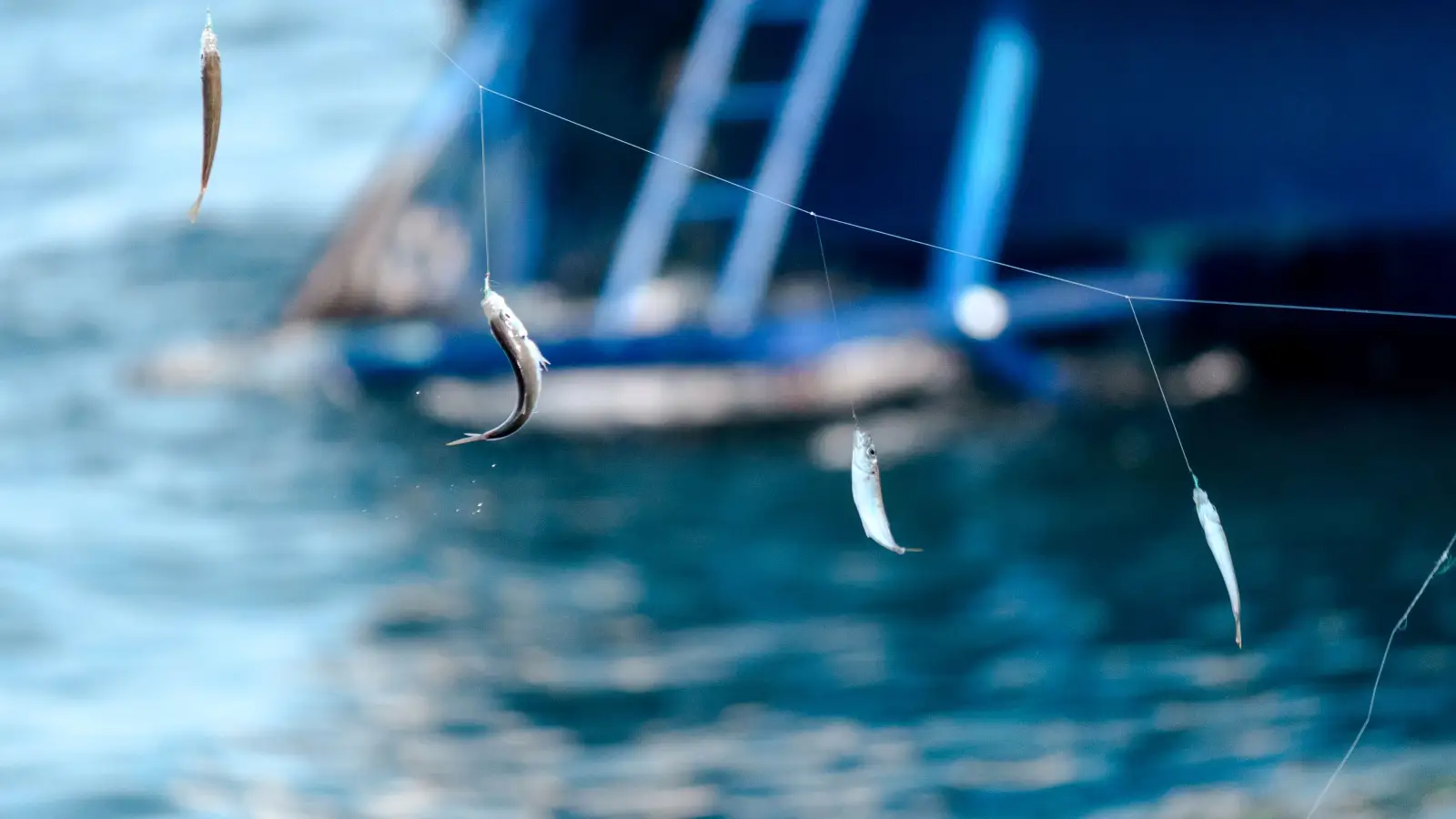
Predator spawns don't happen in an empty ocean; they follow the bait. When dense schools of menhaden, mullet, or anchovies gather near inlets and passes, the food chain is shifting into spawning mode, and the gamefish notice. Baitfish staging and becoming active draws striped bass, redfish, and snook into feeding frenzies that often precede or overlap their own spawning runs.
Reading Bait Behavior
Boiling balls of bait, birds diving, and slick patches on the surface are not random—they're signs that something is happening below. Anglers with an eye for this start looking days before they think the spawn should start. Mullet pushing into a bay when water temperatures hover near the redfish range means the window is cracking open. Along the Atlantic, menhaden moving inshore often forecasts striped bass staging, while mullet runs in the Gulf align with fall redfish spawning.
Putting the Framework Together: A Step-by-Step Read
No single cue is infallible. Warm water without enough daylight won't do much; thick bait without the right temperature is just a passing school. Patience matters. Wait for two signals to align, and when all three converge—temperature trend holding, day length sufficient, bait activity rising—the window is real.
To bring them together:
- Track daily water temperature and watch for a five-day average that exceeds a species threshold.
- Note sunrise and sunset; once day length meets the latitude-appropriate range (roughly 12.5–14 hours for most spring spawners), the clock is running.
- Look for baitfish activity that increases over several days.
A Mid-Atlantic angler might see bay temperatures rising through the low 60s in late April, day length at 13.5 hours, and menhaden pushing into a river mouth—that's when to be on the water for pre-spawn stripers.
Why These Three Signals Beat a Calendar Every Time
- Water temperature trend (not a single reading) is the primary trigger—watch for a sustained rise through species-specific thresholds.
- Day length provides the seasonal backdrop; spawn won't occur until photoperiod is sufficient, regardless of temperature.
- Baitfish activity confirms that the ecosystem is aligning; feeding frenzies often precede the spawn.
- Combining all three readings eliminates calendar guesswork and adjusts automatically for each year's weather.
Trust the Cues, Not the Calendar
Spawning runs aren't written on paper; they're written in the relationship between water, light, and food. Once you stop looking at a date and start watching how the temperature has trended, how long the sun stays up, and what the bait is doing, you'll find the fish at the right moment—no matter how early or late the season unfolds. Next trip, skip the calendar. Check the signs, watch the bait, and let the fish tell you when they're ready.
Predicting Saltwater Spawning: Common Questions
Do moon phases affect saltwater spawning times?
Moon phases can influence spawning, but they're a secondary cue. Many species spawn around the full moon to take advantage of strong tides for egg dispersal, yet the moon alone won't trigger a spawn if water temperatures are still below threshold or day length is too short. Treat moon phase as a fine-tuning tool once the primary signals are in place.
How can I measure water temperature accurately for spawn prediction?
A submersible digital thermometer or a transducer reading, taken at the same spot and at the same tide each day, reveals the trend. Surface readings can be misleading, so try to get a reading from a few feet below the surface. Precision matters less than consistency; the pattern of movement tells the story.
What if I see baitfish but the water temperature is still below the spawning range?
Seeing baitfish early is a good sign—it means the ecosystem is priming. However, the actual spawn often waits for temperatures to climb into the right range. Don't rush out and expect a full spawn that day, but start watching more closely. The main event usually follows within a week or two when temperatures cooperate.
Can I use this framework for all saltwater species?
The principles—temperature trends, photoperiod, and forage availability—apply broadly across estuarine and nearshore species. The challenge is learning each species' own threshold temperatures and seasonal preferences, but once that is known, the trend-watching approach works from flounder to tarpon. It's not a shortcut to knowledge, but a way to apply what you know to the current conditions.