The fish you released didn't make it. Not because you fought it too long, or because the water was too warm—but because your hands were dry. The rule that costs fish is the mismatch between handling technique and a species' biological hardware: slime thickness, scale type, and mouth structure. The tissue stress continuum is a framework that fixes that mismatch by matching every handling action—grip pressure, tool choice, time out of water—to the fish's tissue tolerance. This guide lays out the entire decision sequence.
The Three Tissues That Bear Handling Stress
Handling stress doesn't exist in the abstract. It lands in three anatomical layers: the slime coat, the scale-and-skin layer, and the mouth and jaw architecture. These are the biological shock absorbers. Their thickness and resilience vary wildly. A brook trout's slime strips away under dry contact instantly; a channel catfish's slime can tolerate a few seconds of dry glove. A bass's cycloid scales flex under pressure, but a snook's ctenoid scales shred if you reposition your grip while holding weight. A largemouth's jaw handles a vertical lip grip; a crappie's thin membrane tears the moment you apply the same technique.
The tissue stress continuum works on a simple principle: every handling action imposes a load, and every fish has a capacity. Stay under the capacity, and the fish recovers. Exceed it—by gripping too hard, leaving the fish in the air too long, or touching with dry skin—and you open a route to infection, osmotic failure, or direct mortality. The process that follows turns that principle into a working protocol.
Read the Slime Coat Before Your Hands Touch Water
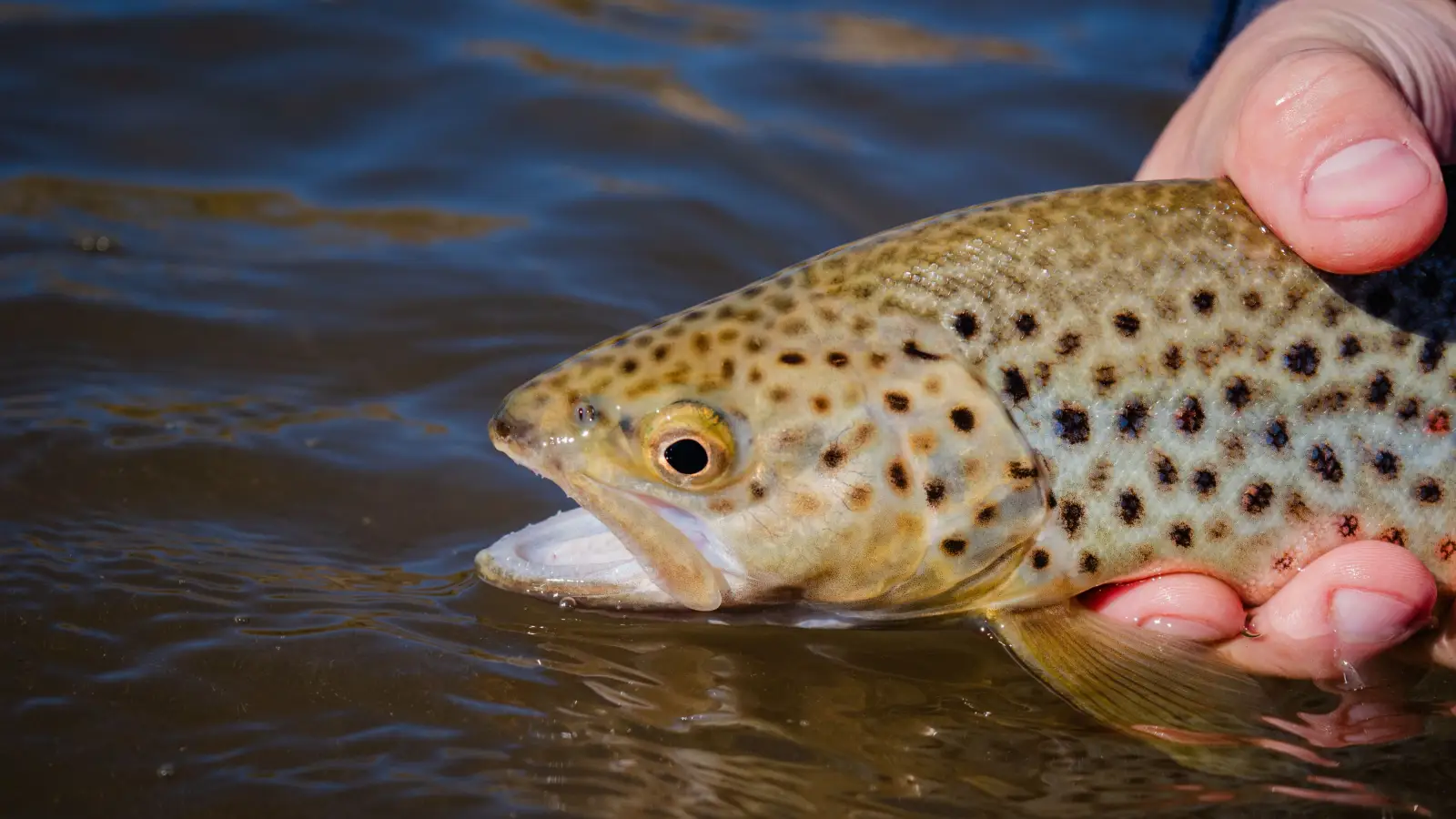
Slime is a fish's primary immune barrier. It blocks bacteria and fungus, and it keeps the skin's water balance intact. Species differ in slime thickness, not because of value but because of evolutionary pressure. Coldwater stream fish—trout, salmon, char—have the thinnest coatings. That slime comes off the moment anything dry touches it. Once gone, the fish's skin is unprotected, and full replacement takes days. In water with high pathogen loads, that delay is often the difference between surviving and developing a fatal fungal bloom.
What to do: Assess the fish while it's still in the water. A heavy slime coat looks like a thick, translucent sheen that leaves a smear on net bags or surfaces; you have some leeway with glove material and net bag type. A thin-slime fish looks bright and almost dry—there's no visible coating. That fish stays wet at all times. Use a rubber or silicone net bag, not knotted nylon. Bare hands or wet nitrile gloves are the only surfaces that should touch the fish. Done well, the fish moves from water to wet net to water without a single dry or abrasive contact.
Scale Type Decides Where and How You Grip the Body
Scales anchor the slime coat and protect muscle from mechanical damage. The three common scale types—cycloid, ctenoid, and placoid—each demand a different grip strategy.
Cycloid scales (bass, carp, suckers) are smooth and overlapping. A wet hand wrapped around the midsection with even pressure works. A pinch, however, can dislodge scales, especially near the tail, setting up a patch for infection. When a heavy cycloid-scaled fish must be lifted, support the rear third with a second wet hand.
Ctenoid scales (snook, walleye, striped bass) have microscopic spines that make the surface rough—and damage-prone if you slide your hand while bearing weight. The grip must be stationary: place your hand once, apply steady pressure, and don't readjust. A cradle-style lift works best.
Placoid scales (sharks, rays) are tooth-like structures that cut hands and line. These fish are never gripped bare-handed; a dehooking tool and quick release are mandatory. Bruising from over-pressure is still a risk, because the internal organs sit close beneath that tough skin.
Naked skin (catfish, bullheads, some eels) lacks scales entirely, making the skin highly vascular and easy to abrade. Even a dry rag can peel the outer layer. Use a wet glove or bare wet hand, and never twist the body. A well-handled scaleless fish shows no skin sloughing or red abrasions.
The Mouth Tells You Whether to Lip-Grip, Tool-Grip, or Cradle
The mouth is the default handle for many anglers—and the most common injury site. Mouth structure splits species into three handling paths.
Lip-grip mouths belong to largemouth bass, spotted bass, and a few other centrarchids. The lower jaw is structurally built for a vertical, forward-directed force. A vertical hang is safe if the fish is not shaken and the grip remains static. If the fish is heavy, the belly must be supported; any angle past 10–15 degrees strains jaw muscles and can stress the spine.
Toothy, trap-like mouths demand a tool. Pike, muskie, walleye, and trout have teeth that make bare-hand lipping dangerous and injurious to both parties. A rubber net, cradle, or jaw grip tool designed for the species is the correct option. For walleye and muskie, tools must be properly sized to avoid fracturing the jaw bones.
Thin-membrane mouths tear easily. Crappie, white bass, and many panfish have delicate oral tissue that a standard fish grip punctures instantly. A thumb-and-forefinger lip grip still rips the membrane if the fish thrashes—which happens often. The correct method is a wet-hand body cradle, fingers kept completely out of the mouth.
Done well, the fish shows no jaw bleeding, no dislocation, and resumes feeding shortly after release.
Time Out of Water Follows an Oxygen-Debt Model, Not a Fixed Number
A 30-second rule is arbitrary and unsafe. For a thick-slime catfish on a cool, overcast day, 60 seconds may do no harm. For a thin-slime trout on a hot afternoon after a hard fight, 15 seconds can be lethal. The tissue stress continuum replaces a fixed clock with a stress-budget calculation: the fish's fight already accumulated a lactic acid load. Air exposure stops gas exchange and deepens that debt. The harder the fight, the shorter the safe air time.
What to do: For thin-slime, coldwater fish, target zero air exposure. Perform hook removal with the fish in the net, submerged. For bass in moderate conditions, 30 seconds is a safe ceiling. For thick-slime rough fish, 60 seconds is acceptable, but less is always better. A rubber net serves as a water basin. If a photo is necessary, have the camera ready before the lift, then shoot, submerge, and release within five seconds. An underwater release video captures the memory without the cost.
Done well, the fish's gill plates move steadily throughout and it swims away under its own power, no revival needed.
One Fish, Start to Finish: Largemouth Bass in Warm Water
It’s a July afternoon on a Texas reservoir. A 4-pound largemouth bass eats a topwater frog, fights for 45 seconds—typical jumps, a couple of strong runs—and comes to the boat in a rubber net. Water temperature is 87°F, which already stresses bass physiology.
Slime check: Largemouth slime is moderate, thicker than a trout's but thinner than a catfish's. The net is wet, the fish stays in the water. Both hands get wet before contact.
Scale grip: Cycloid scales tolerate a body grip, but the weight demands support. The angler uses a wet-thumb lip grip and a second wet hand cradling the belly just forward of the tail. No twist.
Mouth handling: The jaw handles the vertical hold. The angler removes the hooks with pliers without prying the mouth farther open than necessary. The fish hangs vertically for under ten seconds.
Time management: Total air time stays under 20 seconds, including a quick horizontal photo with full belly support. The bass goes back into the net for a 10-second rest in the water, then swims off strong.
No scales lost, no slime damage, no jaw injury. The continuum didn’t add steps—it just made every step intentional and matched to the fish.
Three Handling Habits That Break the Continuum
Grabbing a Trout With Dry Hands at the Bank
The urge to unhook quickly in shallow water often leads to a dry-hand grab around the body. Slime strips instantly. Even if the fish swims away, a white fungal infection often appears within 48 hours. The fix: net the fish, keep it in the water, and use wet hands or a wet glove for any contact.
Lip-Gripping a Fish That Never Evolved for It
A big crappie or white bass often gets a thumb in the mouth because that’s the bass-handling habit. The membrane tears. A torn jaw prevents feeding. The correction: recognize soft or thin mouths instantly and switch to a wet-hand body cradle.
Letting the Photo Session Run Over Species Limits
The fish gets pulled out, posed, checked, re-posed. Each 10-second increment above the species limit stacks tissue damage. The fix is a single-shot protocol: prepare everything beforehand, lift, shoot, submerge. If you need another frame, the fish stays underwater between attempts. Better yet, shoot an underwater release video and delete the dry-photo pressure altogether.
At-a-Glance: Tissue Continuum Profiles
| Species | Slime Thickness | Scale Type | Safe Grip Method | Air Exposure Ceiling (cool water) |
|---|---|---|---|---|
| Trout | Thin | Small cycloid | Wet hand body cradle, keep in water | 10 seconds |
| Largemouth Bass | Moderate | Cycloid | Wet hand lip grip + belly support | 30 seconds |
| Smallmouth Bass | Moderate | Ctenoid | Wet hand lip grip + cradle | 20 seconds |
| Walleye | Moderate | Ctenoid | Rubber net, tool grip, wet glove | 30 seconds |
| Northern Pike | Moderate-thick | Cycloid (small) | Rubber net, jaw spreader or cradle, no body squeeze | 45 seconds |
| Crappie | Thin | Cycloid | Wet hand body cradle, never lip grip | 23 seconds |
| Catfish | Thick | Naked | Wet glove or bare wet hand, support belly | 60 seconds |
| Snook | Moderate | Large ctenoid | Wet hand craddle, avoid sliding grip | 30 seconds |
FAQs
Do I really need to wet my hands for every fish?
For thin-slime species like trout, salmon, and char—yes, with no exceptions. For bass and panfish, wetting hands is still a best practice because even moderate slime can be disrupted by dry skin. If the fish is destined for the cooler, less slime disturbance also preserves meat quality, but wet hands are still a good default.
Can I lip-grip a trout if I’m careful?
No. A trout’s jaw bones are not load-bearing. Lip-gripping risks dislocation. The teeth also make a bare thumb a poor choice. Use a net and wet-hand body support.
What’s the best tool for handling toothy fish?
A rubberized landing net with a knotless basket, paired with a jaw spreader for pike or a cradle-style grip tool for walleye and muskie. Rotating-head tools reduce torque on the jaw. Never use piercing-style stringers or grip tools that puncture tissue.
How do I tell if a fish is too stressed to release?
Signs include a fish floating belly-up, no gill movement, or inability to right itself after support. In-water revival—pointing the fish into current or gently moving it forward—can sometimes reverse mild stress. The tissue stress continuum drastically lowers the odds of reaching this state because it prevents the cumulative damage that leads to delayed mortality.
Apply the Continuum on Your Very Next Fish
The tissue stress continuum is this: every fish has a species-specific stress budget. Allocate your handling time, grip pressure, and gear against that budget. Start with the slime coat. Before doing anything else, determine whether the fish has a heavy or thin slime layer. That single observation sets the safety threshold for everything that follows—the grip, the tool, the clock. Catch your next fish, read its slime, and handle it like its life depends on that decision. Because it does.