You've just unhooked a fish and your first move is to dry your hands on your shirt. That split-second decision can peel off up to 70% of the fish's protective slime in less than 10 seconds of contact.
The slime coat is not a nuisance; it's a live barrier against bacteria, fungus, and parasites. Strip it, and the fish swims away vulnerable to infections that don't show up until hours or days later. The remedy is straightforward: wet your hands before you touch the fish. Done correctly, this also gives you a better hold and produces photographs where the fish looks as healthy as it actually was.
The Wet-Hand Quick Routine
- Submerge both hands in the water at your feet—lake, stream, or a clean bucket.
- Let the heavy drops fall away, leaving your skin damp but not streaming.
- Support the fish from below with wet hands, staying clear of gills and eyes.
- Re-wet your hands every time you change your grip for a photograph.
- Return the fish to the water using the same damp-hand support.
How to Handle a Fish with Wet Hands, Step by Step
Saturate Your Skin Before the First Touch
Get both hands fully wet. If you're wading, cup water and let it run over every finger. On a boat, reach over the side and soak your hands. The objective is to eliminate any dry surface. Dry skin has tiny ridges that scrape against the slime; wet skin forms a slick barrier that passes over the fish without friction. If you have sunscreen or bug spray on your hands, rinse them thoroughly with natural water first—those chemicals dissolve into the slime and irritate the fish's skin.
Let the Drip Stop, Not Your Moisture
Hold your hands above the water for a few seconds until the heavy droplets fall. You need damp hands, not drenched ones. A hand that is dripping can carry a temperature shock to warm-water species like bass, especially if the lake is cool and the air is hot. Damp skin—similar to a wrung-out cloth—preserves the slime, delivers secure grip, and avoids unnecessary thermal stress.
Support Under the Belly, Not by the Jaw or Tail
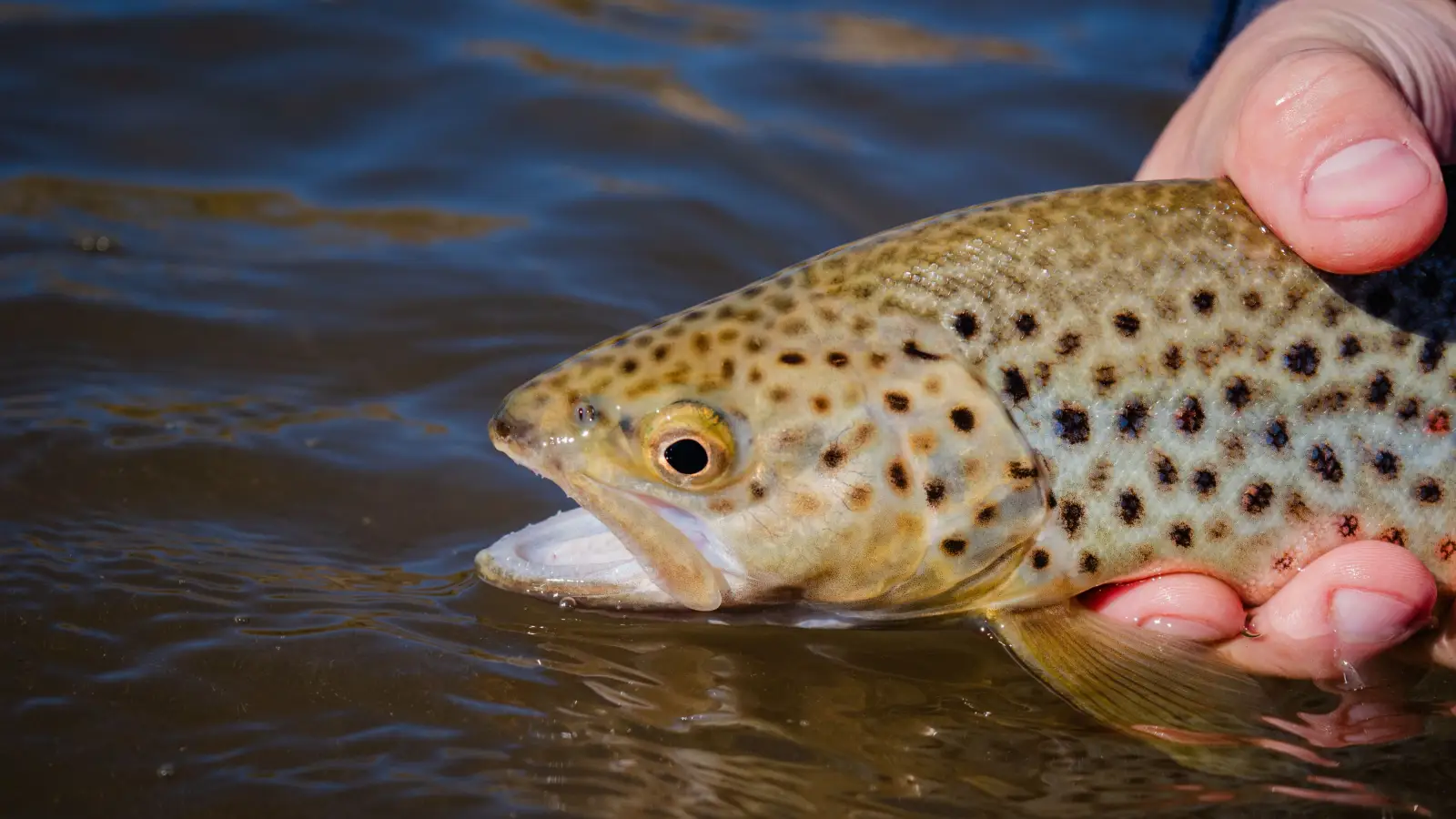
Slide one damp hand under the fish's belly and the other near the base of the tail for light control. For trout, cradle the area just behind the pectoral fins and keep the fish upright in the current. The slime that stays on the fish actually improves your hold because it fills the fine grooves in your skin with a tacky layer. A dry hand, by contrast, strips that layer and leaves a rough, patchy surface that can cause the fish to slip free.
If you already handled the fish with dry fingers while unhooking it, don't compound the damage. Wet your hands right away and limit any extra contact. The slime will start rebuilding within hours, but each touch with dry skin removes a little more of the remaining protection.
Photograph with Wet Hands to Keep the Slime Glossy and Intact
A fish that is lifted for a grip-and-grin often shows dull streaks by the time the camera shutter fires. That is slime removed by dry contact. Damp hands leave the coat unbroken, so the fish's natural colors stay vibrant under outdoor light. Dip your hands each time you adjust for a better shot, and hold the fish low over the water so that if it wriggles free, it lands softly. A fish supported with wet hands and photographed while it still wears its own slime looks like the wild animal it is, not like something that has been handled.
How to Check the Slime Coat After You Release the Fish
- Uniform sheen — Before letting go, look at the fish's flank in the sun. There should be a consistent wet gloss, with no dull patches.
- No pale fingerprint marks — Any light, streaked smudges where your fingers rested are slime that lifted off onto your skin.
- Immediate, strong escape — A fish that bolts the moment your hands open had a full slime barrier. That layer keeps its skin conditioned for fast swimming.
- No loitering at the surface — A fish that stays near the bank or drifts sluggishly is showing stress, often tied to slime loss. A healthy fish dives without hesitation.
What to Do When the Slime Layer Has Already Been Compromised
After Dry Contact During Unhooking
Wet your hands at once and finish the unhooking as fast as you can. If the water is moving, release the fish facing into the current; the flow pushes fresh oxygen over the gills and supports faster slime regrowth. In still water, hold the fish upright and ease it forward and back slowly to get water moving over the gills before you let go.
Dull Patches or Cloudy Eyes After a Photo
These signal that the slime was stripped—either by dry hands or by extended handling. The best recovery is a rapid return to clean, oxygen-rich water with absolutely no further contact. If you can, move the fish into shade; direct sun adds stress to a fish that no longer has its full protective coat. For trout in water below 68°F, release it into a cooler pocket like a shaded cut bank or a deeper run.
Questions Anglers Ask About Wet-Hand Handling
Does wetting my hands make the fish too slippery to hold?
The opposite is true. A damp hand grips a fish better than a dry one because the slime fills in the microscopic texture of your skin, creating a tacky, high-friction surface. Dry hands strip the slime and turn the fish into something like a wet bar of soap.
Should I use water from the lake or clean tap water?
Use the water the fish came from. Matching temperature and chemistry prevents thermal shock and pH disturbance to the slime. If you can't reach the live water, a bucket of clean, dechlorinated water is a workable substitute.
Do fishing gloves do the same damage as dry hands?
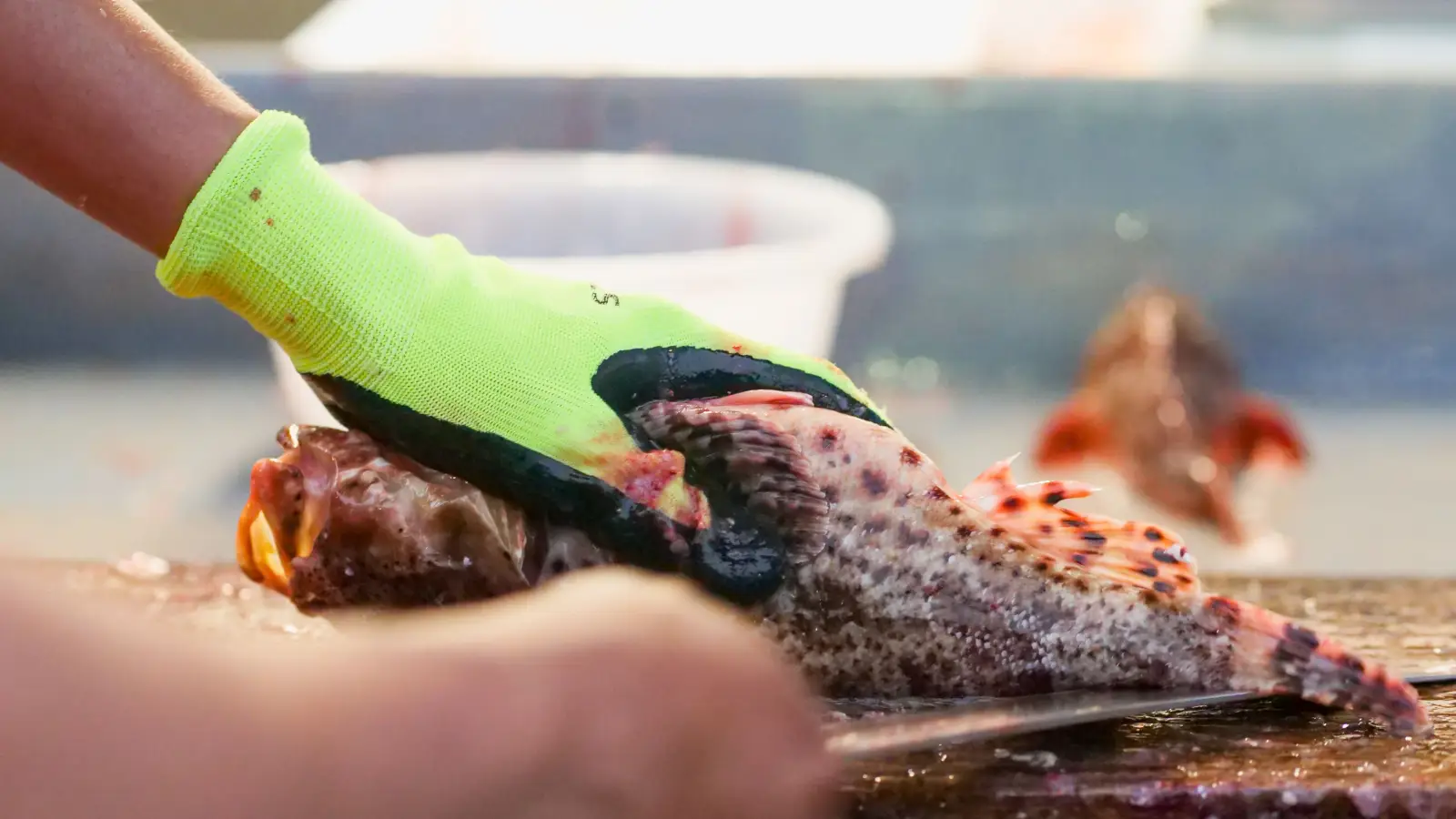
Wet rubberized or neoprene gloves can be reasonably safe, but any dry fabric, leather, or coarse glove will abrade slime nearly as fast as dry skin. Bare, damp hands remain the surest method.
How long does it take for the slime layer to grow back?
A renewing film appears within a few hours, but full thickness often requires 24 to 48 hours. While the coat is rebuilding, the fish is at higher risk of infection. Catching and handling the same fish again during that period compounds the injury.
Wet hands demand almost no extra effort and give the fish its best shot at a healthy release. Next time you land a fish, reach into the water first—then notice how securely you can hold it, how sharp its colors look in the frame, and how fast it disappears when you open your grip.