A roll in a heated pool with swim trunks builds technique, not readiness. Cold water, wet clothing, and gear strapped to the boat change the entire equation. When a flip happens on a fishing trip, the shock to the system and the unexpected drag from waders throw off the clean motion learned in calm water. The following protocol forces a kayak angler to practice under real conditions and, just as importantly, trains the mind to stay methodical when panic starts to spike.
The Practice Capsize Drill in Seven Steps
- Find a shallow, protected area with firm bottom and no boat traffic.
- Rig the kayak fully—rods, crate, anchor, electronics—exactly as for fishing.
- Get in the water wearing all gear and a PFD; float and breathe slowly for two minutes.
- Flip the boat on purpose, keeping the paddle in one hand.
- Execute a complete self-rescue without help, even if you have to repeat it.
- Do it again from opposite sides and with gear deliberately tangled or misplaced.
- Write down the moment hesitation crept in, then drill that one action until it’s automatic.
Essential Gear for a Practice Session That Actually Transfers
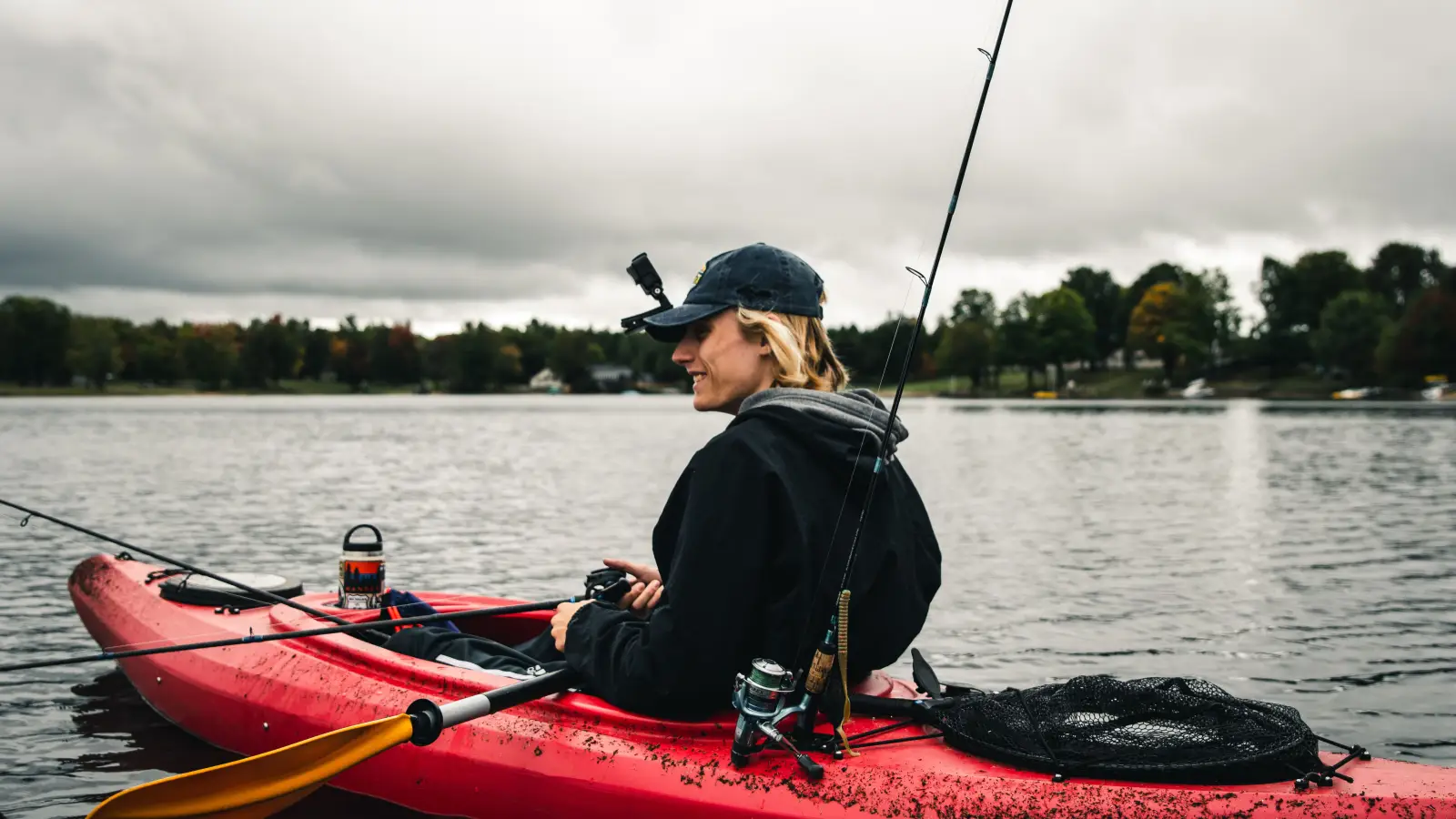
Bring every piece of normal fishing kit. That means a sit-on-top kayak with mounted rod holders, a USCG-approved PFD cinched tight, waders or bibs over adequate insulation, and a long-sleeve shirt. Leash the paddle. Stow a waterproof bag with a phone, a whistle, and a small first-aid kit. Carry the rods and reels you use on the water—remove treble hooks or cap them, but leave the weight and bulk intact. Clip everything down the way you would on a trip. Loose items bobbing away mid-drill teach nothing.
Step-by-Step Execution
1. Pick a Practice Site That Removes Unnecessary Danger
Select a lake cove, a slow backwater, or a pond where the bottom is gravel or sand. Depth should be no more than chest-high, so standing up is always possible. Current, stumps, and boat wakes introduce variables that distract from the drill. If working with a partner, choose a spot where they can walk or paddle to you in seconds. Eliminate the external risks so the focus lands squarely on the capsize and recovery.
2. Load the Kayak as You Would for a Fishing Day
Attach the fish finder, anchor trolley, and crate with tackle trays. Put the rods in the holders, even if you replace the hooks with rubber safety caps. Clip a paddle leash. Stash the waterproof bag in the tankwell. The boat should feel heavy and cluttered—because that’s what a flipped fishing kayak actually feels like. Skip the temptation to train with a bare hull; it won’t prepare you for the drag of all that gear.
3. Force the Body Through Cold-Water Acclimation
Step into the water fully dressed, PFD secured. Float on your back, tread, and breathe with slow exhales for two solid minutes. This deliberate exposure dulls the gasp reflex and brings the heart rate under control. Water below 60°F demands extra time; shivering is normal, but uncontrolled hyperventilation means you need to get out and warm up before continuing. Ignoring this step guarantees a poor recovery because cold shock, not poor technique, derails most rescues.
4. Trigger the Capsize Deliberately
Hold the paddle in one hand and the kayak’s side in the other. Lean hard into the capsize until the boat goes over. Do not abandon the motion halfway—ride it through so you experience full disorientation. Underwater, keep the paddle, orient yourself, and then surface. This builds the habit of staying with the boat even when upside down.
5. Perform the Full Rescue Sequence
Surface without releasing paddle or kayak. If you use a stirrup or paddle float, deploy it. On a sit-on-top, slide onto the stern or side with control, not frantic scrambling. Wet clothing adds around 20–30 pounds, so the first try often fails. Repeat until you can re-enter smoothly. If re-entry proves impossible, swim to shore towing the kayak—that counts as a successful self-rescue outcome.
6. Add Off-Angle Flips and Gear Complications
After a clean recovery, flip again but come up on the opposite side. Next, let the paddle drift away and get back to the kayak. Then tangle a rod around a leg or let the anchor line snag the seat. Introduce one complication per drill. These variations stamp a library of realistic scenarios into muscle memory, leaving less room for panic when the real thing throws a curve.
7. Dissect the Session and Repeat Weak Points
As soon as the drill ends, while memory is sharp, identify the instant when hesitation or confusion flared. If the gasp from cold water was the trigger, double the acclimation time next session. If re-entry failed because waders ballooned with water, practice that specific move three more times. Keep drilling until every step runs on autopilot.
Checkpoints to Confirm the Session Worked
- Acclimation: After two minutes, breathing is steady and the mind is calm.
- Capsize: Paddle never left the hand, no thrashing.
- Self-rescue: Re-entry succeeded within two attempts without shedding gear.
- Variations: At least one off-angle flip and one gear-snag scenario were handled without assistance.
- Debrief: A specific moment of hesitation was identified and re-drilled until smooth.
The Fastest Fixes When Something Breaks Down
Cold shock overwhelms. Roll to the back, float, and exhale slowly. If a partner is present, signal for help rather than fighting alone. Severe hyperventilation is not a drill to gut through—get out and rewarm.
Re-entry keeps failing. Most attempts fall apart because the angler tries to muscle up too fast. Stay low and slide across the kayak like a seal. If waders fill, kick gently to push water out before the final pull. Keep the PFD on; adjusting its fit almost always solves buoyancy complaints.
Gear tangles trigger panic. Stop, look, and remove the snag slowly. Practice slow untangling in controlled water so the brain stores a calm response pattern, not a reactive one.
Common Questions About Realistic Flip Drills
Can I start practicing alone?
No. Deliberate capsizes require a capable partner—on shore, wading, or in another kayak—ready to intervene if cold shock or entanglement disables you. Shallow water does not eliminate the risk of incapacitation.
What water temperature is too cold for these drills?
Below 50°F triggers intense cold shock almost instantly. For practice, stay above 55°F and wear a wetsuit or drysuit under the outer layers. If stepping in makes you gasp uncontrollably, the water is too cold for extended work.
How often should I run this drill?
Start of every fishing season and again after any significant gear change (new PFD, new kayak, rearranged rod layout). Twice a year maintains the physical reflex and resets the mental edge.
Does pool practice help at all?
A pool isolates the mechanics of a roll or re-entry, but it must be followed by a cold-water, full-gear session. Use the pool as a warm-up, never as a substitute for the real drill.
Once this drill becomes routine, an actual flip turns into a problem to manage, not a crisis to survive. The next logical step is to run the same sequence with a fishing partner and rehearse a tandem assist, where one person stabilizes the boat while the other climbs back in.