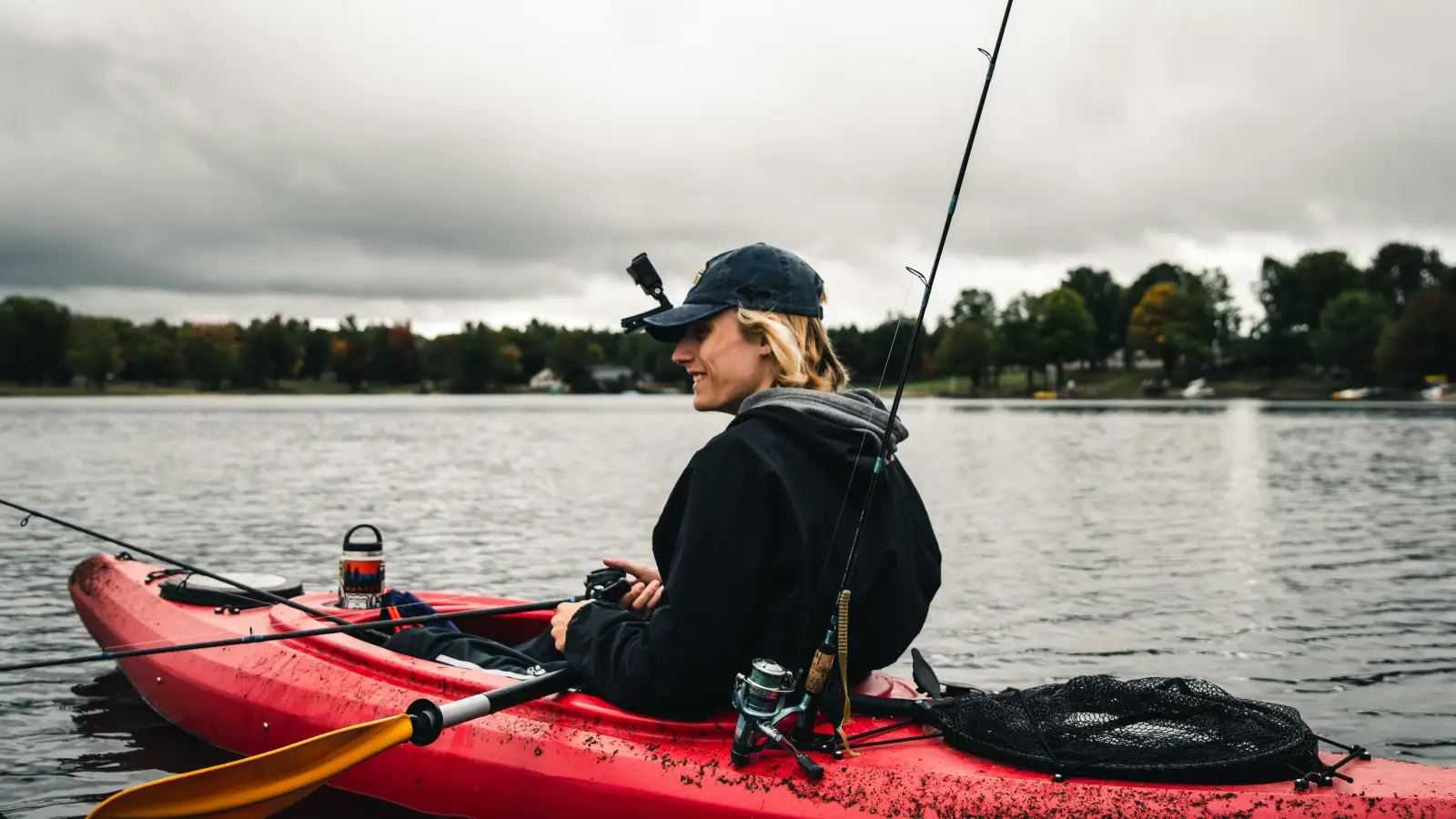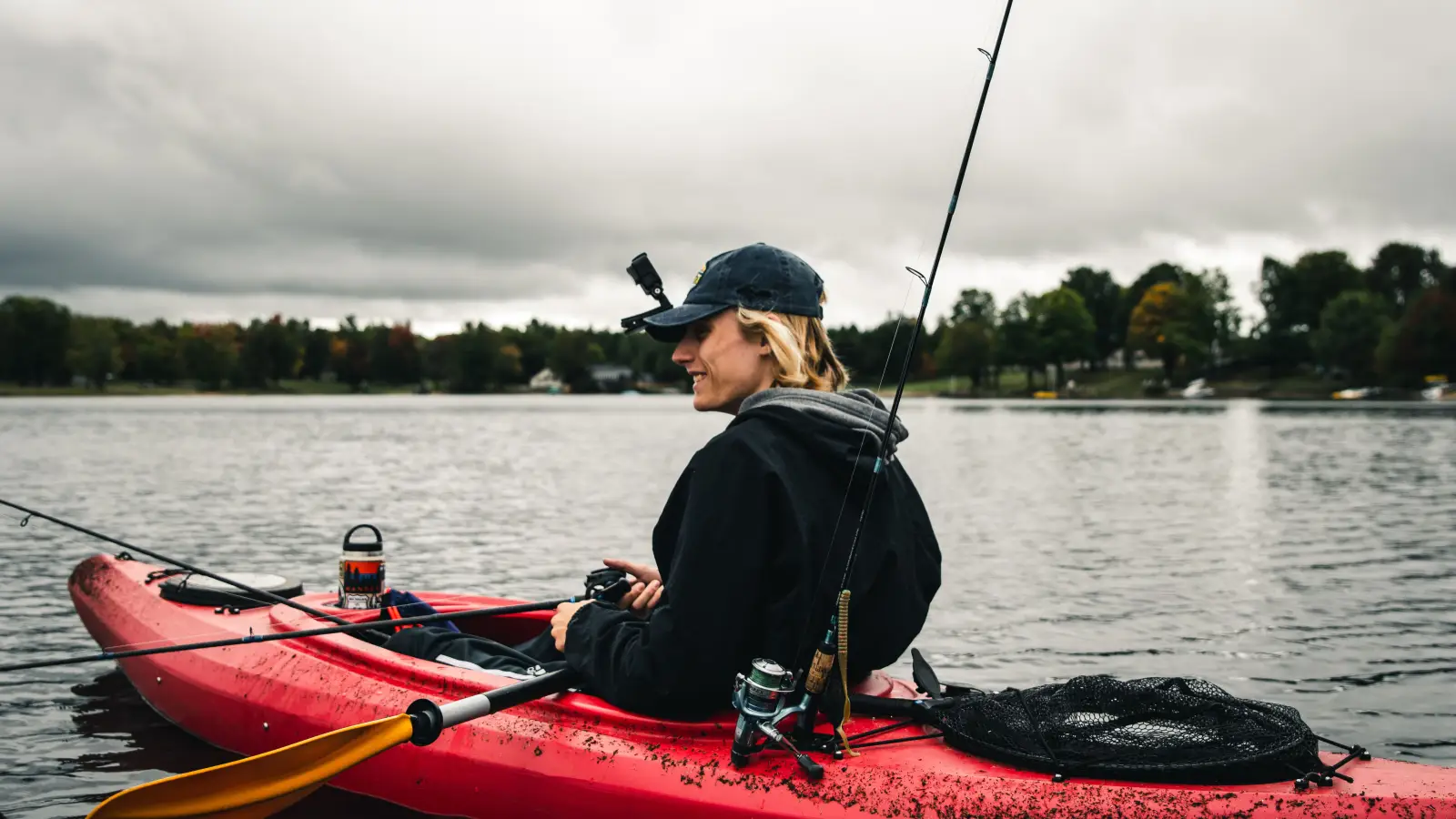
Every additional mount you bolt onto a fishing kayak steals time from the only metric that counts: minutes a lure spends in the water. The problem is not that adding gear is a bad idea—it’s that each new bracket, adjustable arm, or clamp introduces a complexity debt that collects interest throughout the day. A loose knob, a cable hanging just wrong, a rod butt that bumps a camera mount during a cast—these are not isolated annoyances. They are withdrawals from a finite account of fishing time, and the cost is paid in missed strikes and shorter drifts.
The Real Objective: Protecting Productive Fishing Minutes
Kayak anglers rig their boats to gain an edge. A rod holder keeps a line in the water while paddling; a net mount saves seconds during landing. But the math flips quickly. A third rod holder that never holds a rod, an anchor trolley that tangles a leashed stakeout pole, a GoPro arm that needs tightening every half hour—those devices stop being tools and start being obstacles. The goal of a lean rig is not minimalism for its own sake. It is about preserving the time and mental bandwidth needed to detect a soft bite, adjust a drift, and react to a fish without first untangling yourself from your own gadgetry.
The Lean Kayak Fix: A Priority List for Cutting Rigging Debt
- Remove every mount, clamp, and accessory from the kayak.
- Put back only the three or four mounts that are used on every single trip.
- Eliminate anything that duplicates a function or hasn’t been used in the last five outings.
- Secure remaining mounts where they never intersect your paddle stroke, cast, or net reach.
- Pre-rig all cables and straps so nothing dangles or snags.
- Apply a one-in-one-out rule: if a new mount goes onto the kayak, an old one comes off.
Paring Down the Kayak: A Methodical Process
Strip the Deck and Face the Blank Slate
Pull every attachment off the kayak—rod holders, rail systems, camera arms, transducer brackets—and set them on the ground. With the boat bare, note the zones where your body naturally moves: the forward casting arc, the paddle stroke corridor, the hand path to the seat-side net. Any mount that would occupy those zones is a future conflict point, no matter how small it looks on a workbench.
Decide What Actually Earns Its Place
For the typical solo kayak angler, the non-negotiable core is small: one primary rod holder set behind the seat or angled to troll, a paddle clip or bungee, and a secure spot for a landing net. An anchor trolley or stakeout pole mount becomes essential only on waters where you regularly hold position in current or wind—on calm ponds, it’s dead weight. A fish finder is justifiable if you fish deep, unfamiliar lakes where depth contours matter. On clear rivers and small ponds where you can read the bottom, its battery drain and cable management cost more than the information it returns. The test is blunt: if you can’t name the last fish a mount helped you catch, it belongs in storage.
Eliminate Redundancies and Distractions
Two rod holders on the same side of the kayak create more tangles than opportunities. A full rail system crowded with a GoPro, a phone holder, and an adjustable light is a guaranteed snag point during a fight. Strip side-by-side duplicates and any device whose primary job is to record or display something other than a bite. If a camera is occasionally useful, use a single removable RAM-style mount and take it off when not filming; a permanent arm constantly in the way is pure rigging debt.
Position Remaining Mounts Inside Dead Space
Place each mount in a pocket of hull real estate that sits outside your movement pattern. The main rod holder should point the rod behind you, not sideways into a casting lane. The net mount must be reachable with one hand without shifting your weight, or it belongs behind the seat. If a fish finder stays, run its transducer through a scupper-mounted arm and secure the cable flush along the gunwale; eliminate any over-the-side bracket that adds a second connection and a dangling wire.
Ground-Test Before Launching
Install the final set of mounts and then sit in the kayak on land. Execute a full paddle stroke, a sidearm cast, an overhead cast, and the motion of grabbing the net and rod behind you. If any movement brings a line into contact with a mount or forces your hand to dodge a bracket, adjust the mount’s angle or location until the path is clean. Problems caught on land never ruin a hookset.
Let the Water Deliver the Final Verdict
Fish the stripped-down rig for at least one full trip. If you inadvertently bump a mount during a cast, that mount is still in the wrong spot. If an afternoon passes and you never touch a particular mount, remove it permanently. The only feedback loop that matters is whether decreased clutter actually translates into longer uninterrupted drifts and fewer aborted casts.
How to Know the Rig Is Right
- The launch-to-first-cast routine stays under five minutes.
- No loose straps, dangling cords, or sharp-edged brackets remain on deck.
- A full 360-degree cast can be made without the line touching hardware.
- Grabbing the primary rod from its holder is automatic, requiring zero adjustment.
- At day’s end, every mount on the kayak can be linked to a specific fishing situation that occurred that trip.
When a Lean Rig Creates New Problems
A needed mount was removed by mistake. If a situation reveals a genuine gap—such as a second rod holder that would have allowed trolling a different depth—hold the rod or wedge it for that session. If the need repeats over three trips, add that one mount back and immediately retire another low-use item to keep the deck count stable.
The kayak still feels crowded after stripping gear. The issue is usually placement, not inventory. Move the same number of mounts to the outermost edges of the hull, or switch to clamp-on mounts that can be repositioned or removed entirely on days they aren’t needed. Unused sections of gear track often invite over-rigging simply because they exist; cover them with blanking plates to remove the temptation.
Lines tangle on a mount that was deemed essential. Reassess the mount’s orientation. A rod holder pointing straight up catches line with every cast; angle it rearward or use a horizontal mount that keeps the rod low and parallel to the water. A fish finder cable that loops over the side should be rerouted internally or zip-tied flush, turning a potential snag into a silent, unobtrusive path.
Common Questions About Rigging Debt
What is rigging debt?
Rigging debt is the hidden cost of each accessory you attach to a fishing kayak—measured in lost fishing time, increased failure points, and diverted attention. Every bolt, clamp, and dangling wire is a small task waiting to interrupt a cast or a landing, and those interruptions compound over a day.
How many rod holders should a kayak have?
For a solo angler, one primary rod holder is enough for most situations. A second, placed on the opposite side and used only for trolling, can be justified if you regularly fish two rods. More than two holders on a typical sit-on-top kayak almost always creates a net loss in practical fishable time.
Is a fish finder mount worth the complexity?
It’s worth it on deep, unfamiliar water where bottom contour directly guides lure placement. On clear, shallow, or familiar water, a fish finder becomes a drain on battery life and attention that rarely pays back in fish. If you install one, use a scupper-mounted transducer to eliminate the most common failure point: a dangling external cable.
What’s the earliest warning that a kayak is over-rigged?
The clearest sign is that setup at the ramp takes longer than ten minutes even on routine trips, or the bare hull with no gear on it still looks cluttered with brackets and arms. A kayak whose primary function isn’t obvious at a glance has crossed the line.
Can a kayak be under-rigged?
Yes—if you have no clear way to secure your paddle and rod when both hands are needed to land a fish, you’re under-rigged. The absolute minimum functional rig consists of a paddle holder and one rod holder. Fall below that, and the resulting juggling act costs as many fish as an overstuffed boat.
After the Cut: What Comes Next
A kayak rigged with only the hardware that directly contributes to putting fish in the net frees up the most valuable resource on the water: uninterrupted focus. The logical next task is to practice the launch-and-load sequence with the new setup until the entire routine runs on muscle memory. When you no longer think about the boat at all, you start noticing the small, meaningful signs that tell you where the fish are holding.