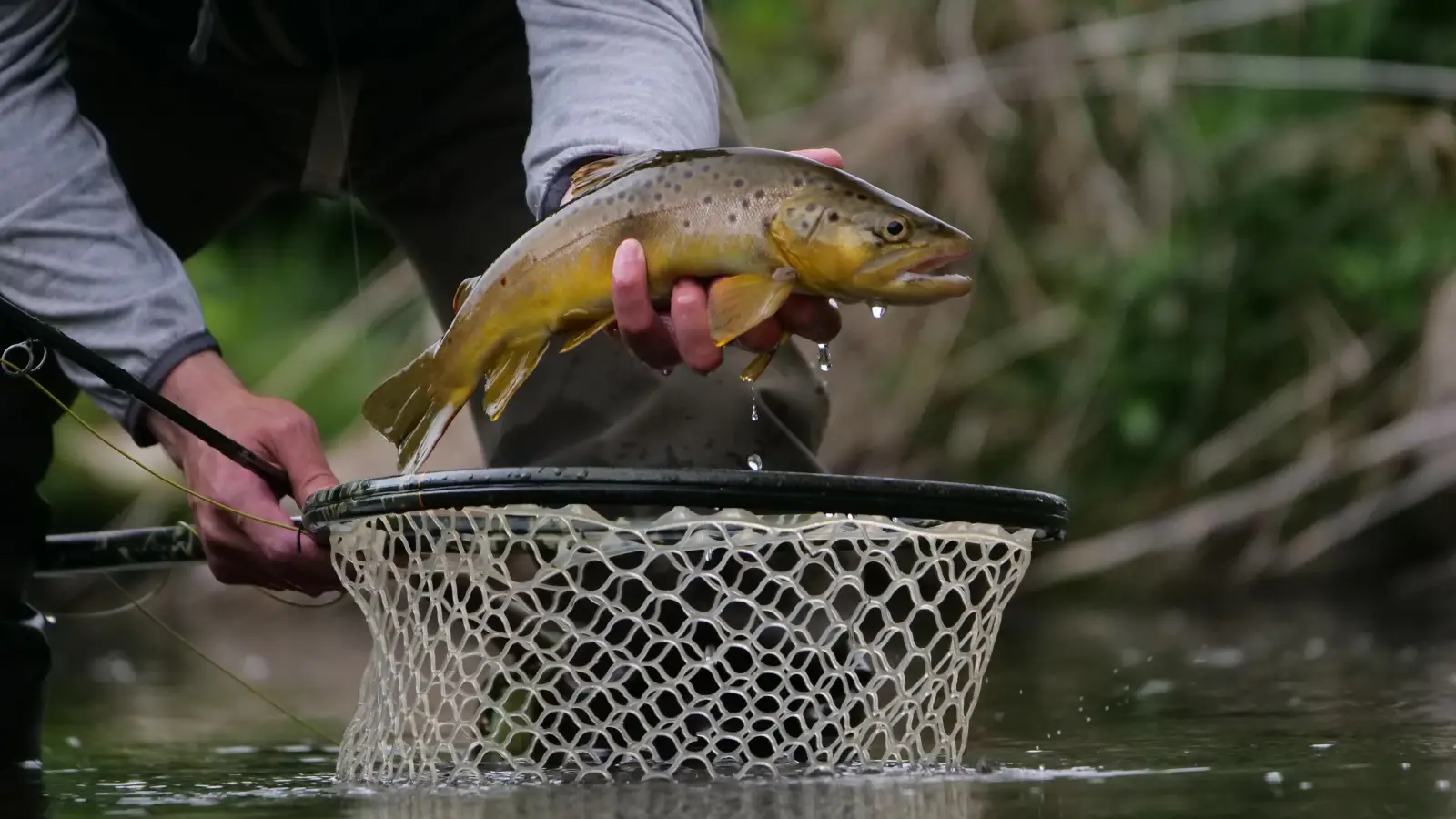
When you slip a 16-inch bass back into the water, you’re not obeying a rule to avoid a fine. You’re preserving the fishery’s ability to manufacture trophy fish next year and beyond. The biological machinery behind that requirement is direct: spawning stock biomass and recruitment overfishing. Once you grasp those two concepts, a forced release becomes a deliberate investment in the fish you’ll tangle with later—and in the wall-hanger you may never forget.
Spawning stock biomass is the total weight of mature females present—the reproductive capital. Recruitment overfishing occurs when that capital shrinks so far that too few young fish are produced to replace the adults removed. Entire year-classes can vanish. Slot limits stop that spiral by shielding the fish whose size and age yield the highest reproductive return, holding them in the water precisely when they matter most.
The Biological Account That Pays Out Trophies
Every fishery runs on a kind of biological savings account: spawning stock biomass generates the interest of annual juvenile recruitment. Harvest draws from that account. A slot limit safeguards the principal by making certain size classes untouchable, keeping the balance above the threshold where recruitment collapses. The protected band is pegged to the length at which fish mature and the length where their per-egg contribution peaks. For many species, that window is only a few inches wide. Removing fish inside it is like liquidating the core of a retirement plan for today’s cash.
The protection a slot provides plays out in three linked biological movements. Each one depends on the one before it, and together they transform a single released fish into the giant you hope to hold.
Stage 1: Save the Spawners That Matter Most
The lower and upper boundaries of a slot are not guesses. The lower boundary often sits near the size where half the females reach maturity; below it, fish haven’t spawned yet. Above the upper boundary, fish may be past their reproductive prime or may already have contributed several years of spawns. The middle—the slot—captures fish at their reproductive peak. In a 14- to 20-inch protective slot for largemouth bass, for instance, females inside that range produce the highest number of eggs per pound of body weight. Releasing a fish in the slot ensures it will spawn again, often several times, before it either grows into a protected trophy class or nudges above the harvestable size.
When compliance is high—when most anglers release slot fish quickly, with wet hands and minimal air exposure—managers can rely on a spawning stock dense enough to absorb poor spawning years without tanking the fishery.
Stage 2: From Eggs to Yearlings—Why the Next Generation Needs a Safety Net
After the spawn, recruitment is what separates a vibrant fishery from a ghost town. A single female may release thousands of eggs, but survival to fingerling stage often sits under 5 percent, and to one year old even lower. The more spawners, the more eggs; the more eggs, the higher the odds that some cohort will hit the right conditions and produce a strong year-class. Slot limits build spawning stock biomass directly, stacking the deck in favor of a recruitment pulse. In waters without that shield, removing prime spawners can cause a bottleneck so severe that even perfect habitat can’t fill the void. That’s recruitment overfishing at work—the system consuming its own future.
When the framework functions, electrofishing surveys show steady or climbing numbers of young fish year after year, a sign that recruitment is holding because the spawning bank remains intact.
Stage 3: The Growth Dividend—How Today’s Released Slot Fish Become Tomorrow’s Trophies
A fish that survives the slot keeps growing. That growth is more than a bigger fillet; it’s a compounding reproductive asset and a potential wall mount. Fast-forward a few seasons: the 16-inch bass released today can become a 22-inch, 7-pound fish. By protecting it at its reproductive peak, the fishery collects both the extra spawns and the eventual trophy. Many trophy-management systems depend on this pipeline—maintain enough fish in the productive middle-age classes, and the giants appear naturally. Slot limits paired with selective harvest of fish above the slot keep that pipeline flowing.
Success looks like anglers regularly boating quality fish above the slot, with occasional true trophies, because the middle of the fishery bristles with fast-growing, mature fish.
A 16-Inch Bass in a 13–18 Inch Slot: One Release, a Decade of Returns
Imagine an angler on a Tennessee River impoundment governed by a 13- to 18-inch protective slot on largemouth bass. He lands a chunky 16-inch fish. He wets his hands, removes the hook, and slides it back. That single release echoes through the next decade.
In Stage 1, the fish resumes feeding within hours and spawns that spring, adding hundreds of eggs to the system. In Stage 2, over the following two years, those spawns contribute to a year-class that, given decent conditions, pumps recruit-sized bass into the population. In Stage 3, four to six years later, fish from that year-class grow past 18 inches and become legal keepers—some push into trophy dimensions. The angler who now targets larger bass reaps the reward of a decision made years earlier. The payoff isn’t instant, but it compounds.
The Mistakes That Short-Circuit the Slot Cycle
Keeping a “Shoulder” Fish Just Outside the Slot
A fish that measures half an inch above the slot may read as harvestable, but it was inside the slot last season. Its early spawns are still paying into the system. Removing it prematurely cuts off multiple future spawns and the trophy it could have become. The upper slot boundary exists to protect fish until they’ve banked enough reproductive years—working the edge erodes the entire framework.
Breaking the Spawn Closure Window
Seasonal closures extend the slot’s logic across time. Fishing during the spawn—even strict catch-and-release—adds stress and mortality at the moment fish are most vulnerable and their eggs most precious. A bedded bass that is caught and released may abandon the nest, forfeiting an entire brood. Compliance during closures guarantees that spawning stock biomass actually turns into young fish.
High-Grading: Trading a Slot Fish for a Slightly Larger Keeper
Culling—releasing a fish already in the livewell to make room for a heavier one—can be lethal for slot fish. The released fish has already been handled, possibly injured, and faces delayed mortality. Swapping it for a fish outside the slot may meet a tournament goal, but it sacrifices the reproductive core the slot is designed to protect. The hidden cost is the quiet erosion of spawning stock biomass through unseen release deaths.
Slot Limit Cycle at a Glance
| Stage | Goal | What an Angler Does |
|---|---|---|
| Protect Prime Spawners | Maintain spawning stock biomass above critical threshold | Immediately release slot-sized fish with minimal handling |
| Secure Recruitment | Ensure enough juveniles survive each year to replace harvested adults | Support seasonal closures, avoid disturbing spawning fish |
| Grow Trophies | Allow fish to reach large size through multiple growth seasons | Harvest selectively above the slot, release mid-size fish |
Frequently Asked Questions About Slot Limits and Fisheries Science
What exactly is a slot limit?
A slot limit is a harvest regulation that requires anglers to release fish whose length falls within a specified range (the “slot”), while fish shorter than the slot and longer than the slot may be kept. The slot protects fish of prime spawning size.
Why can’t I keep a fish that’s in the slot if I’m going to eat it anyway?
The fish in the slot are the most important for sustaining the population. Removing them reduces future spawns and recruitment, which means fewer fish overall—both now and in the long run. The slot balances harvest today with harvest tomorrow.
How do biologists decide the slot length boundaries?
Biologists study the size at which 50% of females reach sexual maturity, the size where reproductive output per unit weight is highest, and growth rates of the population. The lower boundary typically falls near maturity, and the upper boundary protects fish until they’ve had several spawning seasons. Electrofishing surveys and aging data refine the numbers for a given water body.
Does a slot limit really create trophy fisheries?
Yes, when paired with adequate habitat and forage. By protecting the prime spawners and allowing them to contribute multiple year-classes, slot limits build a dense population of fish that grow into larger sizes. Many of the country’s best trophy bass lakes use a slot limit as a core management tool.
What’s the difference between a minimum size limit and a slot limit?
A minimum size limit only protects fish below a certain length, allowing harvest of all larger fish. A slot limit protects fish within a middle size range but allows harvest of smaller fish (to reduce stunting) and larger fish (to provide a trophy harvest). Slot limits target the reproductive engine more precisely.
Do seasonal closures really help?
Yes. Seasonal closures give spawning fish a chance to reproduce without disturbance. Even catch-and-release during the spawn can increase nest abandonment and egg mortality. Protecting spawners during this vulnerable window directly supports recruitment and is one of the most effective rebuilding tools.
The slot limit cycle moves from protecting prime spawners, through securing strong recruitment, to delivering the trophy fish that make every trip memorable. Compliance isn’t a sacrifice—it’s an investment with a predictable return. Start by learning the slot range on your home water, check the maturity length of your target species, and handle every released fish like the asset it is. The wall-hanger you’re chasing probably swam through a slot first.