A fast action rod isn't always the answer. The physics of energy transfer and hook penetration change completely depending on whether you're driving a single, stout hook or a set of tiny trebles. With a jig or Texas rig, the rod's stiff tip delivers a concentrated, fast pulse that punches the hook home. With treble hooks, that same quick snap generates force spikes the small wire can't handle—hooks rip free or bounce out instead of penetrating.
Picture two anglers working a rocky point. One is dragging a 3/8-ounce football jig with a heavy single hook; the other is reeling a squarebill crankbait armed with three small trebles. Both feel a solid thump at the same moment. Both rods are labeled fast action. Only one fish stays hooked.
A Jig and a Crankbait: The Physics of the Hookset
Single Hooks: Why Concentrated Speed Works
The fast action rod loads in its upper third and unloads instantly. That rapid, short-stroke impulse drives the jig's thick wire through the fish's jaw before line stretch eats the energy. A stout shank doesn't flex under the load—so all the force goes into penetration. The hook set is clean and deep.
Treble Hooks: When Speed Turns Against You
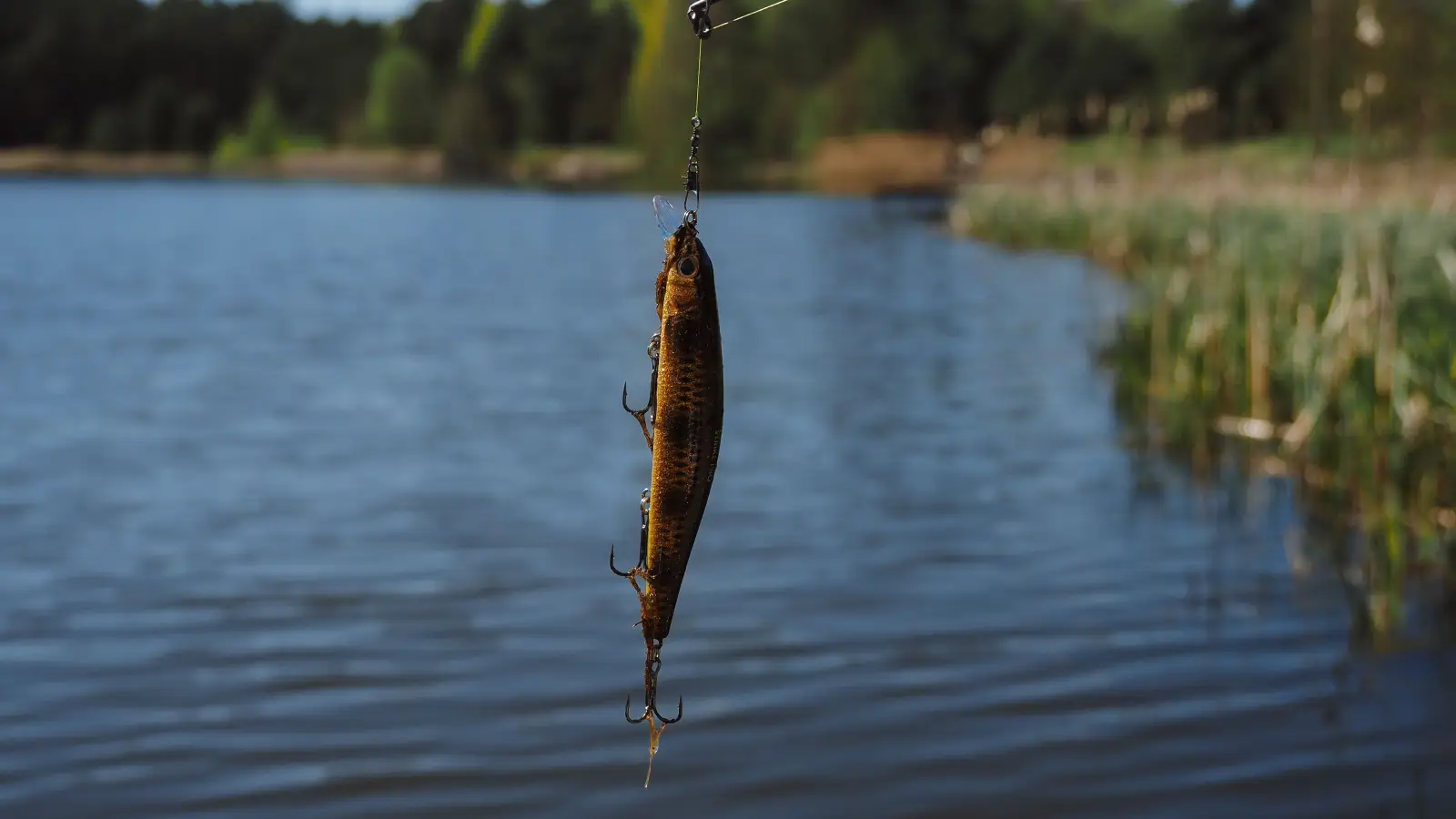
The crankbait angler swings with the same intent, but the thin wire and small points react differently. The rod's stiff tip snaps to attention, delivering a sharp, brief yank. The treble points lack mass to punch deep and lack stiffness to resist the load—they flex and pull out the moment tension peaks. Instead of sinking in, they tear free, often on the first head shake.
Energy Transfer: Efficiency vs. Control
A fast rod transmits an angler's motion to the lure with minimal loss—great for driving one big hook, terrible for trebles. The efficient, high-acceleration pulse overshoots the holding power of fine wire. A moderate or slow rod bends farther down the blank, stretching the impulse over a longer interval. That gives the small hooks time to find a hold and maintain it during the fight, rather than overwhelming them.
The Fight: Shock Absorption Matters
After the hookset, a fish's thrashing delivers shock loads. A fast rod's narrow flex profile offers little cushion. With a deeply embedded single hook, that's manageable. With treble hooks, every head shake works against the tiny contact patches. A softer rod absorbs those shocks and keeps tension steady, reducing pullouts.
Where Fast Action Belongs—and Where It Doesn't
When to Choose Fast Action
Fast or extra-fast rods are the right call for any lure using a single heavy-gauge hook. Texas-rigged soft plastics, jigs, Carolina rigs, and flipping baits all benefit. The stiff tip drives hooks through plastic, weed guards, and tough mouth tissue, and the backbone controls fish quickly around cover.
When a Fast Action Rod Becomes a Liability
Lures with exposed treble hooks—crankbaits, jerkbaits, topwaters, spybaits—need a rod that gives. A moderate or moderate-fast blank bends deeper, slowing the hookset enough for small points to embed rather than rip. Anglers who stick with fast action for these baits commonly lose fish at the strike or after a jump, not because of weak hooksets, but because the rod works against the hooks.
Line Type Complicates the Picture
Braided line has near-zero stretch, so a fast rod plus braid delivers an instant, undampened hookset. For treble lures, that combination guarantees torn-out hooks. Monofilament or fluorocarbon add some give, but the rod's flex pattern is the primary governor of how energy reaches the hook points. Changing line doesn't fix an action mismatch.
Why Stiffer Doesn't Mean Stronger
The biggest misconception is that a stiffer, faster rod equals a harder hookset. Reality: hookset success with treble hooks comes from controlled energy, not raw power. In the rocky point example, the crankbait angler matched the jig angler's force. The stiffer rod transferred that force as a violent yank that the light wire hooks couldn't survive. The rod that lands the fish isn't the one that flexes least; it's the one that flexes in sync with the hooks it carries.
Frequently Asked Questions
What's the difference between fast action and slow action?
Action describes where a rod bends. Fast action bends in the top third, moderate in the top half, slow through the whole blank. Fast action gives quick tip recovery and more sensitivity; slow action provides deeper flex and more shock absorption.
Can I use a fast action rod for crankbaits if I sweep the hookset?
Sweeping helps by spreading the force over time, but the rod's inherent tip speed still works against you. A moderate action rod does the same thing mechanically, more consistently. You'll lose fewer fish with the tool designed for the job.
What rod action should I use for topwater lures with treble hooks?
Moderate or moderate-fast. Topwater strikes are often violent and short-lived; a softer rod keeps the hooks in contact longer and cushions the fish's lunges, while a fast rod tends to jerk the bait away before a solid connection forms.
Isn't a fast action rod always more sensitive?
A fast rod transmits vibration more directly because its stiff tip doesn't dampen it. That improves bite detection. But sensitivity isn't everything—if the rod helps you feel the bite but can't keep the fish pinned, you've traded the catch for feedback.
How do I know my rod's action is costing me fish?
When you feel a good hookset, the fish is on for a moment, and then it comes unbuttoned after a head shake or jump—especially with treble baits—your rod is likely too fast. Switch to a moderate action and notice how the small hooks stay connected.
Match the Flex to the Hooks
Back at that rocky point, the jig angler's fast action rod was the right choice: stiff tip, single stout hook. The crankbait angler needed a rod with more give, not more guts. The practical shortcut is simple—single hooks call for fast action; treble hooks demand moderate. Let the lure's hooks pick the rod, and you'll put more fish in the net.