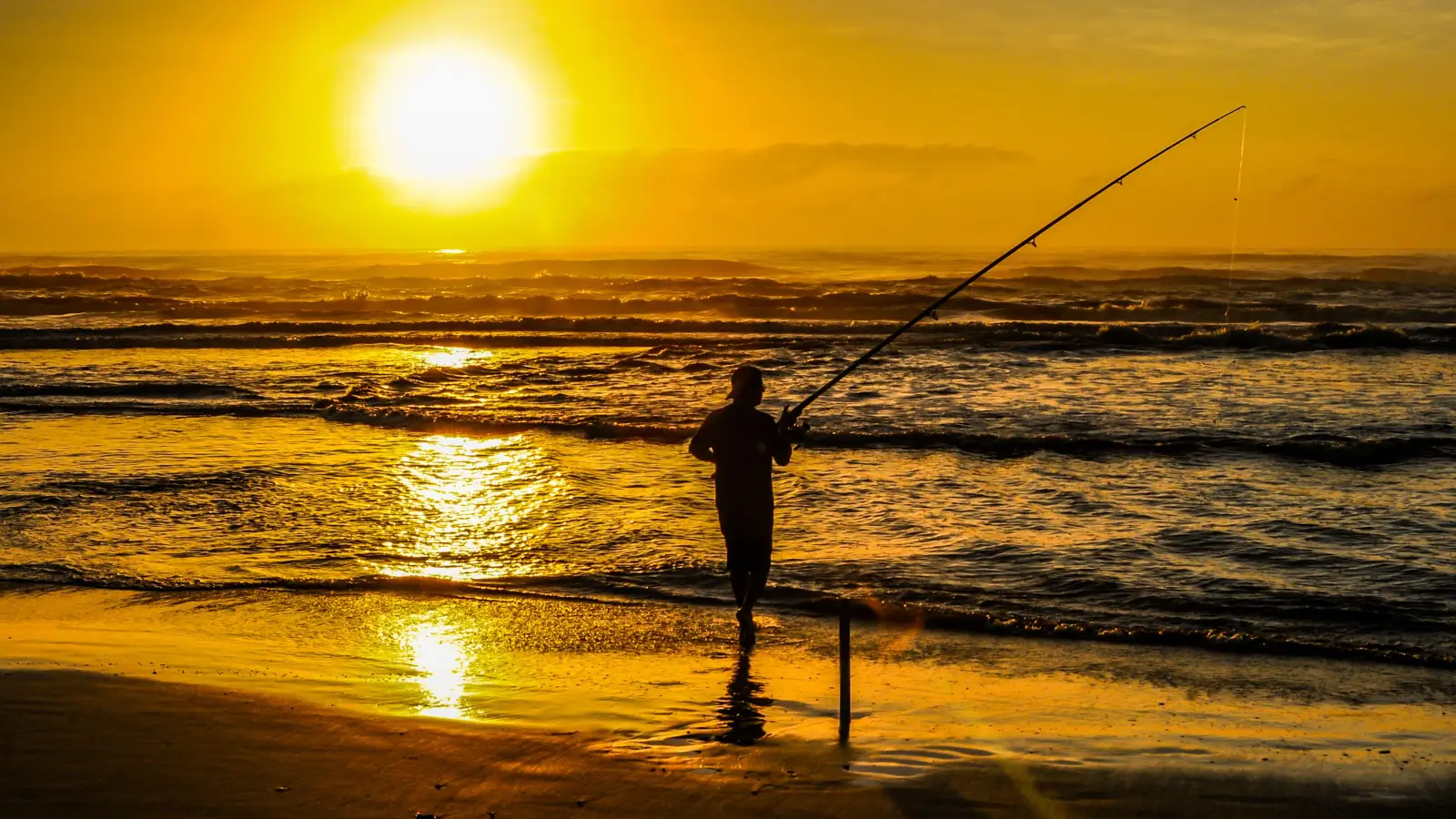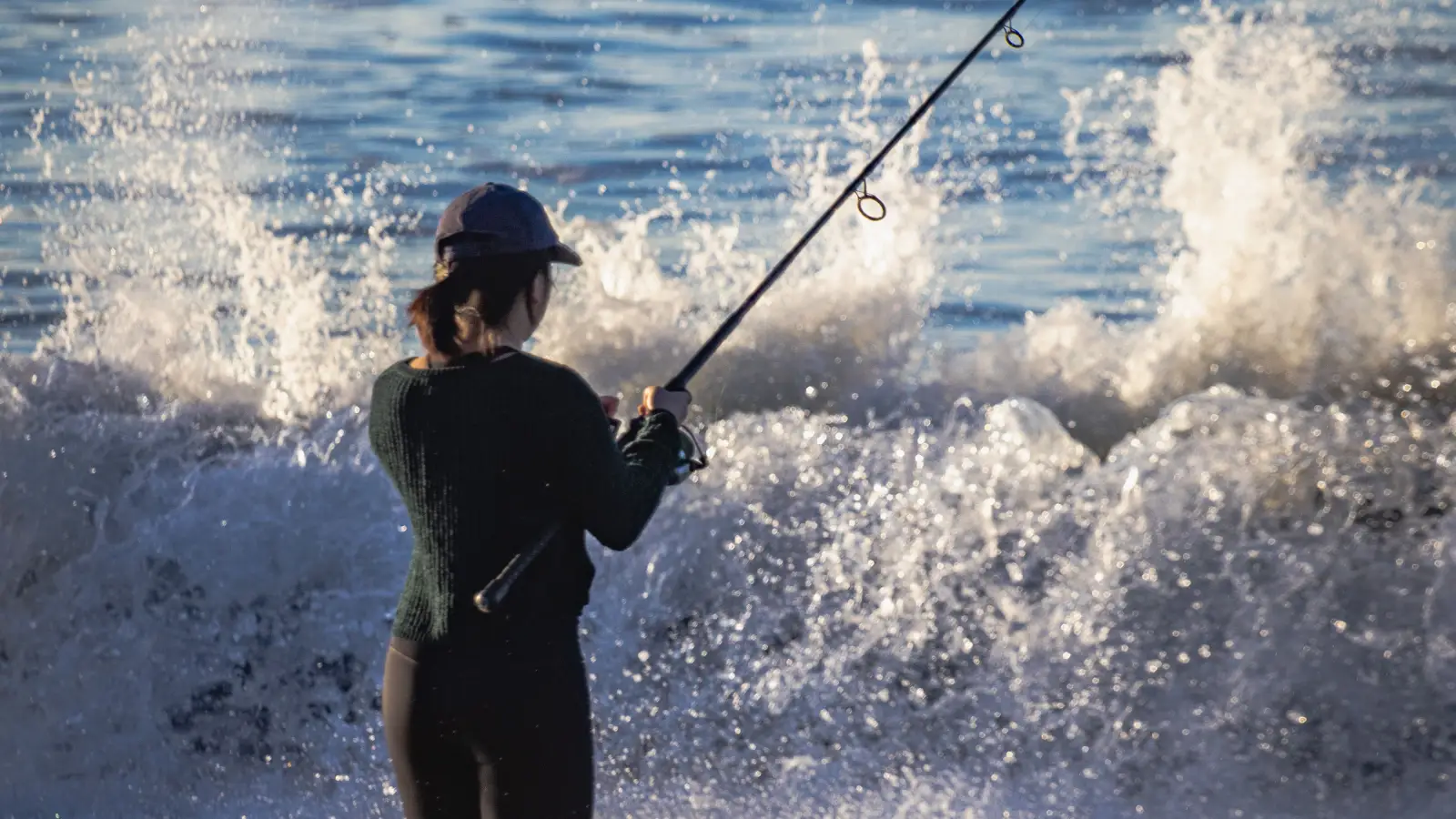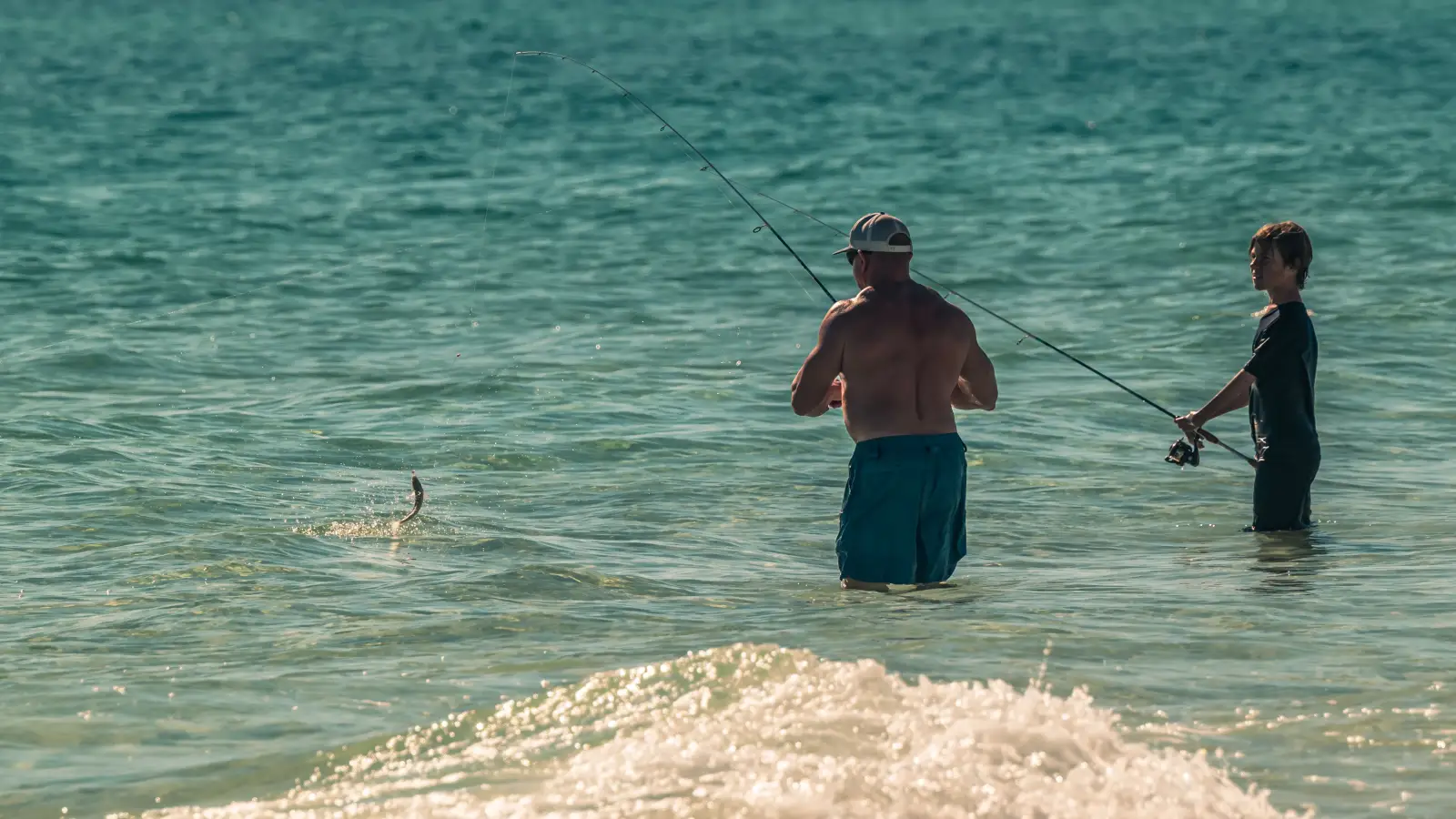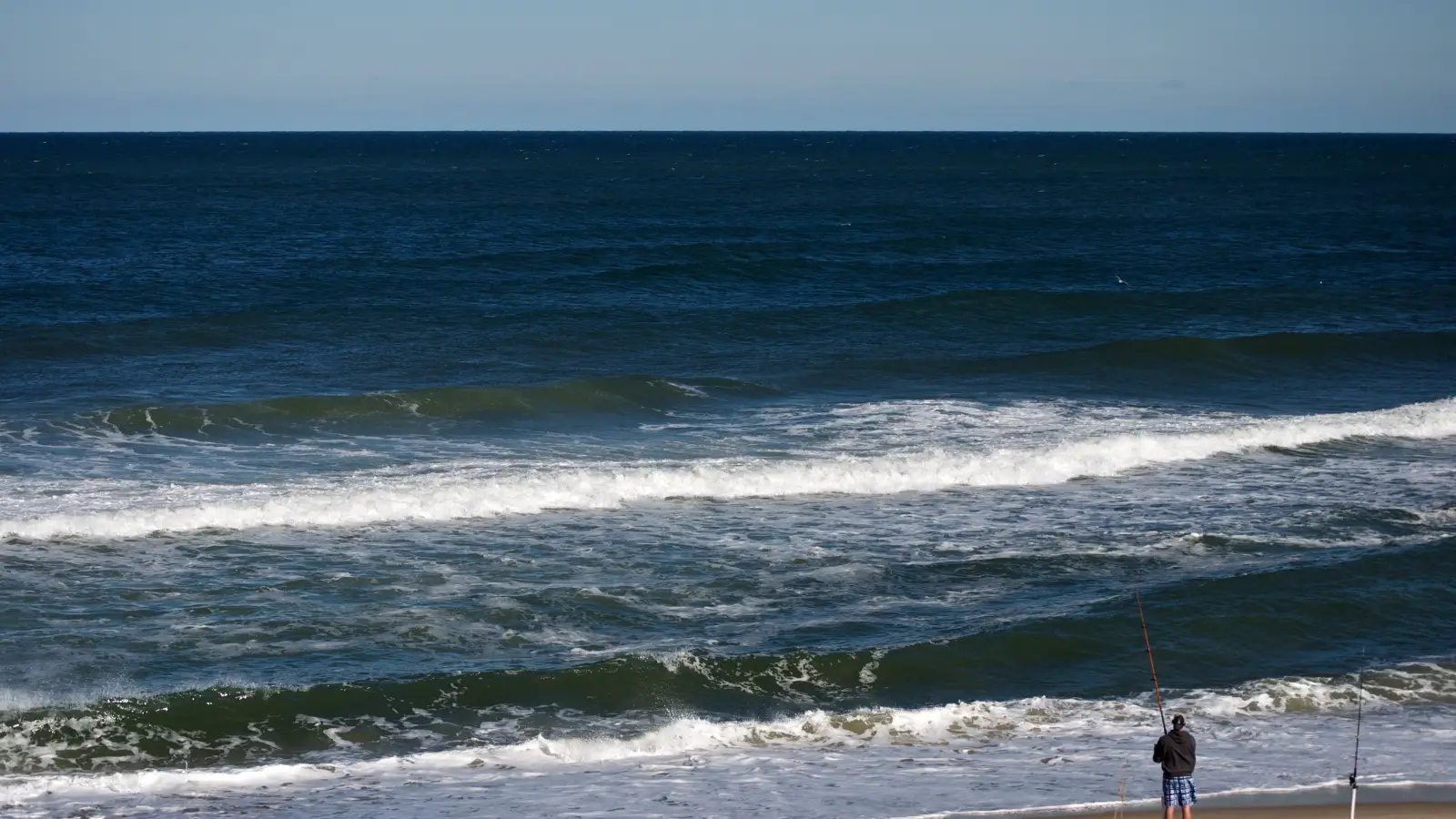
Breaking waves trace the underwater landscape line by line. Every trough, sandbar, and current edge shows itself at the surface—if you know how to look. This article lays out a visual system for surf fishing that needs no electronics, no boat, and no local knowledge. Just your eyes, the beach, and the water in front of you.
The Beach Is Your Depth Finder
A surfcaster standing on dry sand faces one problem: fish don’t leave tracks you can see. But the water does. Wave shape, foam movement, and the dark gaps between breakers act like a live chart of the bottom. Once you can read them, choosing where to cast becomes a decision based on structure, not guesswork. The following steps build that skill from scratch, using only what’s visible from the shore.
Quick Reference: Visual Surf Reading Checklist
- Decide whether the waves are spilling or plunging—that tells you slope and depth.
- Follow the foam line and note its drift direction to lock onto current seams.
- Locate dark, smooth gaps with few breaking waves; those are rip currents.
- Spot where waves crest twice (outer bar, then beach) and target the trough between.
- Find points or cuts that break the pattern—bait and fish concentrate there.
From Wave to Fish: Decoding the Water’s Surface
1. Wave Shape Reveals Bottom Depth
Spilling waves crumble from the top down, spreading white water across a wide face. They form over gradual slopes and broad, shallow sandbars. Plunging waves jack up suddenly and throw a hollow lip—the sign of a steeper bottom drop.
For the angler, this difference dictates where to look. Spilling breakers usually mean a flat, sandy bottom that doesn’t concentrate fish tightly; you need to find a cut or a disruption in the bar that creates deeper water. Plunging breakers signal a sharp trough just inside the break, where predators like striped bass or bluefish wait for bait swept over the bar.
If the entire beach shows uniform spilling waves, walk until you see a spot where a wave suddenly plunges or where the foam line breaks and reforms. That transition is often the sweet spot. When plunging waves dominate the stretch, focus on locating the outer bar and the deep trough behind it—cast into that dark channel.
2. Foam Lines and the Longshore Drift
After a wave breaks, the foam it leaves behind isn’t random. It drifts with the surface current, marking a seam between moving and still water. Watch the drift for a minute or two. If foam slides consistently left, you’re seeing a longshore current pushing in that direction. Fish hold on the slower side of that seam, facing into the flow to pick off food.
Match the foam line to a structural feature—a trough edge, the margin of a rip, or a small point. Where drifting foam runs next to deeper water, you’ve got a high-percentage zone. A narrow, fast-moving foam line tends to pin fish right beneath it. A wide, lazy drift spreads them out along the seam.
3. Reading Rip Currents—The Dark Avenues
Rips stand out as lanes of darker, smoother water flowing seaward. Waves rarely break inside them; the surface looks confused but organized, often with a slight hummock or a thread of debris pulling offshore. Fish use these currents like travel routes. Small bait gets funneled out, and larger fish hang at the edges—especially where the rip cuts through the outer bar.
Cast to the sides of the rip, not the center. Work the boundary where moving water meets breaking waves. That seam is where predators sit, conserving energy while watching the flow. If several rips are visible, target the one with the most distinct edges and the strongest outflow. A weaker rip may still hold fish, but the bite windows are shorter.
4. Sandbars and the Two-Break System
Plenty of surf beaches have a double-break pattern: a wave crests on the outer bar, dies down in the trough, then re-forms and breaks again on shore. The deep water between those breaks—the longshore trough—is the primary highway for fish.
Scan from the horizon inward. Find the farthest point where waves first stand up—that’s the outer bar. Track the same wave as it moves in. If it collapses and takes a noticeable pause before breaking a second time, you’re seeing the trough. The longer that pause, the wider and deeper the channel. If the wave rolls straight in without a lull, the trough is shallow or gone, and fish likely push closer to the beach on a high tide.
Tide changes shift the pattern. Low tide can expose the outer bar or bring it near the surface; fish often pull off into deeper adjacent channels. Flooding water lets fish move right into the swash zone. Adjust your positioning accordingly.
5. Points, Cuts, and Structure That Concentrate Fish
A straight, featureless stretch spreads fish thin. They stack up where the bottom changes shape. A point—a finger of sand reaching seaward—creates eddies on its down-current side. A cut—a narrow slot in the outer bar—squeezes water and bait into a tight funnel. Fish often sit just inside the cut, in the trough, or on the down-drift lip of a point.
Spot these features from the beach by watching how the wave pattern breaks. A cut shows as a sudden gap in an otherwise continuous outer break. A point appears where the outer break bends seaward, often with a patch of chop or swirl on the lee side. Disrupted foam lines and small, pulsing rips frequently mark those points and cuts.
Verifying Your Read After the First Casts
- If you picked the trough and get a strike within a few casts, your depth read was on target.
- No interest? Walk 50 yards in the direction the foam is drifting and try the next seam.
- Baitfish scattering or birds diving near your spot confirm you’re in the right zone.
- On a rip edge, feeling the lure swim without fighting current tells you it’s in the slack water.
When the Visual Cues Lie: Troubleshooting Surf Reading
No visible waves or foam—flat calm conditions
Flat water hides nothing of the bottom, but it still holds clues. Color shifts become the main tool: lighter patches over sandy bars, darker green or brown over deeper channels. Even a faint surface riffle can mark a current edge. Walk the beach and look for the smallest seam where two water masses meet; fish that seam.
High tide flooding the bar—fish move inshore
When the outer bar submerges completely, waves may break only on the beach. Fish often ride the rising water right into the wash. Shorten your cast and target the lip where waves finally collapse. The trough still exists, but it’s now landward of the bar.
Misreading a submerged rock or wreck as a sandbar
If a break stays in the same spot regardless of tide and never shifts form, it could be a hard structure. Fish relate to it similarly, so the read isn’t wasted. Cast to the deeper water just outside the break and the eddy behind it. The difference: this feature won’t change shape with tide, so consistency in where you fish matters more.
The wave pattern seems uniform everywhere
Some long beaches have an identical break for miles. In that case, stop hunting for bottom variation and zero in on current seams and foam lines. Even a weak, intermittent rip creates a seam that holds fish. Focus your time on reading water movement, not topography.
Once you can locate fish without electronics, the next move is learning to approach them without spooking—fresh angles, quiet footwork, and managing your shadow and line in the surf zone.
Frequently Asked Questions
Can I really find fish on a flat day with no waves at all?
Yes. While waves make reading the bottom faster, a flat ocean still shows color breaks and subtle current seams. Darker water signals depth; even a barely visible line of smooth water against choppier water is a seam worth casting.
Does this technique work at low tide when sandbars are visible?
Absolutely. Low tide exposes the bottom architecture—troughs, cuts, rips—so you can scout the layout before the water rises. Come back at high tide and fish the same features you mapped.
What if the foam line is broken up and messy?
A fragmented foam line often means multiple currents clashing, which can scatter bait. Still, target the edge where the broken foam meets clean water; that’s usually the steadiest seam. If no clear drift emerges, walk to a section with more organized wave energy.
Does this work for all species of surf fish?
The rule—structure attracts bait, bait attracts predators—holds across species. But each fish has its own preference. Redfish may patrol the trough on a falling tide; striped bass often work rips at dawn. Use the surf read to find the structure, then tailor your presentation to the target.
How long should I watch the water before casting?
Five minutes is enough to nail the primary features: breaker type, foam drift, rip locations. Spend another five minutes walking the beach to confirm subtle points or cuts before you commit to a spot.