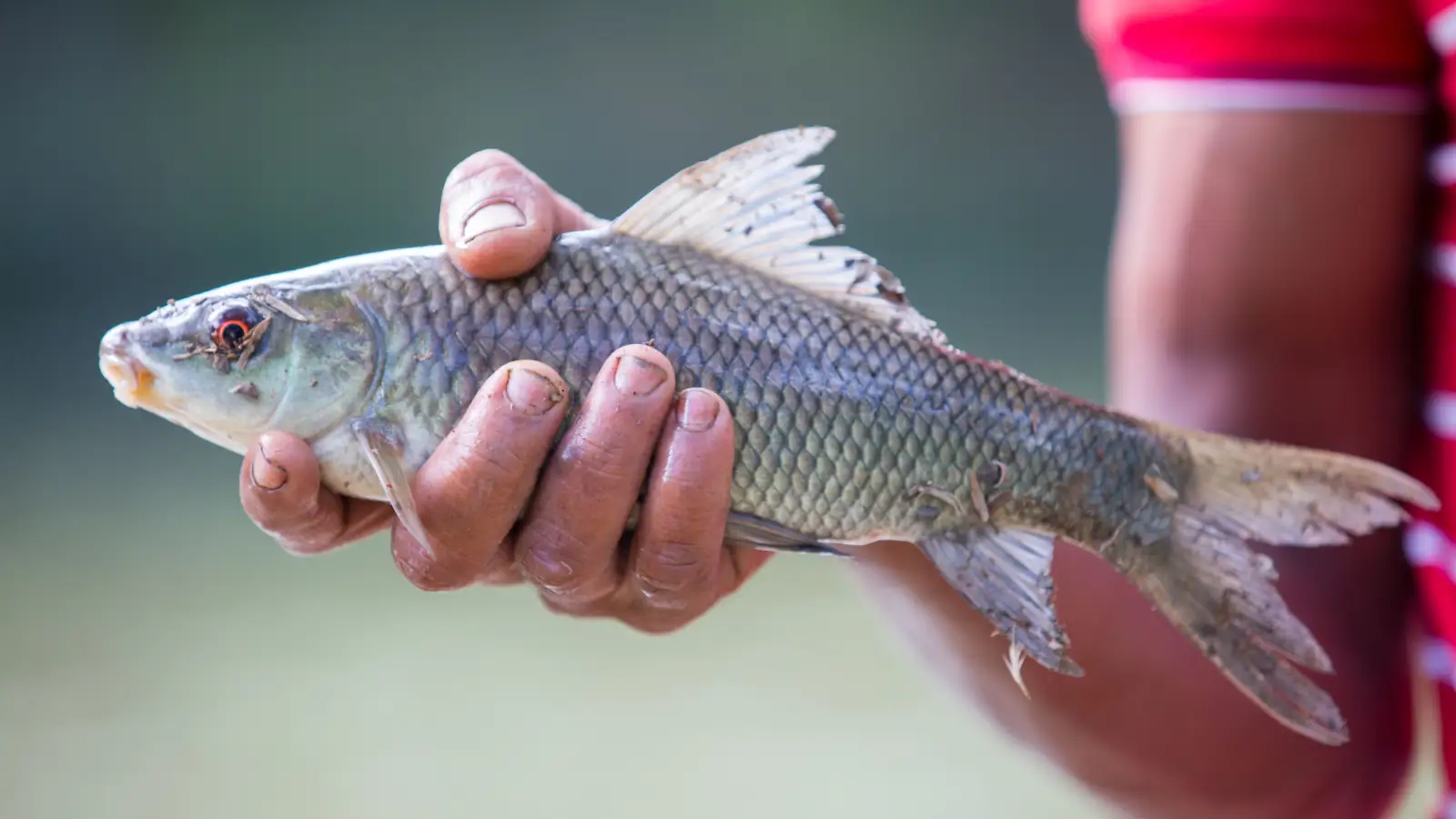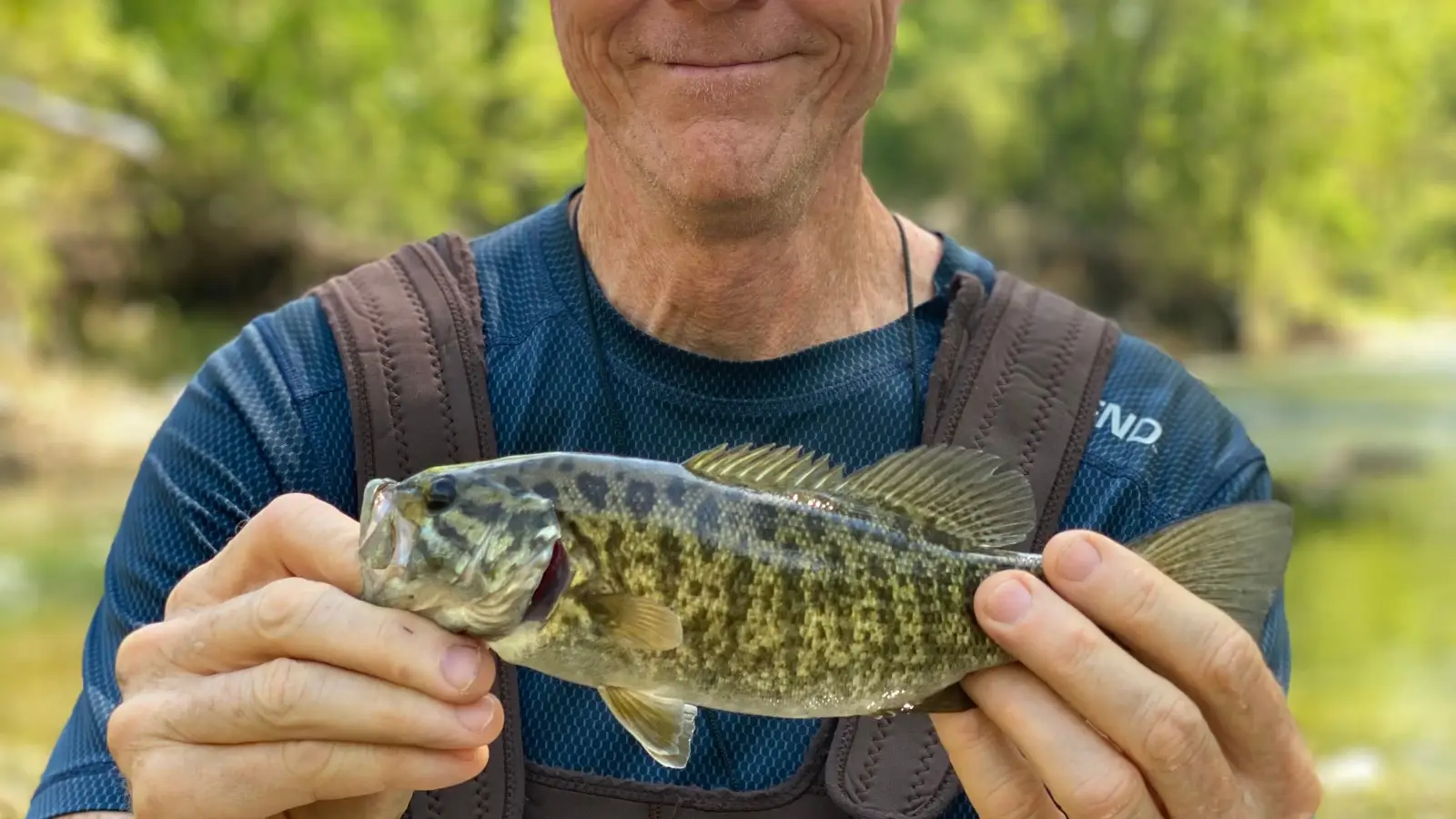
The fish in the riffle shows bronze and dark bars, so most anglers file it under bluegill. That’s the lazy call. Bluegill avoid current; they’re built for calm, weedy water. A fish that’s holding in broken, fast-moving water is almost certainly a smallmouth bass, and the river’s own features will confirm it. Forget squinting at markings — read the water instead. Current speed, bottom type, cover, and geographic range reverse-engineer the fish’s identity, no cast required.
Why Riffle Sightings Routinely Get Mislabeled
You saw a fish in a riffle and your brain served up “bluegill” because that’s the mental shortcut — panfish profile, dark bars, done. The river, however, doesn’t do shortcuts. Bluegill belong in slow, warm, vegetated zones; they are not riffle residents. Once you start reading the habitat instead of the markings, the identification becomes obvious before you ever tie on a fly.
Seven Quick Checks That Sort a Riffle Fish’s ID
- Current speed: anything above 1 mph of sustained flow points to smallmouth; bluegill normally won’t tolerate it.
- Bottom material: gravel and cobble = smallmouth water; mud, silt, or heavy vegetation = bluegill territory.
- Cover type: fish holding behind boulders or ledges in the current are smallmouth; those buried in weed beds say bluegill.
- Geographic location: cool, rocky streams in the Midwest, Northeast, or Ozarks lean smallmouth; warm, sluggish southern creeks tilt bluegill.
- Size and shape: an 8- to 14‑inch fish in a riffle is almost always a smallmouth; bluegill top out smaller and have a round, compressed body.
- Combine the signals: three out of four factors aligned with smallmouth settles the case.
- The cast confirms it: a smallmouth runs hard and stays deep; a bluegill makes tight, circling bulldog runs.
The River’s Identification System: Four Habitat Clues
Speed Exposes the Slack-Water Impostor
Smallmouth bass are current specialists — they actively hunt in water moving 1 to 3 miles per hour. Bluegill, by contrast, rarely hold in sustained flow over half a mile per hour. If the fish was stationed in a patch of water that broke the surface and made audible noise, the current already ruled out bluegill. Only where the water is a lazy glide does bluegill become a real candidate. When the speed clue is ambiguous, move to the bottom.
Bottom Tells You More Than the Fish’s Body
Smallmouth spawn and feed over hard, clean substrate: gravel, cobble, small boulders. Bluegill prefer soft bottoms with mud, silt, or sand where vegetation grows. Peer down: a mosaic of rocks and pebbles under the surface screams smallmouth. If you’re staring at a mud‑bottomed pool with milfoil tumbling in the current, you’re in bluegill headquarters. The bottom never mists over like color can.
Cover Splits by Type, Not Just Presence
In moving water, smallmouth use boulders and ledges as current breaks to ambush prey. Bluegill tuck into thick weeds or submerged wood in quiet areas. Ask where the fish vanished: behind a boulder in mid‑current? That’s smallmouth architecture. Into a mat of coontail along a slow bank? Bluegill. The style of cover aligns perfectly with each fish’s feeding tactics.
The River’s Address Narrows the Candidate List
Smallmouth need cool, oxygen‑rich water. They dominate the upper Mississippi, Ohio, and Great Lakes basins and persist in high‑gradient creeks, tailwaters, and spring‑fed rivers farther south. Bluegill are generalists — they occupy nearly any warm, slow water. If you’re fishing a freestone stream in the Ozarks or a rocky river in New England, smallmouth are the expected answer. In a warm, sluggish creek in Georgia, the bluegill odds rise to near‑certainty.
Cross‑Check and Overrule the Markings
When you stack the clues — fast water, rocky bottom, boulder cover, cool‑water region — you’ve got a smallmouth identity at better than 90 percent certainty. Juvenile smallmouth often wear dark vertical bars that mimic panfish. Color and pattern, at that point, are just noise. The habitat is the fingerprint that doesn’t smudge.
Confirm Each Clue Before You Trust the Cast
- Speed verified: you measured or eyeballed current at over 1 mph in the fish’s holding spot.
- Bottom read: at least half the visible substrate is gravel or cobble, not mud or sand.
- Cover observed: the fish used a rock, boulder, or ledge for cover, not a weed bed.
- Region matched: the waterbody sits in a recognized smallmouth watershed or cool‑water refuge.
If you can check all four, the ID is solid. If one check is uncertain, let the remaining three carry the verdict.
When the Water Throws a Misdirection
The fish sat in a slow eddy in the middle of the riffle. Slack pockets inside fast water can temporarily hold a bluegill chasing a hatch. Look at the dominant habitat — if the river overall is fast and rocky, the territory belongs to smallmouth. Also watch the fish’s escape route: a bluegill bolts for weeds, a smallmouth drops back into the current.
You’re in the South and the stream looks riffly. Smallmouth in warm climates hang on only in cool refuges — spring creeks or tailwaters below dams. Check the water temperature. Above 80°F, smallmouth are rare and bluegill take over the shallows.
The bottom reads sand, not gravel. Smallmouth tolerate mixed sand if there are scattered rocks and decent flow, but a flat, featureless sandbar with no current break is bluegill habitat. If you spot rocks within that sand, stay with smallmouth.
Questions Anglers Ask About Riffle Fish
Can a bluegill ever live in a riffle?
They’ll visit a riffle briefly to snap up drifting insects, but they lack the physiology to hold there for long. A fish that stays put in fast water for minutes at a time has current‑adapted gills and fins — a smallmouth signature.
Do smallmouth and bluegill share the same water?
They often coexist in the same river, but they self‑sort by current. Smallmouth take the faster, rockier stretches; bluegill occupy the quiet backwaters and side channels. The dividing line is usually the current seam.
Why is color so unreliable?
Water clarity, light angle, and stress can alter a fish’s appearance in seconds. The habitat is a fixed set of physical conditions that don’t change from minute to minute. Trust the river’s constants, not the fish’s wardrobe.
If the fish is small, could it still be a smallmouth?
Yes. Juvenile smallmouth often show bold vertical bars that look exactly like bluegill. Check the body shape — smallmouth are more elongated, and their jaw reaches the rear of the eye, while a bluegill’s mouth is tiny and puckered. When in doubt, fall back on the habitat clues.
What Knowing the Species Does for Your Next Cast
Your identification isn’t just corrective — it changes tactics. A smallmouth in a riffle wants a crayfish‑pattern crankbait, a tube jig, or a topwater plug, not the mini panfish lures you’d use for bluegill. Work from upstream and let the current do the presentation work. The river told you which fish is there; now let it deliver the strike.