When you lift a fish from the water and your palm comes away slick, you're holding the animal's most vital defense. That slippery coating is not waste; it's a living armor packed with infection-fighting compounds. Every time it leaves the fish and sticks to your hands, a net, or a boat deck, the animal's chance of surviving release drops. The answer is not just to avoid towels—it is a three-step wet-prime protocol that treats the slime layer as the fragile, living shield it is, from the instant the fish is hooked until it swims free.
The Fish's Slime Coat: A Living Armor, Not a Mess to Wipe Away
The mucus coating is a rich mixture of glycoproteins, enzymes, antibodies, and antimicrobial proteins secreted by cells just beneath the skin. It forms the fish's primary immune barrier, trapping pathogens and neutralizing them on contact. It also keeps the internal salt-water balance steady—stopping a freshwater fish from bloating and a saltwater fish from dehydrating. Beneath that layer, minor scrapes heal fast. Strip it away, and the naked epidermis is open to bacteria, fungi, and osmotic stress that can lead to fatal infections later. The slime is the fish's skin of its skin; it's not something to clean off.
How a Single Dry Touch Starts a Chain of Damage
Dry human skin acts like a sponge on the slime coat. Even a quick grab can pull away a visible smear, but the deeper harm happens at a microscopic level: tiny fissures open in the coating, letting water and pathogens seep in. The same holds true for dry nets, boat carpet, rubber mats, and any other surface a fish might touch. Each point of contact scrapes more of the barrier away. A fish that gets netted, handled, laid on a dry board for a photo, and released may swim off looking fine, but its immune shield is now riddled with gaps. Days later, a bacterial or fungal infection can set in, often with no visible sign until it's too late. Biologists have linked mortality in released fish to compromised slime coats, even when handling appeared gentle.
A Three-Step Protocol That Keeps the Shield Intact
The solution is simple: never let anything dry touch the fish. This wet-prime sequence makes that happen.
Step 1: Start with Soaking-Wet Hands
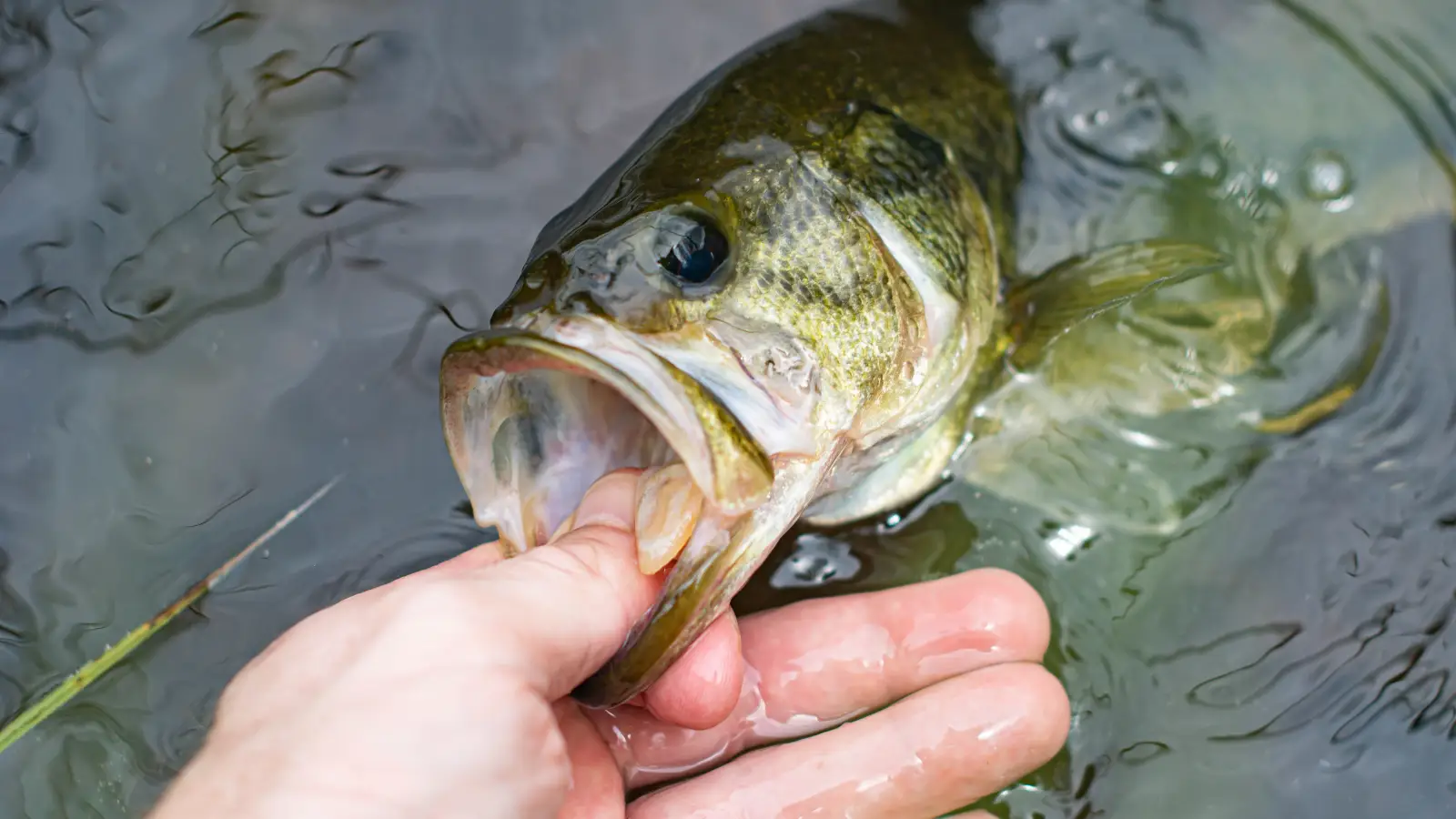
Before you reach for a hooked fish, submerge both hands fully and leave them dripping. The water film acts as a slip layer, so the slime slides along the surface instead of sticking. Pay attention to how fast your hands dry—if you're in wind or warm sun, dip them again mid-handle.
Step 2: Prime the Landing Net and the Unhooking Zone
Dunk the entire net bag in the water before it cradles the fish. Even a rubber net, which is already smoother than twine, will drag slime if it's dry. Right after, wet the unhooking mat, the boat deck patch, or any surface the fish might rest on. A quick slosh of water on these surfaces creates a hydrated landing zone that mimics the fish's own environment.
Step 3: Cradle with Wet Care, Not a Tight Grip
Lift the fish with wet palms gently under the belly and near the tail, supporting its weight without squeezing. Avoid clamping the gill covers or the tail. Keep the fish over water whenever possible so any lost drips fall back onto its body. If a photo is needed, have the camera ready before the fish exits the water—cut the time it spends on any dry surface to nearly zero.
Why This Routine Actually Protects the Fish
The wet buffer you create with soaked hands, a wet net, and a wet landing spot keeps the slime where it belongs—on the fish. It's a few seconds of preparation that can mean the difference between a fish that heals and one that fades silently days later.
Handling Myths That Quietly Harm the Fish
"A towel is gentler on the fish than bare hands." A towel is one of the worst things for the slime coat. Its fibers wick mucus away immediately and leave microscopic scratches that invite infection. If you intend to release the fish, a towel should never touch it.
"I wet my hands, so the net and deck don't matter." A dry net strips slime as fast as dry fingers. The deck or mat will do the same. Every surface that meets the fish needs to be wet, not just your hands.
"Lip grip tools keep the slime safe." These tools concentrate pressure on a small patch of jaw and don't stop the body from thrashing against dry boat sides, boots, or decking. They can puncture the lower lip, creating another opening for pathogens. For release fishing, they're best left in the tackle box.
"If I release it fast, it doesn't need its slime." A fish let go quickly but with its slime coat shredded can still die from a slow infection in the following week. The damage is cumulative, and the consequences are often invisible until it's far too late.
Quick-Reference Guide: The Wet-Prime Protocol at a Glance
| Step | Action | Why It Matters |
|---|---|---|
| 1 | Wet your hands first | Forms a water barrier that reduces slime transfer |
| 2 | Submerge the net bag before use | Cuts dry friction that rips mucus away |
| 3 | Wet the unhooking surface | Stops slime loss on dry mats or decks |
| 4 | Cradle with wet support, minimal pressure | Distributes weight without scraping the coat |
| 5 | Re-wet as handling progresses | Maintains the hydrating buffer throughout |
What to Remember About Fish Slime Protection
- The slime coat is a living immune defense, not a nuisance.
- Any dry contact—hands, net, deck—tears away that barrier.
- Seconds of dry handling can lead to death days later from infection.
- The wet-prime protocol (wet hands, wet net, wet landing zone) is the most reliable way to stop slime loss.
- Towels, dry cloths, and lip grip tools have no place in a release.
Common Questions About Slime-Safe Fish Handling
Does wetting my hands really matter if it's only for a second?
Yes. A film of water on your skin acts as a physical slip-layer that lets the slime stay on the fish. Even a moment of dry contact can pull enough mucus to weaken the immune defense.
I use a rubber net—do I still need to wet it?
Absolutely. Rubber is less abrasive than nylon but it still grabs slime when dry. A dunk before landing makes a clear difference.
If I'm releasing several fish in a row, must I re-wet between each?
Yes. Hands and net dry out. A quick dip before handling the next fish restores the protective water buffer every time.
Can a lip grip tool be used safely if I keep the fish in the water?
Not really. The tool can damage the jaw, and the fish's body may still scrape against the boat or your wading boots. Wet-hand cradling is gentler on both the slime and the fish's internal skeleton.
The one habit that changes everything is making wet hands, a wet net, and a wet landing surface an automatic part of every catch. The slime coat is the fish's quiet armor—keeping it whole means the difference between a fish that thrives after release and one that never recovers. Start with soaked hands, and the rest of the routine becomes second nature.