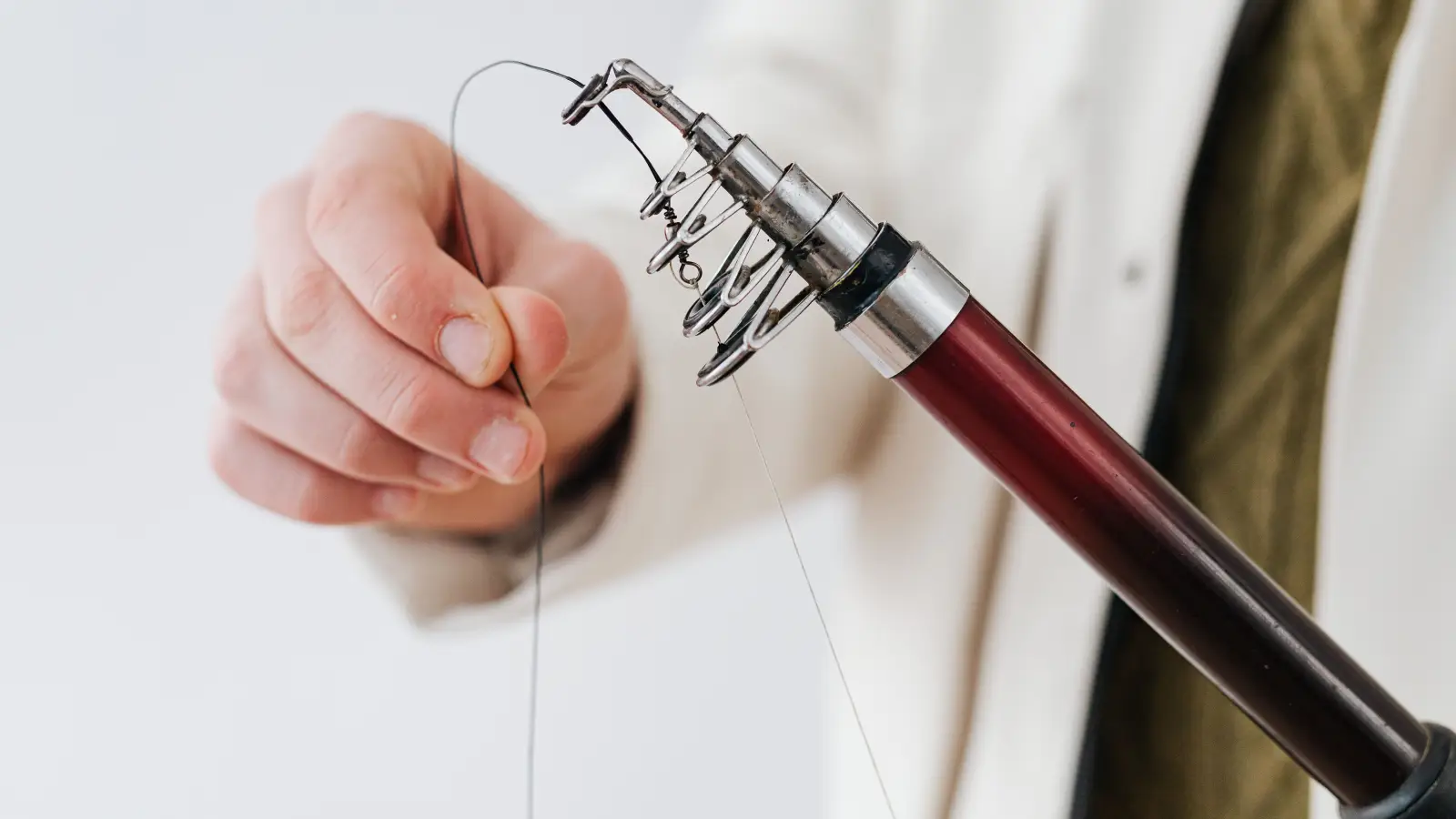
Most knot guides obsess over tensile strength, but a knot that scores 100% on a pull test can still fail you the moment its bulk smothers a finesse worm’s action or blunts a subtle pickup. The rule that’s missing: knot size and shape dictate how a lure moves and whether a bite registers — far more than a few pounds of breaking strain ever will. This guide replaces the strength-first reflex with a decision pathway that selects knots by how they interact with your presentation, not just the lab numbers.
The Quiet Cost of a Bulky Knot
Adding even a few millimeters of knot mass near the lure eye changes the bait’s behavior immediately. Light lures — weightless stickbaits, small dropshots, tiny jerkbaits — rely on precise weight distribution to produce the dart, wobble, or spiral that triggers a strike. A fat knot at the eye acts like a miniature sea anchor: it adds drag, disrupts balance, and turns that intentional twitch into a lazy slop. In clear water especially, where fish case a bait before committing, that lump can be the one detail that makes a bass refuse. A bulky knot also often carries a longer tag end or a stiff kink that alters tracking, introducing unnatural micro-wobbles detectable from below.
Profile Matters: How Knot Shape Influences Bite Sensitivity
A knot standing proud of the line — think of a hastily cinched clinch knot — creates friction as it moves through water and rod guides. That friction translates into noise and damping at the rod tip, the kind that turns a firm pressure tick into a vague nothing. A slim, flush-to-the-line knot like a properly seated San Diego Jam or an FG connection for leaders slips through guides with minimal interference, preserving the subtle information that matters. For bottom-contact baits where a fish inhales and barely moves, strike detection lives or dies on how cleanly the knot transmits vibration. Bulk isn’t just about look; it’s about feel.
The Decision Flowchart: Selecting a Knot by Lure Type and Presentation
Before reaching for a knot based on memory or strength, run through this sequence. It prioritizes the effect on the lure’s job.
Step 1: How much will the knot’s bulk alter the intended lure action?
- Finesse and light-line baits (dropshot, Ned rig, hair jigs): Bulk kills action. Choose the lowest-profile knot that’s reliable with that line.
- Power presentations (spinnerbaits, crankbaits, swimbaits): Action comes from the retrieve speed and the bait’s lip or blade; a knot’s bulk has a smaller effect, but don’t ignore it entirely — a chunky knot can still collect grass or throw off a crankbait’s tracking.
- Topwater walkers and poppers: A bulky knot at the nose interferes with the dog-walk cadence or creates extra surface splash in calm conditions. A compact Palomar or a precisely sized loop knot gives cleaner action.
Step 2: Is strike detection a priority?
- Slow bottom-contact where fish inhale subtly: Profile that stands off the line robs sensitivity. Streamlined knots (FG, Alberto, snug Uni) transmit more.
- Fast-moving hard strikes (buzzbaits, burning a spinnerbait): Detection is almost automatic; profile matters little.
Step 3: Will the knot survive the hookset and abrasion?
Strength enters last. With the action and sensitivity requirements already narrowing your options, pick the strongest knot from that category you can tie reliably. For instance, a uni knot works for many situations with a decent profile, but connecting heavy fluoro with a double uni creates a clunky junction. In that spot, an FG knot supplies slimness and top-end strength.
How Line Type and Diameter Shape the Bulk Equation
Knot bulk is relative to line thickness. With 10-pound braid (thin, often breaks at 20+ pounds), knots nearly disappear beside the lure. Switch to 20-pound fluorocarbon — stiff, thick — and the same knot becomes a visible ball. Line suppleness matters too: limp braids allow knots to cinch down tight and flatten, while inflexible mono or fluoro resists compression, leaving a larger profile. Leader knots add a second bulk point. When you join braid to fluoro, an FG knot creates a long, thin, smooth passage; a surgeon’s or double uni produces a double-thick lump that catches guides and kills sensitivity during the cast. For finesse leaders under 12-pound test, the Alberto knot offers a practical middle ground between slimness and easy tying.
Two Scenarios Where Knot Bulk Betrayed the Bite
A clear highland reservoir in late summer. Dropshot rig with a 4-inch worm, Palomar knot snugged to the hook. The bait falls dead — no quiver. The knot’s mass prevented the worm from oscillating. Switching to a smaller San Diego Jam, half the bulk, lets the worm shimmy on the drop. Within five casts, a bass picks it up on the pause. The knot wasn’t weak; it was the action’s enemy.
Tidal river, striped bass cruising stained water. A topwater spook tied with a big loop knot to allow movement, but the loop hangs and drags a V-wake on the surface. Fish short-strike or pass. Replace with a smaller perfection loop — just enough play for the walk, tight enough to reduce drag — and the surface disturbance cleans up. Hookup rate climbs.
Neither initial knot failed on strength. Both failed on presentation.
Key Takeaways
- Knot strength is only one input; bulk and profile usually matter more for triggering and detecting bites.
- Low-profile, streamlined knots preserve lure action and sensitivity, especially in finesse situations.
- A decision pathway — action → sensitivity → strength check — stops you from tying the wrong knot on autopilot.
- Line type and diameter magnify or shrink knot bulk; the same knot behaves differently on braid versus fluoro.
- Test knots in clear, visible water before fishing; watch how the knot changes bait movement.
Frequently Asked Questions
Which knots have the lowest profile for finesse fishing?
The San Diego Jam, the improved clinch (trimmed flush), and the uni knot cinch to a small, tight profile. For braid-to-fluoro connections, the FG knot is the slimmest option.
If I tie a low-profile knot, am I giving up significant strength?
Rarely. Many compact knots — like the Palomar and San Diego Jam — rate near the top in strength tests. The task isn’t to sacrifice strength for slimness; it’s to choose, among strong knots, the one that lets your bait perform its job.
How do I know if a knot’s bulk is hurting my bait’s action?
Test in clear, shallow water where you can watch closely. Tie your usual knot, then switch to a known slim version and compare twitch, fall, and swim. If the bait moves differently, the bulky knot is stealing performance.
Can I use the same low-profile knot for everything?
A universal slim knot like the uni or San Diego Jam handles many situations, but specific presentations demand special knots — a loop knot for topwater walkers, for example. The decision pathway guides when to deviate.
Where to Start Next
Pick the two or three knot profiles your main presentations actually require, and tie them at home until they’re automatic. On the water, force the question: what does the lure need the knot to do? Answer that before tying, and you’ll convert more strikes than any incremental strength gain could deliver.