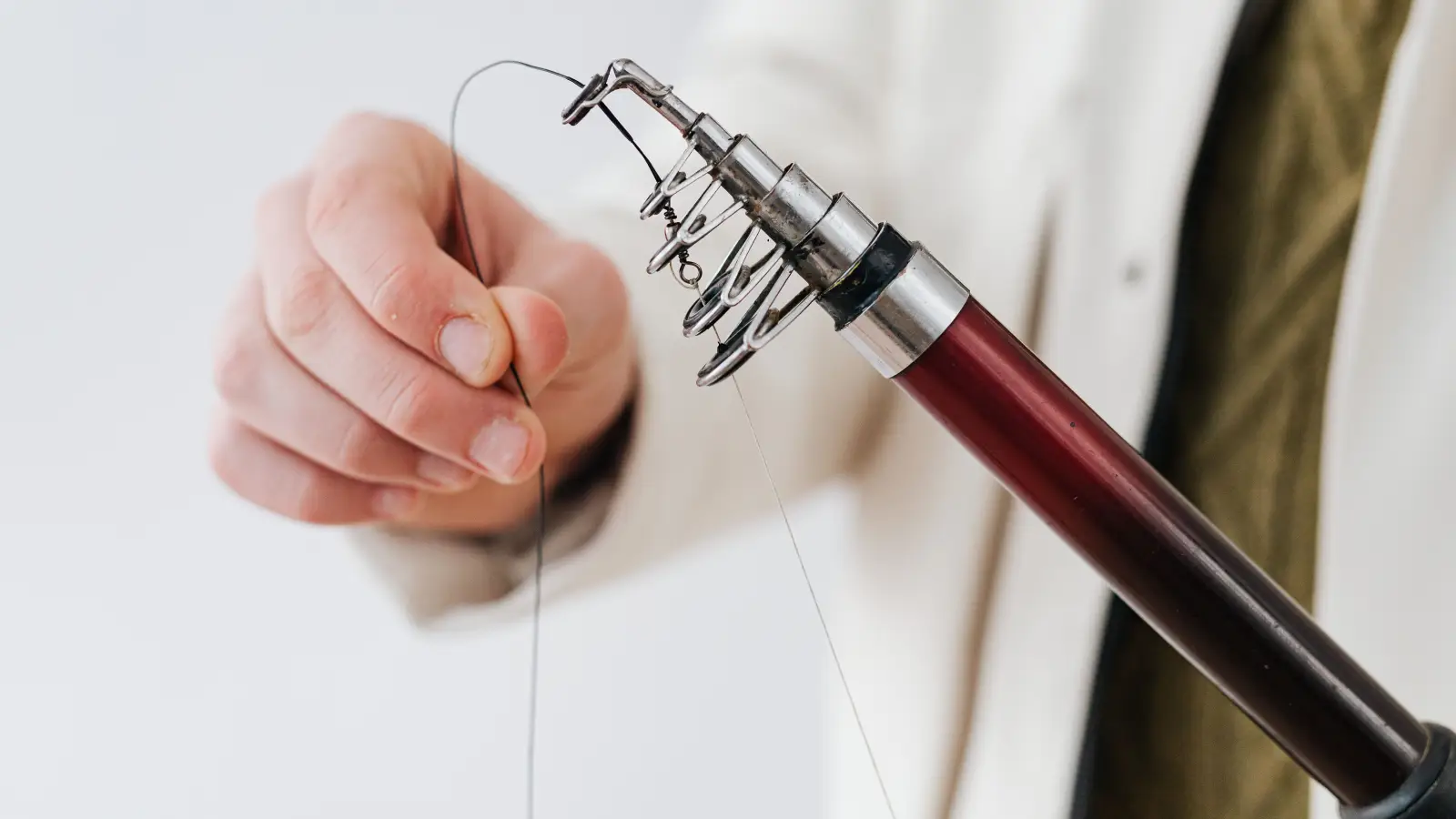
In clear water with light fluorocarbon, tie the Improved Clinch. The extra tuck does two things: it locks the slippery line so the knot won’t slip, and it creates a small bump that breaks up the line’s straight profile—making it less likely a wary fish sees it. The standard Clinch is faster, but that speed costs you fish when the water is clear.
Knot Performance in Clear Water: Side-by-Side
| Criterion | Improved Clinch | Standard Clinch |
|---|---|---|
| Visibility in clear water | The extra tuck adds a subtle bump that disrupts a straight-line silhouette, making it harder for fish to detect. | The knot is sleeker but presents a more uniform profile that alert fish may recognize as unnatural. |
| Security with fluorocarbon | The second pass through the eye and the tucked tag end hold better in slippery fluoro, reducing slip. | Can slip with light fluoro if not cinched perfectly; the tag end may pull through under sudden pressure. |
| Ease of tying | Requires one extra step (tucking the tag end through the final loop), adding a few seconds. | Quicker, with fewer wraps and no final tuck, making it ideal for fast reties. |
| Best for | Light fluorocarbon in clear water, cautious fish, and situations where knot failure means lost fish. | Murky water, heavy line, fast-moving baits, or when retying frequently without close inspection. |
Improved Clinch: The Stealth Edge in Clear Water
The Improved Clinch uses 5–7 wraps, then the tag end passes through the first loop near the eye and back through the big loop. That final step isn’t just security—it creates a contour at the eye. Fluorocarbon might be nearly invisible, but a straight line still catches light and looks like a boundary. The bump scatters light and breaks that outline, mimicking a natural irregularity, a bit of debris. Fish that inspect the line don’t spook as easily.
Then there’s the lock. Light fluoro is stiff and slick, so a knot that doesn’t hold will slip. The Improved Clinch’s double locking action—through the first loop and around the tag end—prevents that. It routinely retains 90% or more of the line’s breaking strain with fluoro, while the standard Clinch can fail at 60–70% if the tag end pulls. The only real downside is one extra step, and the knot might be bulky with micro jigs. In clear-water finesse fishing, that’s a trade worth making.
Standard Clinch: Fast but Unprotected in Clear Water
The standard Clinch is quick: five twists, tag end through, cinch. In stained water or with mono, it’s fine. Clear water with light fluoro exposes two weaknesses. First, the knot’s smooth profile looks like a line, not a camouflage. Fish conditioned to avoid lines will notice. Second, fluorocarbon’s slick surface means the tag end can slip unless you cinch it perfectly—and in wind or low light, you won’t. The standard Clinch doesn’t forgive mistakes.
In murky water, these issues don’t matter because fish can’t see the line. That’s where the standard Clinch belongs: fast reties in conditions where visibility is irrelevant. But if you’re targeting pressured fish in clear water, skip it.
Visibility, Security, and Speed: The Decisive Factors
Visibility is everything in clear water. The Improved Clinch’s bump is a real advantage; the standard knot’s sleekness is a liability. Security: light fluoro demands a lock. The improved knot locks twice, the standard once—and tests bear out the difference. Speed: the standard knot is faster, but in clear-water situations you aren’t retying every other cast. The extra seconds are irrelevant, so the standard’s speed becomes a red herring. Focus on the knot that hides the line and holds.
Choosing the Right Knot for Your Conditions
- Crystal-clear water with 4–8lb fluorocarbon: Improved Clinch, no exceptions. The visibility break and security are non-negotiable.
- Stained or turbid water, or heavy fluorocarbon (12lb+): Standard Clinch is fine. Line visibility is already low, and heavier line resists slipping.
- Fast reties in wind or low light: Standard Clinch for speed, but only if water clarity isn’t a factor.
- Ultra-finesse presentations with tiny flies or jigs: If the Improved Clinch’s bulk impedes action, switch to a standard Clinch or a purpose-built finesse knot like the Davy or Orvis.
Common Questions About Clinch Knots and Clear Water
Does the Improved Clinch weaken fluorocarbon?
Only if you tie it dry. Lubricate the knot, cinch slowly, and it’s no weaker than any other knot.
Is the standard Clinch strong enough for most situations?
For monofilament or dirty water, yes. For light fluoro in clear water, it’s a risk you don’t need.
Can you use these knots with braided line?
No. Braid slips through clinch knots. Use a Palomar or Uni knot.
How many wraps should I use?
With light fluorocarbon, 5–7 wraps for both knots. Fewer risk slipping; more add friction and weaken the line.
The Bottom Line for Clear Water
Tie the Improved Clinch for clear water with light fluorocarbon. It stops the line from slipping and makes your presentation less visible to fish that can actually see it. Don’t let the standard Clinch’s speed fool you into giving up that edge.