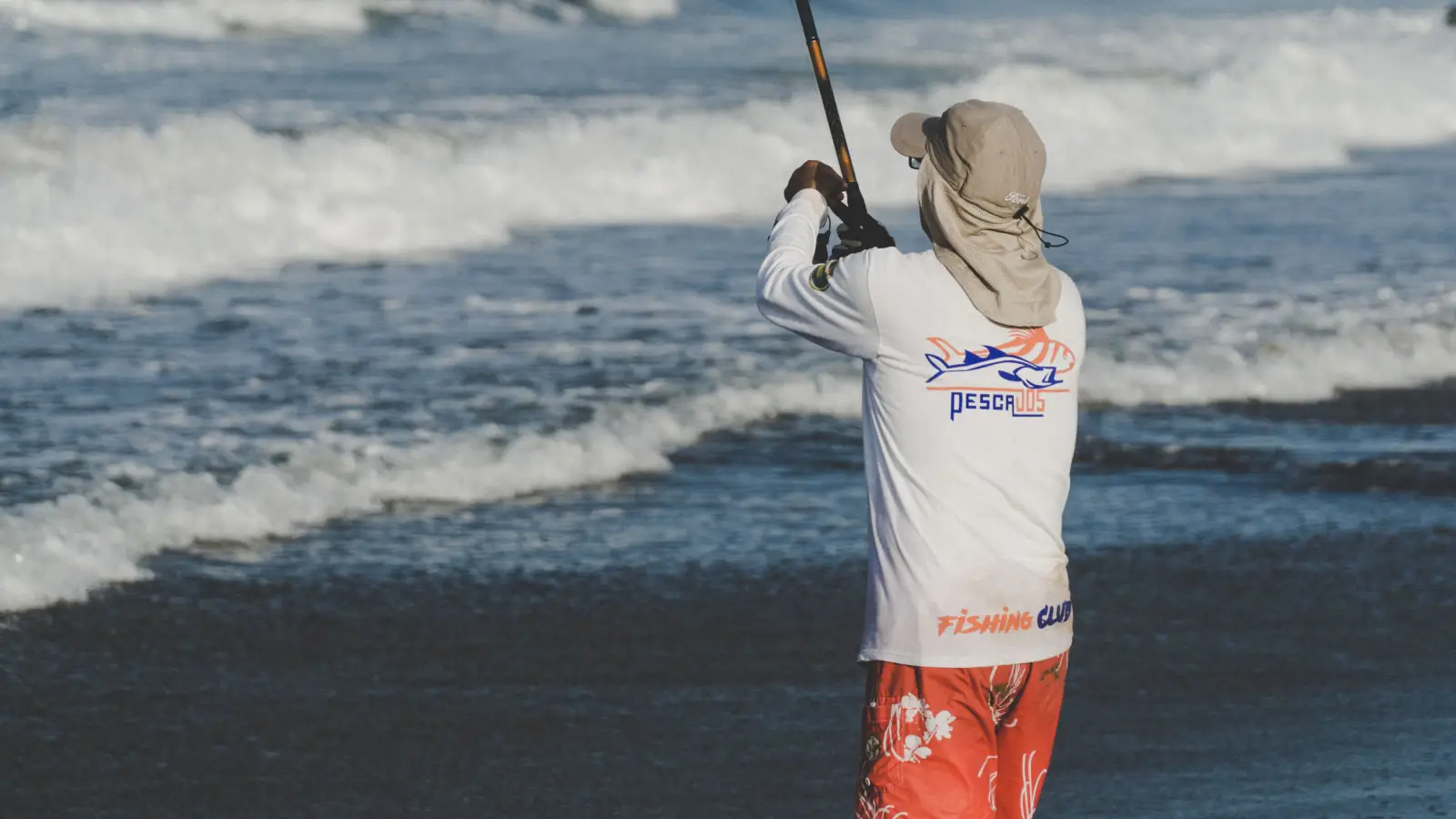
When the beach looks empty, pro surf anglers don't rely on distance. They read the terrain. Sandbars, deep cuts, and rip currents funnel bait and concentrate fish. Learning to spot these features from dry sand puts the angler directly over fish, not just in the water.
The 5-Step Beach-Reading Process That Replaces Blind Casting
- Identify rip current channels by scanning for dark, calm water breaking the wave pattern.
- Map sandbars from wave shape and foam lines.
- Locate the deep troughs inshore of sandbars where bait holds.
- Watch for baitfish activity—dimpling water, diving birds, or oil slicks.
- Cast to present your bait along the seam between current and slack water.
Detailed Walkthrough of Each Step
Step 1: How to Pick Out a Rip Current from the Beach
A rip current disrupts the normal wave sequence. Look for a gap in the breaking waves where the water appears darker and smoother, often carrying foam, debris, or a slight sediment plume seaward. That water is being pulled offshore, and it creates a conveyor belt for baitfish. Predatory fish hold along the edges, waiting to ambush prey swept past.
If the rip is pronounced—murky, churning, with a clear foam trail—position up-current from the distinct edge. If the rip is subtle, only a narrow, slightly darker band without obvious foam, look for floating weed lines or a sudden change in surface texture that marks the current boundary. The fish will be on the seam, not in the turbulence.
Step 2: Interpreting Wave Action to Map Sandbars
Waves break where the bottom rises, so the line of breakers reveals sandbars. An outer bar produces a long row of breaking waves, followed by a calmer stretch—the trough—and often a second, inner bar where waves break again closer to shore. The trough between the outer bar and the beach is a major holding zone for species like striped bass, redfish, and pompano.
On a steep beach with a single prominent bar, fish the deep hole just landward of the breakers. That is where fish conserve energy while food washes over the bar. On a flatter beach with multiple bars, the deep trough between the inner bar and the shore—called a gut—funnels current and bait. If high tide hides the structure, note where the waves break at low tide and lock in landmarks; the bar will be in the same place when the water rises.
Step 3: Finding the Troughs and Cuts That Concentrate Fish
Troughs appear as darker water where depth is greater and waves break less often or not at all. Cuts are narrow channels that drain water from the shore back to the trough, gathering bait and predators. From dry sand, scan for a stretch of water with a distinctly darker color than the surrounding shallows, or a slick, oily-looking surface that indicates deeper, slower-moving water.
With clear water, polarized sunglasses reveal the bottom contour as a shadowy depression. In murky water, rely on foam and wave behavior: a trough often shows a persistent foam line along its edge, and waves don't break inside it even when they break on both sides. At low tide, the contour is obvious—walk the beach and note where you could wade deeper without waves crashing.
Step 4: Spotting Baitfish and Feeding Activity from Dry Sand
Baitfish activity confirms that structure is holding life. Scan the water surface for nervous dimpling—tiny ripples that look like rain but are caused by schooling bait just under the surface. Watch for birds, especially terns and gulls, hovering low, diving, or wheeling tightly over one spot. An oily sheen or “slick” on the water often indicates a dense school of menhaden or anchovies, even when no fish are visible.
Early morning and late afternoon light makes these surface signs far easier to pick out. Bait pushed against the edge of a rip or a trough marks the prime feeding zone. If no bait is visible, move a hundred yards down the shore and scan again for the same subtle cues—the beach is rarely truly empty, just quiet.
Step 5: Placing the Cast to Fish the Structure, Not Just the Water
Once the rip, bar, and trough are mapped, the cast must present the bait to travel naturally through the feeding zone. Do not cast into the center of a rip—that puts the bait in turbulent water where fish rarely feed. Instead, cast into the seam where clear water meets the rip, and let the current carry the offering along the edge. For a trough or gut, land the cast on the outer bar and draw the lure down into deeper water.
When structure runs parallel to the beach, cast diagonally across the trough and retrieve slowly, keeping the bait in the strike zone as long as possible. Factor in wind and wave drift: an onshore wind that pushes the line demands a heavier weight or shorter cast to maintain bottom contact. Accuracy, not distance, keeps the bait where fish are already holding.
Field Signs That Confirm You're Reading the Beach Right
- Baitfish scatter or skip along the surface as your lure splashes down.
- Line tension comes immediately and pulls at an angle, caught in a current seam.
- A distinct color change or foam line aligns with where you are fishing.
- Within the first few retrieves, the sinker or lure taps across a hard sand edge—the lip of a trough or bar.
- A strike, bump, or short hit comes quickly, or swirls appear near the bait.
Troubleshooting: When the Beach Still Looks Like a Desert
No Visible Rips or Bars in Sight
Return to the same stretch at dead low tide with polarized glasses. Photograph the beach from a high vantage to map underwater contours when they are most exposed. Even a subtle bar will reveal itself by how the tide flows out around it. Mark landmarks on land—a house, a dune notch—that align with the structure, so it can be found at high tide.
No Bait Activity Anywhere
Walk the beach and scan over a longer distance. Small scattered bait schools may still draw a single diving tern a hundred yards away. A faint oily slick or a patch of water that looks “heavy” and still is often all that is visible. If a mile of beach seems barren, check a different section with more pronounced structure, such as near an inlet or jetty where currents concentrate.
Water Is Too Murky to See Features
Rely on wave patterns and foam lines exclusively. Even in chocolate-milk water, a rip current still shows as a gap in the breakers and a floating debris trail. A trough still causes waves to flatten or not break. Surface texture and the rhythm of the surf provide all the information needed; ignore color and trust the physical cues.
You've Found Structure but Still Aren't Getting Bites
Adjust the depth. Fish may be holding deeper in the trough than the bait reaches; add weight or let it sink longer. Alternatively, they could be on the bar itself, feeding on crabs and sand fleas; try casting onto the bar and hopping the bait off into the trough. Also check retrieve speed—a slow, natural drift often outproduces a fast retrieve in clear water when fish are looking up.
Common Questions About Reading the Beach for Fish
Can I spot fish when the water is really murky?
Yes, by focusing on movement and surface signs instead of color. Rip currents, foam lines, and wave behavior remain visible. Baitfish activity may be harder to see, but birds and occasional splashes give away location. In very dirty water, fish often move shallower and tighter to structure, making the trough edge even more critical.
Do I need polarized sunglasses to read the beach?
They are not mandatory, but they cut surface glare dramatically in bright sun. On overcast days or early morning, wave and current lines are visible without them. For anglers who fish clear water often, polarized lenses are a practical tool because they expose bottom contours and baitfish shadows that otherwise stay hidden.
Is it better to read the beach at low tide or high tide?
Low tide offers the clearest view of structure—bars, troughs, and cuts are exposed or easily visible. High tide hides many features, but fish often move onto the bars or into the shorebreak to feed. The smart approach is to scout at dead low, then fish the incoming tide when the structure you mapped is working.
How far should I cast if I'm fishing a specific structure?
Only as far as necessary to reach the seam or trough. On most beaches, the most productive water sits 20–40 yards out, inside the first bar. Casting beyond the bar puts the bait into featureless water where fish aren't concentrated. Precision placement on the target zone matters far more than sheer distance. Use tide and current to let the bait work naturally once it arrives.
Now Go Map Your Local Beach
With this beach-reading knowledge, any empty beach can be decoded for holding spots; the immediate next step is to scout the home beach at dead low tide and sketch the bars, troughs, and rip channels so you know exactly where to cast next time.