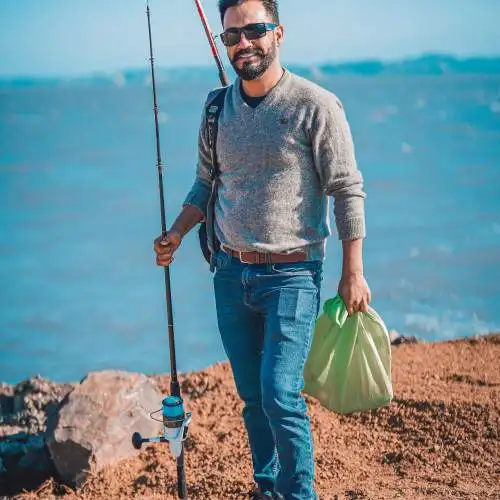
Left on the concrete, a gut pile is not litter with a smell. It is a concentrated food source dropped exactly where people, pets, and wildlife cross paths, and the fix comes down to one of two moves: return the offal to deep, moving water, or bag it and put it in the trash at home. Everything below is how those two options actually work in the field, when each one is the right call, and why the choice counts as stewardship rather than a footnote in a regulation book.
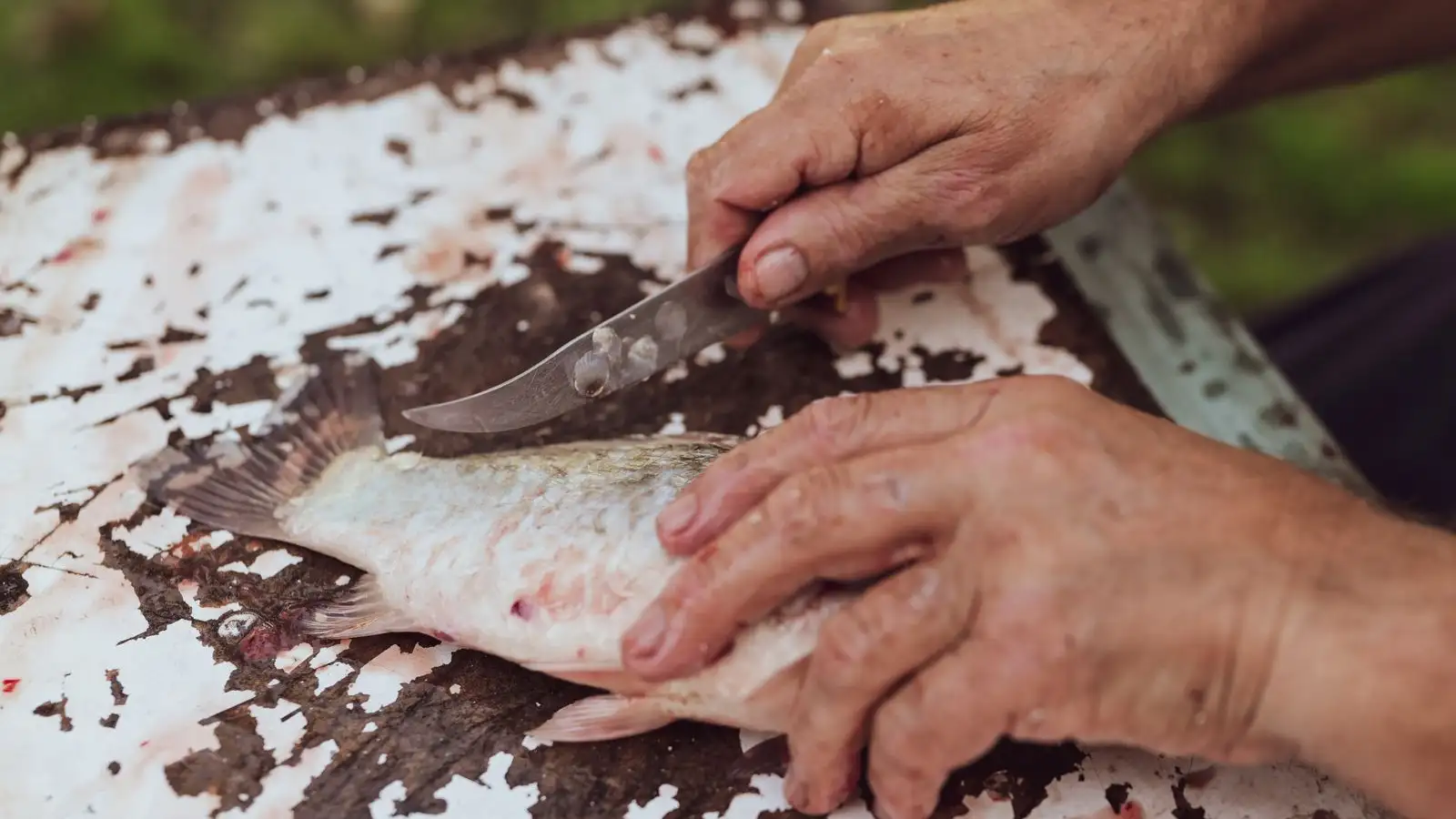
Stand on the concrete at a launch ramp at seven on a July morning and you can usually smell the last guy before you see what he left. Wet concrete, two-stroke exhaust, and underneath it that sweet rank of guts that have been cooking since Friday. Then you look past the trash barrel, down toward the waterline, and there it is: a rib cage picked half clean, a gray coil of intestine, a dark stain spreading where last night's rain pushed everything toward the lake.
I have cleaned fish on tailgates, picnic tables, a cooler lid, and one memorable afternoon on the back of a truck in a hailstorm. I am not squeamish about the work. What changed how I handle the leftovers was not a warden and not a fine. It was watching a raccoon walk past three guys rigging rods and go straight to the same corner of the same lot, at the same time of day, two weekends in a row.
The pile does not stay where you leave it
Nothing about a gut pile is static. On concrete in July it goes anaerobic in a matter of hours, which is the smell, and it holds moisture, which means it keeps going long after a carcass scattered in the woods would have dried out and stopped being interesting. Flies find it in minutes. Gulls find it by afternoon. Raccoons, skunks, and coyotes find it after dark.
That last part is the one that costs everybody. A single pile is a nuisance. A pile in the same spot, weekend after weekend, is a training program. You are teaching a population of scavengers that the parking lot is a reliable food source, and the animals that learn it fastest are the ones least afraid of people. Then someone's dog gets into it, or a kid steps in it, or a raccoon starts treating a cooler as a lid to be opened. Then the complaints start, and then the gate goes up and gets chained, and a ramp that twenty people used every Saturday morning is gone because four of them would not walk fifty yards.
There is a disease angle here too. Repeated dumping in one place concentrates whatever the fish or the animal was carrying into a single patch of ground, and the next animal that noses around picks up a heavier dose than it would find from a carcass scattered over a mile of riverbank. I am not going to dress that up with numbers I do not have. I have just watched a shoreline at a busy access point get to the point where I did not want my dog's nose anywhere near it, and I do not think that is a coincidence.
Deep, moving, and cold
The old practice, and still the best one where the water allows it, is to give it back. Not at the ramp. Out in the main channel, where the current is real and the water is deep and cold.
Think about what you are handing it to. Cold moving water is full of things that eat. Crayfish work a carcass down. Sculpins and dace and suckers pick at it. Turtles and gulls handle the rest, and the soft parts are usually gone in a day or two. Whatever is left gets carried downstream and scattered instead of sitting in one place. The nutrients go back into the system that grew the fish you just put in your cooler, which is a story the old-timers tell better than I can, and they are not wrong about the mechanism.
The mechanics matter, though, and this is where most people do it badly. Deep means deep enough that what you drop does not come back up on the beach by Tuesday, and moving means a channel with actual flow rather than the stagnant corner by the ramp. Open the body cavity before it goes in. A sealed carcass with air trapped inside is a balloon, and it will float past you at eye level on the way downstream, which is a worse look than the pile you were trying to avoid. If the current is sluggish or the fish is large, a rock in the bag does the job.
And do not stand at the top of the ramp and heave it ten feet out into two feet of water. That is not returning it to the system. That is the same pile, wetter, and closer to where everybody wades in.
When the water is the wrong answer
This is not a universal rule, and anybody who tells you it is has not fished enough different water. Shallow ponds, reservoirs with no real flow, small urban lakes, alpine water, anything where the current goes nowhere and the volume is too small to process what you are adding: put it in a bag instead. Same for any body of water where the carcass rules exist for a reason. Some fisheries require carcasses to be removed or landfilled because of a specific disease or an invasive species, and in those places the entire point is to keep the material out of the water rather than return it. When the local regulation says something different from the general practice, the local regulation is the answer. Every time.
There is a practical limit too. If the only way to reach deep water is wading down a slick concrete ramp in the dark with a bucket in one hand, do not do it. Take the bag home. Nobody is handing out awards for a broken wrist, and the water will not miss one gut pile.
The freezer is the whole trick
Bagging it out sounds simple until you picture a warm trash can on a Monday in August, and that smell is the reason people go back to dumping at the ramp. The fix is the freezer, and the trick is to freeze it flat.
Heavy zip bag, doubled. Into the cooler with the fish while you are still on the water, not into the sun on the tailgate. At home, straight into the freezer, laid flat on a sheet pan or a piece of cardboard so it freezes into a thin slab. Come trash day it goes into the can as a flat, hard brick that does not tear the bag and does not start decomposing on the way to the curb. If you are a long way from trash day or the weather is hot, freeze it and take it out the morning of pickup.
Not everybody has that option. Apartment dwellers, renters, anyone sharing a freezer with three roommates, households in bear country with rules about what can sit in a can. If that is you, the answer is smaller bags, sooner, and a tighter lid, not a pile behind the boathouse.
Campsites and trails are the ones that get people hurt
A pile at a ramp is rude. A pile forty yards from a tent pad is a different category of problem, and so is a pile on a trail people walk. Those are the ones that produce habituated bears, and habituated bears do not get quietly relocated to a happy ending. The same goes for a gut pile left near a portage, a picnic area, or a walk-in access where families park. If you are camping, the offal either goes into deep moving water that same day or it goes into a sealed bag and into your vehicle, not into the treeline at the edge of camp.
The carcass, not just the guts
The same reasoning scales up. A whole deer carcass, a big salmon, a goose after plucking. It is the same problem with more volume and a longer timeline. Deep moving water where that is legal and appropriate, or out. What it is not is a gift to the coyotes in the brush at the edge of the lot. Coyotes do not need your help, and a coyote that learns the lot is a food source is a coyote that is going to have a bad outcome, along with somebody's dog.
The part that is really about the next guy
Here is why I think of this as ethics instead of compliance. Every pile is a withdrawal from an account somebody else deposited into. The landowner who lets strangers park on his field edge. The club that negotiated an access easement. The state crew that poured the ramp and put up the courtesy dock. It took years to get those, and it takes one summer of a persistently smelly parking lot to start the conversation about closing it.
The person you are really doing this for is the one who shows up at 5:40 the next morning and walks his kid down to the water.
So the decision takes about five seconds once you are in the habit. Before the knife comes out, decide where the offal goes. If the water is deep, moving, cold, and legal, open it up and put it in the channel, not off the end of the ramp. If any of those four things is missing, it goes into a doubled bag, into the cooler, into the freezer, flat, and out with the trash. Carry the bag out either way. And leave the concrete a little cleaner than you found it, because somebody is going to notice, and it might as well be in your favor.