Start the clock the second the fish is dispatched: bleed and gut it right there, get it into slush ice, and keep it below 40 degrees Fahrenheit in a drained cooler with ice packed both under and over the fish until you are home. The 40-degree rule is not a setting on a cooler or a finish line at the cleaning table. It is the direction you push the fish's temperature from the first minute, and every minute the fish sits above that line is time you do not get back.
I have stood at a gravel ramp in August with the tailgate down and felt the sun come through the truck bed like a heat lamp. The tailgate is hot through my jeans. The ice bag sweats on the bed liner. You have a fish in one hand and a knife in the other, and the sun is on your neck. That is where the clock starts, not when you finally open the cooler. The fish is still cool from the water. That is the only free cold you get. The air is already working against you, and the cooler is still closed.
The first ten minutes are the whole game
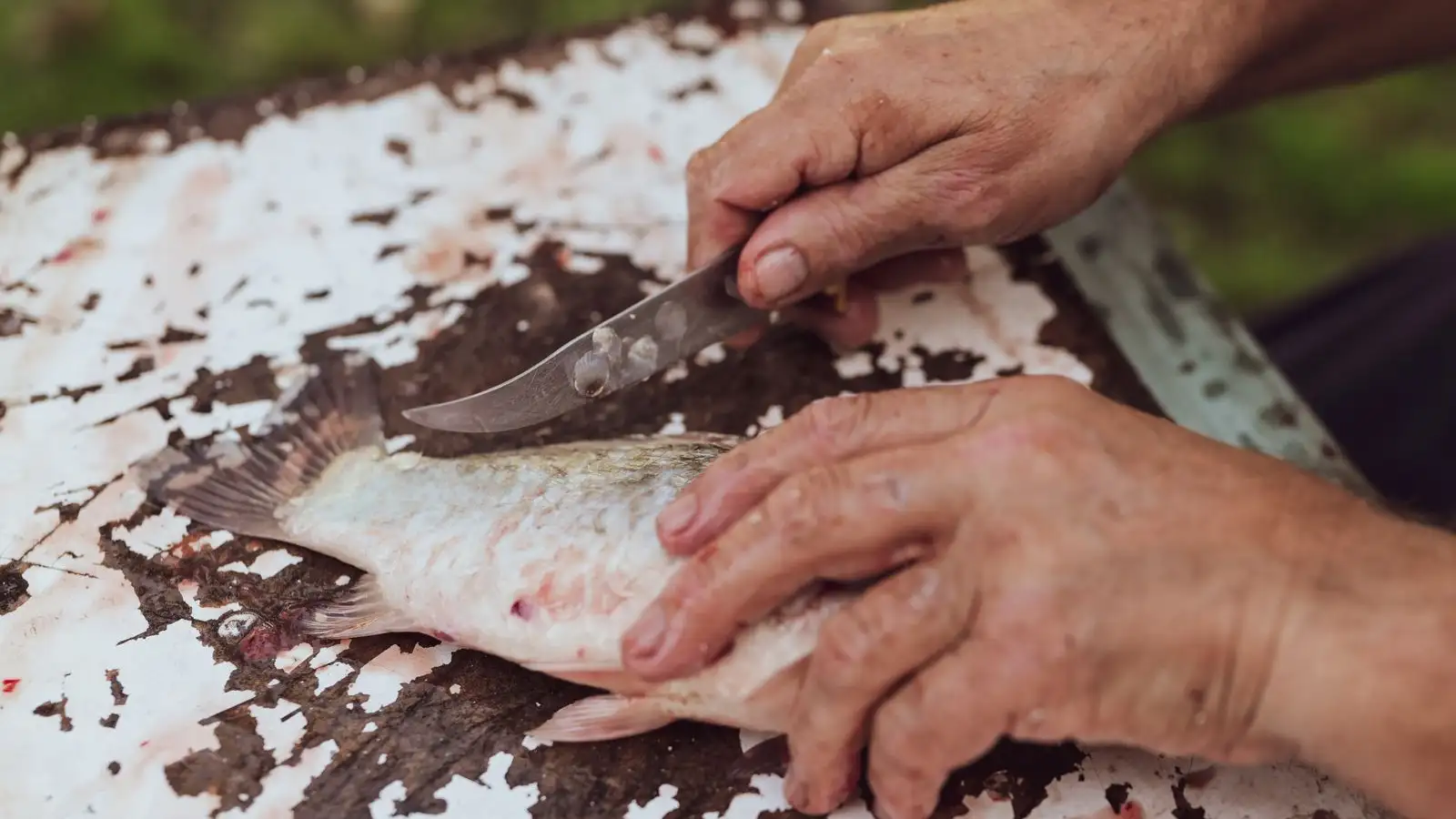
I used to treat the cooler as the start of the cold chain. It isn't. The start is the dispatch. Bleed the fish, gut it, and open the body cavity so the cold can get to the core. A whole fish is a sealed container of heat. A gutted fish is a shape that can give up heat from the inside as well as the skin. A gutted fish chills through to the core faster than a whole one, and that matters more on a big fish. A big fish is a heat sink. If you leave the guts in it, you are asking a bag of ice to cool a warm rock from the outside in.
Between about 40 and 140 degrees Fahrenheit, spoilage bacteria do their fastest work. The aim is to push the fish below 40 as quickly as practical, not to wait until you get home to start. Field-dressing on the bank is not about being tidy. It is about surface area and time. Get the guts out, cut the gills if you bleed there, and get the fish into the cold you brought. Do not rinse it in warm water from a jug that has been sitting in the sun. If you rinse, use the coldest water you have. Then get it out of the air.
Slush does the work cubes cannot
Dry cubes touch a fish at points. Slush touches it everywhere. I mix ice and just enough water to make a thick, wet slurry, something that moves like a heavy snowball and not like a soup. The fish goes in and the slurry fills the body cavity and presses against the skin. That contact is what pulls heat out fast. A gutted fish in slush will chill through to the core faster than the same fish lying on a bed of dry cubes with air around it.
You do not need a special product to make slush. You need ice, a little water, and the willingness to let the ice start melting. If all you have is cubes, put them in the cooler and add a splash of water. Come back in a few minutes and you have a slurry. It looks rough. That is fine. The fish does not care what it looks like. It cares about contact.
A cooler full of meltwater is a bathtub
This is the mistake I see most often, and I made it for years. The ice melts, the fish sits in the water, and the cooler feels cold when you put your hand in. But that water is not doing what the slush did. Once the meltwater has absorbed heat, it holds it against the fish. The fish is soaking in the warmest part of the cooler. That is why a drain or a rack matters. You want the fish cold and exposed to ice, not cold and sitting in a pool.
If your cooler has a drain, open it when you stop and let the water run off. If it does not, put something under the fish so it stays above the water line, and tilt the cooler to pour off the melt when you can. A rack or a couple of clean spacers will do. The point is not to keep the cooler dry for its own sake. The point is to keep the fish out of the water that has already taken heat off the ice.
Layering is what carries you home
On a short drive, almost anything works. On a long warm drive, the cooler has to be built, not just filled. I put ice in the bottom, then the fish, then ice over the top. I pack the ice into the gaps and around the sides. The top layer is not decoration. It is the lid's heat shield, and it is the first ice to melt, which is exactly what you want. The fish is between two cold masses, not lying on one.
A warm cooler eats ice before it ever cools a fish. If you can, chill the cooler before you load it. Keep it out of the sun. Keep the lid shut. Every time you open it at a gas station or to show someone your catch, you dump the cold air and let warm air in. Throw a blanket or a jacket over the cooler if it is riding in the back of a truck. That is not a brand trick. It is shade and insulation.
Do not leave a lot of empty air in the cooler if you can help it. A half-full cooler warms faster than a full one. Fill the empty space with ice, not with a towel that will get wet and heavy. The fish should be packed in, not rattling around. If the drive is long and the day is hot, bring more ice than you think you need. You can always leave some in the bag. You cannot make more on the road.
The test is at the end, not the ramp
When I get home, I do not just look at the ice and call it good. I check the fish. The thickest part should feel cold, not cool. The belly cavity should be cold. If there is a warm spot, the clock won. That does not mean the fish is ruined, but it does mean I need to change something next time: more ice, more slush, a drained cooler, a shorter stop.
The drive home is where the 40-degree rule is actually tested. At the ramp, you have cold water and shade and a fish that just came out of the lake. Two hours later, you have a cooler that has been fighting the air temperature and a fish that has been sitting in whatever water melted. The cooler does not make cold. It only slows the leak. Your job is to give it enough ice, enough contact, and enough drainage to keep the leak from winning.
Freeze after the chill, not instead of it
If you are freezing the fish, do it after it has fully chilled. A warm fish going into a freezer chills slowly, and the texture pays for it. The freezer has to pull all that heat out, and the outer layers can freeze while the center is still warm. That is not the same as a clean freeze. Get the fish cold in the cooler first, then freeze it.
I know it is tempting to skip the cooler and go straight to the freezer when you get home. I have done it. The fish comes out with a softer texture and more water when it thaws. The 40-degree rule does not stop at the freezer door. It just changes form.
The short version is the one I wish someone had told me at the ramp: the clock starts when the fish is dispatched, not when you open the cooler. Gut it, slush it, drain it, layer it, and keep the lid shut. That is the whole game on a warm drive home.