If a new spool of monofilament or fluorocarbon leaps off the reel in a tight coil the instant you open the bail, that’s line memory—and you can fix it in five minutes flat. This routine runs a timed sequence: warm water soak, controlled stretch, then line conditioner. Each step directly addresses the polymer structure that holds the line’s set shape, forcing it back toward a relaxed, linear state before your first cast.
Monofilament and fluorocarbon are thermoplastics. Left wound on a spool, their long-chain molecules slowly lock into that curl. Heat and gentle mechanical stress reverse the process. The three-phase ritual ahead uses precise temperature, steady tension, and a friction-reducing conditioner to reset the line’s alignment. It’s not about yanking the memory out—it’s about giving the polymer the right conditions to forget it.
Tools and Materials for the 5-Minute Routine
You’ll gather these before starting—nothing exotic.
- A container large enough to submerge 50 yards of line in warm water. A clean bucket, mixing bowl, or sink basin will do.
- Tap water at 110–120°F. You should be able to hold your hand in it comfortably.
- A clean microfiber or cotton towel for blotting and grip.
- A silicone- or PTFE-based line conditioner that matches your line type.
- The rod and reel already spooled, or the loose line if you’re filling a spool.
The Sequence, Step by Step
Step 1: Warm Water Soak — 2 Minutes
Fill the container with 110–120°F water. Strip off about 50 yards of line and fully submerge it, leaving the reel beside the container. Leave it for exactly two minutes. That heat increases chain mobility just enough to soften the coiled memory without compromising tensile strength. Boiling water causes permanent damage—keep it below 140°F. If the water feels too hot to keep your hand in, it’s too hot for the line.
Step 2: Controlled Stretch — 1 Minute 30 Seconds
Lift the line from the soak and press it lightly in the towel to remove excess water—you want it damp, not dripping. Work along the length in 5-foot sections. Grip the line through the towel, apply a steady pull of roughly 25–30% of its rated breaking strength (about 2–2.5 pounds for 8-pound test), and hold each section stretched for 5–8 seconds before moving on. That controlled tension realigns the polymer chains. Jerky pulls or rushing create weak spots. If the line turns opaque, you’re stretching past its limit; back off immediately.
Step 3: Line Conditioner Application — 1 Minute 30 Seconds
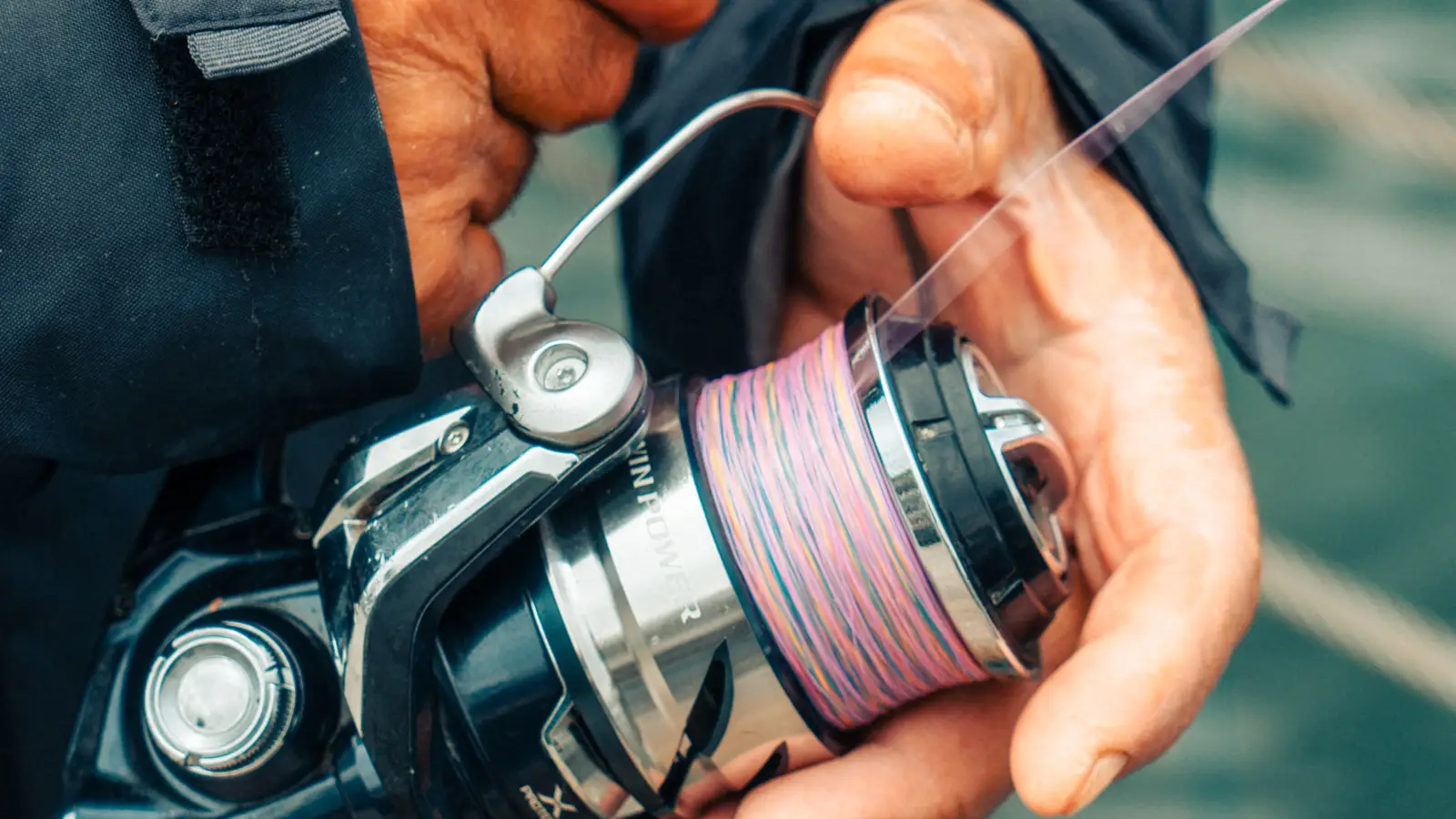
With the line still slightly damp, spray or wipe on a thin, even coat of conditioner across the entire treated length. Spread it by running the line through a pad or your towel-covered fingers. The conditioner cuts surface friction between spool wraps, so the line won’t lock into a new memory once wound back. Let the treatment sit for 30 seconds, then reel the line under moderate, consistent tension—enough to lay it flat without pulling it further.
What Trips People Up
Overheating the Water
More heat doesn’t mean faster results. Water above 140°F can drop tensile strength by double-digit percentages without any visible cue. The line may feel fine, but it’ll break under a load that should have been routine. Stick to the hand-test standard.
Rushing the Stretch
Skipping the stretch or pulling unevenly leaves the line still holding its coil once it cools. Fluoro especially suffers from hurried tension—it’s stiffer and more prone to snapping if yanked. Seconds matter; each 5-foot section needs 5–8 seconds of steady hold.
Applying Conditioner to a Wet Line
If water droplets sit on the line when you spray, the conditioner beads up and slides off. Blot thoroughly before applying, and give the carrier time to bond. A greasy, over-applied film is just as bad—it collects grit that fouls guides and casts.
Loose Re-Spooling
Winding the line back without tension invites the same memory you just erased. Use light, even drag—your thumb and forefinger as a guide—to get a firm, level lay. Too much pressure, however, stretches the line beyond its freshly relaxed state and undoes the work.
The Line Is Ready
The 5-minute soak, stretch, and coat reset has delivered a supple, straight line that sits tight on the spool and leaves the guides without fighting itself. Load the rod carefully—don’t bang the tip against hard edges—and take one or two practice casts before tying on a lure. That first cast should run clean, the coils gone before you ever made them a problem.